Kirjojen hintavertailu. Mukana 12 390 323 kirjaa ja 12 kauppaa.

Kirjailija

Margaret O'Mara

Kirjat ja teokset yhdessä paikassa: 8 kirjaa, julkaisuja vuosilta 2004-2024, suosituimpien joukossa The American Pageant, Volume 2. Vertaile teosten hintoja ja tarkista saatavuus suomalaisista kirjakaupoista.

8 kirjaa

Kirjojen julkaisuhaarukka 2004-2024.

The American Pageant

The American Pageant

David Kennedy; Margaret O'Mara

CENGAGE LEARNING, INC
2024
nidottu
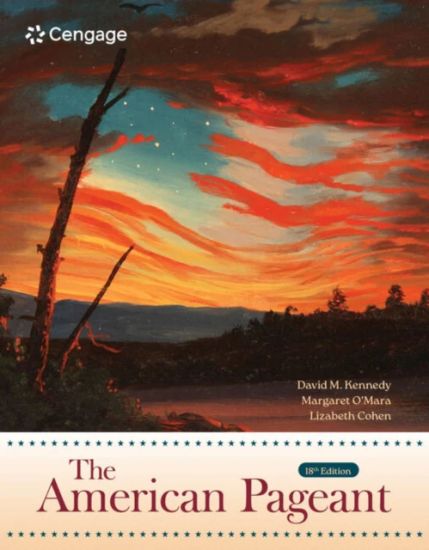
You may not think that a history book could make you laugh, but Kennedy/O'Mara's THE AMERICAN PAGEANT, 18th Edition, just might. It's known for being one of the most popular, effective and entertaining texts on American history. Colorful anecdotes, first-person quotations and the authors' trademark wit bring history to life. Learning aids make the book as accessible as it is enjoyable. Part openers and chapter-ending chronologies provide a context for the major periods in American history, while primary sources and introductions to key historical figures give you a front row seat to the nation's past and place today’s debates in historical context.
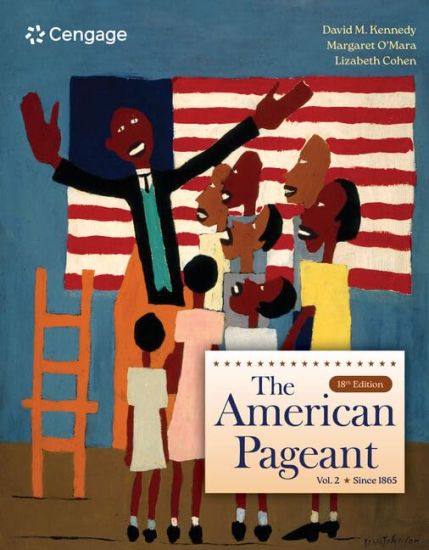
The American Pageant, Volume 2

The American Pageant, Volume 2

David Kennedy; Margaret O'Mara

CENGAGE LEARNING, INC
2024
nidottu
You may not think that a history book could make you laugh, but Popular, effective and entertaining, Kennedy/O'Mara's THE AMERICAN PAGEANT, Volume 2, 18th Edition, just might. It's known for being one of the most popular, effective and entertaining texts on American history. Colorful anecdotes, first-person quotations and the authors' trademark wit bring history to life. Learning aids make the book as accessible as it is enjoyable. Part openers and chapter-ending chronologies provide a context for the major periods in American history, while primary sources and introductions to key historical figures give you a front row seat to the nation's past and place today’s debates in historical context.
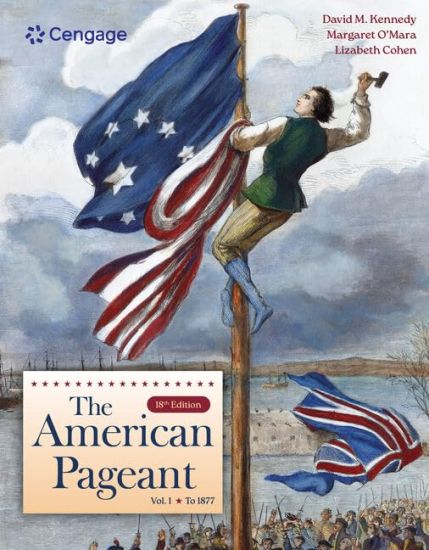
The American Pageant, Volume I

The American Pageant, Volume I

David Kennedy; Margaret O'Mara

CENGAGE LEARNING, INC
2024
nidottu
You may not think that a history book could make you laugh, but Kennedy/O'Mara's THE AMERICAN PAGEANT, Volume I, 18th Edition, just might. It's known for being one of the most popular, effective and entertaining texts on American history. Colorful anecdotes, first-person quotations and the authors' trademark wit bring history to life. Learning aids make the book as accessible as it is enjoyable. Part openers and chapter-ending chronologies provide a context for the major periods in American history, while primary sources and introductions to key historical figures give you a front row seat to the nation's past and place today’s debates in historical context.
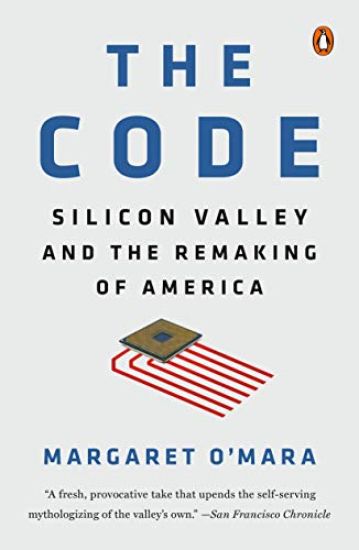
The Code: Silicon Valley and the Remaking of America
One of New York Magazine's best books on Silicon Valley The true, behind-the-scenes history of the people who built Silicon Valley and shaped Big Tech in America Long before Margaret O'Mara became one of our most consequential historians of the American-led digital revolution, she worked in the White House of Bill Clinton and Al Gore in the earliest days of the commercial Internet. There she saw firsthand how deeply intertwined Silicon Valley was with the federal government--and always had been--and how shallow the common understanding of the secrets of the Valley's success actually was. Now, after almost five years of pioneering research, O'Mara has produced the definitive history of Silicon Valley for our time, the story of mavericks and visionaries, but also of powerful institutions creating the framework for innovation, from the Pentagon to Stanford University. It is also a story of a community that started off remarkably homogeneous and tight-knit and stayed that way, and whose belief in its own mythology has deepened into a collective hubris that has led to astonishing triumphs as well as devastating second-order effects. Deploying a wonderfully rich and diverse cast of protagonists, from the justly famous to the unjustly obscure, across four generations of explosive growth in the Valley, from the forties to the present, O'Mara has wrestled one of the most fateful developments in modern American history into magnificent narrative form. She is on the ground with all of the key tech companies, chronicling the evolution in their offerings through each successive era, and she has a profound fingertip feel for the politics of the sector and its relation to the larger cultural narrative about tech as it has evolved over the years. Perhaps most impressive, O'Mara has penetrated the inner kingdom of tech venture capital firms, the insular and still remarkably old-boy world that became the cockpit of American capitalism and the crucible for bringing technological innovation to market, or not. The transformation of big tech into the engine room of the American economy and the nexus of so many of our hopes and dreams--and, increasingly, our nightmares--can be understood, in Margaret O'Mara's masterful hands, as the story of one California valley. As her majestic history makes clear, its fate is the fate of us all.
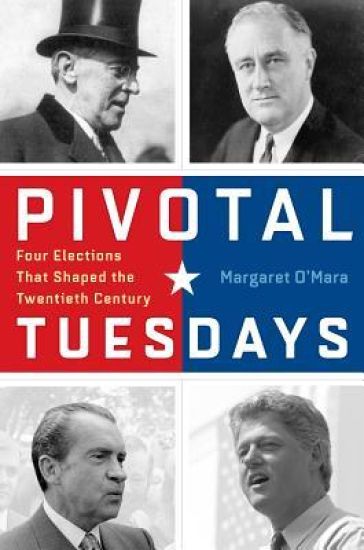
Pivotal Tuesdays

Pivotal Tuesdays

Margaret O'Mara

University of Pennsylvania Press
2017
pokkari
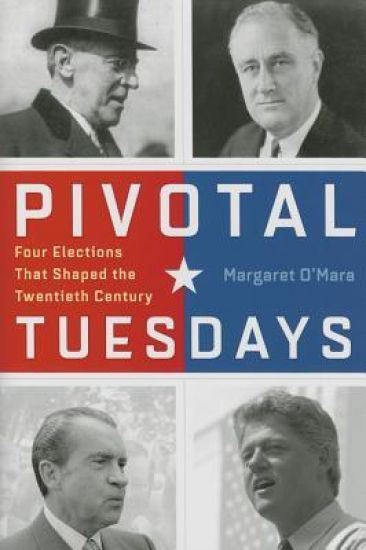
Serious and silly, unifying and polarizing, presidential elections have become events that Americans love and hate. Today's elections cost billions of dollars and consume the nation's attention for months, filling television airwaves and online media with endless advertising and political punditry, often heated, vitriolic, and petty. Yet presidential elections also provoke and inspire mass engagement of ordinary citizens in the political system. No matter how frustrated or disinterested voters might be about politics and government, every four years, on the first Tuesday in November, the attention of the nation-and the world-focuses on the candidates, the contest, and the issues. The partisan election process has been a way for a messy, jumbled, raucous nation to come together as a slightly-more-perfect union. Pivotal Tuesdays looks back at four pivotal presidential elections of the past 100 years to show how they shaped the twentieth century. During the rowdy, four-way race in 1912 between Teddy Roosevelt, William Howard Taft, Eugene Debs, and Woodrow Wilson, the candidates grappled with the tremendous changes of industrial capitalism and how best to respond to them. In 1932, Franklin Roosevelt's promises to give Americans a "New Deal" to combat the Great Depression helped him beat the beleaguered incumbent, Herbert Hoover. The dramatic and tragic campaign of 1968 that saw the election of Richard Nixon reflected an America divided by race, region, and war and set in motion political dynamics that persisted into the book's final story-the three-way race that led to Bill Clinton's 1992 victory. Exploring the personalities, critical moments, and surprises of these races, Margaret O'Mara shows how and why candidates won or lost and examines the effects these campaigns had on the presidencies that followed. But this isn't just a book about politics. It is about the evolution of a nation and the history made by ordinary people who cast their ballots.
Pivotal Tuesdays

Pivotal Tuesdays

Margaret O'Mara

University of Pennsylvania Press
2015
sidottu
Serious and silly, unifying and polarizing, presidential elections have become events that Americans love and hate. Today's elections cost billions of dollars and consume the nation's attention for months, filling television airwaves and online media with endless advertising and political punditry, often heated, vitriolic, and petty. Yet presidential elections also provoke and inspire mass engagement of ordinary citizens in the political system. No matter how frustrated or disinterested voters might be about politics and government, every four years, on the first Tuesday in November, the attention of the nation-and the world-focuses on the candidates, the contest, and the issues. The partisan election process has been a way for a messy, jumbled, raucous nation to come together as a slightly-more-perfect union. Pivotal Tuesdays looks back at four pivotal presidential elections of the past 100 years to show how they shaped the twentieth century. During the rowdy, four-way race in 1912 between Teddy Roosevelt, William Howard Taft, Eugene Debs, and Woodrow Wilson, the candidates grappled with the tremendous changes of industrial capitalism and how best to respond to them. In 1932, Franklin Roosevelt's promises to give Americans a "New Deal" to combat the Great Depression helped him beat the beleaguered incumbent, Herbert Hoover. The dramatic and tragic campaign of 1968 that saw the election of Richard Nixon reflected an America divided by race, region, and war and set in motion political dynamics that persisted into the book's final story-the three-way race that led to Bill Clinton's 1992 victory. Exploring the personalities, critical moments, and surprises of these races, Margaret O'Mara shows how and why candidates won or lost and examines the effects these campaigns had on the presidencies that followed. But this isn't just a book about politics. It is about the evolution of a nation and the history made by ordinary people who cast their ballots.
Cities of Knowledge

Cities of Knowledge

Margaret O'Mara

Princeton University Press
2015
pokkari
What is the magic formula for turning a place into a high-tech capital? How can a city or region become a high-tech powerhouse like Silicon Valley? For over half a century, through boom times and bust, business leaders and politicians have tried to become "the next Silicon Valley," but few have succeeded. This book examines why high-tech development became so economically important late in the twentieth century, and why its magic formula of people, jobs, capital, and institutions has been so difficult to replicate. Margaret O'Mara shows that high-tech regions are not simply accidental market creations but "cities of knowledge"--planned communities of scientific production that were shaped and subsidized by the original venture capitalist, the Cold War defense complex. At the heart of the story is the American research university, an institution enriched by Cold War spending and actively engaged in economic development. The story of the city of knowledge broadens our understanding of postwar urban history and of the relationship between civil society and the state in late twentieth-century America. It leads us to further redefine the American suburb as being much more than formless "sprawl," and shows how it is in fact the ultimate post-industrial city. Understanding this history and geography is essential to planning for the future of the high-tech economy, and this book is must reading for anyone interested in building the next Silicon Valley.
Cities of Knowledge

Cities of Knowledge

Margaret O'Mara

Princeton University Press
2004
sidottu
What is the magic formula for turning a place into a high-tech capital? How can a city or region become a high-tech powerhouse like Silicon Valley? For over half a century, through boom times and bust, business leaders and politicians have tried to become "the next Silicon Valley," but few have succeeded. This book examines why high-tech development became so economically important late in the twentieth century, and why its magic formula of people, jobs, capital, and institutions has been so difficult to replicate. Margaret O'Mara shows that high-tech regions are not simply accidental market creations but "cities of knowledge"--planned communities of scientific production that were shaped and subsidized by the original venture capitalist, the Cold War defense complex. At the heart of the story is the American research university, an institution enriched by Cold War spending and actively engaged in economic development. The story of the city of knowledge broadens our understanding of postwar urban history and of the relationship between civil society and the state in late twentieth-century America. It leads us to further redefine the American suburb as being much more than formless "sprawl," and shows how it is in fact the ultimate post-industrial city. Understanding this history and geography is essential to planning for the future of the high-tech economy, and this book is must reading for anyone interested in building the next Silicon Valley.