Kirjailija
Margaret R Miles
Kirjat ja teokset yhdessä paikassa: 31 kirjaa, julkaisuja vuosilta 1998-2024, suosituimpien joukossa The Long Goodbye. Vertaile teosten hintoja ja tarkista saatavuus suomalaisista kirjakaupoista.
Mukana myös kirjoitusasut: Margaret R. Miles
31 kirjaa
Kirjojen julkaisuhaarukka 1998-2024.
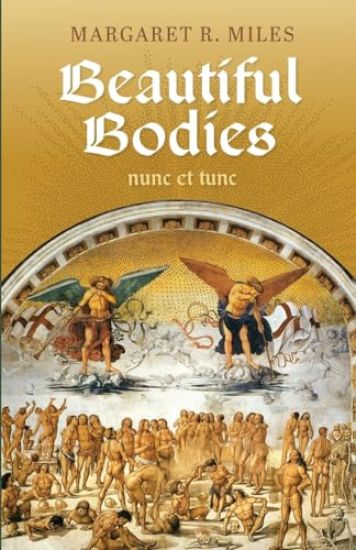
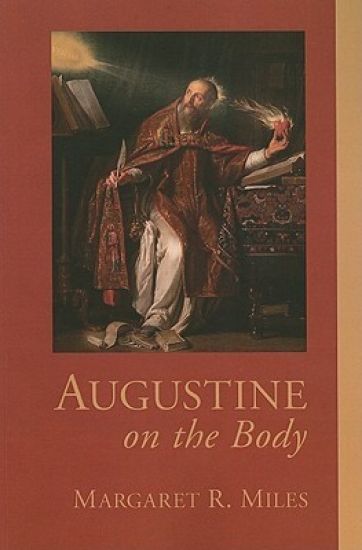
St. Augustine was known as a theologian of feeling for many centuries. Renaissance painters pictured him holding his passionately blazing heart in his hand. In Augustine's society and education, feeling was considered an intimate and integral aspect of thinking, so intimately interwoven that philosophers struggled to distinguish these activities. Thus, Augustine was also committed to learning throughout his passionate and thoughtful life, from his early conviction that "God and the soul" can be known through the meticulous use of reason, to mature sermons in which he quoted "God is love," and commented, in effect, that is all you need to know about God. The role of feeling in his understanding of the effect of Christian doctrines on present life has been less noticed. This book proposes that changes in his perception of the value and significance of human bodies--from objects of rapacious lust to rapturous admiration of their beauty--form the nexus within which Augustine's thought and feeling cohere. The old Augustine's understanding of the theological significance of present bodies informed his acknowledged speculations on the qualities and capacities of beautiful bodies, nunc et tunc.
On Memory, Marriage, Tears, and Meditation offers readers the tools for reading Augustine’s journey to human emotions through his writings on feeling, marriage, conversion, and meditation. Augustine understood that feeling, not rationality, gathers and reveals the deep longing of the whole person. Throughout his ecclesiastical career, he discussed marriage in sermons, letters, and treatises from the perspective of his own experience. Miles examines Augustine’s prototypes for conversion – reading and conversion; sacrifice and conversion; and the importance of friends in what might be considered a subjective and private process. Meditation was central to Augustine’s Christian life and Miles argues that his practice of meditation suggests that penitence included a rich range of feeling leading to gratitude, peace, wonder, and love.
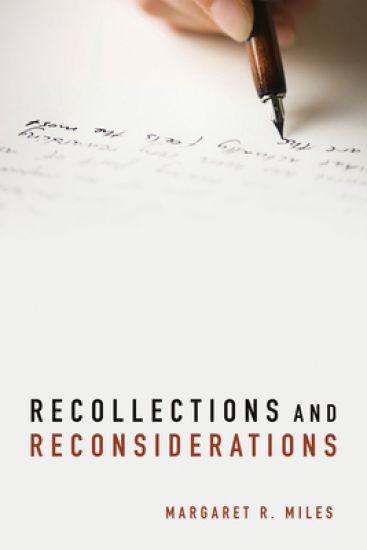
Several years before his death, Augustine of Hippo reviewed his published works, commenting on his purpose in writing each, and correcting, from his present perspective, the mistakes he noticed. Inspired by Augustine's Retractationes, Miles's Recollections and Reconsiderations undertakes a similar project, a critical review of almost fifty years of her publications. Rereading and rethinking in chronological order effectively bonds life and thought into a corpus, a body of work with consistent values and interests. Such a review would be an illuminating project for any longtime scholar/student--both rewarding and humbling, an exercise in self-knowledge. Informed by a lifetime of studying Christian traditions, Miles concludes by describing both endemic problems with Christianity, and what she sees is its essence and beauty. ""This is no mere intellectual memoir. St. Augustine writes, 'I feed you with what nourishes me.' Miles embodies precisely this, and we are all nourished by our reading of her generous book. Unflinchingly honest, Miles teaches us that scholarship is more a way of life than a career. She teaches us that scholarly skills help us form life skills, and that the solitude of the scholar is perfected in dialogue. Among scholars she is the last of a breed."" --Martin Laird, OSA, Villanova University Margaret R. Miles is Emerita Professor of Historical Theology at the Graduate Theological Union, Berkeley, California. She is most recently the author of The Long Goodbye: Dementia Diaries (2017).
Education is about learning to think. Much of what we call thinking, however, is a hodge-podge of repetitious self-talk, opinion, and cutting and pasting of second-hand ideas. Moreover, thinking in the present has often been alien to scholars who were tempted to think abstractly. But life and thought belong together and require each other, as Plotinus pointed out many centuries ago: "" T]he object of contemplation is living and life, and the two together are one"" (Ennead 3.8.8). Presently, many women and men in the academic world are thinking concretely within the context of their own lives and with acknowledged accountability to broader communities with whom they think and to whom they are answerable. The essays in this volume consider Christianity as an aspect of North American culture, bringing the critical tools of the academy to thinking about some of the perplexing and pressing problems of contemporary public life. Three interactive and interdependent themes traverse these essays: gender, the effects of media culture, and institutions. Each of these themes has been central to Margaret Miles's work for thirty years. Each understands corporeality as fundamental both to subjectivity and society. Miles finds that Christianity, critically appropriated, provides ideas and methods for thinking concretely about life in North American society. Through her prolific career Margaret Miles has focused her scholarly sensibilities on the history of Christianity in conjunction with real and abiding social concerns. Not least of these are the problems and promises of gender relations. In this collection of essays, she turns her critical gaze upon food and film, media and mythology, delight and desire, as she examines the verbal and visual dimensions that comprise institutional, personal, communal, and artistic bodies. Miles mines the history of Christianity for ways to overcome our contemporary dis-ease with bodies. Incisively descriptive, Miles nonetheless remains unafraid to write prescriptions. --S. Brent Plate, author of Blasphemy: Art that Offends and Religion and Film: Cinema and the Re-Creation of the World This collection of essays, written over two decades, displays Margaret Miles's remarkable breadth as a theologian, administrator, and cultural critic. With equal adeptness, she brings ancient theological insights to bear on contemporary culture and sheds critical, historical light on Christianity. The essays are written with elegance, humor, and acuity, and their subject matter offers something for almost everyone--from film to sexuality, asceticism to pleasure, philosophical reflection to institutional strategy. But they are unified by a single quest--for embodied, passionate life in all its fullness. Following that pilgrimage through these essays, one cannot help but breathe and think more deeply. --Kathleen Sands, Associate Professor and Director of Religious Studies at the University of Massachusetts, Boston Margaret R. Miles is Emerita Professor of Historical Theology, the Graduate Theological Union, Berkeley. She was Bussey Professor of Theology at the Harvard University Divinity School until 1996, when she became Dean and Academic Vice President of the Graduate Theological Union. Her books include A Complex Delight: The Secularization of the Breast, 1350-1750 (2008), Rereading Historical Theology: Before, During, and After Augustine (2008), The Word Made Flesh: A History of Christian Thought (2005), and Plotinus on Body and Beauty (1999).
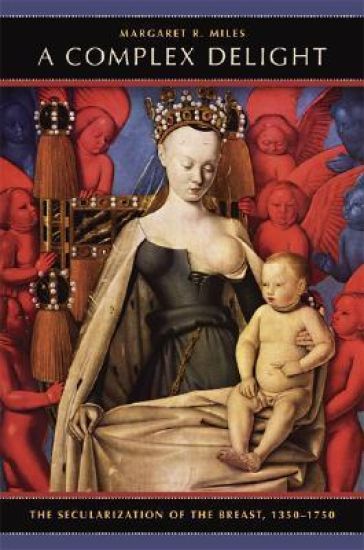
Looking at painting and sculpture from the fourteenth through the eighteenth centuries, this provocative work focuses on the symbolism of the female breast to open a dazzling interpretive view of Western European history over four centuries. Margaret R. Miles finds that while in 1350 the Virgin's bare breast represented nourishment and loving care - God's provision for the Christian - by 1750, artistic representations of the breast were either erotic or medical. The breast had lost its meaning as a religious symbol. But how did the breast, and nakedness more generally, lose the ability to represent human bodies as site and symbol of religious subjectivity and commitment? To explore this phenomenon, Miles engages in a wide-ranging investigation of the social, cultural, and religious circumstances within which a religious symbol came to be thoroughly "mastered" by erotic and medical meanings. What emerges is a nuanced understanding of the location of power in early modern Western Europe, of how the lives of women changed over this period, of how art reveals and helps to construct religious meaning, and of how modern Christianity's attitude toward bodies was shaped.