Kirjojen hintavertailu. Mukana 12 290 406 kirjaa ja 12 kauppaa.

Kirjailija

Margaret Wilkinson

Kirjat ja teokset yhdessä paikassa: 4 kirjaa, julkaisuja vuosilta 2006-2017, suosituimpien joukossa Thought X. Vertaile teosten hintoja ja tarkista saatavuus suomalaisista kirjakaupoista.

4 kirjaa

Kirjojen julkaisuhaarukka 2006-2017.

Thought X

Thought X

Adam Marek; Sarah Schofield; Ian Watson; Margaret Wilkinson; Adam Roberts; Anneliese Mackintosh; Zoe Gilbert; Sandra Alland; Andy Hedgecock; Robin Ince

Comma Press
2017
nidottu
Science is always telling stories. Whether in the creation myths of evolution or the Big Bang, or in the eureka moments of science history, narrative – just as much as metaphor – is a key tool in the scientist’s surprisingly literary toolkit. Perhaps the most interesting use of story is the thought experiment, the intuition pump, that draws on the most instinctive parts of the imagination to crack otherwise perplexing problems. From Newton's Bucket, to Maxwell’s Demon, from Einstein's Lift to Schrödinger’s Cat – all are examples of 'fiction' being used at the highest level, not just to explain, but to deduce, to prove. In this unique anthology, authors have collaborated with leading scientists, to bounce literary, human narratives against purely theoretical ones, alloying together real stories with abstract ones, to produce truly extraordinary results. Featuring leading scientists acting as consultants on the stories, and writing scientific afterwords, bringing the theory featured in the stories to life, including Prof. Sarah Bridle (Jodrell Bank), Prof. Jonathan Wolff and Prof. Frank Jackson (the inventor of the 'Mary's Room' thought experiment).

Changing Minds in Therapy

Changing Minds in Therapy

Margaret Wilkinson

WW Norton Co
2010
sidottu
Recent advances in research in the fields of attachment, trauma, and the neurobiology of emotion have shown that mind, brain, and body are inextricably linked. This new research has revolutionized our understanding of the process of change in psychotherapy and in life, and raised a flurry of questions about the practical application of neuroscience in clinical treatment, particularly with those who have experienced early relational trauma and neglect. What insight does neuroscience offer to our clinical understanding of early life experiences? Can we use the plasticity of the brain to aid in therapeutic change? If so, how? Changing Minds in Therapy explores the dynamics of brain-mind change, translating insights from these new fields of study into practical tips for therapists to use in the consulting room. Drawing from a wide range of clinical approaches and deftly integrating the scholarly with the practical, Margaret Wilkinson presents contemporary neuroscience, as well as attachment and trauma theories, in an accessible way, illuminating the many ways in which cutting edge research may inform clinical practice.
Coming into Mind

Coming into Mind

Margaret Wilkinson

Taylor Francis Ltd
2006
sidottu
Contemporary neuroscience has a valuable contribution to make to understanding the mind-brain. Coming into Mind aims to bridge the gap between theory and clinical practice, demonstrating how awareness of the insights gained from neuroscience is essential if the psychological therapies are to maintain scientific integrity in the twenty-first century. Margaret Wilkinson introduces the clinician to those aspects of neuroscience which are most relevant to their practice, guiding the reader through topics such as memory, brain plasticity, neural connection and the emotional brain. Detailed clinical case studies are included throughout to demonstrate the value of employing the insights of neuroscience. The book focuses on the affect-regulating, relational aspects of therapy that forge new neural pathways through emotional connection, forming the emotional scaffolding that permits the development of mind. Subjects covered include: Why neuroscience? The early development of the mind-brain Un-doing dissociation The dreaming mind-brain The emergent selfThis book succeeds in making cutting-edge research accessible, helping mental health professionals grasp the direct relevance of neuroscience to their practice. It will be of great interest to Jungian analysts, psychoanalysts, psychodynamic psychotherapists and counsellors.
Coming into Mind

Coming into Mind

Margaret Wilkinson

Taylor Francis Ltd
2006
nidottu
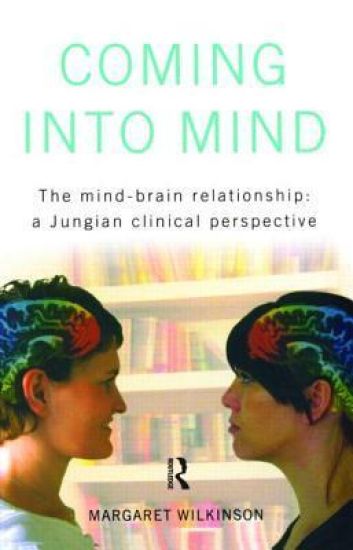
Contemporary neuroscience has a valuable contribution to make to understanding the mind-brain. Coming into Mind aims to bridge the gap between theory and clinical practice, demonstrating how awareness of the insights gained from neuroscience is essential if the psychological therapies are to maintain scientific integrity in the twenty-first century. Margaret Wilkinson introduces the clinician to those aspects of neuroscience which are most relevant to their practice, guiding the reader through topics such as memory, brain plasticity, neural connection and the emotional brain. Detailed clinical case studies are included throughout to demonstrate the value of employing the insights of neuroscience. The book focuses on the affect-regulating, relational aspects of therapy that forge new neural pathways through emotional connection, forming the emotional scaffolding that permits the development of mind. Subjects covered include: Why neuroscience? The early development of the mind-brain Un-doing dissociation The dreaming mind-brain The emergent selfThis book succeeds in making cutting-edge research accessible, helping mental health professionals grasp the direct relevance of neuroscience to their practice. It will be of great interest to Jungian analysts, psychoanalysts, psychodynamic psychotherapists and counsellors.