Kirjojen hintavertailu. Mukana 12 657 676 kirjaa ja 12 kauppaa.

Kirjailija

Margaretta Jolly

Kirjat ja teokset yhdessä paikassa: 4 kirjaa, julkaisuja vuosilta 2008-2021, suosituimpien joukossa Sisterhood and After. Vertaile teosten hintoja ja tarkista saatavuus suomalaisista kirjakaupoista.

4 kirjaa

Kirjojen julkaisuhaarukka 2008-2021.

Sisterhood and After

Sisterhood and After

Margaretta Jolly

Oxford University Press Inc
2021
nidottu
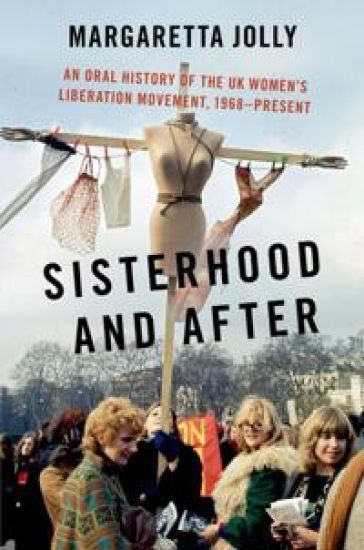
This ground-breaking history of the UK Women's Liberation Movement shows why and how feminism's 'second wave' mobilized to demand not just equality but social and gender transformation. Oral history testimonies power the work, tracing the arc of a feminist life from 1950s girlhoods to late life activism today. Peppered with personal stories, the book casts new light on feminist critiques of society and on the lives of prominent and grassroots activists. Margaretta Jolly uses oral history as creative method, making significant use of Sisterhood and After: The Women's Liberation Oral History Project to animate still-unresolved controversies of race, class, sexuality, disability, and feminist identity. Women activists vividly recall a divisive education system, the unevenness of sexual liberation and the challenges of Thatcherism, Northern Ireland's Troubles and the policing of minority ethnic communities. They illuminate key campaigns in these wider contexts, and talk of the organizational and collaborative skills they struggled to acquire as they moved into local government, NGOs and even the business sector. Jolly provides fresh insight into iconic actions including the Miss World Protest, the fight to protect abortion rights, and the peace protest at Greenham Common. Her accounts of workplace struggles, from Ford and Grunwick to Women Against Pit Closures and Women and Manual Trades, show how socialist ideals permeated feminism. She explores men's violence and today's demands for trans-liberation as areas of continuing feminist concern. Jolly offers a refreshingly jargon-free exploration of key debates and theoretical trends, alongside an appreciation of the joyfully personal aspects of feminism, from families, homes, shopping and music to relationships, health, aging, death and faith. She concludes by urging readers to enter the archives of feminist memory to help map their own political futures. Her work will appeal to general readers, scholars and practitioners alike.
Sisterhood and After

Sisterhood and After

Margaretta Jolly

Oxford University Press Inc
2019
sidottu
This ground-breaking history of the UK Women's Liberation Movement shows why and how feminism's 'second wave' mobilized to demand not just equality but social and gender transformation. Oral history testimonies power the work, tracing the arc of a feminist life from 1950s girlhoods to late life activism today. Peppered with personal stories, the book casts new light on feminist critiques of society and on the lives of prominent and grassroots activists. Margaretta Jolly uses oral history as creative method, making significant use of Sisterhood and After: The Women's Liberation Oral History Project to animate still-unresolved controversies of race, class, sexuality, disability, and feminist identity. Women activists vividly recall a divisive education system, the unevenness of sexual liberation and the challenges of Thatcherism, Northern Ireland's Troubles and the policing of minority ethnic communities. They illuminate key campaigns in these wider contexts, and talk of the organizational and collaborative skills they struggled to acquire as they moved into local government, NGOs and even the business sector. Jolly provides fresh insight into iconic actions including the Miss World Protest, the fight to protect abortion rights, and the peace protest at Greenham Common. Her accounts of workplace struggles, from Ford and Grunwick to Women Against Pit Closures and Women and Manual Trades, show how socialist ideals permeated feminism. She explores men's violence and today's demands for trans-liberation as areas of continuing feminist concern. Jolly offers a refreshingly jargon-free exploration of key debates and theoretical trends, alongside an appreciation of the joyfully personal aspects of feminism, from families, homes, shopping and music to relationships, health, aging, death and faith. She concludes by urging readers to enter the archives of feminist memory to help map their own political futures. Her work will appeal to general readers, scholars and practitioners alike.
In Love and Struggle

In Love and Struggle

Margaretta Jolly

Columbia University Press
2010
pokkari
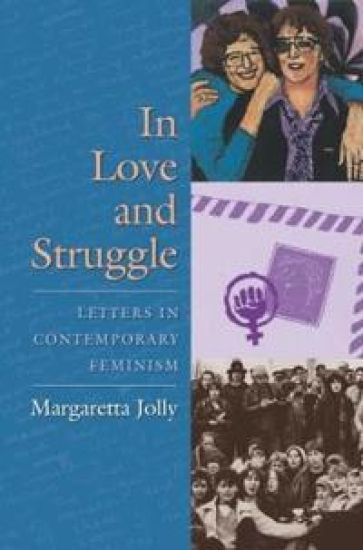
Winner of the 2009 Feminist and Women's Studies Association Book Prize Do you think I can be a feminist mother? Did I make you and your kisses up in my mind? Will you join our military protest at the gate? Will you feed the kids when I'm in prison? Are you able to forgive me for breaking off this correspondence because you are a man? During the women's movement of the 1970s and 1980s, feminists in the United States and Britain reinvented the image of the woman letter writer. Symbolically tearing up the love letter to an absent man, they wrote passionate letters to one another, exploring questions of sexuality, separatism, and strategy. These texts speak of the new interest women began to feel in one another and the new demands--and disappointments--these relationships would create. Margaretta Jolly provides the first cultural study of these letters, charting the evolution of feminist political consciousness from the height of the women's movement to today's e-mail networks. Jolly uncovers the passionate, contradictory emotions of both politics and letter writing and sets out the theory behind them as a fragile yet persistent ideal of care ethics, women's love, and epistolary art. She follows several compelling feminist relationships sustained through writing and confronts the mixed messages of the "open letter," which complicated political relations between women (such as Audre Lorde's "Open Letter to Mary Daly," which called out white feminists for their implicit racism). Jolly recovers the unsung literature of lesbianism and feminist romance, examines the ambivalent feelings within mother-daughter correspondences, and considers letter-writing campaigns during the peace movement. She concludes with a discussion of the ethical dilemma surrounding care versus autonomy and the meaning behind the burning or saving of letters. Letters that chart love stories, letters stowed away in attics, letters burnt at the end of romances, bittersweet letters written but never sent...this fascinating glimpse into women's intimate archives illuminates one of feminism's central concerns--that all relationships are political--and uniquely recasts a social movement in very emotional terms.
In Love and Struggle

In Love and Struggle

Margaretta Jolly

Columbia University Press
2008
sidottu
Winner of the 2009 Feminist and Women's Studies Association Book Prize Do you think I can be a feminist mother? Did I make you and your kisses up in my mind? Will you join our military protest at the gate? Will you feed the kids when I'm in prison? Are you able to forgive me for breaking off this correspondence because you are a man? During the women's movement of the 1970s and 1980s, feminists in the United States and Britain reinvented the image of the woman letter writer. Symbolically tearing up the love letter to an absent man, they wrote passionate letters to one another, exploring questions of sexuality, separatism, and strategy. These texts speak of the new interest women began to feel in one another and the new demands--and disappointments--these relationships would create. Margaretta Jolly provides the first cultural study of these letters, charting the evolution of feminist political consciousness from the height of the women's movement to today's e-mail networks. Jolly uncovers the passionate, contradictory emotions of both politics and letter writing and sets out the theory behind them as a fragile yet persistent ideal of care ethics, women's love, and epistolary art. She follows several compelling feminist relationships sustained through writing and confronts the mixed messages of the "open letter," which complicated political relations between women (such as Audre Lorde's "Open Letter to Mary Daly," which called out white feminists for their implicit racism). Jolly recovers the unsung literature of lesbianism and feminist romance, examines the ambivalent feelings within mother-daughter correspondences, and considers letter-writing campaigns during the peace movement. She concludes with a discussion of the ethical dilemma surrounding care versus autonomy and the meaning behind the burning or saving of letters. Letters that chart love stories, letters stowed away in attics, letters burnt at the end of romances, bittersweet letters written but never sent...this fascinating glimpse into women's intimate archives illuminates one of feminism's central concerns--that all relationships are political--and uniquely recasts a social movement in very emotional terms.