Kirjojen hintavertailu. Mukana 12 390 323 kirjaa ja 12 kauppaa.
Kirjailija
Margarita Espino Calderon
Kirjat ja teokset yhdessä paikassa: 6 kirjaa, julkaisuja vuosilta 2010-2024, suosituimpien joukossa Breaking Down the Wall. Vertaile teosten hintoja ja tarkista saatavuus suomalaisista kirjakaupoista.
Margarita Espino Calderon; Maria G. Dove; Diane Staehr Fenner; Margo Gottlieb; Andrea Honigsfeld; Tonya W. Singer; Shawn M. Sinclair-Slakk; Ivannia Soto; Debbie Zacarian
It was a dark and stormy night in Santa Barbara. January 19, 2017. The next day’s inauguration drumroll played on the evening news. Huddled around a table were nine Corwin authors and their publisher, who together have devoted their careers to equity in education. They couldn’t change the weather, they couldn’t heal a fractured country, but they did have the power to put their collective wisdom about EL education upon the page to ensure our multilingual learners reach their highest potential. Proudly, we introduce you now to the fruit of that effort: Breaking Down the Wall: Essential Shifts for English Learners’ Success. In this first-of-a-kind collaboration, teachers and leaders, whether in small towns or large urban centers, finally have both the research and the practical strategies to take those first steps toward excellence in educating our culturally and linguistically diverse children. It’s a book to be celebrated because it means we can throw away the dark glasses of deficit-based approaches and see children who come to school speaking a different home language for what they really are: learners with tremendous assets. The authors’ contributions are arranged in nine chapters that become nine tenets for teachers and administrators to use as calls to actions in their own efforts to realize our English learners’ potential: 1. From Deficit-Based to Asset-Based 2. From Compliance to Excellence 3. From Watering Down to Challenging 4. From Isolation to Collaboration 5. From Silence to Conversation 6. From Language to Language, Literacy, and Content 7. From Assessment of Learning to Assessment for and as Learning 8. From Monolingualism to Multilingualism 9. From Nobody Cares to Everyone/Every Community Cares Read this book; the chapters speak to one another, a melodic echo of expertise, classroom vignettes, and steps to take. To shift the status quo is neither fast nor easy, but there is a clear process, and it’s laid out here in Breaking Down the Wall. To distill it into a single line would go something like this: if we can assume mutual ownership, if we can connect instruction to all children’s personal, social, cultural, and linguistic identities, then all students will achieve.
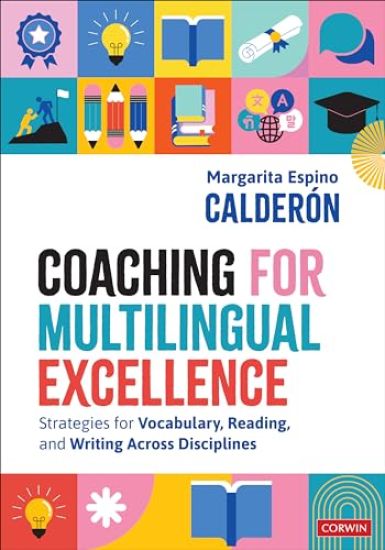
Be the instructional coach multilingual students and their teachers need. As the population of multilingual learners (MLs) in K–12 schools continues to grow, instructional coaches must support content teachers to recognize these students’ assets and address their linguistic, cultural, academic, and social-emotional needs. Leveraging her decades of facilitating and coaching experience in the fields of language, literacy, and professional learning, Margarita Calderón meets this urgent need with practical, evidence-based strategies to leverage the power of coaching in support of ML excellence. Through the individual chapters dedicated to academic language, reading, and writing instruction and strategies to promote student discourse and social-emotional learning embedded throughout, this book will give coaches what they need to guide all teachers toward ML excellence. Additional features include A step-by-step framework designed to help coaches promote teacher efficacy with MLs regardless of program setting or instructional approachClear guidance for how to structure coaching sessions with teachers, driven by research-based approaches and observation and feedback protocols for accelerating student comprehensionMyth-busting facts about the do’s and don'ts of effective coaching for ML successSpotlights on the experiences of veteran coaches focusing on successes, challenges, and tips to remain resilientIndividual and group reflection questions and tools at the close of each chapter Offering solutions to the challenges faced by MLs that content area teachers must be prepared to address, this book is a powerful tool coaches can use to move multilingual instruction beyond compliance to excellence.
Ivannia Soto; Sydney Cail Snyder; Margarita Espino Calderon; Margo Gottlieb; Andrea Honigsfeld; Joan R. Lachance; Margarita Marshall; David Nungaray; Rubí Flores; Lyn Scott
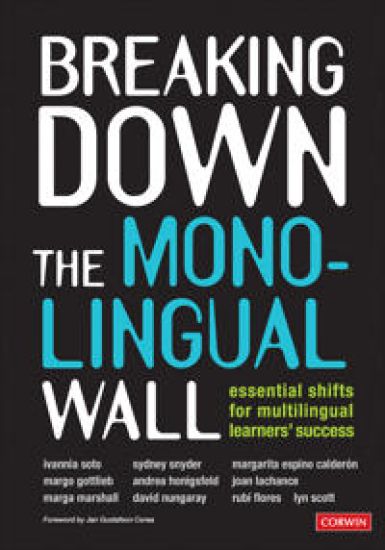
Your guide to culturally and linguistically sustaining practices in your dual language classroom and school. It’s time to set the record straight: Multilingualism is a tremendous asset that must be nurtured and valued and the most effective pathway to multilingualism is dual language education. Despite significant evidence attesting to the cognitive, social/emotional, and economic benefits of multilingualism, the majority of our classrooms and schools are monolingual. Encouragingly, recent shifts in state policies have increased the demand for dual language programming in our schools. This increased momentum brings new challenges, including the need for more bilingually authorized teachers, high-quality instructional resources, and accurate assessment and accountability in the target languages of instruction. With contributions from ten experts in multilingual education, Breaking Down the Monolingual Wall outlines the systemic and pedagogical approaches necessary for successful multilingual and dual language programs. The book supports educators to: Shift the paradigm from one that is subtractive and deficit-based to one that is additive and assets-basedEmbed culturally and linguistically sustaining practices in their instructionUnderstand how to promote multilingualism in the context of teaching academic contentDevelop assessments as, for, and of learning in multiple languages.Lead high-quality dual language schools and programsRecruit and retain highly qualified bilingual educators Offering a comprehensive overview of bilingual policies and historical context all educators should understand, Breaking Down the Monolingual Wall is an invaluable guide to creating dual language learning environments that build on the precious assets of our multilingual students and families.
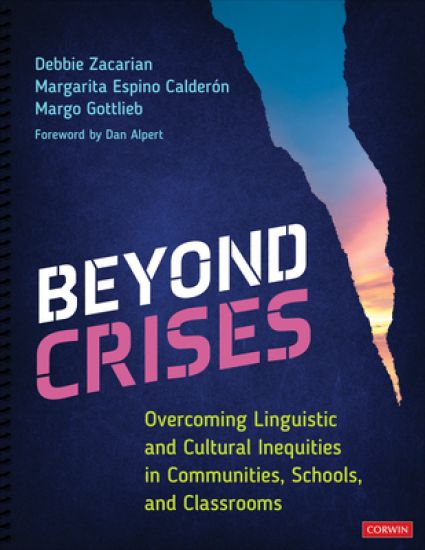
What are some lessons learned from the pandemic? We learned that, in times of crises, the humanitarian needs of students, families, and ourselves must be a top priority. We learned that forming effective partnerships with families and communities is essential to the health and well-being of our children. We were offered a blunt reminder that a system designed to serve the interests of a privileged few was destined to fail our historically underserved students, especially our millions of multilingual learners. Above all, we learned that the "normal" many of us have yearned for was never good enough—that we must envision a "better world," where we build on our multilingual students’ unique assets and cultivate their inner brilliance. Only then will we deliver on their promise. It’s this "better world," a world in which communities, schools, and classrooms work together as a "whole-child ecosystem," Beyond Crises: Overcoming Linguistic and Cultural Inequities in Communities, Schools, and Classrooms sets out to create. Taking a look from the outside in, Debbie Zacarian, Margarita Calderón, and Margo Gottlieb address three critical arenas: 1. Imagining Communities describes how to design and enact strengths-based family and community partnerships, including the critical importance of identifying, valuing, and acknowledging each member’s assets and competencies, and the ways recent crises have amplified their struggles. 2. Imagining Schools takes an up-close look at policies, structures, and now irrelevant ways of schooling that call for change and how we might reconfigure professional development to ensure every teacher and administrator is dedicated to the well-being and success of our multilingual learners. 3. Imagining Classrooms demonstrates how to optimize learning opportunities—both virtual and face-to-face—so our diverse students grow cognitively, linguistically, and social-emotionally, and accentuate their talents in knowing and using multiple languages in linguistically and culturally sustainable environments. "Student and family, classroom, school, and local community are not silos unto themselves," Debbie, Margarita, and Margo insist. "They are part of a larger whole that is interrelated and interconnected and, even, interdependent on each other. By forming stronger alliances, we can realize the power of truly working, socializing, and flourishing together." Beyond Crises is the first critical step forward.
By now it's a given: if we're to help our ELLs and SELs access the rigorous demands of today's content standards, we must cultivate the "code" that drives school success: academic language. Look no further for assistance than this much-anticipated series from Ivannia Soto, in which she invites field authorities Jeff Zwiers, David and Yvonne Freeman, Margarita Calderon, and Noma LeMoine to share every teacher's need-to-know strategies on the four essential components of academic language.The subject of this volume is vocabulary. Here, Margarita Calderon reveals how vocabulary is best taught as a tool for completing and constructing more complex messages. With this book as your roadmap, you'll learn how to:Teach high-frequency academic words and discipline-specific vocabulary across content areasUtilize strategies for teaching academic vocabulary, moving students from Tier 1 to Tiers 2 and 3 words and selecting appropriate words to teachAssess vocabulary growth as you goOur vocabulary instruction must come from the texts our ELLs and SELs are about to read, not from a set of activities that teach words in isolation. This guidebook will help you get started as early as tomorrow. Better yet, read all four volumes in the series and put in place an all-in-one instructional plan for closing the achievement gap.
After decades of experimentation with teaching language minority students, we are still confronted with an achievement gap between these students and their White Anglo counterparts that refuses to close. This gap widens, as students get older. This book is designed to help leadership teams at the school, district, and state levels to develop, implement and evaluate effective programmes for ELLs and all other students. Grounded in the author's extensive research on professional development and effective ELL instruction, the authors describe how professional development programmes integrate language, literacy, and subject matter for better results.