Kirjojen hintavertailu. Mukana 12 595 353 kirjaa ja 12 kauppaa.

Kirjailija

Margot Liberty

Kirjat ja teokset yhdessä paikassa: 9 kirjaa, julkaisuja vuosilta 1993-2022, suosituimpien joukossa Songs and Snippets. Vertaile teosten hintoja ja tarkista saatavuus suomalaisista kirjakaupoista.

9 kirjaa

Kirjojen julkaisuhaarukka 1993-2022.

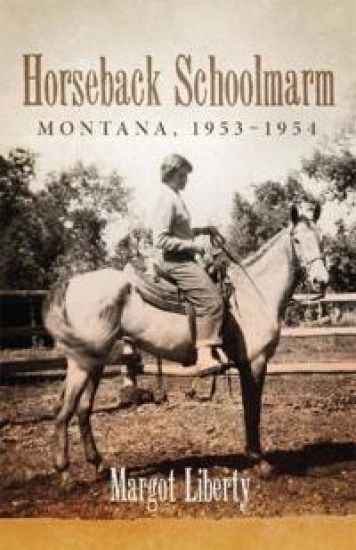
Horseback Schoolmarm

Horseback Schoolmarm

Margot Liberty

UNIVERSITY OF OKLAHOMA PRESS
2022
nidottu
In 1953, Margot Pringle, newly graduated from Cornell University, took a job as a teacher in a one-room school in rural eastern Montana, sixty miles southeast of Miles City. “Miss Margot,” as her students called her, would teach at the school for one year. This book is the memoir she wrote then, published here for the first time, under her married name. Filled with humor and affection for her students, Horseback Schoolmarm recounts Liberty’s coming of age as a teacher, as well as what she taught her students. Margot’s school was located on the SH Ranch, whose owner needed a way to retain his hired hands after their children reached school age. Few teachers wanted to work in such remote and primitive circumstances. Margot lived alone in a “teacherage,” hardly more than a closet at one end of the schoolhouse. It had electricity but no phone, plumbing, or running water. She drew water from a well outside. The nearest house was a half-mile away. Margot had a car, but she had to park it so far away, she kept her saddle horse, Orphan Annie, in the schoolyard. Miss Margot started with no experience and no supplies, but her spunk and inventiveness, along with that of her seven students, made the school a success. Evocative of Laura Ingalls Wilder’s school-teaching experiences some eighty years earlier, Horseback Schoolmarm gives readers a firsthand look at an almost forgotten—yet not so distant—way of life.
A Cheyenne Voice

A Cheyenne Voice

John Stands In Timber; Margot Liberty; Raymond J. DeMallie

University of Oklahoma Press
2019
nidottu
Rarely does a primary source become available that provides new and significant information about the history and culture of a famous American Indian tribe. With A Cheyenne Voice, readers now have access to a vast ethnographic and historical trove about the Cheyenne people - much of it previously unavailable.A Cheyenne Voice contains the complete transcribed interviews conducted by anthropologist Margot Liberty with Northern Cheyenne elder John Stands In Timber (1882-1967). Recorded by Liberty in 1956-1959 when she was a schoolteacher on the Northern Cheyenne Indian Reservation in southeastern Montana, the interviews were the basis of the well-known 1967 book Cheyenne Memories. While that volume is a noteworthy edited version of the interviews, this volume presents them word for word, in their entirety, for the first time. Along with memorable candid photographs, it also features a unique set of maps depicting movements by soldiers and warriors at the Battle of the Little Bighorn. Drawn by Stands In Timber himself, they are reproduced here in full color. The diverse topics that Stands In Timber addresses range from traditional stories to historical events, including the battles of Sand Creek, Rosebud, and Wounded Knee. Replete with absorbing, and sometimes even humorous, details about Cheyenne tradition, warfare, ceremony, interpersonal relations, and everyday life, the interviews enliven and enrich our understanding of the Cheyenne people and their distinct history.
Horseback Schoolmarm

Horseback Schoolmarm

Margot Liberty

University of Oklahoma Press
2016
sidottu
In 1953, Margot Pringle, newly graduated from Cornell University, took a job as a teacher in a one-room school in rural eastern Montana, sixty miles southeast of Miles City. ""Miss Margot,"" as her students called her, would teach at the school for one year. This book is the memoir she wrote then, published here for the first time, under her married name. Filled with humor and affection for her students, Horseback Schoolmarm recounts Liberty's coming of age as a teacher, as well as what she taught her students. Margot's school was located on the SH Ranch, whose owner needed a way to retain his hired hands after their children reached school age. Few teachers wanted to work in such remote and primitive circumstances. Margot lived alone in a ""teacherage,"" hardly more than a closet at one end of the schoolhouse. It had electricity but no phone, plumbing, or running water. She drew water from a well outside. The nearest house was a half-mile away. Margot had a car, but she had to park it so far away, she kept her saddle horse, Orphan Annie, in the schoolyard. Miss Margot started with no experience and no supplies, but her spunk and inventiveness, along with that of her seven students, made the school a success. Evocative of Laura Ingalls Wilder's school-teaching experiences some eighty years earlier, Horseback Schoolmarm gives readers a firsthand look at an almost forgotten - yet not so distant - way of life.
Working Cowboy

Working Cowboy

Margot Liberty; Barry Head

University of Oklahoma Press
2002
nidottu
In Working Cowboy, Margot Liberty and Barry Head present the oral history of Ray Holmes, a Wyoming cowboy born in 1911. Holmes has spent his life on horseback, herding cattle and doing other work with livestock. Since the time he rode his first horse, Holmes wanted nothing more than to be a cowboy--though his father insisted he would never make a living at it. The determination that started him on his dream has stayed with him throughout his life. Holmes remains a quiet man, averse to bragging but is candid and strongly opinionated.Practical chapters, such as ""Some Talk about Cowboys"" and ""Some Talk about Calves and Calving,"" alternate with chapters describing Holmes's colorful life, including his coping with the blizzard of 1959, listening to the very first radio in the neighborhood, and sleeping with potatoes to keep them from freezing.
American Indian Intellectuals of the Nineteenth and Early Twentieth Centuries
Based on papers delivered at the 1976 meeting of the American Ethnological Society, American Indian Intellectuals of the Nineteenth and Early Twentieth Centuries offers biographical sketches of major American Indian scholars and historians between 1828 and 1975.Edited by Margot Liberty, this book includes important individuals from throughout the United States, including the Northwest Coast (William Beynon), the Great Basin(Sarah Winnemucca), the Southwest(Flora Zuni), the Northeast (Jesse Cornplanter, Alexander General, Arthur Parker, and Ely Parker), and the Plains (George Bushotter, Charles Eastman, Francis La Flesche, John Joseph Mathews, James Murie, and Bill Shakespeare). As liberty notes in her introduction, the biographies of these individuals are marked by the ""awareness of life-ways precious because they were unique, each in its own way, and more precious because they were rapidly vanishing. Linked to this awareness was dedication to the task of preserving at least something for the future ….There is no more poignant record of the pressures of acculturation than some of the personal vignettes presented here.""
Cheyenne Memories

Cheyenne Memories

John Stands In Timber; Margot Liberty

Yale University Press
1998
pokkari
This classic work is an oral history of the Cheyenne Indians from legendary times to the early reservation years, a collaborative effort by the Cheyenne tribal historian, John Stands in Timber, and anthropologist Margot Liberty. Published in 1967, the book now has an updated bibliography and a new preface by Liberty, in which she shares her recollections of Stands in Timber and describes the circumstances of the Cheyenne over the past thirty years.Stands in Timber was born in 1882, a few years after his grandfather was killed in the Custer battle. In this book he recounts tribal myths and sacred rituals, conflict with traditional enemies and whites, and eventual “civilization” and settlement on a reservation. The retelling of Cheyenne traditions formed an important part of Stands in Timber’s life from early childhood, and on his return from school in 1905 he became the primary keeper of the oral literature of his people, seeking out every elder who could contribute personal memories to Cheyenne lore. In 1956 he met Margot Liberty, then an Indian Affairs Bureau teacher, who helped him tape-record more than thirty hours of recollections. From these she compiled this unique and lively folk history, one based on a longtime inside view that can never be duplicated.“This is an extraordinarily fascinating book, . . . a book that all Americans, Indians as well as non-Indians, will treasure.”—Alvin M. Josephy, Jr.
Hell on Horses and Women

Hell on Horses and Women

Alice Marriott; Margot Liberty

University of Oklahoma Press
1993
nidottu
The world of the West has been from the beginning a man's world, but there are homes and wives and children there, too. And although the time of water hauled in barrels and of homemade candles is long past, the ranch wife of today must be prepared to deal with housekeeping, shopping, and personal problems in wholly original ways as the need arises. For ranches are usually far from town and neighbors are scattered, so that good humor and a good sense of humor, as well as the more conventional virtues of courage and fortitude, must be possessed by the ranch woman.For more than eighteen months Alice Marriott traveled the cattle country from Wyoming to Florida-visiting, observing, and talking with the women on the ranches and with their men. This book is the story of these women, who share with their men-folks the problems and pleasures of ranch life. It's about the city girl transformed into ranch wife, about the women who were born on ranches, and about their families and the cattle they raise.She reports on the modern roundups, the cattle sales, the courage of both men and women in the face of a howling blizzard, and the tragedy of a cow with a broken leg. Here they are-the real people of the cattle country and the real things that happen to them in a society in which the man's work is sharply distinguished from the woman's.And, concludes Miss Marriott, ranch life ""can be hard and tough and truly hell for the women who live it, but it can also come about as close to Heaven as any life a woman can live today."" This is a book for Western enthusiasts, for women everywhere, and for just good reading.