Kirjailija
Margot Sunderland
Kirjat ja teokset yhdessä paikassa: 44 kirjaa, julkaisuja vuosilta 1999-2024, suosituimpien joukossa Willy and the Wobbly House. Vertaile teosten hintoja ja tarkista saatavuus suomalaisista kirjakaupoista.
44 kirjaa
Kirjojen julkaisuhaarukka 1999-2024.
Understand key stages in your child's development and discover effective parenting strategies from experts in education and neuroscience.What Every Parent Needs to Know delves into the latest research on child brain development and applies it to real-life scenarios that all parents face. This isn't one person's opinion or experience of parenting. Director of Education at the Centre for Child Mental Health, Margot Sunderland, together with research from Professor Jaak Panksepp, who has studied the emotional brain for over 30 years, presents evidence-based strategies for parents looking for trusted information and guidance on how best to raise their family.Alongside detailed information on how the child's brain works, anatomical illustrations present the science while case studies and Q and As apply the science to everyday situations. Parenting strategies span from sleep training your newborn right through to soothing your 12-year-old, addressing separation, anxiety, social development and more. This book not only focuses on your child's needs but also on yours as a parent with advice on looking after yourself too. New material on child mental health completes this new edition making it the ultimate parenting tome.
This is a story for children who are anxious or obsessional. Willy is an anxious boy who experiences the world as a very unsafe, wobbly place where anything awful might happen at any time. Joe, the boy next door, is too ordered and tidy to be able to ever really enjoy life. Follow their adventures with the Puddle People who help them break out of their fixed patterns and find far richer ways of living in the world.
This is a story for children with troubled parents. Monica has a horrid problem. It gets everywhere: into her schoolwork, her dreams, and her ability to make friends. People keep telling her to cheer up. She can't. She feels as if she is carrying around some very heavy luggage. Then one day, a helpful teacher sees how miserable Monica is, and tells her about the knights in the world, who are posing as people. In a whispering wood, Monica finds some of these knights.They teach her how to make her problem far less horrid. In particular they show her how to cope when other people's problems weigh you down and make you feel miserable. Most importantly they show her how to do life well. Monica leaves whispering wood feeling empowered and ready to face what she could not face before.
This is a guidebook to help children who: don't like themselves or feel there is something fundamentally wrong with themhave been deeply shamedhave received too much criticism or haven't been encouraged enoughlet people treat them badly because they feel they don't deserve betterdo not accept praise or appreciation because they feel they don't deserve itfeel defeated by life, fundamentally unimportant, unwanted or unlovablebully because they think they are worthless or think they are worthless because they are bulliedand feel they don't belong or do not seek friends because they think no-one would want to be their friend.
This is a guidebook to help children who:hurt, hit, bite, smash, kick, shout, scream or who are out of control, hyperaroused or hyperactivecan only discharge their angry feelings in verbal or physical attacks, rather than being able to think about and reflect on what they feelare angry because it is easier than feeling hurt or sadare locked in anger or rage because of sibling rivalryare controlling and punitiveregularly defy authority or are diagnosed with a conduct disordercommit cold acts of cruelty, hurt animals or do not cry any more; spoil, damage or destroy what others do or makecreate fear in others because they have locked away their own fearsdo not want to please people, cannot trust, have stopped looking for love or approval or truly believe they do not need anyonedo not really know how to 'like' someone; and, definitely do not know how to love someone or are affectionate only if they want something.
How Hattie Hated Kindness is a story for children locked in rage or hate. Hattie lives by herself on an island. She likes sharks, and crabs and stinging centipedes. She likes anything hard and spiky. Lots of people try to bring kindness to Hattie on her island, but each time she is very horrid to them, smashing and spoiling everything they try to do for her. So after a while they all stop coming to the island. Hattie is very alone. So she sits by the water's edge and tries to figure out why she hates love and loves hate. She thinks it must be because she is a very bad girl indeed. But the lapping water-over-her-toes helps Hattie to understand that because she'd been a very sad and frightened little girl in a too hard world, she had become hard too, so that the awful fear and the awful pain would go away. The lapping-water-over-her-toes helps Hattie to move from cruel to kind. In the end, Hattie builds a bridge to the warm and cosy world across the water.
Helping Children Who Have Hardened Their Hearts or Become Bullies
Margot Sunderland
Speechmark Publishing Ltd
2001
nidottu
This is a guidebook to help children who:bully or take revenge on others for the pain they have felt themselveshave become very defensive because something too painful has happened to themhave hardened their hearts because they have: been too hurt in love; met with too much harshness; witnessed parental violence; been repeatedly hit; been shamed or humiliatedhad too many experiences of not being responded tothink they have lost their parent's love to someone else and have hardened their heart.
Helping Children with Low Self-Esteem & Ruby and the Rubbish Bin
Margot Sunderland
Speechmark Publishing Ltd
1999
nidottu
This practical guidebook, with a beautifully-illustrated storybook, enables teachers, parents and professionals to help children aged 4-12 connect with unresolved feelings affecting their behaviour. Helping Children with Low Self-Esteem is a guidebook to help children who: don't like themselves or feel there is something fundamentally wrong with themhave been deeply shamedhave received too much criticism or haven't been encouraged enoughlet people treat them badly because they feel they don't deserve betterdo not accept praise or appreciation because they feel they don't deserve itfeel defeated by life, fundamentally unimportant, unwanted or unlovablebully because they think they are worthless or think they are worthless because they are bulliedand, feel they don't belong or do not seek friends because they think no-one would want to be their friend. Ruby and the Rubbish Bin is a story for children with low self-esteem. Ruby hates herself so much that she often feels more like a piece of rubbish than a little girl. Sometimes Ruby feels so miserable that she wants to sleep and sleep and never wake up again. Then Ruby meets Dot and, over time, Dot helps Ruby to move from self-hate to self-respect. After a very important dream, and help from Dot, Ruby finds her voice and her anger, and stands up to the bullies. She makes new friends and knows what it's like to feel happy for the first time in her life.
What Every Parent Needs to Know: A Psychologist's Guide to Raising Happy, Nurtured Children
Margot Sunderland
DK Publishing (Dorling Kindersley)
2023
sidottu
Backed by the most up-to-date scientific research, The Science of Parenting, 2nd Edition provides evidence-based parenting advice about how you should care for your child, with practical strategies from birth to 12 years of age. Child psychotherapist Dr. Margot Sunderland has more than 30 years' experience that she brings to this internationally-acclaimed guide, and she provides numerous case studies to relate the science to real life.From separations and time apart to forms of discipline to the latest thinking on screen time, this guide traces the direct effect of different parenting practices on your child's brain. Summaries at the end of every chapter provide key takeaways and make action points simple and clear so you can begin to implement them immediately.As a professional who works with families, Dr. Sunderland is attuned to the struggle of parents juggling lives at work and at home. This second edition of The Science of Parenting provides newly added, invaluable advice on making the most of your time with your child, so that you can forge a strong bond and have a positive relationship.The Science of Parenting remains the greatest work on what science can teach us about parenting and the remarkable effects of love, nurture, and play on a child's development.
Now in a fully updated second edition, this professional guidebook has been created to help adults provide emotional support for children who have experienced the loss of somebody they know, or something they loved.Written in an accessible style and with a sensitive tone, Helping Children with Loss provides adults with a rich vocabulary for mental states and painful emotions, paving the way for meaningful and healing conversations with children who are struggling with difficult feelings. Practical activities provide opportunities for conversation and will empower the child to find creative and imaginative ways of expressing themselves when words fail.Key features of this resource include: Targeted advice for children who defend against feeling their painful feelings by dissociating from grief Tools and strategies for helping children cope with loss, including engaging activities to help children explore their feelings in a non-threatening way Photocopiable and downloadable resources to help facilitate supportWritten by a leading child psychotherapist with over thirty years’ experience, this book will support children to develop emotional literacy and connect with unresolved feelings affecting their behaviour. It is an essential resource for anybody supporting children aged 4-12 who have experienced loss.
The Day the Sea Went Out and Never Came Back: A Story for Children Who Have Lost Someone They Love
Margot Sunderland; Nicky Armstrong
TAYLOR FRANCIS LTD
2022
nidottu
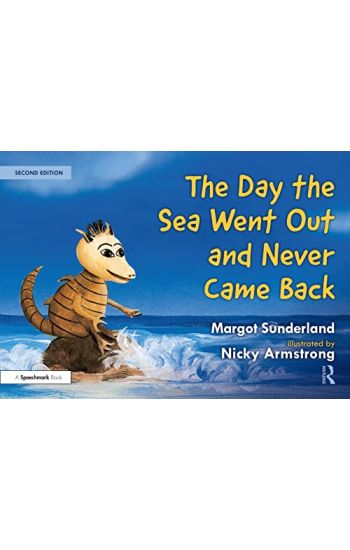
Eric is a sand dragon who loves the sea very much. Each day, he watches it go out, knowing that it will return. But one day, Eric waits and waits, but it does not come back. He falls on the sand, feeling as if he has lost everything. Eric wants to shut himself off from his feelings, but eventually spots a little wildflower growing, and another, and another. He builds a rock pool garden, in memory of the sea that he loves, and learns that it is much better to feel the full pain of his loss, instead of closing his heart. The Day the Sea Went Out and Never Came Back is a story for children who have lost someone they love. The beautiful illustrations and sensitively written story offer a wealth of opportunities to begin a conversation about the difficult emotions that can follow a loss, helping children to acknowledge and express their emotions. The story shows them that it is brave to feel sad, that they are surrounded by support, and that memories of a loved one are a special treasure that can never be lost.Ideal for starting conversations about grief and sadness, this is an essential resource for anybody supporting children aged 4-12 who have experienced loss.
Helping Children with Loss and The Day the Sea Went Out and Never Came Back
Margot Sunderland; Nicky Armstrong
TaylorFrancis Ltd
2022
muu
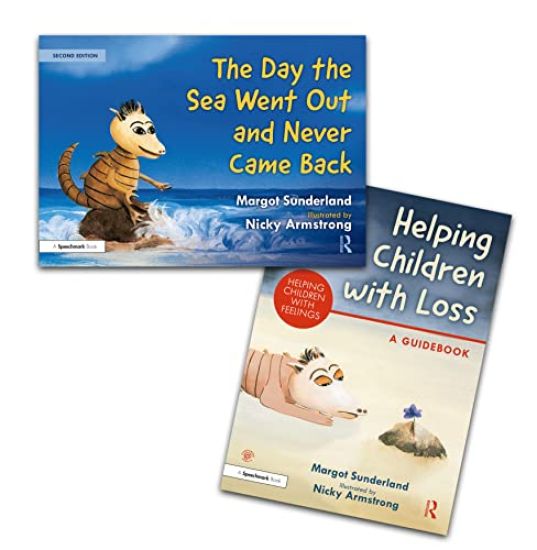
This practical guidebook and beautifully illustrated storybook have been created to help teachers and professionals support children who have experienced loss. The guidebook aids adults in meaningful and healing conversations, whilst the storybook teaches children to acknowledge and express their emotions.
Draw On Your Relationships book and The Relationship Cards
Margot Sunderland; Nicky Armstrong
Routledge
2020
muu
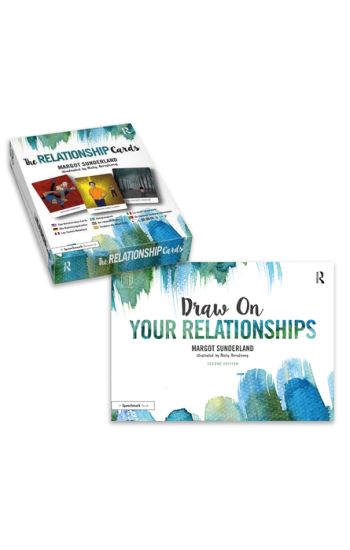
Combined set of Draw on Your Relationships and The Relationship Cards. Draw on Your Relationships is a bestselling resource to help people of all ages express, communicate and deal more effectively with their emotions through drawing. Built around five key themes, each section contains a simple picture exercise with clear objectives, instructions and suggestions for development. The picture activities have been carefully designed to help ease the process of both talking about feelings and exploring life choices, by trying out alternatives safely on paper. This will help to create clarity and new perspectives as a step towards positive action.This revised and updated second edition also contains a new section on how to use the superbly emotive The Relationship Cards (ISBN 9781138071018) to facilitate deeper therapeutic conversations.The Relationship Cards are 48 emotive and artistic images designed to help people to review the key relationships in their lives in a meaningful and often transformative way. The cards provide an engaging way for people to talk about and clarify their feelings, while reflecting on what they value in their relationships and what they might want to change.
Draw on Your Relationships is a bestselling resource to help people of all ages express, communicate and deal more effectively with their emotions through drawing. Built around five key themes, each section contains a simple picture exercise with clear objectives, instructions and suggestions for development. The picture activities have been carefully designed to help ease the process of both talking about feelings and exploring life choices, by trying out alternatives safely on paper. This will help to create clarity and new perspectives as a step towards positive action. Offering a broad range of exercises which can be adapted for any ability or age from middle childhood onwards, this unique book explores a range of emotions surrounding a person’s important life experiences, key memories, relationships, best times, worst times and who they are as a person. This is an essential resource for therapists, educators, counsellors and anyone who engages other people in conversations that matter about their relationship to self, others and life in general. This revised and updated second edition also contains a new section on how to use the superbly emotive The Relationship Cards (ISBN 9781138071018) to facilitate deeper therapeutic conversations.
The Relationship Cards are 48 emotive and artistic images designed to help people to review the key relationships in their lives in a meaningful and often transformative way. The cards provide an engaging way for people to talk about and clarify their feelings, while reflecting on what they value in their relationships and what they might want to change. Spanning both positive and negative states in relationships, the cards show themes such as trust, resentment, fear of abandonment, drifting apart, encouragement and feeling supported. The accompanying booklet explains how to use the cards with participants in a supportive and safe way to facilitate deeper conversations about relationships with people in their lives, past and present. Accompanying translations are provided in German, French, Swedish, Dutch, Spanish, Italian, Portuguese and Japanese.This beautiful resource can be used by educators, therapists or anyone wishing to open a dialogue about relationships. It is also a perfect supplement to Draw on Your Relationships, Margot Sunderland’s bestselling book. The second edition of Draw on Your Relationships contains a new section that explains how to get the most out of combining the activities in the book with these cards to encourage meaningful conversations and take steps towards positive action. Intended for use in educational settings and/or therapy contexts under the supervision of an adult. This is not a toy.
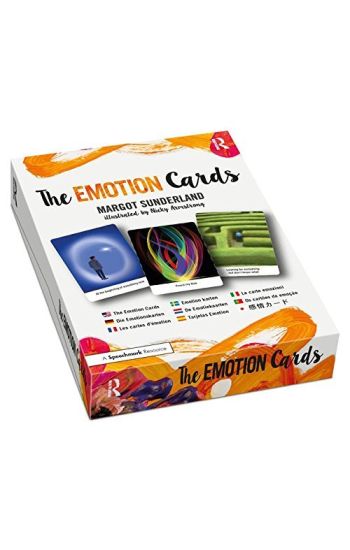
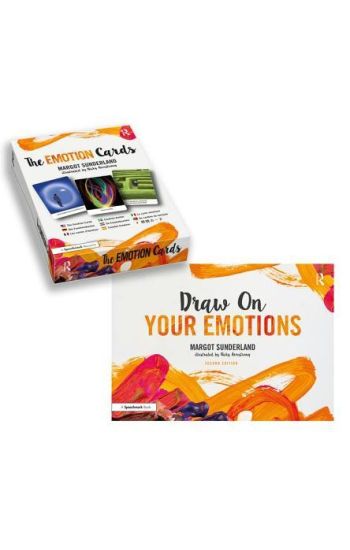
The Emotion Cards are 48 emotive and artistic images designed to help people to review their emotions and their relationships in a meaningful and often transformative way. The cards are designed to capture the deeper truth of how people experience their life, offering poignant descriptions for what someone may be feeling.This beautiful resource is also a perfect supplement to Draw on Your Emotions, Margot Sunderland¹s bestselling book. The second edition of Draw on Your Emotions contains a new section that explains how to get the most out of combining the activities in the book with these cards to encourage meaningful conversations and take steps towards positive action.Intended for use in educational settings and/or therapy contexts under the supervision of an adult. This is not a toy.
Draw On Your Emotions book and The Emotion Cards
Margot Sunderland; Nicky Armstrong
CRC Press Inc
2018
muu
Combined set of Draw on Your Emotions and The Emotions Cards. Draw on Your Emotions is a bestselling resource to help people of all ages express, communicate and deal more effectively with their emotions through drawing. Built around five key themes, each section contains a simple picture exercise with clear objectives, instructions and suggestions for development. The picture activities have been carefully designed to help ease the process of both talking about feelings and exploring life choices, by trying out alternatives safely on paper. This will help to create clarity and new perspectives as a step towards positive action.The second edition of Draw on Your Emotions contains a new section that explains how to get the most out of combining the activities in the book with these cards to encourage meaningful conversations and take steps towards positive action.The Emotion Cards are 48 emotive and artistic images designed to help people to review their emotions and their relationships in a meaningful and often transformative way. The cards are designed to capture the deeper truth of how people experience their life, offering poignant descriptions for what someone may be feeling.
Draw on Your Emotions is a bestselling resource to help people of all ages express, communicate and deal more effectively with their emotions through drawing. Built around five key themes, each section contains a simple picture exercise with clear objectives, instructions and suggestions for development. The picture activities have been carefully designed to help ease the process of both talking about feelings and exploring life choices, by trying out alternatives safely on paper. This will help to create clarity and new perspectives as a step towards positive action.Offering a broad range of exercises which can be adapted for any ability or age from middle childhood onwards, this unique book explores a range of emotions surrounding a person¹s important life experiences, key memories, relationships, best times, worst times and who they are as a person. This is an essential resource for therapists, educators, counsellors and anyone who engages other people in conversations that matter about their relationship to self, others and life in general. This revised and updated second edition also contains a new section on how to use the superbly emotive The Emotion Cards (9781138070981) to facilitate deeper therapeutic conversations.
This practical handbook begins with the philosophy and psychology underpinning the therapeutic value of story telling. It shows how to use story telling as a therapeutic tool with children and how to make an effective response when a child tells a story to you. It is an essential accompaniment to the "Helping Children with Feelings" series and covers issues such as: Why story telling is such a good way of helping children with their feelings? What resources you may need in a story-telling session? How to construct your own therapeutic story for a child? What to do when children tell stories to you? Things to do and say when working with a child's story.