Kirjojen hintavertailu. Mukana 12 657 676 kirjaa ja 12 kauppaa.
Kirjailija
Margrit Pernau
Kirjat ja teokset yhdessä paikassa: 8 kirjaa, julkaisuja vuosilta 2008-2021, suosituimpien joukossa Bürger mit Turban. Vertaile teosten hintoja ja tarkista saatavuus suomalaisista kirjakaupoista.
This Element brings together the history of emotions and temporalities, offering a new perspective on both. Time was often imagined as a movement from the past to the future: the past is gone and the future not yet here. Only present-day subjects could establish relations to other times, recovering history as well as imagining and anticipating the future. In a movement paralleling the emphasis on the porous self, constituted by emotions situated not inside but between subjects, this Element argues for a porous present, which is open to the intervention of ghosts coming from the past and from the future. What needs investigating is the flow between times as much as the creation of boundaries between them, which first banishes the ghosts and then denies their existence. Emotions are the most important way through which subjects situate and understand themselves in time.
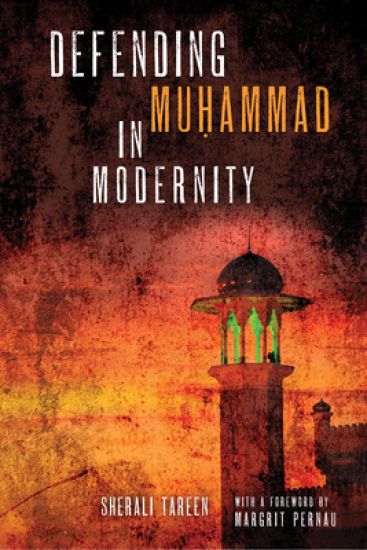
In this groundbreaking study, SherAli Tareen presents the most comprehensive and theoretically engaged work to date on what is arguably the most long-running, complex, and contentious dispute in modern Islam: the Barelvi-Deobandi polemic. The Barelvi and Deobandi groups are two normative orientations/reform movements with beginnings in colonial South Asia. Almost two hundred years separate the beginnings of this polemic from the present. Its specter, however, continues to haunt the religious sensibilities of postcolonial South Asian Muslims in profound ways, both in the region and in diaspora communities around the world. Defending Mu?ammad in Modernity challenges the commonplace tendency to view such moments of intra-Muslim contest through the prism of problematic yet powerful liberal secular binaries like legal/mystical, moderate/extremist, and reformist/traditionalist. Tareen argues that the Barelvi-Deobandi polemic was instead animated by what he calls "competing political theologies" that articulated—during a moment in Indian Muslim history marked by the loss and crisis of political sovereignty—contrasting visions of the normative relationship between divine sovereignty, prophetic charisma, and the practice of everyday life. Based on the close reading of previously unexplored print and manuscript sources in Arabic, Persian, and Urdu spanning the late eighteenth and the entirety of the nineteenth century, this book intervenes in and integrates the often-disparate fields of religious studies, Islamic studies, South Asian studies, critical secularism studies, and political theology.
In this groundbreaking study, SherAli Tareen presents the most comprehensive and theoretically engaged work to date on what is arguably the most long-running, complex, and contentious dispute in modern Islam: the Barelvi-Deobandi polemic. The Barelvi and Deobandi groups are two normative orientations/reform movements with beginnings in colonial South Asia. Almost two hundred years separate the beginnings of this polemic from the present. Its specter, however, continues to haunt the religious sensibilities of postcolonial South Asian Muslims in profound ways, both in the region and in diaspora communities around the world. Defending Mu?ammad in Modernity challenges the commonplace tendency to view such moments of intra-Muslim contest through the prism of problematic yet powerful liberal secular binaries like legal/mystical, moderate/extremist, and reformist/traditionalist. Tareen argues that the Barelvi-Deobandi polemic was instead animated by what he calls "competing political theologies" that articulated—during a moment in Indian Muslim history marked by the loss and crisis of political sovereignty—contrasting visions of the normative relationship between divine sovereignty, prophetic charisma, and the practice of everyday life. Based on the close reading of previously unexplored print and manuscript sources in Arabic, Persian, and Urdu spanning the late eighteenth and the entirety of the nineteenth century, this book intervenes in and integrates the often-disparate fields of religious studies, Islamic studies, South Asian studies, critical secularism studies, and political theology.
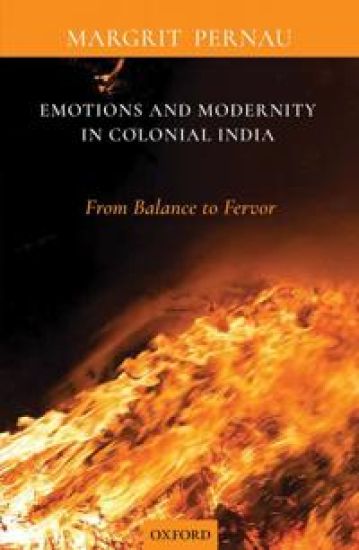
Emotions and Modernity in Colonial India investigates the experiences, interpretations and practices of emotions in India between 1857 and the First World War. It is based on a large archive of sources in Urdu, many explored for the first time. These sources range from philosophical and theological treatises on questions of morality to advice literature, from journals to newspapers, from children's literature to nostalgic descriptions of the courtly culture, from sermons to psychological essays. Modernity for long has been viewed as a process which went along with a growing control over emotions - whether this control was regarded as linked to capitalism, to the modern bureaucratic state or interpreted as a process through which external control mechanisms moved inside the subject. As the case studies of this book show, this discipline has to be viewed together with the transformation from the ideal of balance and harmony to a desire for strong, visceral and even indomitable passions, showing the youthfulness and vigor of the community. Men (and a little later also women) increasingly strove for an experience of these strong emotions and attempted to inculcate them in others as well, and they devised new languages and practices to bring about these feelings.
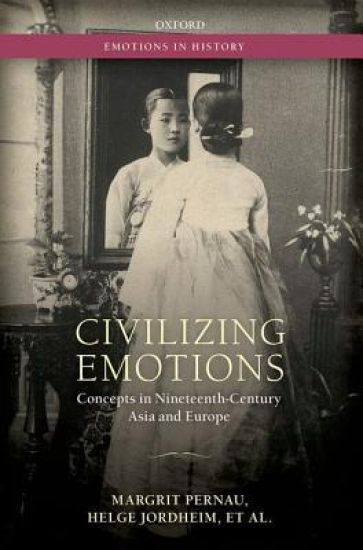
At the beginning of the twenty-first century, the vocabulary of civility and civilization is very much at the forefront of political debate. Most of these debates proceed as if the meaning of these words were self-evident. This is where Civilizing Emotions intervenes, tracing the history of the concepts of civility and civilization and thus adding a level of self-reflexivity to the present debates. Unlike previous histories, Civilizing Emotions takes a global perspective, highlighting the roles of civility and civilization in the creation of a new and hierarchized global order in the era of high imperialism and its entanglements with the developments in a number of well-chosen European and Asian countries. Emotions were at the core of the practices linked to the creation of a new global order in the nineteenth century. Civilizing Emotions explores why and how emotions were an asset in civilizing peoples and societies - their control and management, but also their creation and their ascription to different societies and social groups. The study is a contribution to the history of emotions, to global history, and to the history of concepts, three rapidly developing and innovative research areas which are here being brought together for the first time.
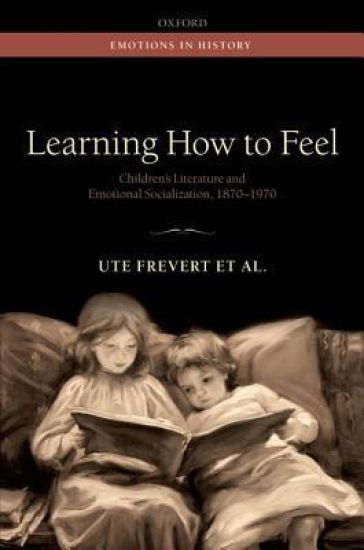
Learning How to Feel explores the ways in which children and adolescents learn not just how to express emotions that are thought to be pre-existing, but actually how to feel. The volume assumes that the embryonic ability to feel unfolds through a complex dialogue with the social and cultural environment and specifically through reading material. The fundamental formation takes place in childhood and youth. A multi-authored historical monograph, Learning How to Feel uses children's literature and advice manuals to access the training practices and learning processes for a wide range of emotions in the modern age, circa 1870-1970. The study takes an international approach, covering a broad array of social, cultural, and political milieus in Britain, Germany, India, Russia, France, Canada, and the United States. Learning How to Feel places multidirectional learning processes at the centre of the discussion, through the concept of practical knowledge. The book innovatively draws a framework for broad historical change during the course of the period. Emotional interaction between adult and child gave way to a focus on emotional interactions among children, while gender categories became less distinct. Children were increasingly taught to take responsibility for their own emotional development, to find 'authenticity' for themselves. In the context of changing social, political, cultural, and gender agendas, the building of nations, subjects and citizens, and the forging of moral and religious values, Learning How to Feel demonstrates how children were provided with emotional learning tools through their reading matter to navigate their emotional lives.
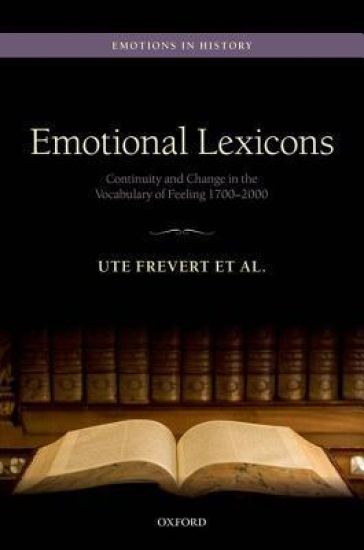
Emotions are as old as humankind. But what do we know about them and what importance do we assign to them? Emotional Lexicons is the first cultural history of terms of emotion found in German, French, and English language encyclopaedias since the late seventeenth century. Insofar as these reference works formulated normative concepts, they documented shifts in the way the educated middle classes were taught to conceptualise emotion by a literary medium targeted specifically to them. As well as providing a record of changing language use (and the surrounding debates), many encyclopaedia articles went further than simply providing basic knowledge; they also presented a moral vision to their readers and guidelines for behaviour. Implicitly or explicitly, they participated in fundamental discussions on human nature: Are emotions in the mind or in the body? Can we "read" another person's feelings in their face? Do animals have feelings? Are men less emotional than women? Are there differences between the emotions of children and adults? Can emotions be "civilised"? Can they make us sick? Do groups feel together? Do our emotions connect us with others or create distance? The answers to these questions are historically contingent, showing that emotional knowledge was and still is closely linked to the social, cultural, and political structures of modern societies. Emotional Lexicons analyses European discourses in science, as well as in broader society, about affects, passions, sentiments, and emotions. It does not presume to refine our understanding of what emotions actually are, but rather to present the spectrum of knowledge about emotion embodied in concepts whose meanings shift through time, in order to enrich our own concept of emotion and to lend nuances to the interdisciplinary conversation about them.