Kirjojen hintavertailu. Mukana 12 595 353 kirjaa ja 12 kauppaa.

Kirjailija

Mari Hvattum

Kirjat ja teokset yhdessä paikassa: 8 kirjaa, julkaisuja vuosilta 2004-2024, suosituimpien joukossa Style and Solitude. Vertaile teosten hintoja ja tarkista saatavuus suomalaisista kirjakaupoista.

8 kirjaa

Kirjojen julkaisuhaarukka 2004-2024.

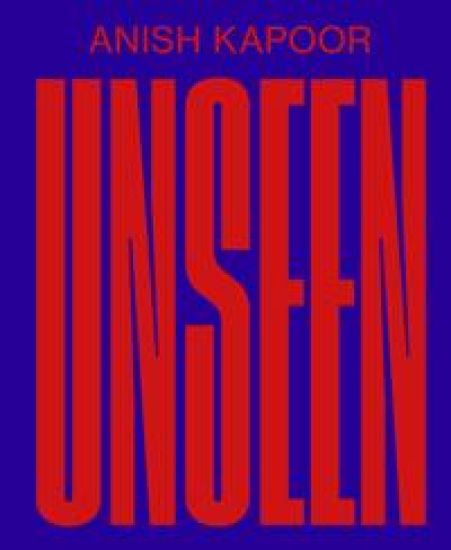
ANISH KAPOOR – Unseen

ANISH KAPOOR – Unseen

Sarah Fredholm; Mari Hvattum; Pireeni Sundaralingam; Mikkel Bille; Tim Flohr Sørensen

-
2024
sidottu
Anish Kapoor (f. 1954) er en af vores samtids mest indflydelsesrige kunstnere. Indisk-britiske Kapoor har skabt en lang række banebrydende værker over de seneste fire årtier i materialer som voks, sten, pigment og blankpoleret rustfrit stål. Kapoors monumentale værker er omsluttende og overvældende. Samtidig undersøger han det, vi ikke kan se, igennem sine ikoniske værker, der forvrider og forvrænger udstillingsrummene og den arkitektur, værkerne er bygget ind i. Denne bog er udgivet i forbindelse med udstillingen Anish Kapoor – Unseen på ARKEN Museum for Samtidskunst, og den giver et unikt indblik i, hvordan kunstnerens arbejde med materialer, overflader og farver er blevet forfinet og udviklet helt fra de tidlige år til nu. Igennem fire essays og et interview med Anish Kapoor udfoldes en række poetiske, filosofiske og eksistentielle spørgsmål med udgangspunkt i Kapoors forførende og til tider foruroligende værker.
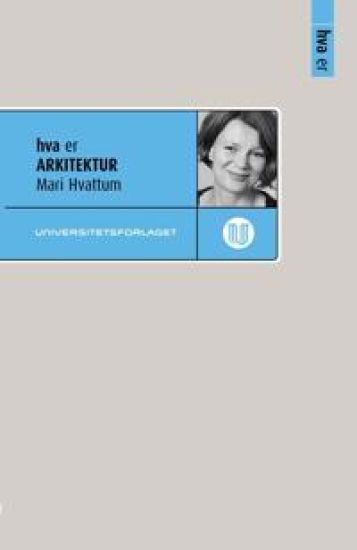
Hva er arkitektur

Hva er arkitektur

Mari Hvattum

Universitetsforlaget
2015
nidottu
Bygninger, byer og landskap virker på oss gjennom hele livet og kan vanskelig velges vekk. Derfor er arkitektur viktig.«Hva er ARKITEKTUR» er en engasjert introduksjon til arkitektur som fenomen og fag. God arkitektur har med omsorg og overraskelse å gjøre, erklærer forfatteren. Ved hjelp av velvalgte eksempler fra samtid og fortid beskriver hun arkitektur som et rikt, innviklet og mangfoldig felt som spenner fra konkret materie til abstrakte forestillinger, og fra dørhåndtaket til byen og landskapet.
Project: Villa Schreiner, architect: Sverre Fehn
Villa Schreiner (1963) is one of Sverre Fehn's (1924-2009) most celebrated works, considered an icon of Nordic modernism and example of a particular sensitivity to the natural surroundings. Fehn himself did not see himself as particularly Nordic, however, nor did he romanticize nature. He called Villa Schreiner a "hommage au Japon" and described its relationship to the site as "an act of unparallelled brutality". Returning to Fehn's own description of the Schreiner house, Mari Hvattum's introductory essay situates Villa Schreiner within post-war architectural culture. Presenting Fehn's original drawings for Villa Schreiner, including working drawings, technical specifications, historical as well as brand new photographs, this book gives a unique insight into one of the masterpieces of 20th century architecture. Mari Hvattum is professor of architectural theory and history at the Oslo School of Architecture and Design.
Heinrich Ernst Schirmer

Heinrich Ernst Schirmer

Mari Hvattum

Pax
2014
sidottu
Tyskeren Heinrich Ernst Schirmer (1814-1887) var en av det norske 1800-tallets mest betydningsfulle arkitekter. Han tegnet og oppførte kirker, fengsler, skoler, stasjoner, sykehus og boliger over hele landet, deriblant Christiania botsfengsel, Gaustad asyl og Norges første jernbanestasjon. Schirmer kunne til og med ha vært arkitekt for stortingsbygningen, om ikke en tårnsky visekonge hadde grepet inn i siste liten. J.S. Welhaven beskrev Schirmer som "vor dueligste Architekt", og arbeidene hans formet det moderne Norge på avgjørende vis. Denne første større studien av Schirmer og hans arkitektur plasserer ham, ved hjelp av et rikt kildemateriale, midt i 1800-tallets kulturelle og politiske offentlighet. Schirmer var kosmopolittenes arkitekt. Arbeidene hans viser fram glemte nyanser i historismens byggekunst og minner om at 1800-tallet, for all dets kjærlighet til det nasjonale, først og fremst var et kosmopolitisk århundre.
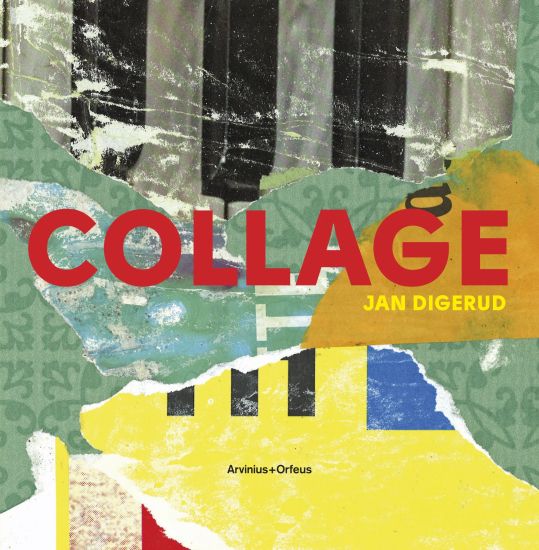
Collage and Architecture

Collage and Architecture

Jan Digerud; Mari Hvattum

Arvinius+Orfeus Publishing
2013
sidottu
"When I put together a collage, I think about architecture." The famous Norwegian postmodernist architect Jan Digerud is a collector of bits of paper: "Together these bits of paper form my palette, textures and forms. The paper collages in this book comprise a selection from my sketch books. My wish is that precedents from the beginnings of modernism are linked to contemporary ideals, so the past and the present need not stand apart. The collages here are independent, finished compositions. Yet even more so, they are exercises in design, inspired by time and place."
Tracing Modernity

Tracing Modernity

Mari Hvattum; Christian Hermansen

Routledge
2004
nidottu
First published in 2004. Walter Benjamin famously defined modernity as “the world dominated by its phantasmagorias”. The chapters in this book focus on one such phantasmagoria, namely that of ‘modernity’ itself. From the late seventeenth century until today, the ‘modern’ has served as a key category by which to understand an ever-changing present. Art and architecture have played a key role in this pursuit as the means by which the modern was to manifest itself. The aim of this anthology is to trace the modern project through its multifarious manifestations, in order to understand contemporary culture in a deeper sense than facile discussions of modernism and post-modernism often grant. Drawing on architectural and urban history as well as philosophy and sociology, the chapters outline the complex and conflicting roots of modernity by tracing its manifestations in architecture and the city. The book is divided into three parts, each exploring a distinct aspect of modernity. While part one scrutinizes the much-abused concepts of ‘modernity’ , ‘modernism’ and ‘the modern’ , parts two and three look at the manifestations of the modern in architecture and the city respectively. Focusing particularly on the transition between historicism and modernism, the chapters offer a re-interpretation of early modern architectural and urban culture as it came to expression in people such as Cerda, Semper, Bötticher, Scott, Baudelaire, the Goncourt brothers, Benjamin, Warburg, Kracauer, Mackintosh, Behrens, Taut, and Le Corbusier. For all their differences, these were thinkers and practitioners whose undisputed modernity arose from a deep preoccupation with history. A re-reading of their legacy may throw light on the neglected reciprocity between modernity and its historical conditions of becoming.
Tracing Modernity

Tracing Modernity

Mari Hvattum; Christian Hermansen

Routledge
2004
sidottu
First published in 2004. Walter Benjamin famously defined modernity as “the world dominated by its phantasmagorias”. The chapters in this book focus on one such phantasmagoria, namely that of ‘modernity’ itself. From the late seventeenth century until today, the ‘modern’ has served as a key category by which to understand an ever-changing present. Art and architecture have played a key role in this pursuit as the means by which the modern was to manifest itself. The aim of this anthology is to trace the modern project through its multifarious manifestations, in order to understand contemporary culture in a deeper sense than facile discussions of modernism and post-modernism often grant. Drawing on architectural and urban history as well as philosophy and sociology, the chapters outline the complex and conflicting roots of modernity by tracing its manifestations in architecture and the city. The book is divided into three parts, each exploring a distinct aspect of modernity. While part one scrutinizes the much-abused concepts of ‘modernity’ , ‘modernism’ and ‘the modern’ , parts two and three look at the manifestations of the modern in architecture and the city respectively. Focusing particularly on the transition between historicism and modernism, the chapters offer a re-interpretation of early modern architectural and urban culture as it came to expression in people such as Cerda, Semper, Bötticher, Scott, Baudelaire, the Goncourt brothers, Benjamin, Warburg, Kracauer, Mackintosh, Behrens, Taut, and Le Corbusier. For all their differences, these were thinkers and practitioners whose undisputed modernity arose from a deep preoccupation with history. A re-reading of their legacy may throw light on the neglected reciprocity between modernity and its historical conditions of becoming.