Kirjojen hintavertailu. Mukana 12 548 343 kirjaa ja 12 kauppaa.

Kirjailija

Mari Ruti

Kirjat ja teokset yhdessä paikassa: 27 kirjaa, julkaisuja vuosilta 2006-2025, suosituimpien joukossa A World of Fragile Things. Vertaile teosten hintoja ja tarkista saatavuus suomalaisista kirjakaupoista.

27 kirjaa

Kirjojen julkaisuhaarukka 2006-2025.

The Age of Scientific Sexism

The Age of Scientific Sexism

Mari Ruti

Bloomsbury Academic USA
2015
nidottu
We trust our sciences to operate on a plane of objectivity and fact in a world of subjectivity and cultural ideologies, but should we? In The Age of Scientific Sexism, philosopher Mari Ruti offers a sharp critique of the gender profiling tendencies of evolutionary psychology, untangling the insidious threads of various gender mythologies that have infiltrated—or perhaps even define—this faux-science. Selling stereotypes as scientific facts, evolutionary psychology continually brings retrograde models of sexuality into mainstream culture: it insists that men and women live in two completely different psychological, emotional, and sexual universes, and that they will consequently always be locked in a vicious battle of the sexes. Among these regressive arguments is the assumption that men’s sexuality is urgent and indiscriminate, whereas women are “naturally” reluctant, reticent, and choosy—a concept constructed to justify masculine behavior, such as cheating, that women have historically found painful. On its most basic level, The Age of Scientific Sexism explores our impulse to “explain” romantic behavior through science: in the increasingly egalitarian gender landscape of our society, why are we so eager to embrace the rampant gender profiling that evolutionary psychology promotes? Perhaps these simplistic gender caricatures owe their popularity, at least in part, to our overly pragmatic society pragmatic society, which encourages us to search for easy answers to complex questions.
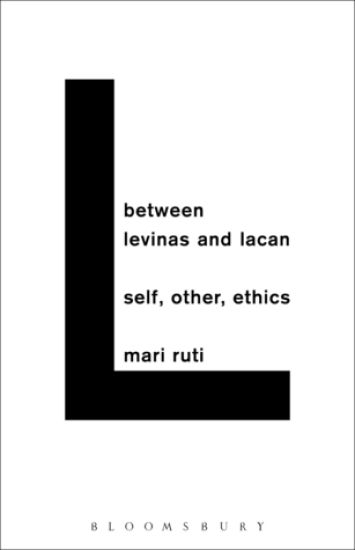
Between Levinas and Lacan

Between Levinas and Lacan

Mari Ruti

Bloomsbury Academic USA
2015
sidottu
Levinas and Lacan, two giants of contemporary theory, represent schools of thought that seem poles apart. In this major new work, Mari Ruti charts the ethical terrain between them. At first glance, Levinansian and Lacanian approaches may seem more or less incompatible, and in many ways they are, particularly in their understanding of the self-other relationship. For both Levinas and Lacan, the subject’s relationship to the other is primary in the sense that the subject, literally, does not exist without the other, but they see the challenge of ethics quite differently: while Levinas laments our failure to adequately meet the ethical demand arising from the other, Lacan laments the consequences of our failure to adequately escape the forms this demand frequently takes. Although this book outlines the major differences between Levinas and Judith Butler on the one hand and Lacan, Slavoj Žižek, and Alain Badiou on the other, Ruti proposes that underneath these differences one can discern a shared concern with the thorny relationship between the singularity of experience and the universality of ethics. Between Levinas and Lacan is an important new book for anyone interested in contemporary theory, ethics, psychoanalysis, and feminist and queer theory.
Between Levinas and Lacan

Between Levinas and Lacan

Mari Ruti

Bloomsbury Academic USA
2015
nidottu
Levinas and Lacan, two giants of contemporary theory, represent schools of thought that seem poles apart. In this major new work, Mari Ruti charts the ethical terrain between them. At first glance, Levinansian and Lacanian approaches may seem more or less incompatible, and in many ways they are, particularly in their understanding of the self-other relationship. For both Levinas and Lacan, the subject’s relationship to the other is primary in the sense that the subject, literally, does not exist without the other, but they see the challenge of ethics quite differently: while Levinas laments our failure to adequately meet the ethical demand arising from the other, Lacan laments the consequences of our failure to adequately escape the forms this demand frequently takes. Although this book outlines the major differences between Levinas and Judith Butler on the one hand and Lacan, Slavoj Žižek, and Alain Badiou on the other, Ruti proposes that underneath these differences one can discern a shared concern with the thorny relationship between the singularity of experience and the universality of ethics. Between Levinas and Lacan is an important new book for anyone interested in contemporary theory, ethics, psychoanalysis, and feminist and queer theory.
The Call of Character

The Call of Character

Mari Ruti

Columbia University Press
2013
sidottu
Should we feel inadequate when we fail to be healthy, balanced, and well-adjusted? Is it realistic or even desirable to strive for such an existential equilibrium? Condemning our current cultural obsession with cheerfulness and "positive thinking," Mari Ruti calls for a resurrection of character that honors our more eccentric frequencies and argues that sometimes a tormented and anxiety-ridden life can also be rewarding. Ruti critiques the search for personal meaning and pragmatic attempts to normalize human beings' unruly and idiosyncratic natures. Exposing the tragic banality of a happy life commonly lived, she instead emphasizes the advantages of a lopsided life rich in passion and fortitude. She also shows what matters is not our ability to evade existential uncertainty but our courage to meet adversity in such a way that we do not become irrevocably broken. We are in danger of losing the capacity to cope with complexity, ambiguity, melancholia, disorientation, and disappointment, Ruti warns, leaving us feeling less "real" and less connected and unable to process a full range of emotions. Heeding the call of our character means acknowledging the marginalized, chaotic aspects of our being, and it is precisely these creative qualities that make us inimitable and irreplaceable.
The Singularity of Being

The Singularity of Being

Mari Ruti

Fordham University Press
2012
sidottu
The Singularity of Being presents a Lacanian vision of what makes each of us an inimitable and irreplaceable creature. It argues that, unlike the "subject" (who comes into existence as a result of symbolic prohibition) or the "person" (who is aligned with the narcissistic conceits of the imaginary), the singular self emerges in response to a galvanizing directive arising from the real. This directive carries the force of an obligation that cannot be resisted and that summons the individual to a "character" beyond his or her social investments. Consequently, singularity expresses something about the individual's non-negotiable distinctiveness, eccentricity, or idiosyncrasy at the same time it prevents both symbolic and imaginary closure. It opens to layers of rebelliousness, indicating that there are components of human life exceeding the realm of normative sociality. Written with an unusual blend of rigor and clarity, The Singularity of Being combines incisive readings of Lacan with the best insights of recent Lacanian theory to reach beyond the dogmas of the field. Moving from what, thanks in part to Slavoj Žižek, has come to be known as the "ethics of the act" to a nuanced interpretation of Lacan's "ethics of sublimation," the book offers a sweeping overview of Lacan's thought while making an original contribution to contemporary theory and ethics. Aimed at specialists and nonspecialists alike, the book manages to educate at the same time as it intervenes in current debates about subjectivity, agency, resistance, creativity, the self–other relationship, and effective political and ethical action. By focusing on the Lacanian real, Ruti honors the uniqueness of subjective experience without losing sight of the social and intersubjective components of human life.
The Singularity of Being

The Singularity of Being

Mari Ruti

Fordham University Press
2012
pokkari
The Singularity of Being presents a Lacanian vision of what makes each of us an inimitable and irreplaceable creature. It argues that, unlike the "subject" (who comes into existence as a result of symbolic prohibition) or the "person" (who is aligned with the narcissistic conceits of the imaginary), the singular self emerges in response to a galvanizing directive arising from the real. This directive carries the force of an obligation that cannot be resisted and that summons the individual to a "character" beyond his or her social investments. Consequently, singularity expresses something about the individual's non-negotiable distinctiveness, eccentricity, or idiosyncrasy at the same time it prevents both symbolic and imaginary closure. It opens to layers of rebelliousness, indicating that there are components of human life exceeding the realm of normative sociality. Written with an unusual blend of rigor and clarity, The Singularity of Being combines incisive readings of Lacan with the best insights of recent Lacanian theory to reach beyond the dogmas of the field. Moving from what, thanks in part to Slavoj Žižek, has come to be known as the "ethics of the act" to a nuanced interpretation of Lacan's "ethics of sublimation," the book offers a sweeping overview of Lacan's thought while making an original contribution to contemporary theory and ethics. Aimed at specialists and nonspecialists alike, the book manages to educate at the same time as it intervenes in current debates about subjectivity, agency, resistance, creativity, the self–other relationship, and effective political and ethical action. By focusing on the Lacanian real, Ruti honors the uniqueness of subjective experience without losing sight of the social and intersubjective components of human life.