

Kirjailija
Maria Popova
Kirjat ja teokset yhdessä paikassa: 20 kirjaa, julkaisuja vuosilta 2005-2027, suosituimpien joukossa The Snail with the Right Heart. Vertaile teosten hintoja ja tarkista saatavuus suomalaisista kirjakaupoista.
20 kirjaa
Kirjojen julkaisuhaarukka 2005-2027.
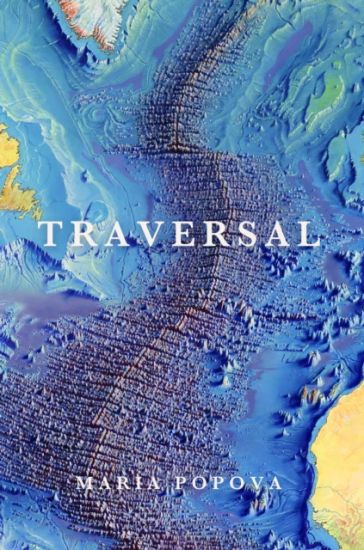
In Traversal, Maria Popova traverses the border between life and death, chance and choice, chemistry and consciousness: what makes a body a person? What makes a planet a world? How do we safeguard our love of truth from our lust for power? What slakes our longings and what redeems our losses? Popova illuminates our various instruments of reckoning with these questions - our telescopes and our treatises, our postulates and our poems - through the intertwined lives, loves and legacies of visionaries both celebrated and sidelined by history, people born into the margins of their time and place who lived to write the future: Mary Shelley, Walt Whitman, Frederick Douglass, Fanny Wright. Woven throughout their stories are other threads - the decoding of the insulin molecule, the invention of the bicycle, how nature creates blue - which come together to create a rich tapestry of life's meaning; exploring what it is that makes life alive and worth living. By turns epic and intimate, Traversal explores the universe between cells and souls to reveal the world, and our lives, in a dazzling new light.
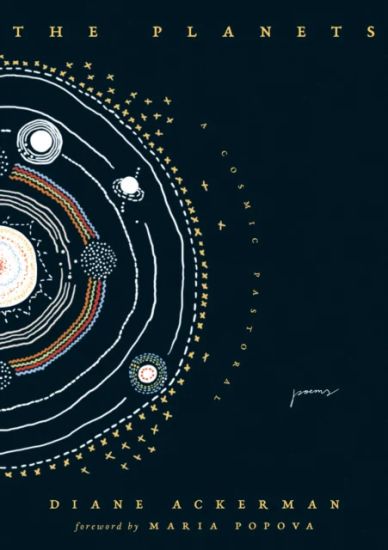
From Marginalian Editions comes a gorgeous reissue of celebrated poet, essayist, and naturalist Diane Ackerman’s debut collection: a whimsical and wonderful ode to our solar system, planet to planet, blending science and imagination, astronomy and cosmology, as well as fantasy, satire, myth, confession, and bawdiness galore. First published in 1973, The Planets: A Cosmic Pastoral introduced not only a splendid new poet but a whole new adventure in poetry. With bravura style, unbridled imagination, and a connoisseur's eye for precise scientific detail, Diane Ackerman gives us an unforgettable ode to each of the planets in our solar system, as well as for the moon, the comet Kohoutek, asteroids, and strange voyages to the stars, the bottom of the sea, through the human body, and into the mind. But The Planets is more than a book of poetry. It is also a major work on the solar system, illustrated with drawings and photographs of the galaxy. Diane Ackerman herself says: “I’ve always been baffled by people who write about nature only in terms of, say, junipers and cornfields, eschewing all things so-called ‘scientific,’ as if science were, per se, the spoil-sport of feeling. So wonderless a view of nature really doesn’t appeal to me; I don’t see the Universe divided up that way, into ‘The Junipers’ on the one hand and ‘The Amino Acids’ on the other.” Astronomy, fantasy, satire, myth, confession and bawdiness meet imagination and lyrical sweep to create this enticing collection, the world of The Planets.
From the Marginalian creator and bestselling author Maria Popova, a bold exploration of what makes a meaningful life. In Traversal, her startling and moving new book, Maria Popova traverses the border between life and death, chance and choice, chemistry and consciousness: What makes a body a person? What makes a planet a world? How do we safeguard our love of truth from our lust for power? What slakes our longings and what redeems our losses? Popova illuminates our various instruments of reckoning with these questions--our telescopes and our treatises, our postulates and our poems--through the intertwined lives, loves, and legacies of visionaries both celebrated and sidelined by history, people born into the margins of their time and place who lived to write the future: Mary Shelley, Walt Whitman, Frederick Douglass, Fanny Wright, Dorothy Crowfoot Hodgkin, Marie Tharp, Alfred Wagener, Humphry Davy, Ruth Benedict, and Margaret Mead. Woven throughout their stories are other threads--the world's first global scientific collaboration, the Irish potato famine, the decoding of the insulin molecule, the invention of the bicycle, how nature creates blue--to make the tapestry of meaning more elaborate yet more clarifying as the book advances, converging on the ultimate question of what makes life alive and worth living. By turns epic and intimate--as concerned with the physical laws binding atoms into molecules as with the psychic forces binding us to each other--Traversal explores the universe between cells and souls to reveal the world, and our lives, in a dazzling new light.
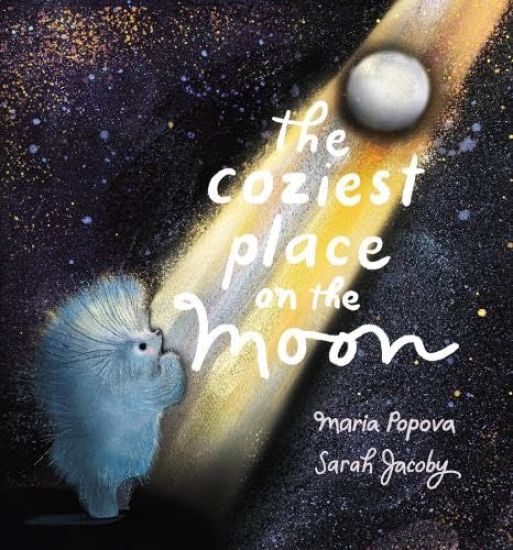
From Marginalian creator Maria Popova and acclaimed illustrator Sarah Jacoby comes this gorgeous picture book about the dark side of the moon, and creative solitude as an antidote to loneliness. Feeling like the loneliest creature on Earth, Re decides to go live in the coziest place on the moon. Re packs a suitcase and takes off on a beam of light, shooting out into the cosmic aloneness of space. Re's aim is to go into the cozy nook that the moon is said to possess. But shortly after arriving, Re makes a surprising discovery: Re is not alone. Indeed, another lonely soul has beaten Re there! And so, Re meets Mi, and while each lives in their own chamber of the nook, these two single souls still become, at times, a kind of togetherness. Each remains alone but less lonely, and now each can watch over the solitude of the other. Moreover, on certain nights, the solitary songs of them both might be heard cadencing the night together, in harmony, across the vast and starry sky.
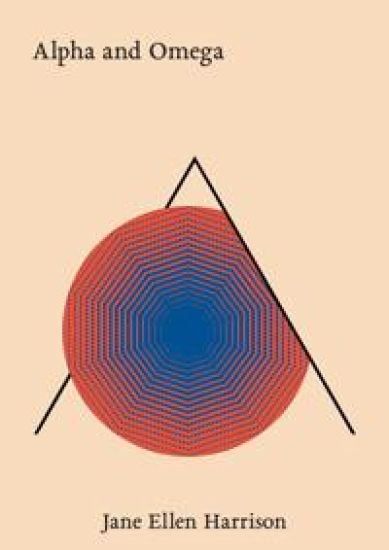
From Marginalian Editions: a far-seeing essay collection by the iconoclastic historian Jane Ellen Harrison—heroine to generations of writers from Virginia Woolf to Mary Beard—that explores the invisible tendrils between science and the sacred, the psychology of bias, the fulcrum of progress, and the countercultural courage of changing our minds in light of new understanding. Alpha and Omega is the culminating work of Jane Ellen Harrison, the maverick Cambridge classicist who reshaped our understanding of ancient Greek culture and pioneered a radical vision of faith, imagination, and progress. Declaring herself a “deeply religious atheist,” Harrison rejected the confines of dogma to explore faith as the human capacity to transcend the known and imagine the possible. This collection of essays—published at the dawn of World War I—unpacks the invisible connections between science and spirituality, individual belief and collective consciousness, and reason and love as forces for societal transformation. With wit and daring, Harrison dismantles the binaries that divide us—young and old, feminine and masculine, sacred and profane—revealing how these tensions, when reconciled, can catalyze change. As Maria Popova writes in her introduction, Harrison’s essays are an “act of faith toward the future and an act of heresy toward the status quo,” challenging us to rethink our biases, beliefs, and most deeply held assumptions. From the influence of Darwinism on religion to the psychology of conversion, from the evolution of gender roles to the ethics of pacifism, Alpha and Omega is a timeless guide to the imagination and courage required to live through an age of division and uncertainty.
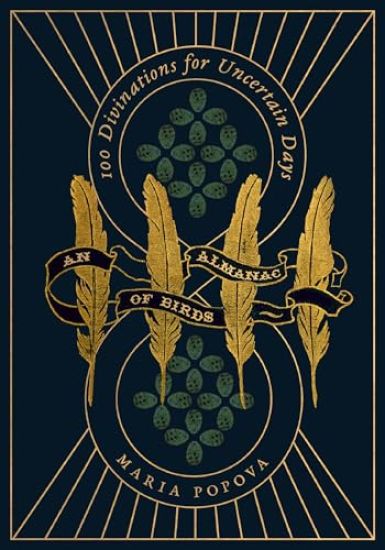
From writer Maria Popova, creator of The Marginalian, comes a gorgeous and inspiring book of cards: one hundred “divinations” for daily living, partway between poem and koan yet neither, collaged from the texts and illustrations of 19th-century ornithological books. How do we live with uncertainty? How can we come to know ourselves, to trust our own secret knowledge? Maria Popova was navigating a challenging season of being, longing for guidance, when this improbable project arrived one morning as a fully formed idea fusing her love of birds and her love of language, her skepticism about tarot and her compassion for the basic human yearning to be shown the way through, and her faith in constraint as a powerful catalyst of creativity. Originally intended as a gift to her friends for her fortieth birthday, she set out to create a sort of avian alternative to tarot—a deck of cards less for telling the future than for making sense of the present, for finding grace in the complexities and confusions of our human lives. Each night before sleep, she chose a single bird to work with from a favorite 19th-century ornithological book—from John James Audubon’s Birds of America to John and Elizabeth Gould’s Birds of Europe—letting her wakeful mind seize a handful of words and phrases from the page, then handing them over to her unconscious to wrestle with in the land of dreams. Each morning, she would read over the text and a kind of message would come to enflesh the skeleton of the noted words—not a poem, not a prescription, but a way of eavesdropping on the conversation between logic and intuition, between knowledge and mystery, between the part of us that already knows how to live through any perplexity and the part that forgets in the overwhelming act of living. Presented as a deck of cards tucked into book-safe in the style of a 19th-century ornithology tome, An Almanac of Birds gathers one hundred of these poetic collages for readers to savor and shuffle into relevance to their own lives, offering consolation, inspiration, and assurance for the daily perplexity of living.
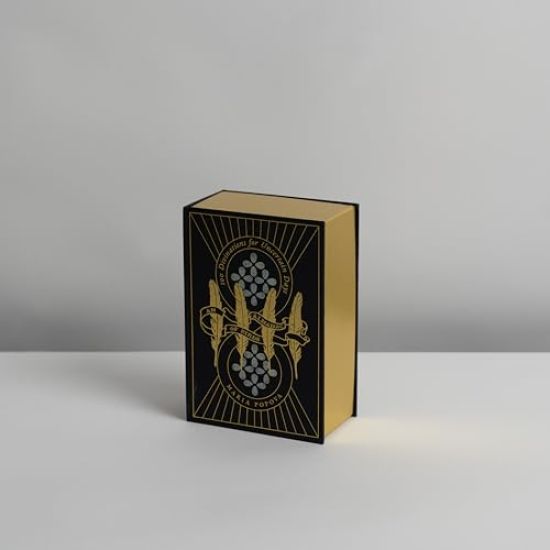
How do we live with uncertainty? Maria Popova was navigating a challenging season, longing for guidance, when she conceived of this project fusing her love of birds and her love of language, her scepticism about tarot and her compassion for the basic human yearning to be shown the way through.Originally intended as a gift to her friends, she set out to create an avian alternative to tarot - a deck of cards for making sense of the present, for finding grace in the complexities and confusions of our human lives. Each night before sleep, she chose a single bird from a favourite 19th-century ornithological book - from John James Audubon's Birds of America to John and Elizabeth Gould's Birds of Europe - letting her wakeful mind seize a handful of words and phrases from the page, then handing them over to her unconscious to wrestle with in the land of dreams. Each morning, she would read over the text and compose a message - not a poem, not a prescription, but eavesdropping on the conversation between logic and intuition, between knowledge and mystery, between the part of us that already knows how to live through any perplexity and the part that forgets in the overwhelming act of living.Presented as a deck of cards tucked into book-safe in the style of a 19th-century ornithology tome, An Almanac of Birds gathers one hundred of these poetic collages for readers to savour and shuffle into relevance to their own lives, offering consolation, inspiration and assurance for the daily perplexity of living.
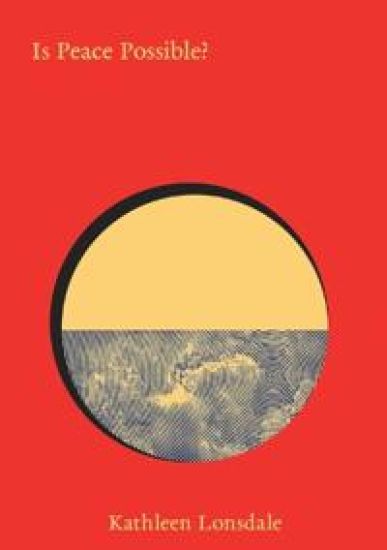
Marginalian Editions presents a trailblazing Quaker scientist's slender masterwork of moral courage, penned at the height of the Cold War, envisioning a transformation of the human spirit and our politics that might enable the triumph of peace. Kathleen Lonsdale was a groundbreaking chemist who was instrumental in developing the science of crystallography. She was also a midlife convert to Quakerism who campaigned for peace and prison reform. Horrified by the dropping of the first atomic bombs, Lonsdale felt that the entire scientific community was now tainted by the violence it had enabled. Published in 1957, Is Peace Possible? was her attempt to make amends for this communal guilt by demonstrating that science can bring peace as well as war, and can address the "big questions" generally left to the humanities. In crystalline language and logic honed from a lifetime of relying on the sharpness of her mind to cut through barriers of class and gender, and refusing to be bullied by received wisdom about war's inevitability, Kathleen Lonsdale's Is Peace Possible? is a work of quiet, elegant sanity. It is a snapshot of a particular moment in history, but its themes are eternally relevant, and perhaps even more necessary now than when it was written.
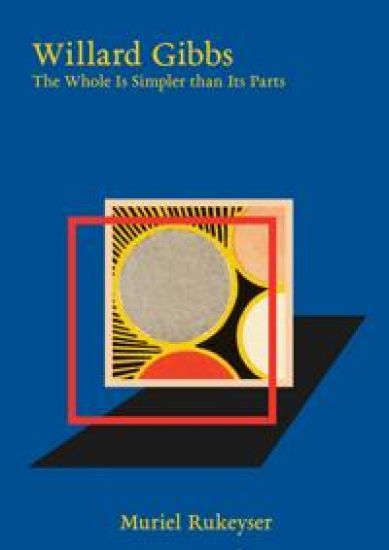
Marginalian Editions presents a groundbreaking poet’s biography of the forgotten scientist who founded physical chemistry, shaping much of the 20th century—and an ingenious, expansive treatise on American creativity, character, and remembrance. Josiah Willard Gibbs (1839–1903) was an American visionary whose work shaped a century of science by bridging classical mechanics and quantum physics. A kindly and shy bachelor who lectured at Yale in relative obscurity for more than thirty years, he single-handedly created the field of physical chemistry without ever completing a single experiment. Gibbs’s visionary work enabled future scientists to predict what states a substance can assume and under what conditions—the implications for industry, agriculture, and warfare were vast. Hailed by Einstein as “the greatest mind in American history,” Gibbs remained essentially unknown. To acclaimed poet Muriel Rukeyser, Gibbs “lived closer than any inventor, any poet, any scientific worker in pure imagination to the life of the inventive and organizing spirit in America.” Rukeyser’s thoroughly researched and lyrical tribute to Gibbs is much more than a biography: it is an alchemical compound of philosophy, history, ethics, and literature writ large. It is the story of a country, a century, a global epoch of scientific creativity that would color every realm of human imagination and aspiration, from poetry to politics.
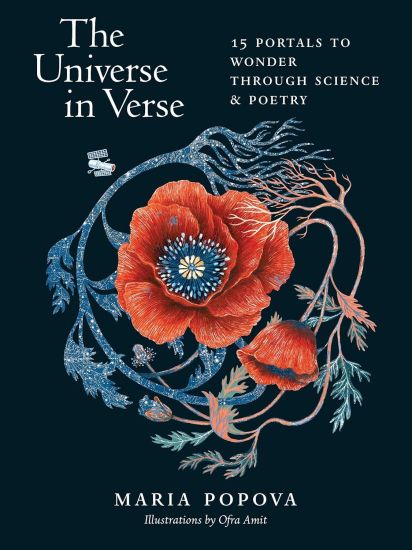
The Universe in Verse is an ode to wonder and an exploration of the human search for truth and meaning. Poetry and science, as Popova writes in her introduction, "are instruments for knowing the world more intimately and loving it more deeply." In 15 short essays on subjects ranging from the mystery of dark matter and the infinity of pi to the resilience of trees and the intelligence of octopuses, Popova tells the stories of scientific searching and discovery. These stories are interwoven with details from the very real and human lives of scientists-many of them women, many underrecognized-and poets inspired by the same questions and the beauty they reveal. Each essay is paired with a poem reflecting its subject by poets ranging from Emily Dickinson, W. H. Auden, and Edna St. Vincent Millay to Maya Angelou, Diane Ackerman, and Tracy K. Smith, and is stunningly illustrated by celebrated artist Ofra Amit. Together, they wake us to a "reality aglow with wonder."

In February 2022, Russian missiles rained on Ukrainian cities, and tanks rolled towards Kyiv to end Ukrainian independent statehood. President Zelensky declined a Western evacuation offer and Ukrainians rallied to defend their country. What are the roots of this war, which has upended the international legal order and brought back the spectre of nuclear escalation? How did these supposedly “brotherly peoples” become each other’s worst nightmare? In Russia and Ukraine: Entangled Histories, Diverging States, Maria Popova and Oxana Shevel explain how since 1991 Russia and Ukraine diverged politically, ending up on a collision course. Russia slid back into authoritarianism and imperialism, while Ukraine consolidated a competitive political system and pro-European identity. As Ukraine built a democratic nation-state, Russia refused to accept it and came to see it as an “anti-Russia” project. After political and economic pressure proved ineffective, and even counterproductive, Putin went to war to force Ukraine back into the fold of the “Russian world.” Ukraine resisted, determined to pursue European integration as a sovereign state. These irreconcilable goals, rather than geopolitical wrangling between Russia and the West over NATO expansion, are – the authors argue – essential to understanding Russia’s war on Ukraine.

In February 2022, Russian missiles rained on Ukrainian cities, and tanks rolled towards Kyiv to end Ukrainian independent statehood. President Zelensky declined a Western evacuation offer and Ukrainians rallied to defend their country. What are the roots of this war, which has upended the international legal order and brought back the spectre of nuclear escalation? How did these supposedly “brotherly peoples” become each other’s worst nightmare? In Russia and Ukraine: Entangled Histories, Diverging States, Maria Popova and Oxana Shevel explain how since 1991 Russia and Ukraine diverged politically, ending up on a collision course. Russia slid back into authoritarianism and imperialism, while Ukraine consolidated a competitive political system and pro-European identity. As Ukraine built a democratic nation-state, Russia refused to accept it and came to see it as an “anti-Russia” project. After political and economic pressure proved ineffective, and even counterproductive, Putin went to war to force Ukraine back into the fold of the “Russian world.” Ukraine resisted, determined to pursue European integration as a sovereign state. These irreconcilable goals, rather than geopolitical wrangling between Russia and the West over NATO expansion, are – the authors argue – essential to understanding Russia’s war on Ukraine.


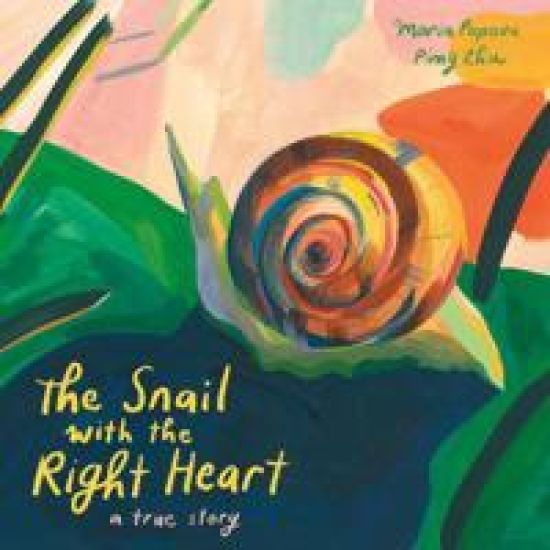
? A Kirkus Best Book of 2021: A Best Informational Picture Book? A Marginalian (formerly Brain Pickings) Best Children’s Book of 2021? A Spirituality & Practice Best Spiritual Book of 2021Based on a real scientific event and inspired by a beloved real human in the author’s life, this is a story about science and the poetry of existence...The Snail with the Right Heart is a story about time and chance, genetics and gender, love and death, evolution and infinity—concepts often too abstract for the human mind to fathom, often more accessible to the young imagination; concepts made fathomable in the concrete, finite life of one tiny, unusual creature dwelling in a pile of compost amid an English garden. Emerging from this singular life is a lyrical universal invitation not to mistake difference for defect and to welcome, across the accordion scales of time and space, diversity as the wellspring of the universe’s beauty and resilience.This boldly illustrated book about evolution for children features a large gatefold that opens up to immerse readers in the story and will help kids understand that nature is all about differentiation and that being different is beautiful.
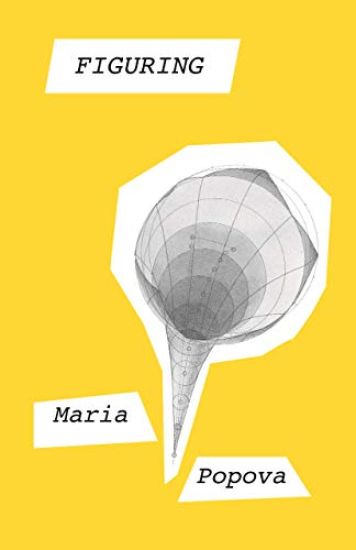
Figuring explores the complexities of love and the human search for truth and meaning through the interconnected lives of several historical figures across four centuries - beginning with the astronomer Johannes Kepler, who discovered the laws of planetary motion, and ending with the marine biologist and author Rachel Carson, who catalysed the environmental movement. Stretching between these figures is a cast of artists, writers, and scientists - mostly women, mostly queer - whose public contribution has risen out of their unclassifiable and often heartbreaking private relationships to change the way we understand, experience and appreciate the universe. Among them are the astronomer Maria Mitchell, who paved the way for women in science; the sculptor Harriet Hosmer, who did the same in art; the journalist and literary critic Margaret Fuller, who sparked the feminist movement; and the poet Emily Dickinson. Emanating from these lives are larger questions about the measure of a good life and what it means to leave a lasting mark of betterment on an imperfect world: Are achievement and acclaim enough for happiness? Is genius? Is love? Weaving through the narrative is a set of peripheral figures - Ralph Waldo Emerson, Charles Darwin, Elizabeth Barrett Browning, Herman Melville, Frederick Douglass, Nathaniel Hawthorne and Walt Whitman - and a tapestry of themes spanning music, feminism, the history of science, the rise and decline of religion, and how the intersection of astronomy, poetry and Transcendentalist philosophy fomented the environmental movement.
Figuring explores the complexities of love and the human search for truth and meaning through the interconnected lives of several historical figures across four centuries - beginning with the astronomer Johannes Kepler, who discovered the laws of planetary motion, and ending with the marine biologist and author Rachel Carson, who catalysed the environmental movement. Stretching between these figures is a cast of artists, writers, and scientists - mostly women, mostly queer - whose public contribution has risen out of their unclassifiable and often heartbreaking private relationships to change the way we understand, experience and appreciate the universe. Among them are the astronomer Maria Mitchell, who paved the way for women in science; the sculptor Harriet Hosmer, who did the same in art; the journalist and literary critic Margaret Fuller, who sparked the feminist movement; and the poet Emily Dickinson. Emanating from these lives are larger questions about the measure of a good life and what it means to leave a lasting mark of betterment on an imperfect world: Are achievement and acclaim enough for happiness? Is genius? Is love? Weaving through the narrative is a set of peripheral figures - Ralph Waldo Emerson, Charles Darwin, Elizabeth Barrett Browning, Herman Melville, Frederick Douglass, Nathaniel Hawthorne and Walt Whitman - and a tapestry of themes spanning music, feminism, the history of science, the rise and decline of religion, and how the intersection of astronomy, poetry and Transcendentalist philosophy fomented the environmental movement.

700 Classroom Activities New Edition Digital Methodology Book Pack
David Seymour; Maria Popova
Macmillan Education
2017
muu
700 Classroom Activities provides an instantly accessible repertoire of practical teaching ideas at a range of levels from elementary to upper intermediate. The clear structure makes it easy to find activities to supplement coursebooks, and comprehensive instructions make them easy to use, helping teachers react to students’ needs as they arise.
Provides a huge and instant repertoire of teaching ideas – ready to use straight from the page with searchable index.Includes both classroom classics and a wealth of new activities across a range of levels.Discover new activities and ways to adapt some firm favourites.Includes projects for students to do for homework or during holidays.