

Kirjailija
Marian McKenna
Kirjat ja teokset yhdessä paikassa: 4 kirjaa, julkaisuja vuosilta 1961-2011, suosituimpien joukossa Pictorial History of Catholicism. Vertaile teosten hintoja ja tarkista saatavuus suomalaisista kirjakaupoista.
4 kirjaa
Kirjojen julkaisuhaarukka 1961-2011.
The Pictorial History of Catholicism by Marian McKenna is a comprehensive and visually stunning book that explores the rich history and traditions of the Catholic Church. The book is filled with beautiful illustrations, photographs, and artwork that bring to life the stories of saints, popes, and other important figures in the history of Catholicism.Beginning with the early days of the Church, the book takes readers on a journey through the centuries, exploring the development of Catholicism as a religion and a cultural force. It covers key events such as the Council of Nicaea, the Crusades, and the Reformation, as well as important figures such as St. Augustine, St. Francis of Assisi, and St. Teresa of Avila.The Pictorial History of Catholicism also delves into the role of the Church in shaping art, music, architecture, and literature throughout history. It examines the contributions of Catholic artists, composers, and writers, and explores the ways in which the Church has influenced the development of Western culture.Overall, the Pictorial History of Catholicism is a fascinating and informative book that will appeal to anyone interested in the history of the Catholic Church or the role of religion in shaping human culture. Its beautiful illustrations and engaging writing make it a pleasure to read and a valuable addition to any library.This scarce antiquarian book is a facsimile reprint of the old original and may contain some imperfections such as library marks and notations. Because we believe this work is culturally important, we have made it available as part of our commitment for protecting, preserving, and promoting the world's literature in affordable, high quality, modern editions, that are true to their original work.
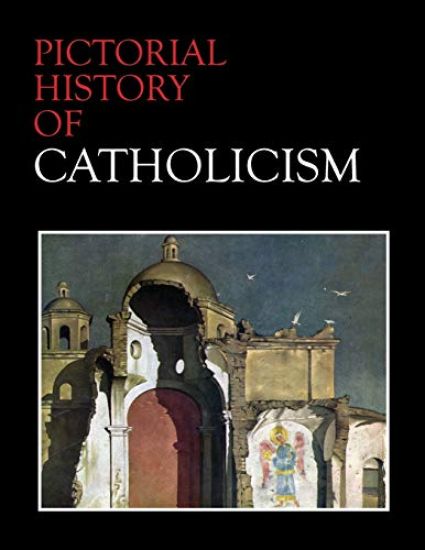
Here is the story of the Roman Catholic Church from the time of the Apostles to the present. Both text and pictures, many of them from Europe’s churches, cathedrals, libraries, monasteries and museums recreate the pageantry, drama and cultural richness of Byzantium, the medieval church, the Renaissance, and the French Revolutionary era. The Christianization of the New World and the missionary work in Asia and Africa are treated along with the modern problems in the history of the Church to the reign of Pope John XXIII. The book carries the imprimatur of Francis Cardinal Spellman, Archbishop of New York.

Borah of Idaho focuses on William Borah: an all-time giant of the Senate and one of the most enigmatic of American statesmen. He was the nonconformist par excellence: a Republican by inheritance, a Democrat by inclination, "just plain Bill" to his constituents, an intellectual recluse to his colleagues; a staunch Progressive, and an opponent of the New Deal; a relentless enemy of the League of Nations, yet sponsor of the Foundation for the Outlawry of War; an isolationist who fought for recognition of the Soviet Union; a moralist who opposed the Child Labor Amendment. This, his first full-length biography, makes use of a vast collection of Borah's unpublished papers, and with fresh material at her disposal author Marian C. McKenna provides a colorful and convincing interpretation of his career. It was unmistakably American, filled with the vigor of Western frontier life and the rough and tumble of politics, local and national. Borah was that rare flower of an earlier America: the practical man governed by almost mystic loyalties to the American dream. Few men have been so eminently expressive of their time, yet throughout his six terms in the Senate he preserved an amazing freedom of thought and action. Many of the abuses he fought—monopoly, bureaucracy, secret diplomacy, federal extravagance—are perennial problems of the Republic, more pervasive now than they were in his day. The pages of this book are crowded with the notables of every administration from Theodore Roosevelt to Franklin Delano Roosevelt: LaFollette, Bryan, Wilson, Lodge, Knox, Stimson, Coolidge, Hoover—the men at the helm when the United States was achieving maturity and taking her place as a world power.