Kirjojen hintavertailu. Mukana 12 390 323 kirjaa ja 12 kauppaa.

Kirjailija

Mariana Dimópulos

Kirjat ja teokset yhdessä paikassa: 5 kirjaa, julkaisuja vuosilta 2021-2026, suosituimpien joukossa Translation and Philosophy. Vertaile teosten hintoja ja tarkista saatavuus suomalaisista kirjakaupoista.

5 kirjaa

Kirjojen julkaisuhaarukka 2021-2026.

Translation and Philosophy

Translation and Philosophy

Mariana Dimópulos

TAYLOR FRANCIS LTD
2026
sidottu
This book offers a comprehensive treatment of the philosophy of translation and its concern with the problem of truth across the work of nine authors. The volume is grounded in the idea of the philosophy of translation as the philosophical discourse about translation written within the European and Anglo-American traditions in the last two centuries. Each chapter presents the central tenets of one author on translation and the concepts of language and society underlying those tenets within the wider body of the author’s work. The book examines the discipline’s origins with Friedrich Schleiermacher. Subsequent sections explore the truth of art and hermeneutics as discussed by Walter Benjamin and Hans-Georg Gadamer, the problem of meaning and truth as conceived by W.V.O. Quine and Donald Davidson, and the political and ethical dimensions of translation as seen by Jacques Derrida and Barbara Cassin – with a brief consideration of translation theorists Antoine Berman and Henri Meschonnic. While translation theory focuses on the how of translation, the philosophy of translation explores the what of translation and, in turn, provides tools for future challenges. This book will be of interest to scholars in translation studies and philosophy of language as well as to those working in the history of ideas, and the political theory of language.
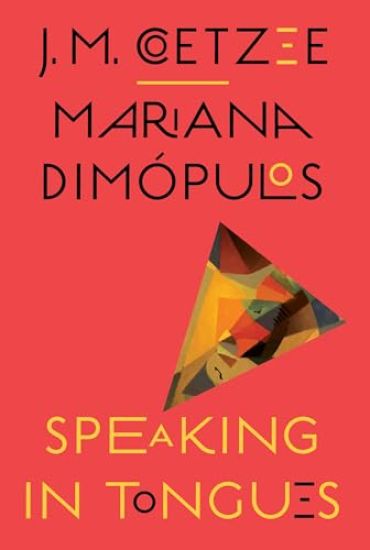
Speaking in Tongues

Speaking in Tongues

J. M. Coetzee; Mariana Dimópulos

Liveright Publishing Corporation
2026
nidottu
Language, historically speaking, has always been slippery. Two dictionaries provide two different maps of the universe: which one is true, or are both false? Speaking in Tongues--taking the form of a dialogue between Nobel laureate novelist J. M. Coetzee and eminent translator Mariana Dim pulos--examines some of the most pressing linguistic issues that plague writers and translators well into the twenty-first century. The authors address questions that we must answer in order to understand contemporary society. They inquire if one can truly love an acquired language, and they question why certain languages, like Spanish, have gender differences built into them. They examine the threat of monolingualism and ask how we can counter, if at all, the global spread of the English language, which seems to maraud like a colonial power. They question whether it should be the duty of the translator to remove morally objectionable, misogynistic, or racist language. And in the conclusion, Coetzee even speculates whether it's only mathematics that can tell the truth about everything. Drawing from decades of experience in the craft of language, both Dim pulos and Coetzee face the reality, as did Walter Benjamin over a century ago in his seminal essay "The Task of the Translator," that when it comes to self-expression, some things will always get lost in translation. Speaking in Tongues finally emerges as an engaging and accessible work of philosophy, shining a light on some of the most important linguistic and philological issues of our time.
Speaking in Tongues

Speaking in Tongues

J.M. Coetzee; Mariana Dimópulos

Vintage Publishing
2025
sidottu
This is a book about languages, what languages can and what they cannot do.In this dialogue between a Nobel Laureate and a leading translator, provocative ideas emerge about the evolution of language and the challenge of translation.Language, historically speaking, has always been slippery. Two dictionaries provide two different maps of the universe: which one is true, or are both false? Speaking in Tongues - taking the form of a dialogue between Nobel-Laureate novelist J. M. Coetzee and eminent translator Mariana Dimópulos - explores questions that have constantly plagued writers and translators, now more than ever. Among them:How can a translator liberate meanings imprisoned in the language of a text?Why is the masculine form dominant in gendered languages while the feminine is treated as a deviation?How should we counter the spread of monolingualism?Should a translator censor racist or misogynistic language?Does mathematics tell the truth about everything?In the tradition of Walter Benjamin’s seminal essay 'The Task of the Translator', Speaking in Tongues emerges as an engaging and accessible work of philosophy, shining a light on some of the most important linguistic and philological issues of our time.
Speaking in Tongues

Speaking in Tongues

J. M. Coetzee; Mariana Dimópulos

Liveright Publishing Corporation
2025
sidottu
Language, historically speaking, has always been slippery. Two dictionaries provide two different maps of the universe: which one is true, or are both false? Speaking in Tongues--taking the form of a dialogue between Nobel laureate novelist J. M. Coetzee and eminent translator Mariana Dim pulos--examines some of the most pressing linguistic issues that plague writers and translators well into the twenty-first century. The authors address questions that we must answer in order to understand contemporary society. They inquire if one can truly love an acquired language, and they question why certain languages, like Spanish, have gender differences built into them. They examine the threat of monolingualism and ask how we can counter, if at all, the global spread of the English language, which seems to maraud like a colonial power. They question whether it should be the duty of the translator to remove morally objectionable, misogynistic, or racist language. And in the conclusion, Coetzee even speculates whether it's only mathematics that can tell the truth about everything. Drawing from decades of experience in the craft of language, both Dim pulos and Coetzee face the reality, as did Walter Benjamin over a century ago in his seminal essay "The Task of the Translator," that when it comes to self-expression, some things will always get lost in translation. Speaking in Tongues finally emerges as an engaging and accessible work of philosophy, shining a light on some of the most important linguistic and philological issues of our time.