Kirjojen hintavertailu. Mukana 12 657 676 kirjaa ja 12 kauppaa.
Kirjailija
Marianna Obrist
Kirjat ja teokset yhdessä paikassa: 5 kirjaa, julkaisuja vuosilta 2008-2025, suosituimpien joukossa Human-Computer Integration. Vertaile teosten hintoja ja tarkista saatavuus suomalaisista kirjakaupoista.
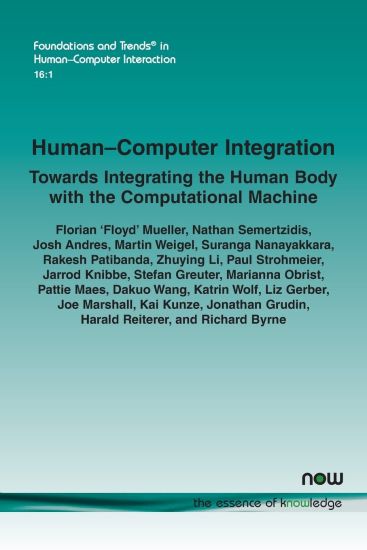
Florian ‘Floyd’ Mueller; Nathan Semertzidis; Josh Andres; Martin Weigel; Suranga Nanayakkara; Rakesh Patibanda; Zhuying Li; Paul Strohmeier; Jarrod Knibbe; Stefan Greuter; Marianna Obrist; Pattie Maes; Dakuo Wang; Katrin Wolf; Liz Gerber; Joe Marshall; Kai Kunze; Jonathan Grudin; Harald Reiterer; Richard Byrne
Human-Computer Integration (HInt) is an emerging paradigm in the human-computer interaction (HCI) field. Its goal is to integrate the human body and the computational machine. Because HInt is not an isolated area of research, the authors draw upon discussions from related perspectives, including cybernetics, augmentation, cyborgs, and wearables. While these prior works provide a basis for HInt, and some of their associated challenges also apply to HInt, the authors focus on articulating the HInt challenges that are of particular relevance to HCI.The monograph makes three contributions: First, the authors apply two key dimensions from psychology – bodily agency and bodily ownership – to enhance our understanding of HInt systems. Second, they use these two dimensions to provide new perspectives on user integration experiences and to develop an integration systems design space. Third, they use the design space and its two dimensions to articulate HInt’s key challenges and group these challenges into four areas: design, society, identity, and technology. Ultimately, the work aims to facilitate a more structured investigation into human body and computational machine integration.
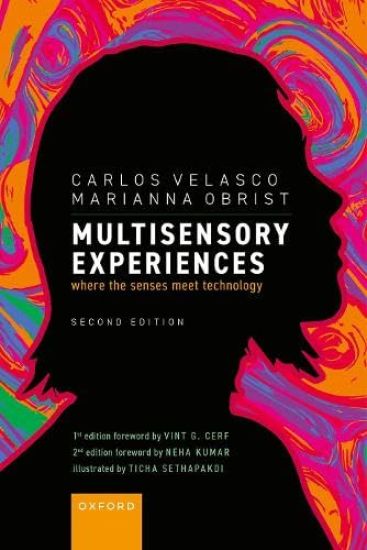
Most of our everyday life experiences are multisensory in nature, they consist of what we see, hear, feel, taste, smell, and much more. Almost any experience, such as eating a meal or going to the cinema, involves a magnificently complex sensory world. In recent years, many of these experiences have been increasingly transformed through technological advancements such as multisensory devices and intelligent systems. This book takes the reader on a journey that begins with the fundamentals of multisensory experiences, moves through the relationship between the senses and technology, and finishes by considering what the future of those experiences might look like, and our responsibility in it. This new edition seeks to further empower the reader to shape their own and other people's experiences by considering the multisensory worlds in which we live. It includes updated content on new technologies such as generative AI, and further development of an ethical framework around multisensory experiences. This book is a powerful and personal story about the authors' passion for, and viewpoint on, multisensory experiences.
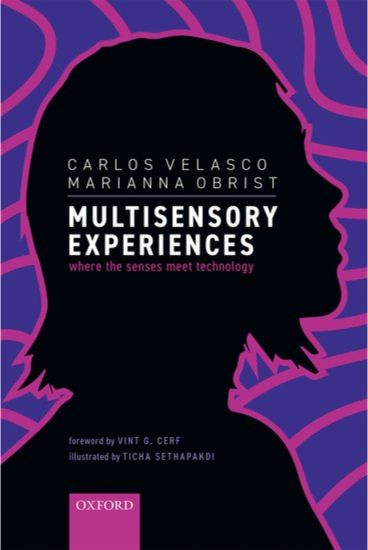
Most of our everyday life experiences are multisensory in nature; that is, they consist of what we see, hear, feel, taste, smell, and much more. Almost any experience you can think of, such as eating a meal or going to the cinema, involves a magnificent sensory world. In recent years, many of these experiences have been increasingly transformed and capitalised on through advancements that adapt the world around us - through technology, products, and services - to suit our ever more computerised environment. Multisensory Experiences: Where the senses meet technology looks at this trend and offers a comprehensive introduction to the dynamic world of multisensory experiences and design. It takes the reader from the fundamentals of multisensory experiences, through the relationship between the senses and technology, to finally what the future of those experiences may look like, and our responsibility in it. This book empowers you to shape your own and other people's experiences by considering the multisensory worlds that we live in through a journey that marries science and practice. It also shows how we can take advantage of the senses and how they shape our experiences through intelligent technological design.
Revision with unchanged content. Nowadays, the Internet has opened up new opportunities to share innovations and to collaboratively innovate and modify products and especially software as shown in the open source software movement. Industry and designers have already started to react on this development by supporting end-user involvement in the design and development process. Still the user potential for being innovative themselves is underestimated. This book is aiming to fill parts of this gap by investigating user modifications in the home context, while emphasising how and why users modify interactive systems. A detailed view on recent trends and interdisciplinary theories on user driven modifications is presented and a new approach called "Do-It-Yourself Human-Computer Interaction (DIY HCI)" is developed. This "do-it-yourself" approach allows people to modify and customize their interactive systems in a more individual and advanced way. People will always engage in areas they are interested in or when they have special needs to solve. Thus, manufacturers will have to provide users more freedom, control and transparency in the interaction with emerging systems or products.