Kirjojen hintavertailu. Mukana 12 319 122 kirjaa ja 12 kauppaa.

Kirjailija

Marianne Boruch

Kirjat ja teokset yhdessä paikassa: 14 kirjaa, julkaisuja vuosilta 1997-2025, suosituimpien joukossa Grace, Fallen from. Vertaile teosten hintoja ja tarkista saatavuus suomalaisista kirjakaupoista.

14 kirjaa

Kirjojen julkaisuhaarukka 1997-2025.

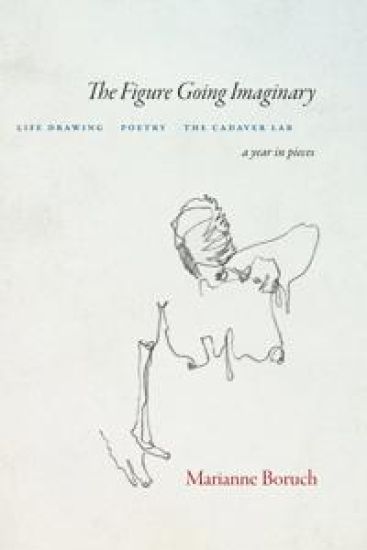
The Figure Going Imaginary

The Figure Going Imaginary

Marianne Boruch

Copper Canyon Press,U.S.
2025
pokkari
Exploring drawing, fate, and the mysterious human body, Boruch embarks on a journey of dark wonder in The Figure Going Imaginary.Marianne Boruch embarks on a journey of dark wonder in The Figure Going Imaginary. A gathering of journal entries, lyrical prose, poetry, and sketches from the author's "Life Drawing" notebook, this hybrid collection recounts the unnerving and otherworldly experience of studying Gross Human Anatomy and life-drawing at Purdue University--an experience that also fueled her 2014 collection, Cadaver, Speak. In the studio, it's the music of "charcoal to paper, a netherworld sound" and learning to bring human models alive on paper. In the cadaver lab, its "flashing knives and probes and forceps" that focus on another kind of beauty, the body as "map, a tracing, evidence of a life." Guided by "the ancient task of learning to see," this poet explores drawing, fate, and at the fragile center of it all, the mysteries of the human figure.
Sing by the Burying Ground

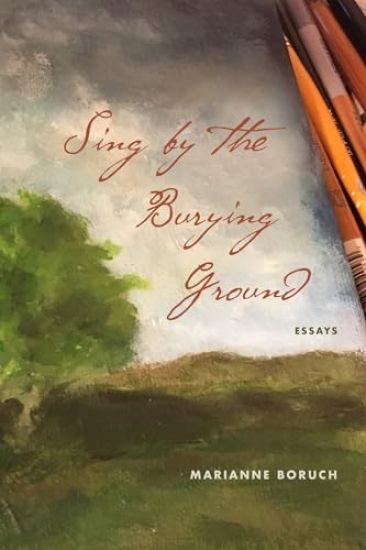
Sing by the Burying Ground

Marianne Boruch

NORTHWESTERN UNIVERSITY PRESS
2024
nidottu
Meditations on life, literature, and curiosity amid the shadows In her fourth essay collection, award-winning author Marianne Boruch explores the possibilities of hope even in darkness. Through poetry, the silence of Trappist monks, the pandemic moment, the Wright brothers’ quirky stab at flight, treasured knickknacks, and more, this book celebrates the weird, the mundane, the overlooked, and the promise of a future. Though each essay is distinct, foraging fresh ways into Louise GlÜck, W. H. Auden, Elizabeth Bishop, Robert Frost, Marianne Moore, Sylvia Plath, John Berryman, Langston Hughes, and more, they are all connected through the thread of Emily Dickinson’s comment that her fate was to “sing, as a Boy does by the Burying Ground . . .” Even in times filled with horror, we find beauty. Maybe we can sing in the blackest of nights. Thoughtful and expressive, this collection provides solace and humor for readers in a world where both are often in short supply.
Bestiary Dark

Bestiary Dark

Marianne Boruch

Copper Canyon Press,U.S.
2021
pokkari
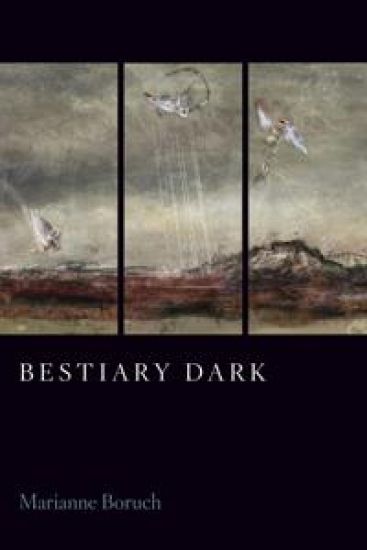
Is the world finite? Through place and time and the great expanse of Australia, Marianne Boruch ponders this, aided not just by wallabies and platypus, kangaroos and wombats, but by a cheeky Archangel who wanders in and out of her poems. The pertinent wisdom of an Indigenous Elder is here too, along with the continuing presence of Pliny the Elder, the Roman naturalist and historian who in 77 CE posed the question Boruch considers. Written following Boruch's Fulbright in Australia, and on the heels of the devastating fires that began after her departure, Bestiary Darkis filled with strange and sweet details, beauty, and impending doom--the drought, fires, and floods that have grown unspeakable in scale. These poems face the ancient, unsettling relationship of humans and the natural world--the looming effect we've wrought on wildlife--and what solace and repair our learning even a little might mean.
The Anti-Grief

The Anti-Grief

Marianne Boruch

Copper Canyon Press
2019
pokkari
What to do with the everything crossing one's path? Everything for and against, upside down and inside out, grief first then its dogged shadow life, which could be joy. In The Anti-Grief, Marianne Boruch challenges our conceptions of memory, age, and time, revealing the many layers of perception and awareness. A book of meditations, these poems venture out into the world, jump their synapse, tie and untie knots, and misbehave. From Emily Dickinson's chamber pot to meat-eating plants, from an angry octopus to crowds of salmon swimming upstream, Boruch's imagery blurs the line between natural and supernatural. And of course there is grief--working through grief, getting over grief, living with grief, and in these magnificent poems, anti-grief.
The Little Death of Self

The Little Death of Self

Marianne Boruch

The University of Michigan Press
2017
nidottu
A volume in the Poets on Poetry series, which collects critical works by contemporary poets, gathering together the articles, interviews, and book reviews by which they have articulated the poetics of a new generation. The line between poetry (the delicate, surprising not-quite) and the essay (the emphatic so-there!) is thin, easily crossed. Both welcome a deep mulling-over, endlessly mixing image and idea and running with scissors; certainly each distrusts the notion of premise or formulaic progression. Marianne Boruch’s essays in The Little Death of Self emerged by way of odd details or bothersome questions that would not quit—Why does the self grow smaller as the poem grows enormous? Why does closure in a poem so often mean keep going? Must we stalk the poem or does the poem stalk us until the world clicks open? Boruch’s intrepid curiosity led her to explore fields of expertise about which she knew little: aviation, music, anatomy, history, medicine, photography, fiction, neuroscience, physics, anthropology, painting, and drawing. There’s an addiction to metaphor here, an affection for image, sudden turns of thinking, and the great subjects of poetry: love, death, time, knowledge. There’s amazement at the dumb luck of staying long enough in an inkling to make it a poem at all. Poets such as Keats, Stevens, Frost, Plath, Auden, and Bishop, along with painters, inventors, doctors, scientists, composers, musicians, neighbors, friends, and family—all traffic blatantly or under the surface—and one gets a glimpse of such fellow travelers now and then.
The Little Death of Self

The Little Death of Self

Marianne Boruch

The University of Michigan Press
2017
sidottu
A volume in the Poets on Poetry series, which collects critical works by contemporary poets, gathering together the articles, interviews, and book reviews by which they have articulated the poetics of a new generation. The line between poetry (the delicate, surprising not-quite) and the essay (the emphatic so-there!) is thin, easily crossed. Both welcome a deep mulling-over, endlessly mixing image and idea and running with scissors; certainly each distrusts the notion of premise or formulaic progression. Marianne Boruch’s essays in The Little Death of Self emerged by way of odd details or bothersome questions that would not quit—Why does the self grow smaller as the poem grows enormous? Why does closure in a poem so often mean keep going? Must we stalk the poem or does the poem stalk us until the world clicks open? Boruch’s intrepid curiosity led her to explore fields of expertise about which she knew little: aviation, music, anatomy, history, medicine, photography, fiction, neuroscience, physics, anthropology, painting, and drawing. There’s an addiction to metaphor here, an affection for image, sudden turns of thinking, and the great subjects of poetry: love, death, time, knowledge. There’s amazement at the dumb luck of staying long enough in an inkling to make it a poem at all. Poets such as Keats, Stevens, Frost, Plath, Auden, and Bishop, along with painters, inventors, doctors, scientists, composers, musicians, neighbors, friends, and family—all traffic blatantly or under the surface—and one gets a glimpse of such fellow travelers now and then.
Eventually One Dreams the Real Thing

Eventually One Dreams the Real Thing

Marianne Boruch

Copper Canyon Press
2016
pokkari
A starred review in Library Journal says this about Eventually One Dreams the Real Thing: "Only a poet as accomplished as Boruch could make such beautiful verse while leading us through the everyday, of life's subtle, steady shiftings ('the bird's hunger, seeking shape'). If the opening image of a pool filled with cruelly dredged up roses bespeaks quiet assent ('I stood before them the way an animal/ accepts sun'), the next poem turns immediately to progress (and hence progression) as a modern invention beyond the heaven-and-hell alternatives; finally, the poet concedes, 'I lose track of my transitions.' In fact, transition defines us. Here, a static painting gives way to 'between and among, ' a simple typeface never yields a perfect copy, and even in a medieval score, two exquisite quavers are connected by a slur. Highly recommended."Marianne Boruch's work has the wonderful, commanding power of true attention: She sees and considers with intensity.--The Washington PostBoruch refuses to see more than there is in things--but her patience, her willingness to wait for the film of familiarity to slip, allows her to see what is there with a jeweler's sense of facet and flaw.--PoetryIn her tenth volume of poetry, Marianne Boruch displays a historical omnipresence, as she converses with Dickinson, envisions Turner painting, and empathizes with Arthur Conan Doyle. She looks unabashedly at the brutality of recent history, from drone warfare to the disaster in New Orleans from Hurricane Katrina. Poems that turn her gaze towards childhood, nature, animals, and her own poetics are patches of light in the collection's chiaroscuro.From Before and Every After: Eventually one dreams the real thing.The cave as it was, what we paid to straddlea skinny box-turned-seat down the middle, narrow boatmade special for the state park, the wet, the trickypassing into rock and underground river.A single row of strangers faced front, each of usbehind another closeas dominoes to fall or we were angels lined uppolitely, pre-flight...Marianne Boruch is the author of ten collections of poetry. She is the 2013 recipient of the Kingsley Tufts Poetry Award, and has taught at Purdue University since the inception of their MFA program. She lives in West Lafayette, Indiana.
Cadaver, Speak

Cadaver, Speak

Marianne Boruch

Copper Canyon Press
2014
pokkari
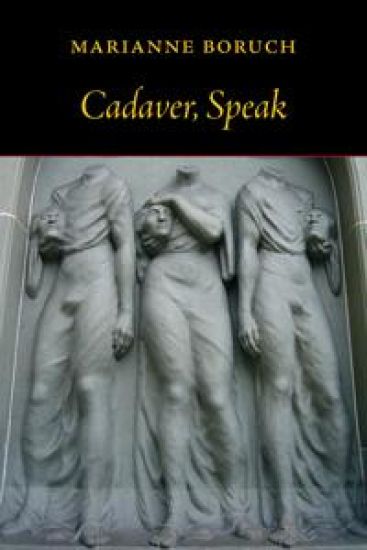
Honored by Library Journal as an Amazing Poetry Title"Extraordinary how in a single poem from 2013 Kingsley Tufts Poetry Award winner Boruch slides 1800s London barber-surgeons and the dissection of murderers only (condemned to hell anyway) to the observation, 'Future or past, it's all we ever think about.' The first part of this sharp, surprising book captures our inescapable but slippery physicality in the world, the second the breakdown of the cadaver of a 99-year-old woman--told from her perspective, rather jauntily."--Library Journal"Boruch displays a quietly gymnastic intellect in the examinations of art, the body, and the human condition.--American PoetsMarianne Boruch's work has the wonderful, commanding power of true attention: she sees and considers with intensity.--The Washington PostSome books begin as a dare to the self, notes poet Marianne Boruch. Inspired by life-study drawing classes and direct work in a cadaver lab, Boruch's latest book looks at what the body holds, and examines living through bodies deceased.Marianne Boruch is the author of seven collections of poetry including The Book of Hours (Copper Canyon Press), two volumes of essays, and a memoir. In 2013 she won the Kingsley Tufts Poetry Award. She lives in West Lafayette, Indiana.
The Book of Hours

The Book of Hours

Marianne Boruch

Copper Canyon Press
2011
pokkari
Marianne Boruch's work has the wonderful, commanding power of true attention.--The Washington Post H]er patience, her willingness to wait for the film of familiarity to slip, allows her to see what is there with a jeweler's sense of facet and flaw.--Poetry magazineEndearingly strange, unsentimental, and uniquely structured, in true Rilkean fashion The Book of Hours questions the meaning and significance of everything from the flaws of human interaction to perfect posture. Unrelenting honesty and exacting description are coupled with the trials of a dying mother, saint shadows, birds, and shit drying to chalk.My mother's body to wires, to tubesand their liquid, days she turned toward meor away, winter but so much sunfrom car to door. I followed it past nurses at their station talking movies, who's goodin one and not the other. Gown tiedat the back and neck, she slept besidea window. I wedged my chair there, reading, looking up, reading, --who knows whatI read--her legs bruised, thin, arms batteredby the doctor's needle. Her face. Can Isay this plainly now? There was light as she grew less. She drifted to it.I'm not hungry, not religious, I'm in a spot, she told me one afternoon thenclosed her eyes to that radiance again.Marianne Boruch grew up in Chicago and earned a masters degree from the University of Massachusetts. She teaches at Purdue University and at Warren Wilson College. She lives in West Lafayette, Indiana.
Grace, Fallen from

Grace, Fallen from

Marianne Boruch

Wesleyan University Press
2010
nidottu
In her wry and riveting new collection, Marianne Boruch discovers things often taken for granted and holds them up to deceptively casual light, questioning them both mercilessly and mercifully. Employing a masterly range of tone and form, Boruch makes a sometimes strange but always revealing investigation of world and self, history and memory, resistance and release. Here a woman levitates behind a door as her daughter badly bangs out Mozart. Here God is caught before the moment of creation, before knowledge, before "the invention/ of the question too, the way all/ at heart are rhetorical, each leaf/ suddenly wedded to its shade." It's here raucous boys on their bikes are told-through telepathy-don't go to this war. Here, that a Dutch still life is returned to the small chaos of its making. And Eve, in "stained fascination," stares down the snake of the lost garden. The lyric impulse in these deeply interior poems stops time, even as the world, indifferent to its mystery, keeps happening.Praise for Marianne Boruch:"Her poems are complex rather than simple rooms ... they bring the world's strangeness, and their own, home to whatever reader is open to old mysteries, both in dreams and in the waking life they illuminate."-Philip Booth, The Georgia Review"Marianne Boruch's (work) has the wonderful, commanding power of true attention: She sees and considers with intensity. Her poems often give fresh examples of how rare and thrilling it can be to notice."-Robert Pinsky, Book World, The Washington Post"Every detail of image and syntax shines with multiplicity."-Donald Revell, The Ohio Review
In the Blue Pharmacy

In the Blue Pharmacy

Marianne Boruch

Trinity University Press,U.S.
2005
pokkari
Collected here are sixteen essays on poets and poetry, the writing life, and a host of fascinating topics that come into the wide range of Marianne Boruch's attention. She examines how the imagination works with mystery and surprise in a variety of poets from Elizabeth Bishop to Theodore Roethke, from Russell Edson to Larry Levis, from Walt Whitman to Eavan Boland. Combining a richly associative personal style with original insights on poetic texts and historical and cultural musing, Boruch considers how the atomic bomb changed William Carlos Williams's deepest ambition for poetry, and how Edison's listening, through his famous deafness, informs our sense of the poetic line. Other essays explore how the car--its danger and solitude--helps us understand American poetry or how Dvorak and Whitman shared darker things than their curious love for trains. Poetry transforms, changing over time in the work of individual poets as well as changing us as we read it or write it. Boruch's writing has a musical, incantatory style, creating a mood in which many of her subjects are immersed. Her approach isn't meant to fix or crystallize her ideas in any hard and fast light, but rather to present the music of her thinking.
Poems

Poems

Marianne Boruch

Oberlin College Press
2004
sidottu
This new collection features twenty-five new poems and a generous selection by the author from each of her four previous volumes - View from the Gazebo, Descendant. Moss Burning, and A Stick that Breaks and Breaks.
Poems

Poems

Marianne Boruch

Oberlin College Press
2004
nidottu
This new collection features twenty-five new poems and a generous selection by the author from each of her four previous volumes - View from the Gazebo, Descendant. Moss Burning, and A Stick that Breaks and Breaks.
A Stick that Breaks and Breaks

A Stick that Breaks and Breaks

Marianne Boruch

Oberlin College Press
1997
nidottu
In this remarkable book, her fourth collection of poems, Marianne Boruch continues to explore the world around her with curiosity, wry humor, searching skepticism, and thoughtful tenderness. Her poems range widely, letting themselves be triggered, often, by quite ordinary events and people, in order to launch themselves into unpredictable questions and considerations.