Kirjojen hintavertailu. Mukana 12 459 402 kirjaa ja 12 kauppaa.

Kirjailija

Marianne Taylor

Kirjat ja teokset yhdessä paikassa: 51 kirjaa, julkaisuja vuosilta 2005-2026, suosituimpien joukossa Find it! ® British Minibeasts. Vertaile teosten hintoja ja tarkista saatavuus suomalaisista kirjakaupoista.

51 kirjaa

Kirjojen julkaisuhaarukka 2005-2026.

RSPB Pocket Guide to British Birds

RSPB Pocket Guide to British Birds

Marianne Taylor

BLOOMSBURY PUBLISHING PLC
2022
nidottu
A compact, lightweight and informative guide to 310 of the most common birds found in the UK. RSPB Pocket Guide to British Birds is a compact, lightweight and informative field guide, featuring 310 bird species regularly seen in the UK. Species are illustrated in all distinct plumage forms likely to be observed in the wild by renowned bird artist Stephen Message, and a detailed distribution map for the British Isles is also provided. Concise text covers appearance, behaviour and voice – focusing on key identification points – and also outlines where you will find the species, describes its seasonal movements and includes the latest UK population data. Finally, confusion species are cross-referenced, with their most important and easily noted differences from the subject species described. A comprehensive introduction provides a guide on how and where to find birds, and how to make the most useful and rewarding observations for newcomers to birdwatching. Uniquely, this guide also provides images and descriptions for not only a selection of rarer visitors, but also for a range of domestic species and certain commonly observed aberrant forms of more familiar birds, all of which are omitted from most field guides but can cause great confusion for beginners when encountered in the wild.
How Birds Live Together

How Birds Live Together

Marianne Taylor

PRINCETON UNIVERSITY PRESS
2022
sidottu
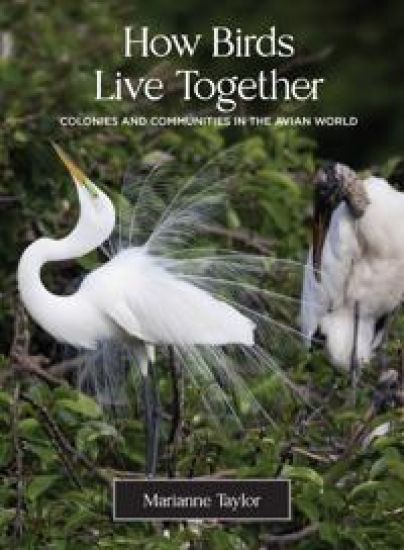
A beautifully illustrated exploration of the ways birds cohabitFeaturing dramatic and delightful wild bird colonies and communities, How Birds Live Together offers a broad overview of social living in the avian world. From long-established seabird colonies that use the same cliffs for generations to the fast-shifting dynamics of flock formation, leading wildlife writer Marianne Taylor explores the different ways birds choose to dwell together.Through fascinating text, color photos, maps, and other graphics, Taylor examines the advantages of avian sociality and social breeding. Chapters provide detailed information on diverse types of bird colonies, including those species that construct single-family nests close together in trees; those that share large, communal nests housing multiple families; those that nest in tunnels dug into the earth; those that form exposed colonies on open ground and defend them collectively, relying on ferocious aggression; those that live communally on human-made structures in towns and cities; and more. Taylor discusses the challenges, benefits, hazards, and social dynamics of each style of living, and features a wealth of species as examples.Showcasing colonies from the edge of Scotland and the tropical delta of the Everglades to the Namib Desert in Africa, How Birds Live Together gives bird enthusiasts a vivid understanding of avian social communities.
Trees, Fruits & Flowers of the Bible

Trees, Fruits & Flowers of the Bible

Peter Goodfellow; Marianne Taylor

JOHN BEAUFOY PUBLISHING LTD
2021
sidottu
Trees, Fruits and Flowers of the Bible is an engaging and informative study of all the most important trees, fruits and flowers mentioned in the Bible, identifying the specific species and explaining the message or symbolism behind the texts. The Prologue sets the scene by giving a simple description of the topography and climate of Israel, so that readers - wherever they are - may get a sense of what the place is like. The following sections of the book cover the flora in detail. A wide range of fruits, herbs, nuts, flowers and trees is covered from those of major symbolical significance such as the apple and the olive tree as well as those less prominent like the saffron crocus but which none the less give a fascinating picture of everyday life in the Holy Land.
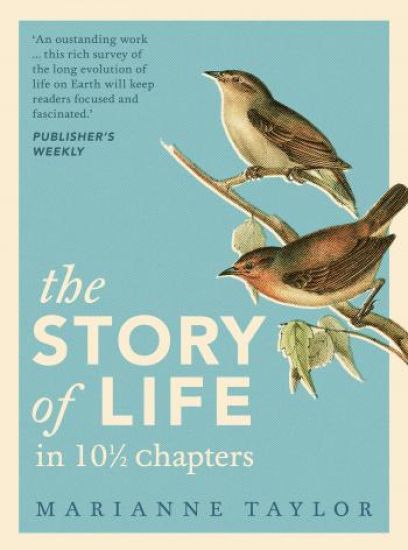
The Story of Life in 10½ Chapters
An exploration of the key aspects of life on Earth – now and in the future – through the study of 10 and a half species. 'Entertaining and intellectually stimulating... The book highlights the wonderfully interconnected nature of our fragile planet. If you want big science at an accessible scale, this is for you' BBC WildlifeIf an alien visitor were to collect ten souvenir life forms to represent life on earth, which would they be? This is the thought-provoking premise of Marianne Taylor's The Story of Life in 10½ Chapters. Each life form explains a key aspect about life on Earth. From the sponge that seems to be a plant but is really an animal to the almost extinct soft-shelled turtle deemed extremely unique and therefore extremely precious, these examples reveal how life itself is arranged across time and space, and how humanity increasingly dominates that vision.Taylor, a prolific science writer, considers the chemistry of a green plant and ponders the possibility of life beyond our world. She investigates the virus in an attempt to determine what a life form is; and wonders if the human – 'a distinct and very dominant species with an inevitably biased view of life' – could evolve in a new direction. She tells us that the giraffe was one species, but is now four; that the dusky seaside sparrow may be revived through 're-evolution', or cloning; explains the significance of Darwin's finch to evolution; and much more. The 'half' species is artificial intelligence. Itself an experiment to understand and model life, AI is central to our future – although from the alien visitor's standpoint, unlikely to inherit the earth in the long run.
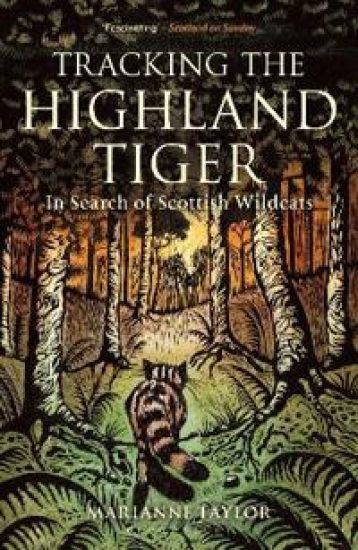
Tracking The Highland Tiger

Tracking The Highland Tiger

Marianne Taylor

Bloomsbury Wildlife
2021
nidottu
A mysterious and rarely seen beast, the Scottish Wildcat is Britain’s rarest mammal, and one of the most endangered carnivores in the world. Over the centuries, one by one, Britain’s most formidable wild animals have fallen to the thoughtless march of humankind. A war on predators put paid to our lynxes, wolves and bears, each hunted relentlessly until the last of them was killed. Only our wildcats lived on. The Scottish wildcat’s guile and ferocity are the stuff of legend. No docile pet cat, this, but a cunning and shadowy animal, elusive to the point of invisibility, but utterly fearless when forced to fight for its life. Those who saw one would always remember its beauty – the cloak of dense fur marked with bold tiger stripes, the green-eyed stare and haughty sneer, and the broad, banded tail whisking away into the forest’s gloom. Driven to the remnants of Scotland’s wilderness, the last few wildcats now face the most insidious danger of all as their domesticated cousins threaten to dilute their genes into oblivion. However, the wildest of cats has friends and goodwill behind it. This book tells the story of how the wildcat of the wildwood became the endangered Scottish wildcat, of how it once lived and lives now, and of how we - its greatest enemy - are now striving to save it in its darkest hour.
The Gull Next Door

The Gull Next Door

Marianne Taylor; David Lindo

PRINCETON UNIVERSITY PRESS
2020
sidottu
A uniquely personal meditation on Britain's gulls by one of today's leading wildlife writersFrom a distance, gulls are beautiful symbols of freedom over the oceanic wilderness. Up close, however, they can be loud, aggressive and even violent. Yet gulls fascinate birdwatchers, and seafarers regard them with respect and affection. The Gull Next Door explores the natural history of gulls and their complicated relationship with humans.Marianne Taylor grew up in an English seaside town where gulls are ever present. Today, she is a passionate advocate for these underappreciated birds. In this book, Taylor looks at the different gull species and sheds light on all aspects of the lives of gulls—how they find food, raise families, socialize and migrate across sea, coastland and countryside. She discusses the herring gull, Britain's best-known and most persecuted gull species, whose numbers are declining at an alarming rate. She looks at gulls in legend, fiction and popular culture, and explains what we can do to protect gull populations around the world.The Gull Next Door reveals deeper truths about these remarkable birds. They are thinkers and innovators, devoted partners and parents. They lead long lives and often indulge their powerful drive to explore and travel. But for all these natural gifts, many gull species are struggling to survive in the wild places they naturally inhabit, which is why they are now exploiting the opportunities of human habitats. This book shows how we might live more harmoniously with these majestic yet misunderstood birds.
What If Humans Were Like Animals?

What If Humans Were Like Animals?

Marianne Taylor; Paul Moran

Buster Books
2020
nidottu
Packed with fun, incredible and often downright disgusting facts about the animal world, this is a book that will both entertain and educate. With questions like: ‘What if people behaved like animals?’, ‘What if you had pop-up claws?’, ‘What if you could taste with your feet?’ and ‘What if your mum puked in your mouth?’. Curious kids will be able to entertain their friends and families for hours with the eye-opening animal facts on every page and Paul Moran's quirky illustrations will spark the imagination and inspire kids to think outside the realms of possibility.
The Pocket Book of Insect Anatomy

The Pocket Book of Insect Anatomy

Marianne Taylor

Bloomsbury Wildlife
2020
nidottu
Insects live alongside us in great profusion – sometimes even in intimate proximity. Their importance to the ecosystems of our world, and to our own survival, cannot be overstated. But it can be challenging to relate to them as fellow living beings when their bodies’ structure and function are so dramatically different from our own.This excellent RSPB guide to insect anatomy aims to demystify the way that insects live, from the fine detail of their internal processes to the way they co-exist with all other forms of life. Insects exhibit dizzying diversity across their millions of species. Among them are mighty hunters, voracious plant defoliators, deep divers, high-fliers, master builders and devoted parents. Within the vast nests of honey-bees, ants and termites, we see them come together to form a huge, complex, multifaceted living machine. All this variation and potential has come about through evolved modification of a simple but perfectly elegant body plan.Each chapter of this book tackles a particular body system or aspect of insect biology, from respiration to digestion, movement to metamorphosis. Using a step-by-step approach, the book breaks down structures and processes and explores the myriad ways these are expressed in different insect groups. Separate pages delve into particular aspects of insect biology and ecology, such as how their colours are formed and the biology behind their remarkable migratory behaviour.Featuring numerous diagrams and more than 200 colour photos, this user-friendly guide is perfect for anyone interested in learning more about these extraordinary animals that – in terms of numbers, if not size – dominate our planet today.
RSPB Spotlight Ducks and Geese

RSPB Spotlight Ducks and Geese

Marianne Taylor

Bloomsbury Wildlife
2020
nidottu
RSPB Spotlight: Ducks and Geese is packed with eye-catching, informative colour photos, and features succinct, detailed text written by a knowledgeable naturalist. This will be a detailed 'biography' of ducks and geese that breed in or regularly visit the UK – covering 30 species in all. It will include chapters on the evolution of ducks and geese, their place in the natural world, their anatomy and physiology, various feeding methods, spectacular courtship displays and diverse breeding behaviour. Marianne Taylor will reveal their often epic migrations and examine their social interactions with their own and other species, including their unusual readiness to hybridise. She will also detail their relationships with humankind over the centuries, including their presence in folklore and literature and their role in our lives as both prey and pets. She will also explore their presence as feral and sometimes invasive species outside their natural ranges, and their current status within their native wild ranges as the group includes several species recently recognised as being of global conservation concern.
The Pocket Book of Bird Anatomy

The Pocket Book of Bird Anatomy

Marianne Taylor

Bloomsbury Wildlife
2020
nidottu
What is a bird? To answer that, we must understand how birds are different from all other living things and how they fit into the diversity of life on Earth.This excellent RSPB guide to bird anatomy looks at the avian body, system by system, how it evolved, and how it functions. Chapters explore traits that are unique to birds, including their remarkable one-way breathing cycle, their trimmed-down skeleton, how feathers permit flight, provide weather-proofing and add beauty, and the avian bill – a lightweight replacement for both teeth and food-handling forelimbs. Each chapter tackles a particular body system and includes detailed anatomical illustrations, from cells and organs to skeletons and muscles, to show how birds’ anatomical adaptations enable all their physical feats and fascinating behaviour. Feature spreads offer more in-depth analysis on topics like birdsong, temperature control, ornamentation, unusual diets, social behaviour, nocturnal adaptations, mutation and natural selection.Featuring more than 300 diagrams and colour photos, this fascinating new book also looks at the human impact on the avian world and reveals how behaviour and anatomy work together to produce these vibrant living beings that delight and inspire us so much.
RSPB Spotlight Owls

RSPB Spotlight Owls

Marianne Taylor

Bloomsbury Wildlife
2020
nidottu
RSPB Spotlight: Owls is packed with eye-catching, informative colour photos, and features succinct, detailed text written by a knowledgeable naturalist. Owls are charismatic and exceptionally well-loved characters in British wildlife, and have always held a special place in our folklore and legends. Their nocturnal habits mean few of us have been lucky enough to see them up close. In RSPB Spotlight: Owls Marianne Taylor introduces readers to every aspect of their lives including their physiology, biology and behaviour, as well as their history, and future in conservation in Britain and abroad. Five species of owl currently live in Britain - the Tawny, Barn, Little, Long-eared and Short-eared Owls - and each of them, as well as their relatives abroad, are introduced here in detail alongside top quality colour photographs and fascinating behavioural images, which will delight and inform the whole family. The book begins with a look at owls in general then examines the five British species in more detail. It discusses their evolutionary history and distribution around the world. Their anatomy and adaptations are examined, as well as their natural behaviours including hunting, nesting and mating practices. Next, we are introduced to their life cycles, beginning as eggs, moving onto fledging and independence, migration, and finally death. Marianne also includes a discussion of conservation as it affects owls, and owls’ unique relationships with humans and our culture.
How Insects Work: An Illustrated Guide to the Wonders of Form and Function - From Antennae to Wings
How Insects Work goes beyond the typical field guide to show us not only what insects look like but why. Arguably the most successful land animals--still going strong after five mass extinctions--insects have evolved a spectacular array of real-life superpowers to help them thrive in virtually every environment: Bumblebees' wingbeats leave a faint electrical signal at each flower they visit to show that the nectar's already been taken (see page 57), and houseflies defy gravity with tiny leg hairs that stick to the smoothest wall or ceiling (see page 69). In this in-depth, photo-filled handbook, discover the ways insects are even more astounding than you know--inside and out: Evolution Exoskeleton and Body Segments Senses Circulation Digestion Respiration Reproduction Metamorphosis Movement And much, much more #1 Bestseller in Entomology
How Birds Work: An Illustrated Guide to the Wonders of Form and Function - From Bones to Beak
How Birds Work goes beyond the typical field guide to show us not only what birds look like but why. Why do many owls have asymmetrical ear openings? (Hint: It helps them pinpoint prey; see page 40.) And why does the Grey Heron rest on one leg at a time? (Hint: Not because it's tired; see page 66 ) Birds boast a spectacular array of adaptations suited to their incredibly diverse diets and habitats. In this in-depth handbook, discover the ways they're even more astounding than you know--inside and out. Detailed analysis and illustrations illuminate: Skeleton Muscles Circulation Digestion Respiration Reproduction Feathers Colors and Patterns And much, much more
RSPB Garden Birds

RSPB Garden Birds

Marianne Taylor

Bloomsbury Wildlife
2019
sidottu
A lavish celebration of 47 of the most frequent and familiar birds found in gardens around the British Isles. From urban rooftops to open meadows, the incredible diversity of gardens in the British Isles can provide refuge and feeding opportunities for a vast array of birds. Even the smallest gardens can attract some birdlife and watching garden birds is a great joy for all nature lovers, brightening each day and providing an immediate connection with the wider and wilder world beyond the fence. Nature is facing challenges throughout the world, including right here in the UK, and the changing fortunes of our garden birds are strong indicators of the overall health of our wildlife. With information on how to encourage birds to visit our gardens and boost their survival and breeding success, and how to identify them, this book describes the small steps we can all take to help these birds survive the hardships of winter and bring forth a healthy new generation that we can recognise, appreciate and enjoy for decades to come. RSPB Garden Birds is a lavish celebration of 47 of our most frequent and familiar garden birds, and the final chapter looks at some of the less regular – but equally welcome – visitors. Detailed biographies outline each species' life history, distribution, behaviour and breeding habits, and an extensive introduction provides guidance on the general practicalities of garden birdwatching and managing a wildlife garden. Featuring more than 200 spectacular photographs revealing every detail of our garden birds' appearance and behaviour, this book will appeal to anyone who has discovered their love of wildlife through watching the birds in their garden.