

Kirjailija
Marie Alohalani Brown
Kirjat ja teokset yhdessä paikassa: 5 kirjaa, julkaisuja vuosilta 2016-2026, suosituimpien joukossa Nalu. Vertaile teosten hintoja ja tarkista saatavuus suomalaisista kirjakaupoista.
5 kirjaa
Kirjojen julkaisuhaarukka 2016-2026.
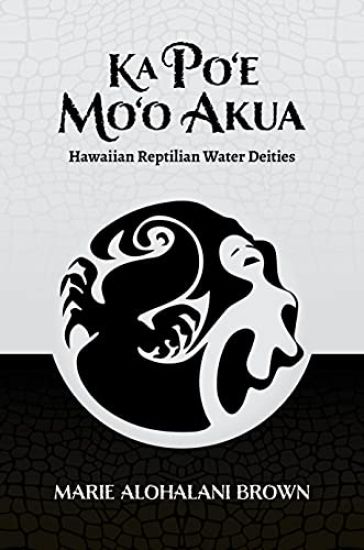
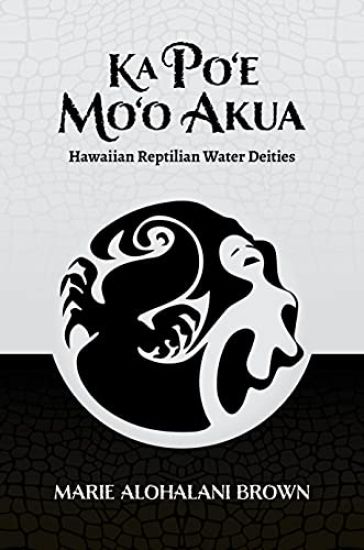
Tradition holds that when you come across a body of freshwater in a secluded area and everything is eerily still, the plants are yellowed, and the water covered with a greenish-yellow froth you have stumbled across the home of a mo‘o. Leave quickly lest the mo‘o make itself known to you! It might eat (‘ai) you or take you as a lover (ai); either way, you will be consumed completely.Revered and reviled, reptiles have slithered, glided, crawled, and climbed their way through the human imagination and into prominent places in many cultures and belief systems around the world. Ka Po‘e Mo‘o Akua: Hawaiian Reptilian Water Deities explores the fearsome and fascinating creatures known as mo‘o that embody the life-giving and death-dealing properties of water. Mo‘o are not ocean-dwellers; instead, they live primarily in or near bodies of freshwater. They vary greatly in size, appearing as tall as a mountain or as tiny as a house gecko, and many possess alternate forms. Mo?o are predominantly female, and the female mo?o that masquerade as humans are often described as stunningly beautiful.During an earlier period in Hawaiian history, mo‘o akua held distinctive roles and filled a variety of functions in overlapping familial, societal, economic, political sectors. Religion, people’s belief in mo‘o akua, was the foundation upon which these roles and functions were established. Marie Alohalani Brown’s extensive research in Hawaiian-language archives has recovered knowledge about more than three hundred mo?o. In addition to being a comprehensive treatise on mo?o akua, this work includes a detailed catalog of 288 individual mo‘o with source citations. It makes major contributions to the politics and poetics of reconstructing ?ike kupuna (ancestral knowledge), Hawaiian aesthetics, the nature of tradition, the study and appreciation of mo?olelo and ka?ao (hi/stories), genre analysis and metadiscursive practices, and methodologies for conducting research in Hawaiian-language newspapers. An extensive introduction also offers readers context for understanding how these uniquely Hawaiian deities relate to other reptilian entities in Polynesia and around the world. Accessibly written about a captivating subject, this extraordinary monograph is the result of over two decades of dedicated study.
Tradition holds that when you come across a body of freshwater in a secluded area and everything is eerily still, the plants are yellowed, and the water covered with a greenish-yellow froth you have stumbled across the home of a mo‘o. Leave quickly lest the mo‘o make itself known to you! It might eat (‘ai) you or take you as a lover (ai); either way, you will be consumed completely.Revered and reviled, reptiles have slithered, glided, crawled, and climbed their way through the human imagination and into prominent places in many cultures and belief systems around the world. Ka Po‘e Mo‘o Akua: Hawaiian Reptilian Water Deities explores the fearsome and fascinating creatures known as mo‘o that embody the life-giving and death-dealing properties of water. Mo‘o are not ocean-dwellers; instead, they live primarily in or near bodies of freshwater. They vary greatly in size, appearing as tall as a mountain or as tiny as a house gecko, and many possess alternate forms. Mo?o are predominantly female, and the female mo?o that masquerade as humans are often described as stunningly beautiful.During an earlier period in Hawaiian history, mo‘o akua held distinctive roles and filled a variety of functions in overlapping familial, societal, economic, political sectors. Religion, people’s belief in mo‘o akua, was the foundation upon which these roles and functions were established. Marie Alohalani Brown’s extensive research in Hawaiian-language archives has recovered knowledge about more than three hundred mo?o. In addition to being a comprehensive treatise on mo?o akua, this work includes a detailed catalog of 288 individual mo‘o with source citations. It makes major contributions to the politics and poetics of reconstructing ?ike kupuna (ancestral knowledge), Hawaiian aesthetics, the nature of tradition, the study and appreciation of mo?olelo and ka?ao (hi/stories), genre analysis and metadiscursive practices, and methodologies for conducting research in Hawaiian-language newspapers. An extensive introduction also offers readers context for understanding how these uniquely Hawaiian deities relate to other reptilian entities in Polynesia and around the world. Accessibly written about a captivating subject, this extraordinary monograph is the result of over two decades of dedicated study.
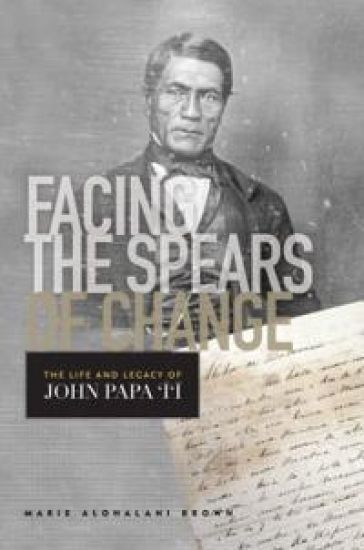
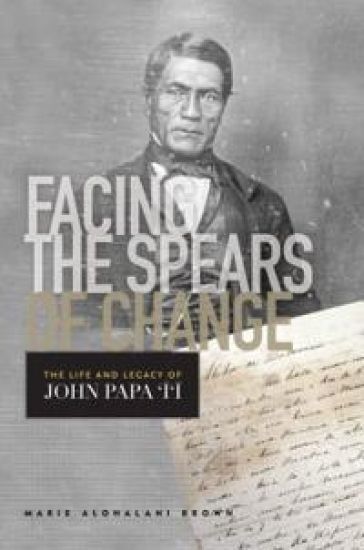
Facing the Spears of Change takes a close look at the extraordinary life of John Papa ??. Over the years, ?? faced many personal and political changes and challenges in rapid succession, which he skillfully parried or grasped firmly and then used to fend off other attacks. He began serving in the household of Kamehameha I as an attendant in 1810, when he was ten. His early service took place in a time when alii nui (the highest-ranking Hawaiians) were considered divine and surrounded with strict kapu (sacred prohibitions); breaking a kapu pertaining to an alii meant death for the transgressor. As an attendant, ?? was highly familiar with the inner workings of the royal household. He went on to become an influential statesman, privy to the shifting modes of governance adopted by the Hawaiian kingdom. ??'s intelligence and his good standing with those he served resulted in a great degree of influence within the Hawaiian government, with his fellow Hawaiians, and with the missionaries residing in the Hawaiian Islands. At the end of his life, he also became a memoirist and biographer, who published accounts of key events in his own life and in the lives of others during the sixty years that he served his kings, his nation, and his people. As a privileged spectator and key participant, his accounts of alii and his insights into early nineteenth-century Hawaiian cultural-religious practices are unsurpassed.In this groundbreaking work, Marie Alohalani Brown offers a meticulously researched, elegantly written, and compelling portrait of an important historical figure in nineteenth-century Hawaii. Brown's extensive archival research and use of Hawaiian and English language primary sources from the 1800s allows readers to access information that would be otherwise unknown but to a very small circle of researchers. While recent scholars have to varying degrees noted ??'s importance in Hawaiian history, his life has been largely neglected as a topic of study. The few scattered lines devoted to him have been merely tombstone epitaphs in relation to the vast archive available about his life, his political achievements, and his cultural contributions as a writer.
Facing the Spears of Change takes a close look at the extraordinary life of John Papa ??. Over the years, ?? faced many personal and political changes and challenges in rapid succession, which he skillfully parried or grasped firmly and then used to fend off other attacks. He began serving in the household of Kamehameha I as an attendant in 1810, when he was ten. His early service took place in a time when alii nui (the highest-ranking Hawaiians) were considered divine and surrounded with strict kapu (sacred prohibitions); breaking a kapu pertaining to an alii meant death for the transgressor. As an attendant, ?? was highly familiar with the inner workings of the royal household. He went on to become an influential statesman, privy to the shifting modes of governance adopted by the Hawaiian kingdom. ??'s intelligence and his good standing with those he served resulted in a great degree of influence within the Hawaiian government, with his fellow Hawaiians, and with the missionaries residing in the Hawaiian Islands. At the end of his life, he also became a memoirist and biographer, who published accounts of key events in his own life and in the lives of others during the sixty years that he served his kings, his nation, and his people. As a privileged spectator and key participant, his accounts of alii and his insights into early nineteenth-century Hawaiian cultural-religious practices are unsurpassed.In this groundbreaking work, Marie Alohalani Brown offers a meticulously researched, elegantly written, and compelling portrait of an important historical figure in nineteenth-century Hawaii. Brown's extensive archival research and use of Hawaiian and English language primary sources from the 1800s allows readers to access information that would be otherwise unknown but to a very small circle of researchers. While recent scholars have to varying degrees noted ??'s importance in Hawaiian history, his life has been largely neglected as a topic of study. The few scattered lines devoted to him have been merely tombstone epitaphs in relation to the vast archive available about his life, his political achievements, and his cultural contributions as a writer.