Kirjojen hintavertailu. Mukana 12 390 323 kirjaa ja 12 kauppaa.

Kirjailija

Marie Carter

Kirjat ja teokset yhdessä paikassa: 6 kirjaa, julkaisuja vuosilta 2014-2026, suosituimpien joukossa Mortimer and the Witches. Vertaile teosten hintoja ja tarkista saatavuus suomalaisista kirjakaupoista.

6 kirjaa

Kirjojen julkaisuhaarukka 2014-2026.

Mortimer and the Witches

Mortimer and the Witches

Marie Carter

FORDHAM UNIVERSITY PRESS
2026
pokkari
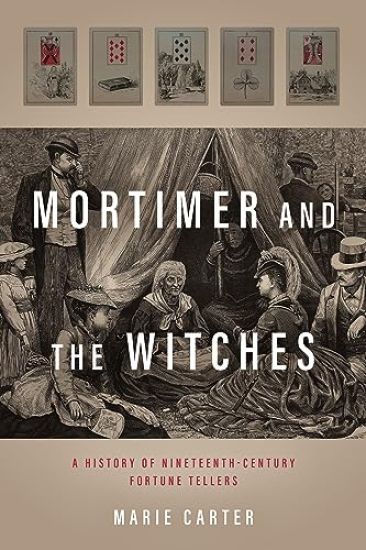
UNTAPPED NEW YORK: THE BEST NYC BOOKS OF ALL TIME The neglected histories of 19th-century NYC’s maligned working-class fortune tellers and the man who set out to discredit them Under the pseudonym Q. K. Philander Doesticks, P. B., humor writer Mortimer Thomson went undercover to investigate and report on the fortune tellers of New York City’s tenements and slums. When his articles were published in book form in 1858, they catalyzed a series of arrests that both scandalized and delighted the public. But Mortimer was guarding some secrets of his own, and in many ways, his own life paralleled the lives of the women he both visited and vilified. In Mortimer and the Witches, author Marie Carter examines the lives of these marginalized fortune tellers while also detailing Mortimer Thomson’s peculiar and complicated biography. Living primarily in the poor section of the Lower East Side, nineteenth-century fortune tellers offered their clients answers to all questions in astrology, love, and law matters. They promised to cure ailments. They spoke of loved ones from beyond the grave. Yet Doesticks saw them as the worst of the worst evil-doers. His investigative reporting aimed to stop unsuspecting young women from seeking the corrupt soothsaying advice of these so-called clairvoyants and to expose the absurd and woefully inaccurate predictions of these "witches." Marie Carter views these stories of working-class, immigrant women with more depth than Doesticks’s mocking articles would allow. In her analysis and discussion, she presents them as three-dimensional figures rather than the caricatures Doesticks made them out to be. What other professions at that time allowed women the kind of autonomy afforded by fortune-telling? Their eager customers, many of whom were newly arrived immigrants trying to navigate life in a new country, weren’t as naive and gullible as Doesticks made them out to be. They were often in need of guidance, seeking out the advice of someone who had life experience to offer or simply enjoying the entertainment and attention. Mortimer and the Witches offers new insight into the neglected histories of working-class fortune tellers and the creative ways that they tried to make a living when options were limited for them.
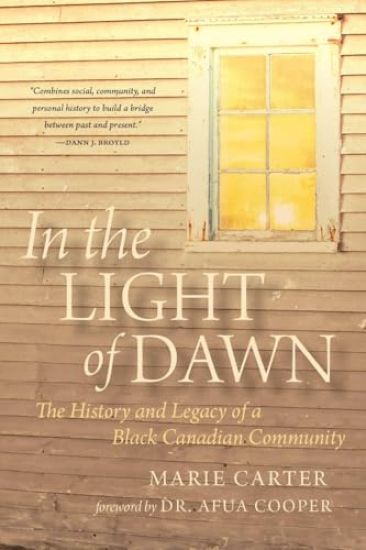
In the Light of Dawn

In the Light of Dawn

Marie Carter; Afua Cooper

University of Regina Press
2025
sidottu
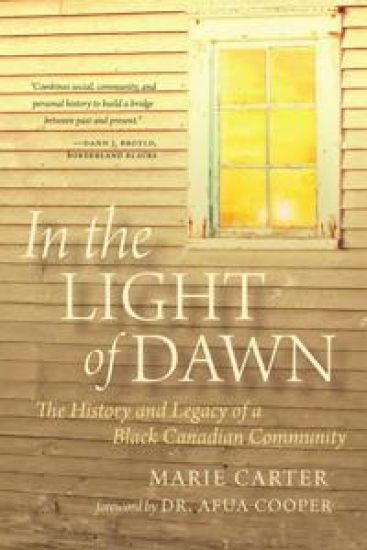
Illuminating two hundred years of lost Black History through the lens of an iconic abolitionist settlementIn the Light of Dawn shares the compelling story of how the iconic Dawn Settlement--now largely within the boundaries of Dresden, Ontario-- shaped (and was shaped by) a broader course of international events along a 200-year continuum of resistance and contribution. Using a geographic approach, the book reveals that the town's size, scope, and importance eclipses its previous narrow interpretations as a "failed" utopian colony at a terminus of the Underground Railroad lead by the Reverend Josiah Henson (the "real Uncle Tom" of Harriet Beecher Stowe's landmark anti-slavery novel). Beyond Henson, Dawn's history contains familiar figures like Frederick Douglass and Rosa Parks as well as a pantheon of lesser known but equally important Black leaders including Dennis Hill, William Whipper, William Carter, and Hugh Burnett. The trajectories of Dawn's residents often intersect with pivotal international events from the time of the fur trade to the modern Civil Rights movement. Activism from 19th-century Pennsylvania's Black Elite and other major American centres run like a golden thread through successive generations in Dawn, resulting in landmark actions such as the challenge to segregation of private businesses and publicly funded schools. Dawn's people not only resisted slavery and oppression but also made successful and lasting contributions to the growth of local communities and wider society. Far from being a failed colony, the Dawn Settlement emerges as a vibrant community of racial and economic diversity, where people of agency and ability influenced wider societal change. In the Light of Dawn presents an expansive yet nuanced account of a small rural town that challenges traditional notions of Black History and the contributions of early Black pioneers, leaving behind an enduring legacy.
In the Light of Dawn

In the Light of Dawn

Marie Carter; Afua Cooper

University of Regina Press
2025
pokkari
Illuminating two hundred years of lost Black History through the lens of an iconic abolitionist settlementIn the Light of Dawn shares the compelling story of how the iconic Dawn Settlement--now largely within the boundaries of Dresden, Ontario-- shaped (and was shaped by) a broader course of international events along a 200-year continuum of resistance and contribution. Using a geographic approach, the book reveals that the town's size, scope, and importance eclipses its previous narrow interpretations as a "failed" utopian colony at a terminus of the Underground Railroad lead by the Reverend Josiah Henson (the "real Uncle Tom" of Harriet Beecher Stowe's landmark anti-slavery novel). Beyond Henson, Dawn's history contains familiar figures like Frederick Douglass and Rosa Parks as well as a pantheon of lesser known but equally important Black leaders including Dennis Hill, William Whipper, William Carter, and Hugh Burnett. The trajectories of Dawn's residents often intersect with pivotal international events from the time of the fur trade to the modern Civil Rights movement. Activism from 19th-century Pennsylvania's Black Elite and other major American centres run like a golden thread through successive generations in Dawn, resulting in landmark actions such as the challenge to segregation of private businesses and publicly funded schools. Dawn's people not only resisted slavery and oppression but also made successful and lasting contributions to the growth of local communities and wider society. Far from being a failed colony, the Dawn Settlement emerges as a vibrant community of racial and economic diversity, where people of agency and ability influenced wider societal change. In the Light of Dawn presents an expansive yet nuanced account of a small rural town that challenges traditional notions of Black History and the contributions of early Black pioneers, leaving behind an enduring legacy.
Mortimer and the Witches

Mortimer and the Witches

Marie Carter

FORDHAM UNIVERSITY PRESS
2024
sidottu
UNTAPPED NEW YORK: THE BEST NYC BOOKS OF ALL TIME The neglected histories of 19th-century NYC's maligned working-class fortune tellers and the man who set out to discredit them Under the pseudonym Q. K. Philander Doesticks, P. B., humor writer Mortimer Thomson went undercover to investigate and report on the fortune tellers of New York City's tenements and slums. When his articles were published in book form in 1858, they catalyzed a series of arrests that both scandalized and delighted the public. But Mortimer was guarding some secrets of his own, and in many ways, his own life paralleled the lives of the women he both visited and vilified. In Mortimer and the Witches, author Marie Carter examines the lives of these marginalized fortune tellers while also detailing Mortimer Thomson's peculiar and complicated biography. Living primarily in the poor section of the Lower East Side, nineteenth-century fortune tellers offered their clients answers to all questions in astrology, love, and law matters. They promised to cure ailments. They spoke of loved ones from beyond the grave. Yet Doesticks saw them as the worst of the worst evil-doers. His investigative reporting aimed to stop unsuspecting young women from seeking the corrupt soothsaying advice of these so-called clairvoyants and to expose the absurd and woefully inaccurate predictions of these "witches." Marie Carter views these stories of working-class, immigrant women with more depth than Doesticks's mocking articles would allow. In her analysis and discussion, she presents them as three-dimensional figures rather than the caricatures Doesticks made them out to be. What other professions at that time allowed women the kind of autonomy afforded by fortune-telling? Their eager customers, many of whom were newly arrived immigrants trying to navigate life in a new country, weren't as naive and gullible as Doesticks made them out to be. They were often in need of guidance, seeking out the advice of someone who had life experience to offer or simply enjoying the entertainment and attention. Mortimer and the Witches offers new insight into the neglected histories of working-class fortune tellers and the creative ways that they tried to make a living when options were limited for them.