

Kirjailija
Marie-Dominique Chenu
Kirjat ja teokset yhdessä paikassa: 6 kirjaa, julkaisuja vuosilta 1975-2023, suosituimpien joukossa La Theologie Comme Science Au Xiiie Siecle. Vertaile teosten hintoja ja tarkista saatavuus suomalaisista kirjakaupoista.
Mukana myös kirjoitusasut: Marie Dominique Chenu
6 kirjaa
Kirjojen julkaisuhaarukka 1975-2023.
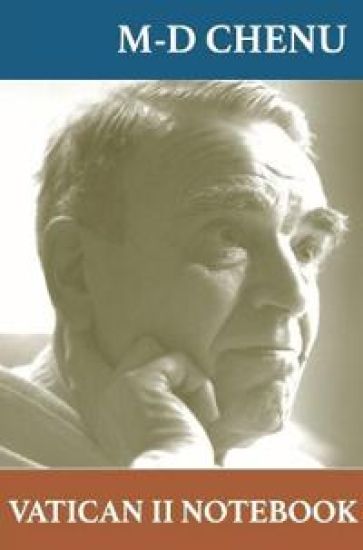
Chenu was a French Dominican friar, a renowned historian, and a theologian with extraordinary creative insight. He shaped the Dominican study center, Le Saulchoir, as its director and as an influential professor from the late 1920s until he was removed by the Vatican in 1942 (for writing a theological program for the school that sounded much like the future Pastoral Constitution on the Church in the Modern World). He influenced two generations of scholars with his rare combination of scientific excellence and pastoral wisdom. Fifty years after Vatican II, historians are still discovering documents and letters that offer important insights into the Council's meaning. This brief journal written by Marie-Dominique Chenu, masterfully edited by Alberto Melloni, is such a document. It reveals the decisive role Chenu played in several initiatives that shaped the Council's character; but, more importantly, it brings to light the dynamic networking of bishops and theologians that lay behind the Council's achievement of so much in so few years. Covering the years 1962-1963, Chenu's Notebook allows readers to feel the drama of the Council's opening period.At the Council, he promoted and drafted its great Message to the World that was the Council's first published statement. In it, many of Chenu's key intuitions became part of an official church statement about its hope for the future: attention to the 'signs of the times', the integration of science and technology into the Church's pastoral message, and commitment to justice and the care of the poor. His Vatican II Notebook is an exciting peek into great moments in a great man's life.
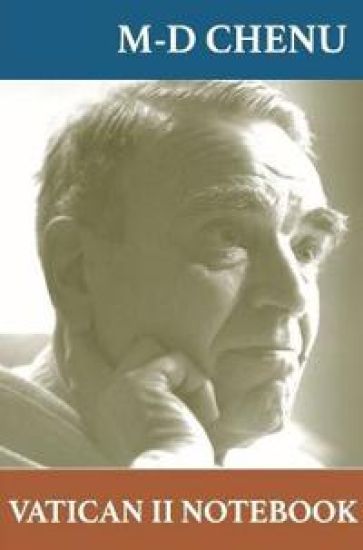
Chenu was a French Dominican friar, a renowned historian, and a theologian with extraordinary creative insight. He shaped the Dominican study center, Le Saulchoir, as its director and as an influential professor from the late 1920s until he was removed by the Vatican in 1942 (for writing a theological program for the school that sounded much like the future Pastoral Constitution on the Church in the Modern World). He influenced two generations of scholars with his rare combination of scientific excellence and pastoral wisdom. Fifty years after Vatican II, historians are still discovering documents and letters that offer important insights into the Council's meaning. This brief journal written by Marie-Dominique Chenu, masterfully edited by Alberto Melloni, is such a document. It reveals the decisive role Chenu played in several initiatives that shaped the Council's character; but, more importantly, it brings to light the dynamic networking of bishops and theologians that lay behind the Council's achievement of so much in so few years. Covering the years 1962-1963, Chenu's Notebook allows readers to feel the drama of the Council's opening period.At the Council, he promoted and drafted its great Message to the World that was the Council's first published statement. In it, many of Chenu's key intuitions became part of an official church statement about its hope for the future: attention to the 'signs of the times', the integration of science and technology into the Church's pastoral message, and commitment to justice and the care of the poor. His Vatican II Notebook is an exciting peek into great moments in a great man's life.
Il n'est pas impossible que les presentes etudes sur la theologie au XIIe siecle aident a mieux comprendre l'unite de la theologie thomiste qui, aux yeux de leur auteur, est inseparable du thomisme veritable. On a souvent observe qu'il y a deja de la scolastique dans la theologie au XIIe . Il est aussi important de noter qu'il y a encore de la patristique dans la scolastique du XIIIe . Il semble desormais certain qu'on doive renoncer au schema historique longtemps percu: fin de la patristique, scolastique, Renaissance. Non que le schema soit faux, mais il est bien trop sommaire. A bien des egards, le XIIe siecle se presente comme le temps d'un ample mouvement theologique, dont certaines tendances se developpent en scolastique pendant que d'autres, refoulees par l'extraordinaire fecondite de la theologie du XIIIe siecle, entrent dans une sorte de demi-sommeil, ou simplement deviennent moins visibles, en attendant le retour offensif qu'elles prononceront au XIVe siecle. Il ne fait pour nous aucun doute que la devotio moderna, dont le sens nouveau est d'etre une reaction contre la scolastique du XIIIe siecle, continue simplement un courant plus ancien oppose d'avance a des methodes theologiques dont, meme vers la fin du XIIe siecle, le developpement futur n'etait pas encore previsible. Etienne Gilson, Preface
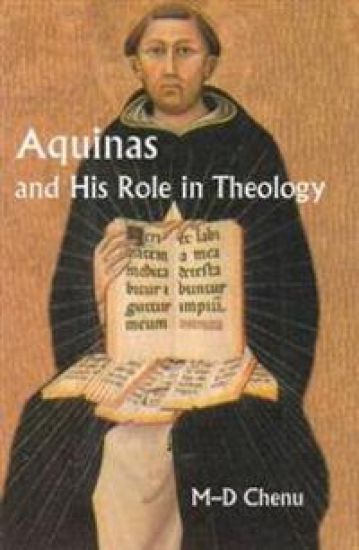
In Aquinas and His Role in Theology, Marie Dominique Chenu provides a lively and representative overview of the life and writings of the thirteenth-century theologian whom many consider to be the greatest master of Catholic religious thought.A rich explanation of the prolific and versatile books of Aquinas follows the story of his life's journey through the heart of Europe in the high Middle Ages. Chenu also portrays the religious and spiritual personality of Aquinas, showing how his typically systematic theology is rooted in personal contemplative roots and a passion for pastoral preaching.Chapters are "The Friar Preacher," "Master in Sacred Theology," "The Contemplative," "The Herald of a New Christianity," "Imago Mundi," "The Virtuous Life," "The Fate of St. Thomas," and "The Works of St. Thomas." Includes illustrations.Marie Dominique Chenu was a leader in applying historical method to the study of Thomas Aquinas. He published widely in both medieval and contemporary theology.Paul Philibert, OP, STD, is the author of Seeing and Believing and served as Translator for Liturgy and the Arts, both published by The Liturgical Press. He is also Distinguished Visiting Professor of Church and Society at the Aquinas Institute of Theology in St. Louis, Missouri.
La Theologie Comme Science Au Xiiie Siecle
Marie-Dominique Chenu
Librarie Philosophique J. Vrin
1975
nidottu