Kirjojen hintavertailu. Mukana 12 595 353 kirjaa ja 12 kauppaa.

Kirjailija

Marilyn Lake

Kirjat ja teokset yhdessä paikassa: 6 kirjaa, julkaisuja vuosilta 1995-2019, suosituimpien joukossa Getting Equal: The History of Australian Feminism. Vertaile teosten hintoja ja tarkista saatavuus suomalaisista kirjakaupoista.

6 kirjaa

Kirjojen julkaisuhaarukka 1995-2019.

Progressive New World

Progressive New World

Marilyn Lake

Harvard University Press
2019
sidottu
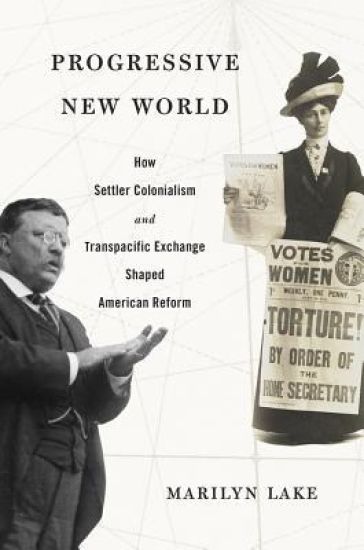
The paradox of progressivism continues to fascinate more than one hundred years on. Democratic but elitist, emancipatory but coercive, advanced and assimilationist, Progressivism was defined by its contradictions. In a bold new argument, Marilyn Lake points to the significance of turn-of-the-twentieth-century exchanges between American and Australasian reformers who shared racial sensibilities, along with a commitment to forging an ideal social order. Progressive New World demonstrates that race and reform were mutually supportive as Progressivism became the political logic of settler colonialism.White settlers in the United States, who saw themselves as path-breakers and pioneers, were inspired by the state experiments of Australia and New Zealand that helped shape their commitment to an active state, women’s and workers’ rights, mothers’ pensions, and child welfare. Both settler societies defined themselves as New World, against Old World feudal and aristocratic societies and Indigenous peoples deemed backward and primitive.In conversations, conferences, correspondence, and collaboration, transpacific networks were animated by a sense of racial kinship and investment in social justice. While “Asiatics” and “Blacks” would be excluded, segregated, or deported, Indians and Aborigines would be assimilated or absorbed. The political mobilizations of Indigenous progressives—in the Society of American Indians and the Australian Aborigines’ Progressive Association—testified to the power of Progressive thought but also to its repressive underpinnings. Burdened by the legacies of dispossession and displacement, Indigenous reformers sought recognition and redress in differently imagined new worlds and thus redefined the meaning of Progressivism itself.
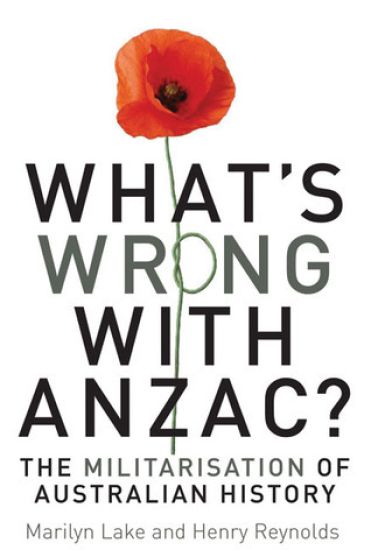
What's Wrong with Anzac?

What's Wrong with Anzac?

Marilyn Lake; Henry Reynolds

NewSouth Publishing
2010
nidottu
Brave and controversial, this account argues that Australians’ collective obsession with the Australian and New Zealand Army Corps (ANZAC) has distorted their perception of national history. Delving into the history of ANZAC and the mythologies surrounding it, this detailed record explores topics such as the formation of Australia’s national holiday—ANZAC Day—and the way in which the spirit of ANZAC is taught in the nation's classrooms. Ultimately, this informative narrative claims that ANZAC has become a conservative political force in Australia and questions whether ANZAC’S renowned foreign battles were worth all of the bloodshed. Daring, intelligent, and thought-provoking, this is a must-read for those interested in Australian or military history.
Drawing the Global Colour Line

Drawing the Global Colour Line

Marilyn Lake; Henry Reynolds

Cambridge University Press
2008
sidottu
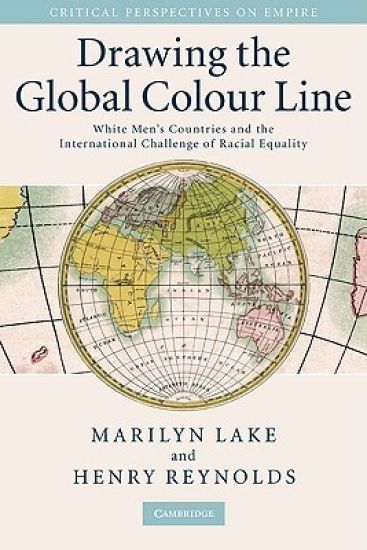
In 1900 W. E. B. DuBois prophesied that the colour line would be the key problem of the twentieth-century and he later identified one of its key dynamics: the new religion of whiteness that was sweeping the world. Whereas most historians have confined their studies of race-relations to a national framework, this book studies the transnational circulation of people and ideas, racial knowledge and technologies that under-pinned the construction of self-styled white men's countries from South Africa, to North America and Australasia. Marilyn Lake and Henry Reynolds show how in the late nineteenth century and early twentieth century these countries worked in solidarity to exclude those they defined as not-white, actions that provoked a long international struggle for racial equality. Their findings make clear the centrality of struggles around mobility and sovereignty to modern formulations of both race and human rights.
Drawing the Global Colour Line

Drawing the Global Colour Line

Marilyn Lake; Henry Reynolds

Cambridge University Press
2008
pokkari
In 1900 W. E. B. DuBois prophesied that the colour line would be the key problem of the twentieth-century and he later identified one of its key dynamics: the new religion of whiteness that was sweeping the world. Whereas most historians have confined their studies of race-relations to a national framework, this book studies the transnational circulation of people and ideas, racial knowledge and technologies that under-pinned the construction of self-styled white men's countries from South Africa, to North America and Australasia. Marilyn Lake and Henry Reynolds show how in the late nineteenth century and early twentieth century these countries worked in solidarity to exclude those they defined as not-white, actions that provoked a long international struggle for racial equality. Their findings make clear the centrality of struggles around mobility and sovereignty to modern formulations of both race and human rights.
Getting Equal: The History of Australian Feminism
After decades of feminist activism women now enjoy freedoms unimagined by their grandmothers and mothers, but the goal of equality remains elusive: women still earn only 65% of what men earn. Pursuing equality has meant participating on men's terms and has reinforced the idea that men's way of organizing the world is the norm. In Getting Equal, Marilyn Lake traces the full story of Australian feminism.
Freedom Bound II

Freedom Bound II

Marilyn Lake

Allen Unwin
1995
nidottu
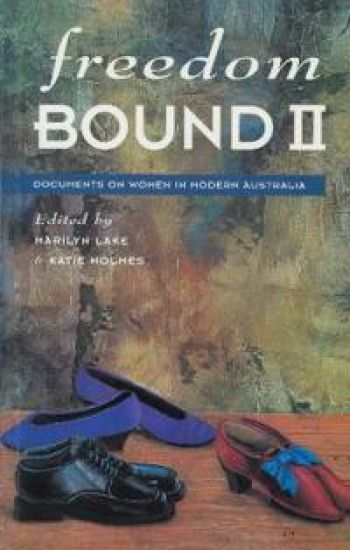
Over generations, Australian women have envisaged a world of freedom. This new collection of documents - letters, songs, poetry, diary extracts - charts the visions that inspired women and the obstacles that confronted them.Exploring twentieth-century Australia, Freedom Bound II shows how intertwined were women's public and personal lives, and how bound by custom, ties, affections and duties. The different meanings of freedom have been shaped by the nature of women's oppression, their quests given focus by their different points of departure. Aboriginal women sought self-determination and the right to keep their children; migrant women sought to affirm culture and family ties, and escape discrimination and poverty. Overburdened mothers wanted relief from continual childbearing and a measure of self-fulfilment. Numerous women have campaigned for freedom from domestic tyranny and male violence.Together with its companion volume, Freedom Bound I, which deals with the period of colonisation, this volume documents the dreams that inspired women, the pleasures and the pain that informed their politics and the desires that enthralled them, even as they bade them to be free. It is an essential resource for students and teachers of Australian women's history.