Kirjojen hintavertailu. Mukana 12 581 469 kirjaa ja 12 kauppaa.

Kirjailija

Marilyn Palmer

Kirjat ja teokset yhdessä paikassa: 9 kirjaa, julkaisuja vuosilta 1994-2020, suosituimpien joukossa Industrial Archaeology. Vertaile teosten hintoja ja tarkista saatavuus suomalaisista kirjakaupoista.

9 kirjaa

Kirjojen julkaisuhaarukka 1994-2020.

The Art Teacher's Survival Guide for Elementary and Middle Schools

The Art Teacher's Survival Guide for Elementary and Middle Schools

Helen D. Hume; Marilyn Palmer

Jossey-Bass Inc.,U.S.
2020
nidottu
The perennial bestseller—now in a new edition Authoritative and practical, this comprehensive guide offers everything a teacher needs to know for conducting an effective art instruction and appreciation program. The Third Edition of The Art Teacher's Survival Guide for Elementary and Middle Schools includes a complete update on public-relations guidelines, and reference material examples. The revised edition also features many new projects, an update on current projects and includes an explanation of the hot topic amongst art educators, Teaching Artistic Behavior (TAB/choice). Choice-based art education is reflected in the authors’ discussion of teaching in mixed-media, ceramics, photography, sculpture, and art history. More than 100 creative art projects, from drawing to digital mediaOffers teaching tools, tips, and multicultural curriculum resourcesIncludes new material on logical ways to encourage individual and personal solutions to a problemGives teachers more latitude as to how individuality is suggested in a lesson This is an invaluable compendium for art educators and classroom teachers alike.
Technology in the Country House

Technology in the Country House

Marilyn Palmer; Ian West

Historic England
2016
sidottu
Visits to country houses are an important leisure pursuit throughout the British Isles, not just to appreciate their superb architecture, great paintings and elaborate furniture but also to experience something of the past life of our great families and their households. Mark Girouard suggested in Life in the English Country House that ‘even when the customs have gone, the houses remain, enriched by the accumulated alterations, and often accumulated contents of several centuries. Abandoned lifestyles can be disinterred from them in much the same way as from the layers of an archaeological dig’. By the 19th century, life in most country houses changed as a result of various technical inventions such as improved water supplies, flushing water closets, boilers and pipes to provide central heating, internal communications by bells and then telephones, and better lighting by means of gas and electricity. Country houses, however, were usually too far from urban centres to take advantage of centralised sources of supply and so were obliged to set up their own systems if they wanted any of these services to improve the comfort of daily living. Some landowners chose to do this; others did not, and this book examines the motivations for their decisions. It also sets out to discover what evidence has survived for the impact of technological innovation on the buildings, contents, parks and gardens of country houses and on the lives of the people within them. In the course of their research, the authors have visited nearly one hundred houses around the United Kingdom, mostly those open to the public and the majority in the hands of the National Trust. Many books have been devoted to the life of those in domestic service in such houses, but this book looks not so much at the social records of their lives as the actual physical evidence for the greater levels of comfort and convenience sought by landowners in country houses from the 18th to the early 20th centuries.
Industrial Archaeology

Industrial Archaeology

Marilyn Palmer; Michael Nevell; Mark Sissons

Council for British Archaeology
2012
nidottu
This Handbook provides an informative and accessible guide to the industrial remains of the UK. It is essential reading for anyone with an interest in our industrial heritage, giving concise summaries of the history of different industries, together with descriptions of the structures and below-ground remains likely to be encountered. The book also considers the power which drove these industries, the transport network which delivered the products and the houses in which the workforce lived. It further reviews the legislation protecting industrial sites and the problems and potential of their adaptive re-use.
Industry in the Landscape, 1700-1900

Industry in the Landscape, 1700-1900

Peter Neaverson; Marilyn Palmer

Routledge
2011
nidottu
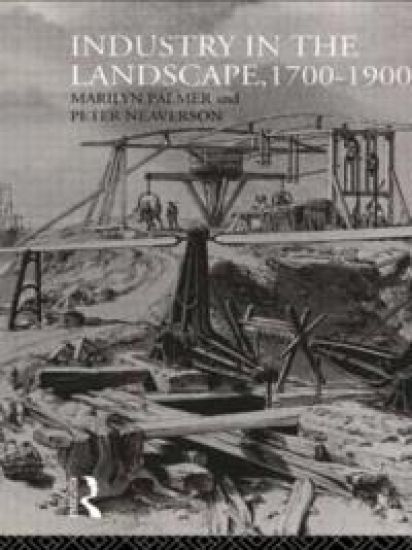
Two hundred years of industry have transformed the British landscape. This book enables the reader to reconstruct the landscape of past industry. The authors are industrial archaeologists of national standing whose concern is to use surviving material evidence and contemporary sources to study the former working conditions of men and women. Comprehensive in coverage, the book examines fuels, metals, clothing, food, building and transport. It makes clear the tangible elements which form the basis for recreation of past landscapes and demonstrates both their function and the context in which they should be considered.
Dictionary of Industrial Archaeology

Dictionary of Industrial Archaeology

William Jones; Marilyn Palmer

The History Press Ltd
2006
nidottu
This dictionary covers the period of the Industrial Revolution, the years between 1750 and 1850, when the major developments and technical advances occurred that are the concern of industrial archaeologists. This is the only book of its kind and designed for students, professionals and academics, railway and canal enthusiasts, and anyone interested in Britain's industrial history.
Industrial Archaeology

Industrial Archaeology

Marilyn Palmer

Routledge
1998
nidottu
Industrial Archaeology uses the techniques of mainstream archaeological excavation, analysis and interpretation to present an enlightening picture of industrial society. Technology and heritage have, until recently, been the focal points of study in industrialization. Industrial Archaeology sets out a coherent methodology for the discipline which expands on and extends beyond the purely functional analysis of industrial landscapes, structures and artefacts to a broader consideration of their cultural meaning and value. The authors examine, for example, the social context of industrialization, including the effect of new means of production on working patterns, diet and health.
Industrial Archaeology

Industrial Archaeology

Marilyn Palmer

Routledge
1998
sidottu
Industrial Archaeology uses the techniques of mainstream archaeological excavation, analysis and interpretation to present an enlightening picture of industrial society. Technology and heritage have, until recently, been the focal points of study in industrialization. Industrial Archaeology sets out a coherent methodology for the discipline which expands on and extends beyond the purely functional analysis of industrial landscapes, structures and artefacts to a broader consideration of their cultural meaning and value. The authors examine, for example, the social context of industrialization, including the effect of new means of production on working patterns, diet and health.
Industry in the Landscape, 1700-1900

Industry in the Landscape, 1700-1900

Peter Neaverson; Marilyn Palmer

Routledge
1994
sidottu
Two hundred years of industry have transformed the British landscape. This book enables the reader to reconstruct the landscape of past industry. The authors are industrial archaeologists of national standing whose concern is to use surviving material evidence and contemporary sources to study the former working conditions of men and women. Comprehensive in coverage, the book examines fuels, metals, clothing, food, building and transport. It makes clear the tangible elements which form the basis for recreation of past landscapes and demonstrates both their function and the context in which they should be considered.