Kirjailija
Marilyn Strathern
Kirjat ja teokset yhdessä paikassa: 23 kirjaa, julkaisuja vuosilta 1990-2024, suosituimpien joukossa Women in Between. Vertaile teosten hintoja ja tarkista saatavuus suomalaisista kirjakaupoista.
23 kirjaa
Kirjojen julkaisuhaarukka 1990-2024.
Anthropologists have long considered kinship as the basis for social solidarity. Indeed, the idea that kinship is grounded in positive sociality has found its way into most anthropological accounts and has served as an orienting framework directing decades of scholarly research. But what about when it is not? What about instances when kinship is anything but ‘warm and fuzzy’ but is characterized, instead, by neglect, violence, negative affect, or a lack of nurturance and care? In the three interlinked sections of this volume, the view that kinship is about “solidarity” and “care” is challenged by exploring how kin relations are not only about connection and inclusion but also about disconnection, exclusion, neglect, and violence. Kinship relationships that feel “positive” and “good” take a great deal of perseverance and work; there is nothing “natural” about kinship ties as being based on positive sociality. In these chapters, the contributors take seriously the contingency of kinship relations (the moments when kinship breaks down or is a source of suffering) and how this prompts scholars to develop new theoretical and methodological perspectives.

In engaging essays, celebrated anthropologist Marilyn Strathern reflects on the complexities of social life. Property, Substance, and Effect draws on Marilyn Strathern’s longstanding interest in the reification of social relations. If the world is shrinking in terms of resources and access to them, it is expanding in terms of new candidates for proprietorship. How new relations are brought into being is among the many questions about property, ownership, and knowledge that these essays bring together. Twenty years have not diminished the interest in the book’s opening challenge: if one were inventing a method of enquiry by which to configure the complexity of social life, one might wish to invent something like the anthropologist’s ethnographic practice. A wide range of studies deliberately brings into conversation claims people make on one another through relations imagined in the form of body-substance along with the increasing visibility of conceptual or intellectual work as property. Whether one lives in Papua New Guinea or Great Britain, categories of knowledge are being dissolved and reformed at a tempo that calls for reflection—and for the kind of lateral reflection afforded through the “ethnographic effect.”
The concept of relation holds a privileged place in how anthropologists think and write about the social and cultural lives they study. In Relations, eminent anthropologist Marilyn Strathern provides a critical account of this key concept and its usage and significance in the English-speaking world. Exploring relation's changing articulations and meanings over the past three centuries, Strathern shows how the historical idiosyncrasy of using an epistemological term for kinspersons (“relatives”) was bound up with evolving ideas about knowledge-making and kin-making. She draws on philosophical debates about relation-such as Leibniz's reaction to Locke-and what became its definitive place in anthropological exposition, elucidating the underlying assumptions and conventions of its use. She also calls for scholars in anthropology and beyond to take up the limitations of Western relational thinking, especially against the background of present ecological crises and interest in multispecies relations. In weaving together analyses of kin-making and knowledge-making, Strathern opens up new ways of thinking about the contours of epistemic and relational possibilities while questioning the limits and potential of ethnographic methods.
Before and After Gender – Sexual Mythologies of Everyday Life
Marilyn Strathern; Sarah Franklin; Judith Butler
HAU
2016
nidottu
Written in the early 1970s amidst widespread debate over the causes of gender inequality, Marilyn Strathern’s Before and After Gender was intended as a widely accessible analysis of gender as a powerful cultural code and sex as a defining mythology. But when the series for which it was written unexpectedly folded, the manuscript went into storage, where it remained for more than four decades. This book finally brings it to light, giving the long-lost feminist work—accompanied here by an afterword from Judith Butler—an overdue spot in feminist history. Strathern incisively engages some of the leading feminist thinkers of the time, including Shulamith Firestone, Simone de Beauvoir, Ann Oakley, and Kate Millett. Building with characteristic precision toward a bold conclusion in which she argues that we underestimate the materializing grammars of sex and gender at our own peril, she offers a powerful challenge to the intransigent mythologies of sex that still plague contemporary society. The result is a sweeping display of Strathern’s vivid critical thought and an important contribution to feminist studies that has gone unpublished for far too long.
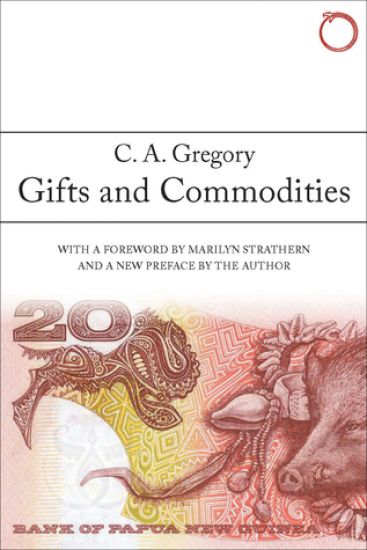
C A Gregory's Gifts and Commodities is one of the undisputed classics of economic anthropology. On its publication in 1982, it spurred intense, ongoing debates about gifts and gifting, value, exchange, and the place of political economy in anthropology. Gifts and Commodities is, at once, a critique of neoclassical economics and development theory, a critical history of colonial Papua New Guinea, and a comparative ethnography of exchange in Melanesian societies. This new edition includes a new foreword by anthropologist Marilyn Strathern that discusses the ongoing response to the book and the debates it has engendered, debates that have only become more salient in our ever-more-neoliberal and ever-more-globalized era.
When a Woman Becomes a Religious Dynasty
Hildegard Diemberger; Marilyn Strathern
Columbia University Press
2014
pokkari
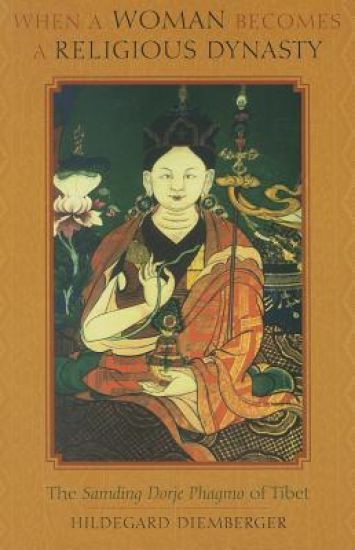
In the fifteenth century, the princess Chokyi Dronma was told by the leading spiritual masters of her time that she was the embodiment of the ancient Indian tantric deity Vajravarahi, known in Tibetan as Dorje Phagmo, the Thunderbolt Female Pig. After suffering a great personal tragedy, Chokyi Dronma renounced her royal status to become a nun, and, in turn, the tantric consort of three outstanding religious masters of her era. After her death, Chokyi Dronma's masters and disciples recognized a young girl as her reincarnation, the first in a long, powerful, and influential female lineage. Today, the twelfth Samding Dorje Phagmo leads the Samding monastery and is a high government cadre in the Tibet Autonomous Region. Hildegard Diemberger builds her book around the translation of the first biography of Chokyi Dronma recorded by her disciples in the wake of her death. The account reveals an extraordinary phenomenon: although it had been believed that women in Tibet were not allowed to obtain full ordination equivalent to monks, Chokyi Dronma not only persuaded one of the highest spiritual teachers of her era to give her full ordination but also established orders for other women practitioners and became so revered that she was officially recognized as one of two principal spiritual heirs to her main master. Diemberger offers a number of theoretical arguments about the importance of reincarnation in Tibetan society and religion, the role of biographies in establishing a lineage, the necessity for religious teachers to navigate complex networks of political and financial patronage, the cultural and social innovation linked to the revival of ancient Buddhist civilizations, and the role of women in Buddhism. Four introductory, stage-setting chapters precede the biography, and four concluding chapters discuss the establishment of the reincarnation lineage and the role of the current incarnation under the peculiarly contradictory communist system.
In the village of Elmdon in north-west Essex, members of certain families are distinguished from other residents as being `real Elmdon'. Through a detailed ethnography of the structure of the village, and the interrelationships between its various families, work patterns and community activities, Marilyn Strathern provides an understanding of the characteristics of those who most vehemently claim to be 'real' village people. Yet this account goes far beyond ethnographic description. Its inspiration lies with Dr Audrey Richards, a distinguished anthropologist whose most substantial contribution has been in Africa, while Dr Strathern herself has had many years' field experience in Papua New Guinea. As 'outsiders' they bring a fresh approach to English village studies. The book takes the idea of 'village' not for granted, but as a dogma to be accounted for. Dr Strathern argues that in order to appreciate why the village should be so salient a reference point in people's self-classifications, it is necessary to understand what the village stands for in their ideas of the world.
When a Woman Becomes a Religious Dynasty
Hildegard Diemberger; Marilyn Strathern
Columbia University Press
2007
sidottu
In the fifteenth century, the princess Chokyi Dronma was told by the leading spiritual masters of her time that she was the embodiment of the ancient Indian tantric deity Vajravarahi, known in Tibetan as Dorje Phagmo, the Thunderbolt Female Pig. After suffering a great personal tragedy, Chokyi Dronma renounced her royal status to become a nun, and, in turn, the tantric consort of three outstanding religious masters of her era. After her death, Chokyi Dronma's masters and disciples recognized a young girl as her reincarnation, the first in a long, powerful, and influential female lineage. Today, the twelfth Samding Dorje Phagmo leads the Samding monastery and is a high government cadre in the Tibet Autonomous Region. Hildegard Diemberger builds her book around the translation of the first biography of Chokyi Dronma recorded by her disciples in the wake of her death. The account reveals an extraordinary phenomenon: although it had been believed that women in Tibet were not allowed to obtain full ordination equivalent to monks, Chokyi Dronma not only persuaded one of the highest spiritual teachers of her era to give her full ordination but also established orders for other women practitioners and became so revered that she was officially recognized as one of two principal spiritual heirs to her main master. Diemberger offers a number of theoretical arguments about the importance of reincarnation in Tibetan society and religion, the role of biographies in establishing a lineage, the necessity for religious teachers to navigate complex networks of political and financial patronage, the cultural and social innovation linked to the revival of ancient Buddhist civilizations, and the role of women in Buddhism. Four introductory, stage-setting chapters precede the biography, and four concluding chapters discuss the establishment of the reincarnation lineage and the role of the current incarnation under the peculiarly contradictory communist system.
How can we hold in the same view both cultural or historical constructs and generalities about social existence? Kinship, Law and the Unexpected takes up an issue at the heart of studies of society - the way we use relationships to uncover relationships. Relationality is a phenomenon at once contingent (on certain ways of knowing) and ubiquitous (to social life). The role of relations in western (Euro-American) knowledge practices, from the scientific revolution onwards, raises a question about the extent to which Euro-American kinship is the kinship of a knowledge-based society. The argument takes the reader through current issues in biotechnology, new family formations and legal interventions, and intellectual property debates, to matters of personhood and ownership afforded by material from Melanesia and elsewhere. If we are often surprised by what our relatives do, we may also be surprised by what relations tells us about the world we live in.
Updated with a new Preface, this seminal work challenges the routine ways in which anthropologists have thought about the complexity and quantity of their materials. Marilyn Strathern focuses on a problem normally regarded as commonplace; that of scale and proportion. She combines a wide-ranging interest in current theoretical issues with close attention to the cultural details of social life, attempting to establish proportionality between them. Strathern gives equal weight to two areas of contemporary debate: The difficulties inherent in anthropologically representing complex societies, and the future of cross-cultural comparison in a field where 'too much' seems known. The ethnographic focus of this book emphasizes the context through which Melanesianists have managed the complexity of their own accounts, while at the same time unfolding a commentary on perception and the mixing of indigenous forms. Revealing unexpected replications in modes of thought and in the presentation of ambiguous images, Strathern has fashioned a unique contribution to the anthropological corpus. This book was originally published under the sponsorship of the Association for Social Anthropology in Oceania.
In Commons and Borderlands a leading social anthropologist examines early twenty-first- century interests in interdisciplinarity, with particular attention to the conjunction of science and society. Interdisciplinary practice has become well entrenched in any number of scientific disciplines, or disciplines from the humanities or from social science for that matter. This does not deter current rhetoric which sees new opportunities in new combinations of interests. One arresting strand is the promise that in a strong form - transdisciplinarity - 'science' might thereby be brought into 'society'. Marilyn Strathern's questioning of this process addresses the challenge that notions of property ownership pose to the expected flow of knowledge. As is fitting for a consideration of the flow and transformational properties of knowledge, the contents of this collection are knowingly designated 'working papers', left as open, unfinished statements to highlight their future and the work they may still do. Marilyn Strathern is William Wyse Professor of Social Anthropology, University of Cambridge. Contents Preface; Introduction - In crisis mode : a comment on interculturality; Chapter One - Knowledge on its travels: Dispersal and divergence in the make-up of communities; Chapter Two - Commons and borderland; Chapter Three - Who owns academic knowledge?; Chapter Four - Accountability across disciplines; Endnote - Re-describing society. Also of Interest Lawrence Kalinoe and James Leach, Rationales of Ownership: Transactions and Claims to Ownership in Contemporary Papua New Guinea (January 2004 ISBN 0-9545572-0-4/Hardback USD54.99 ISBN 0-9545572-1-2/Paperback: USD20.99)
Do audit cultures deliver greater responsibility, or do they stifle creative thought? We are all increasingly subjected to auditing, and alongside that, subject to accountability for our behaviour and actions. Audit cultures pervade in the workplace, our governmental and public institutions as well as academia. However, audit practices themselves have consequences, beneficial and detrimental, that often go unexamined. This book examines how pervasive practices of accountability are, the political and cultural conditions under which accountability flourishes and the consequences of their application. Twelve social anthropologists look at this influential and controversial phenomenon, and map out the effects around Europe and the Commonwealth, as well as in contexts such as the European Commission, the International Monetary Fund and Academic institutions. The result provides an excellent insight into auditing and its dependence on precepts of economic efficiency and ethical practice. This point of convergence between these moral and financial priorities provides an excellent opening for debate on the culture of management and accountability.
Technologies of Procreation
Jeanette Edwards; Sarah Franklin; Eric Hirsch; Frances Price; Marilyn Strathern
Routledge
1999
sidottu
Technologies of Procreation bridges the gap between medical technology and cultural values. It looks at the ways in which the 'technologies of procreation' affect society from an anthropological perspective.
Technologies of Procreation
Jeanette Edwards; Sarah Franklin; Eric Hirsch; Frances Price; Marilyn Strathern
Routledge
1999
nidottu
Technologies of Procreation bridges the gap between medical technology and cultural values. It looks at the ways in which the 'technologies of procreation' affect society from an anthropological perspective.
In 1971 Marilyn Strathern provided what has now become a classic ethnographic text, Women In Between. Significantly, this pioneering contribution to feminist anthropology focuses on gender relations rather than on women alone. Re-issued now, Women in Between examines the attitudes of the Hagen people and analyzes the power of women in their male-dominated system. Strathern cites case studies of marriage arrangements, divorce, and traditional settlement disputes to illustrate women's status in Hagen society.
Central as kinship has been to the development of British social anthropology, this is the first attempt by an anthropologist to situate ideas about English kinship in a cultural context. Based on the Morgan lectures given at the University of Rochester in 1989, After Nature challenges the traditional separation of western kinship studies from the study of society. Marilyn Strathern looks back at mid-century writings on kinship, both within anthropology and outside, and demonstrates continuities between middle-class folk models of kinship and anthropological kinship theory. She also shows how conceptualisations of change have enabled that past world to produce the present one. The values placed upon individual choice, as well as the vanishing of ‘society’ as a self-evident point of reference, are part of an evolving cultural explicitness about kinship and the naturalness of connections between persons. After Nature is a timely reflection at a moment when advances in reproductive technology raise questions about the natural basis of kinship relations.