Kirjojen hintavertailu. Mukana 12 235 782 kirjaa ja 12 kauppaa.

Kirjailija

Marin R. Sullivan

Kirjat ja teokset yhdessä paikassa: 6 kirjaa, julkaisuja vuosilta 2016-2026, suosituimpien joukossa Isamu Noguchi. Vertaile teosten hintoja ja tarkista saatavuus suomalaisista kirjakaupoista.

6 kirjaa

Kirjojen julkaisuhaarukka 2016-2026.

Isamu Noguchi

Isamu Noguchi

Monica Obniski; Marin R. Sullivan

RIZZOLI INTERNATIONAL PUBLICATIONS
2026
sidottu
This revelatory book explores the contributions of Betsy James Wyeth (1921 2020), a multitalented maker of designed environments and interior spaces, preservationist, and creative partner to the beloved American artist Andrew Wyeth. Betsy herself created the world around her through imagery, decorative arts objects, documents, and paintings by Andrew and others, which were largely shaped by Betsy and the worlds she created. The volume features stunning photography of key sites such as Brinton s Mill and environments that define her creative vision. Scholars discuss her process and significant role in projects like the Shore House at Broad Cove Farm, the site of the formation of Betsy s refined and minimalist design sensibility. Personal reflections from her family shed light on Betsy s life and influence, with additional contributions that explore her publishing endeavors and support for the maritime economy. Through a wide range of fine and decorative art objects from the remarkable and largely unexhibited holdings of the Wyeth Foundation for American Art that pertain to Betsy s legacy, select loans, new photography, this book allows visitors to understand and explore her designed environments as never before.
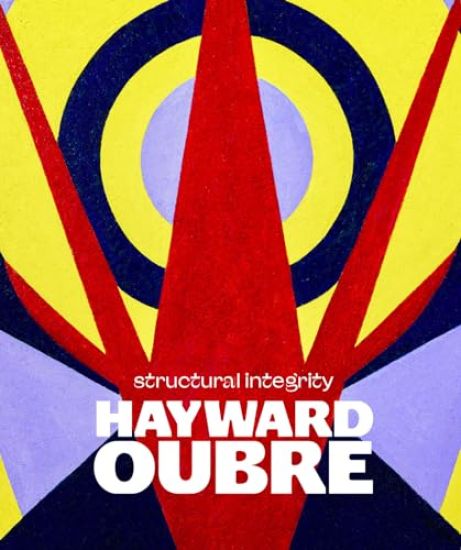
Hayward Oubre

Hayward Oubre

Katelyn D. Crawford; Amalia K. Amaki; Rebecca L. Giordano; Shawnya L. Harris; Marin R. Sullivan; Diana Tuite; Hina M. Zaidi

D GILES LTD
2024
sidottu
Best known for his wire sculptures, Hayward L. Oubre, Jr. (1916–2006), was an important Black American artist and educator, who has until now received little attention from scholars and museums. He created sculptures, paintings, and prints that tested the bounds of each of these mediums. These works share a previously untold history of American modernism rooted in the South. Academically-trained, Oubre worked with an everyday material—wire coat hangers—that led some early critics to associate his sculpture with folk art, despite wire rising to prominence as a material for modernist sculptors in this period. While making his art he also trained a subsequent generation of artists through his teaching, first at Alabama State College (now Alabama State University), from 1949 to 1965, and then at Winston-Salem State University, from 1965 to 1981, both Historically Black Colleges and Universities. Within Oubre’s story is a history of Alabama art shaping American art that has never been written. This new volume, and its accompanying exhibition, will begin to tell this story, laying the foundation for future projects on the work of Black artists in Alabama and the South.
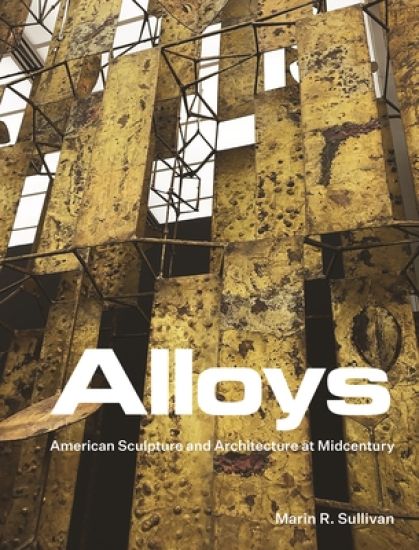
Alloys

Alloys

Marin R. Sullivan

PRINCETON UNIVERSITY PRESS
2022
sidottu
A new look at the interrelationship of architecture and sculpture during one of the richest periods of American modern designAlloys looks at a unique period of synergy and exchange in the postwar United States, when sculpture profoundly shaped architecture, and vice versa. Leading architects such as Gordon Bunshaft and Eero Saarinen turned to sculptors including Harry Bertoia, Alexander Calder, Richard Lippold, and Isamu Noguchi to produce site-determined, large-scale sculptures tailored for their buildings’ highly visible and well-traversed threshold spaces. The parameters of these spaces—atriums, lobbies, plazas, and entryways—led to various designs like sculptural walls, ceilings, and screens that not only embraced new industrial materials and processes, but also demonstrated art’s ability to merge with lived architectural spaces.Marin Sullivan argues that these sculptural commissions represent an alternate history of midcentury American art. Rather than singular masterworks by lone geniuses, some of the era’s most notable spaces—Philip Johnson’s Four Seasons Restaurant in Mies van der Rohe’s Seagram Building, Max Abramovitz’s Philharmonic Hall at Lincoln Center, and Pietro Belluschi and Walter Gropius’s Pan Am Building—would be diminished without the collaborative efforts of architects and artists. At the same time, the artistic creations within these spaces could not exist anywhere else. Sullivan shows that the principle of synergy provides an ideal framework to assess this pronounced relationship between sculpture and architecture. She also explores the afterlives of these postwar commissions in the decades since their construction.A fresh consideration of sculpture’s relationship to architectural design and functionality following World War II, Alloys highlights the affinities between the two fields and the ways their connections remain with us today.
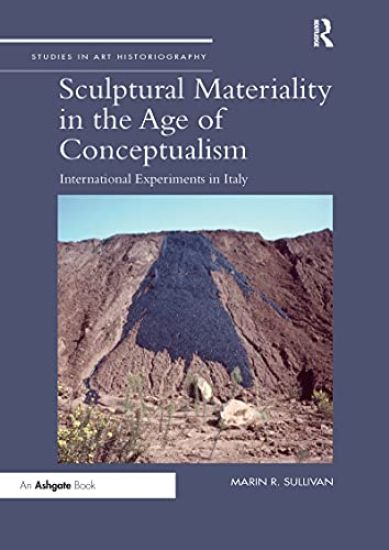
Sculptural Materiality in the Age of Conceptualism

Sculptural Materiality in the Age of Conceptualism

Marin R. Sullivan

TAYLOR FRANCIS LTD
2021
nidottu
Sculptural Materiality in the Age of Conceptualism is structured around four distinct but interrelated projects initially realized in Italy between 1966 and 1972: Yayoi Kusama’s Narcissus Garden, Michelangelo Pistoletto’s Newspaper Sphere (Sfera di giornali), Robert Smithson’s Asphalt Rundown, and Joseph Beuys’s Arena. These works all utilized non-traditional materials, collaborative patronage models, and alternative modes of display to create a spatially and temporally dispersed arena of matter and action, with photography serving as a connective, material thread within the sculpture it reflects. While created by major artists of the postwar period, these particular projects have yet to receive substantive art historical analysis, especially from a sculptural perspective. Here, they anchor a transnational narrative in which sculpture emerged as a node, a center of transaction comprising multiple material phenomenon, including objects, images, and actors. When seen as entangled, polymorphous entities, these works suggest that the charge of sculpture in the late postwar period came from its concurrent existence as both three-dimensional phenomena and photographic image, in the interchanges among the materials that continue to activate and alter the constitution of sculpture within the contemporary sphere.
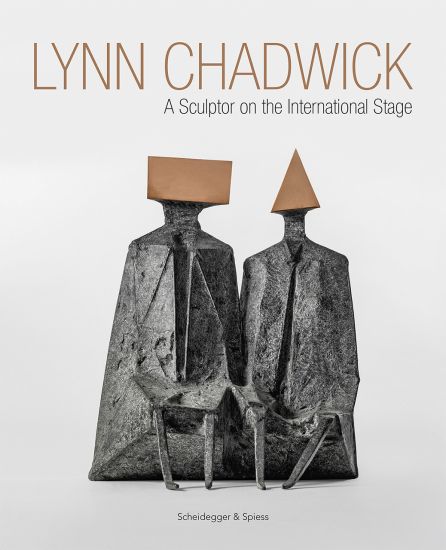
Lynn Chadwick

Lynn Chadwick

Michael Bird; Marin R. Sullivan

Scheidegger und Spiess AG, Verlag
2019
sidottu
First book to place the art of British sculptor Lynn Chadwick in its international context. Examines in particular the reception and promotion of Chadwick's sculpture in the United States. Richly illustrated. This is the first book to set the work of British sculptor Lynn Chadwick (1914-2003) in its international context. Chadwick, a leading figure in modern British art and celebrated for his innovative steel and bronze sculptures of abstracted, expressive figures and animals, always felt that his work was better understood abroad than in his native country. In this richly illustrated monograph, distinguished British scholar and writer Michael Bird, and eminent American art historian and curator Marin R. Sullivan chart the different phases of Chadwick's long career. They vividly locate his art within the wider narrative of European and American post-war sculpture. They examine in particular the reception and promotion of Chadwick's sculpture in the United States, and how a collection of some 140 of his works at the Berman Museum in rural Pennsylvania came to be.
Sculptural Materiality in the Age of Conceptualism
Sculptural Materiality in the Age of Conceptualism is structured around four distinct but interrelated projects initially realized in Italy between 1966 and 1972: Yayoi Kusama’s Narcissus Garden, Michelangelo Pistoletto’s Newspaper Sphere (Sfera di giornali), Robert Smithson’s Asphalt Rundown, and Joseph Beuys’s Arena. These works all utilized non-traditional materials, collaborative patronage models, and alternative modes of display to create a spatially and temporally dispersed arena of matter and action, with photography serving as a connective, material thread within the sculpture it reflects. While created by major artists of the postwar period, these particular projects have yet to receive substantive art historical analysis, especially from a sculptural perspective. Here, they anchor a transnational narrative in which sculpture emerged as a node, a center of transaction comprising multiple material phenomenon, including objects, images, and actors. When seen as entangled, polymorphous entities, these works suggest that the charge of sculpture in the late postwar period came from its concurrent existence as both three-dimensional phenomena and photographic image, in the interchanges among the materials that continue to activate and alter the constitution of sculpture within the contemporary sphere.