Kirjojen hintavertailu. Mukana 12 390 323 kirjaa ja 12 kauppaa.

Kirjailija

Marina Tsvetayeva

Kirjat ja teokset yhdessä paikassa: 3 kirjaa, julkaisuja vuosilta 1989-2011, suosituimpien joukossa In the Inmost Hour of the Soul. Vertaile teosten hintoja ja tarkista saatavuus suomalaisista kirjakaupoista.

3 kirjaa

Kirjojen julkaisuhaarukka 1989-2011.

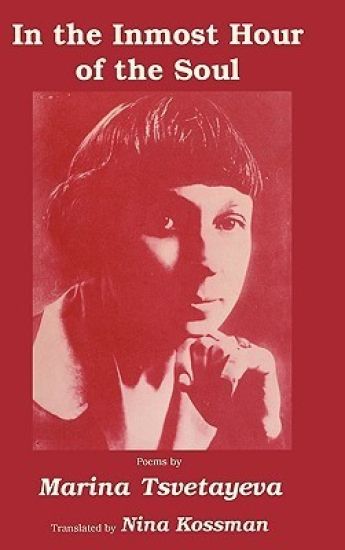
In the Inmost Hour of the Soul

In the Inmost Hour of the Soul

Marina Tsvetayeva; Nina Kossman

Humana Press Inc.
2011
nidottu
" .. .1 have no love for life as such; for me it begins to have significance, i.e., to acquire meaning and weight, only when it is transformed, i.e., in art. If I were taken beyond the sea­ into paradise-and forbidden to write, I would refuse the sea and paradise. I don't need life as a thing in itself." This, written by Tsvetayeva in a letter to her Czech friend, Teskova, in 1925, could stand as an inscription to her life. Marina Tsvetayeva was born in Moscow on September 26, 1892. Her fathel~ a well-known art historian and philolo­ gist, founded the Moscow Museum of the Fine Arts, now known as the Pushkin Museum; her mother, a pianist, died young, in 1906. Marina began writing poetry at the age of six. Her first book, Evening Album, contained poems she had writ­ ten before she turned seventeen, and enjoyed reviews by the poet, painter, and mentor of young writers, Max Voloshin, the poet Gumilyov, and the Symbolist critic and poet, Valerii Bryusov. Voloshin and Gumilyov welcomed the seventeen­ year-old poet as their equal; Bryusov was more critical of her, though he too, in his own belligerent way, acknowledged her talent.
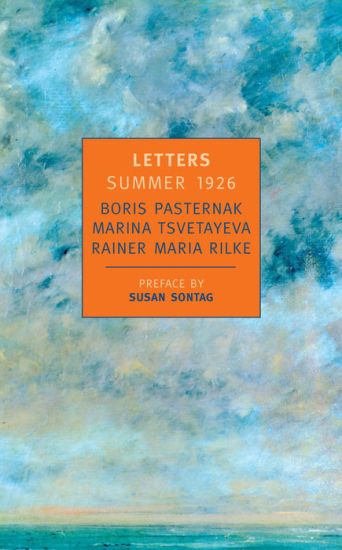
Letters Summer 1926

Letters Summer 1926

Boris Pasternak; Marina Tsvetayeva; Rainer Maria Rilke

New York Review of Books
2001
nidottu
Edited by Yevgeny Pasternak, Yelena Pasternak, and Konstantin M. Azadovsky The summer of 1926 was a time of trouble and uncertainty for each of the three poets whose correspondence is collected in this moving volume. Marina Tsvetayeva was living in exile in France and struggling to get by. Boris Pasternak was in Moscow, trying to come to terms with the new Bolshevik regime. Rainer Maria Rilke, in Switzerland, was dying. Though hardly known to each other, they began to correspond, exchanging a series of searching letters in which every aspect of life and work is discussed with extraordinary intensity and passion. Letters: Summer 1926 takes the reader into the hearts and minds of three of the twentieth century's greatest poets at a moment of maximum emotional and creative pressure.
In the Inmost Hour of the Soul

In the Inmost Hour of the Soul

Marina Tsvetayeva; Nina Kossman

Humana Press Inc.
1989
sidottu
" .. .1 have no love for life as such; for me it begins to have significance, i.e., to acquire meaning and weight, only when it is transformed, i.e., in art. If I were taken beyond the sea­ into paradise-and forbidden to write, I would refuse the sea and paradise. I don't need life as a thing in itself." This, written by Tsvetayeva in a letter to her Czech friend, Teskova, in 1925, could stand as an inscription to her life. Marina Tsvetayeva was born in Moscow on September 26, 1892. Her fathel~ a well-known art historian and philolo­ gist, founded the Moscow Museum of the Fine Arts, now known as the Pushkin Museum; her mother, a pianist, died young, in 1906. Marina began writing poetry at the age of six. Her first book, Evening Album, contained poems she had writ­ ten before she turned seventeen, and enjoyed reviews by the poet, painter, and mentor of young writers, Max Voloshin, the poet Gumilyov, and the Symbolist critic and poet, Valerii Bryusov. Voloshin and Gumilyov welcomed the seventeen­ year-old poet as their equal; Bryusov was more critical of her, though he too, in his own belligerent way, acknowledged her talent.