Kirjojen hintavertailu. Mukana 12 595 353 kirjaa ja 12 kauppaa.

Kirjailija

Marina Warner

Kirjat ja teokset yhdessä paikassa: 52 kirjaa, julkaisuja vuosilta 1983-2026, suosituimpien joukossa Love Stories. Vertaile teosten hintoja ja tarkista saatavuus suomalaisista kirjakaupoista.

52 kirjaa

Kirjojen julkaisuhaarukka 1983-2026.

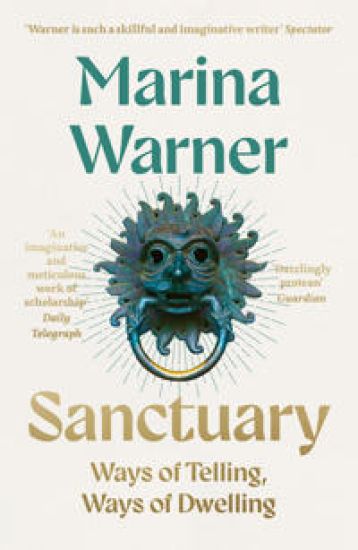
Sanctuary

Sanctuary

Marina Warner

HARPERCOLLINS PUBLISHERS
2025
sidottu
This is a book about sanctuary: what it means for people in desperate situations today, and what refuge and displacement has meant for people throughout history, and the canons of literature and myth.
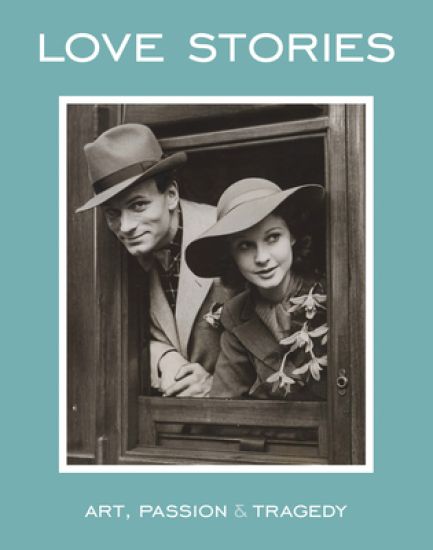
Love Stories

Love Stories

Louise Stewart; Peter Funnell; Simon Callow; Marina Warner; Kate Williams

National Portrait Gallery Publications
2020
sidottu
The National Portrait Gallery’s collections hold numerous portraits of creative partnerships. This book looks at the extensive collection of the Gallery and explores the role of love and the people featured both as sitters and artists. Drawing on recent scholarship, the exhibition will explore changing ideas of love, and give readers the opportunity to discover love stories both tragic and transcendent. The stories cover a variety of topics, including: the role of the muse, featuring stories such as George Romney, Lady Emma Hamilton and Nelson, and the Bloomsbury group; scandal and tragedy, exploring the relationships of Oscar Wilde and Lord Alfred Douglas, Edward VIII and Wallis Simpson, and John Lennon and Yoko Ono; literary love, highlighting the tales of Mary and Percy Shelley, and Sylvia Plath and Ted Hughes; a shared studio, featuring the stories of artists Lee Miller and Man Ray, and Barbara Hepworth and Ben Nicholson; and love and the lens, which explores the stories of Laurence Olivier and Vivien Leigh, and Mick and Bianca Jagger.Love Stories will be brought to life through the perspective of various authors, using material from the sitter’s own letters, diaries and poetry, while highlighting their connection and influence on some of the greatest masterpieces of art.
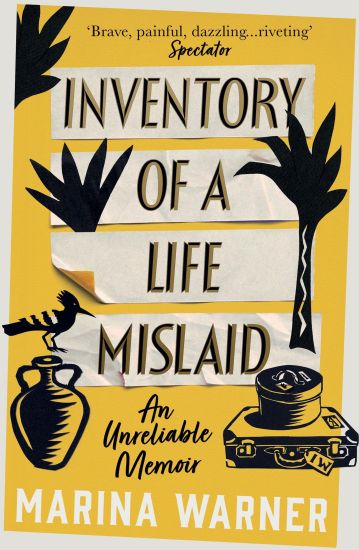
Inventory of a Life Mislaid

Inventory of a Life Mislaid

Marina Warner

HARPERCOLLINS PUBLISHERS
2021
sidottu
A luminous memoir of post-war childhood, adventure and loss on the banks of the Nile. ââ?¬Ë?Wonderful ââ?¬â?? a brave, inventive, touching distillation of memory and imaginationââ?¬â?¢ JENNY UGLOW
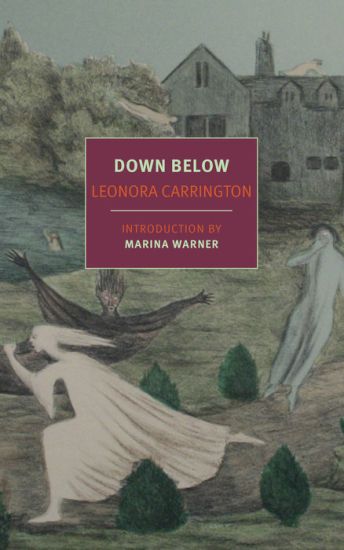
Down Below

Down Below

Leonora Carrington; Marina Warner

The New York Review of Books, Inc
2017
nidottu
A stunning work of memoir and an unforgettable depiction of the brilliance and madness by one of Surrealism's most compelling figures In 1937 Leonora Carrington--later to become one of the twentieth century's great painters of the weird, the alarming, and the wild--was a nineteen-year-old art student in London, beautiful and unapologetically rebellious. At a dinner party, she met the artist Max Ernst. The two fell in love and soon departed to live and paint together in a farmhouse in Provence. In 1940, the invading German army arrested Ernst and sent him to a concentration camp. Carrington suffered a psychotic break. She wept for hours. Her stomach became "the mirror of the earth"--of all worlds in a hostile universe--and she tried to purify the evil by compulsively vomiting. As the Germans neared the south of France, a friend persuaded Carrington to flee to Spain. Facing the approach "of robots, of thoughtless, fleshless beings," she packed a suitcase that bore on a brass plate the word Revelation. This was only the beginning of a journey into madness that was to end with Carrington confined in a mental institution, overwhelmed not only by her own terrible imaginings but by her doctor's sadistic course of treatment. In Down Below she describes her ordeal--in which the agonizing and the marvelous were equally combined--with a startling, almost impersonal precision and without a trace of self-pity. Like Daniel Paul Schreber's Memoirs of My Nervous Illness, Down Below brings the hallucinatory logic of madness home.
Joan of Arc

Joan of Arc

Marina Warner

Oxford University Press
2013
sidottu
The fame of Joan of Arc began in her lifetime and, though it has dipped a little now and then, she has never vanished from view. Her image acts as a seismograph for the shifts and settlings of personal and political ideals: Joan of Arc is the heroine every movement has wanted as their figurehead. In France, anti-semitic, xenophobic, extreme right parties have claimed her since the Action Francaise in the 19th century. By contrast, Socialists, feminists, and liberal Catholics rallied to her as the champion of the dispossessed and the wrongly accused. Joan of Arc has also played a crucial role in changing visions of female heroism. She has proved an inexhaustible source of inspiration for writers, playwrights, film-makers, performers, and composers. In a single, brief life, several of the essential mythopoiec characteristics that throughout history have defined the charismatic leader and saint are powerfully and intensely condensed. Even while Joan of Arc was still alive, but far more so after her death, the heroic part of her story sparked narratives of all kinds, in pictures, ballads, plays, and also satires. This was only heightened in 1841-9 by the publication of the Inquisition trial which had examined Joan for witchcraft and heresy. The transcript of the interrogations gives us the voice of this young woman across the centuries with almost unbearable immediacy; her spirit leaps from the page, uncompromising in its frankness, good sense, courage, and often breathtaking in its simple effectiveness. Joan of Arc into one of the most fully and vividly present personalities in history, about whom a great more is known, in her own words and at first hand, than is, for example, about Shakespeare. However, this has not stopped the flow of fictions and fantasies about her. Marina Warner analyses the symbolism of the Maid in her own time and in her rich afterlife in popular culture. The cultural expressions are part of an ongoing historical struggle to own the symbol - you could say, the brand. In a new preface to her study, Marina Warner takes stock of the continuing contention, in politics and culture, for this powerful symbol of virtue. Joan of Arc's multiple resurrections and transformations show how vigorous the need for figures like her remains, and how crucial it is to meet that need with thoughtfulness. She argues that abandoning the search to identify heroes and define them, out of a kind of high-minded distaste for propaganda, lets dangerous political factions manipulate them to their own ends. When Marine Le Pen calls on Joan of Arc's name, she needs to be confronted about her bad faith and her abuse of history.
Leto Bundle

Leto Bundle

Marina Warner

Vintage Publishing
2002
pokkari
When a mummy in the Museum of Albion is unpacked it is found to contain a bundle of curious objects and documents which tell of the wanderings of an unknown woman, Leto.
Lost Father

Lost Father

Marina Warner

Vintage Publishing
1998
pokkari
Like Visconti's film The Leopard, this magnificent novel paints in sensuous colours the story of a family. It brings to new life the ancient disparaged south of the Italian peninsula, weakened by emigration, silenced by fascism. According to family legend, David Pittagora died as a result of a duel.
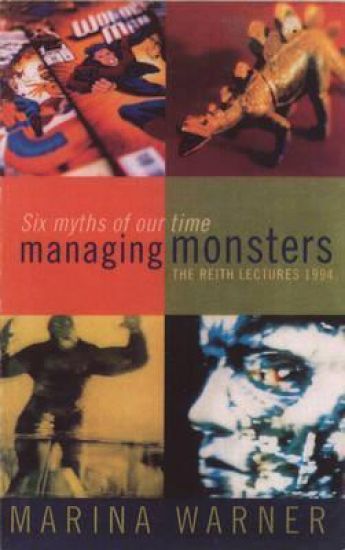
Managing Monsters

Managing Monsters

Marina Warner

Vintage
1994
pokkari
Marina Warner's 1994 Reith Lectures, in which she offered a definition of myth and its many contemporary faces, exploring the monster, children, mothers, strangers, and the idea of home.
Dragon Empress

Dragon Empress

Marina Warner

Vintage Publishing
1993
pokkari
From 1861 to 1908 a woman, the Empress Dowager Tz'u-hsi, born the daughter of a minor mandarin, held the supreme power in China. THE DRAGON EMPRESS also portrays a China in rapid decline as poverty, civil war and foreign exploitation and invasion brought about the fall of the Ch'ing dynasty.
Sanctuary

Sanctuary

Marina Warner

HARPERCOLLINS PUBLISHERS
2026
nidottu
Sanctuary is an ancient right. But what does it mean today? Drawing on a lifetime of engagement with literature, myth, history and tradition from different cultures, Marina Warner's Sanctuary is an ambitious attempt to grapple with the sharpest questions that we are facing in today's world of global turmoil. Sanctuary is an ancient right– a haven, a place of refuge and freedom from harm. In the classical world, it offered immunity to fugitives from justice; in medieval Europe it extended a reprieve to all who sought sanctuary in a church or holy site. It was a sacrilege to lay hands on a sanctuary-seeker: sanctuary was sacred. But what are the principles that govern this ancient tradition? Could a revived practice of sanctuary today offer security, a home for those who seek it? What could ‘sanctuary’ offer to those who have been displaced? Or does the idea support excluding those of a certain race or creed? Increasingly, in keeping with the general growth of nationalism and individualism, the arc of the concept has been bending away from a place of openness and welcome towards a private safe place, a redoubt: home and homeland as sanctuaries to be defended against strangers, migrants, incomers. In this groundbreaking book, the distinguished cultural historian Marina Warner explores the principles that underpin the tradition of ‘sanctuary’. She ranges broadly across myth and history and explores the concept of hospitality, the cult of relics, shrines and festivals, the imagination of place, and travelling tales. She asks profound questions about political ideas of a right to safety, home, freedom of movement, and peace. Sanctuary was written alongside work with the project “Stories in Transit” which brings young refugees together with artists, writers and musicians in the UK and in Sicily to invent or reimagine stories and perform them. Marina Warner reflects on the ways stories address the worst experiences of humanity and argues that the act of storytelling offers a salve, a route to a site of mutual interaction and understanding, a new place of belonging and conviviality. The book draws on a lifetime of engagement with literature, myth, history and tradition from different cultures. It is an ambitious attempt to grapple with the sharpest questions that we are facing in a world of global turmoil. Warner’s inquiry could not be more relevant.
Helen Chadwick

Helen Chadwick

Laura Smith; Marina Warner

THAMES HUDSON LTD
2025
sidottu
The first ever critical biography of Helen Chadwick, who died tragically young but is now revered as a pioneering feminist artist. Helen Chadwick (1953–1996) embraced the sensuous aspects of the natural world, breaking taboos of the ‘traditional’ or ‘beautiful’. Her sculpture, performance and photography is radical, provocative and often steeped in humour, and employs unusual, sometimes grotesque materials – bodily fluids, meat, flowers, chocolate and compost among them. She quickly became a leading figure amongst Britain’s post-war avant-garde, becoming one of the first women to be nominated for the Turner Prize. A dedicated teacher, she mentored the majority of the Young British Artists and is now known as the ‘mother of the YBAs’. She was also involved in the artistic community at Beck Road, Hackney, whose residents included Maureen Paley, Richard Deacon and Genesis P-Orridge. Although she was widely exhibited during her lifetime, attention to Chadwick’s work declined following her unexpected death in 1996, and it is only relatively recently that the significance of her work has been acknowledged afresh. Coinciding with a major touring retrospective, this publication spans the breadth of her practice, from her renowned MA degree show In the Kitchen (1977) through to her seminal Piss Flowers (1991–2). Merging art and life, with a focus on Chadwick’s interdisciplinary interests and engagement with education, music and politics, as well as an in-depth study of her art and ideas, the book is a fitting tribute to her vital impact on social and cultural history.
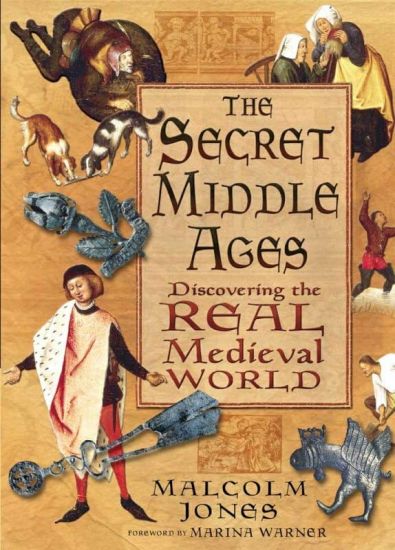
The Secret Middle Ages

The Secret Middle Ages

Malcolm Jones; Marina Warner

THE HISTORY PRESS LTD
2025
nidottu
The Middle Ages are known as a god-fearing time, a time of hard work and of squalid living conditions for the majority of the population – or as a time of opulence that graced only the courts and halls of the reigning monarch. In The Secret Middle Ages, Malcolm Jones presents a completely fresh view of the medieval world that will blow all stereotypes out of the water.Using a wealth of little-known and recently discovered artefacts, and drawing particularly on humbler artworks, Jones paints a compelling picture of the visual environment of the great mass of ordinary people between 1200 and 1550. The picture that emerges is of a civilisation that is both like and unlike our own – one that teems with the richness of life and its contradictions. We find beliefs and traditions rendered memorable by the vivid, creative imagination and strong visual culture of the Middle Ages. Love, hatred, crime and punishment, proverbs, heaven on earth, husband-beating – all feature in the jewellery, tableware, illustrations, carvings and textiles of the period.A major reassessment of the high medieval period, this revised and updated edition of The Secret Middle Ages is essential reading for anyone curious about their ancestors. As Jones writes, gems and precious metals may dazzle the eye, but a pewter brooch – tawdry as it may appear – has the power to reveal far more of the real medieval world.
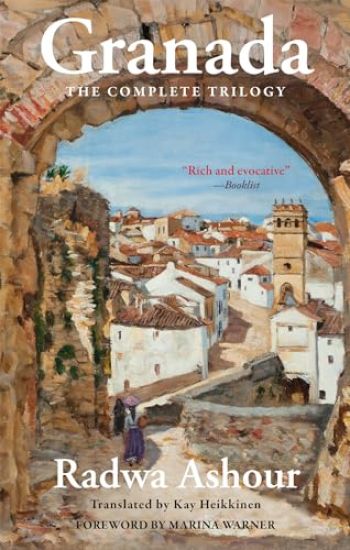
Granada

Granada

Radwa Ashour; Marina Warner

AMERICAN UNIVERSITY IN CAIRO PRESS
2024
pokkari
A TOP 100 LITERARY WORK OF THE TWENTIETH CENTURY (THE ARAB WRITERS UNION)A BOOK RIOT BEST BOOK OF 2024"A feat of profound scholarship, an examination of how history is invented, imagined and instrumentalized in contrast to how it is experienced and lived. "—Patricia Storace, Times Literary Supplement“A magnum opus of prose fiction”—Marina Warner, author of Once Upon a TimeA multigenerational epic set at the collapse of Muslim rule in Medieval Spain, available now for the first time in a new, complete translationIt is 1492, and the keys to Granada, the last Muslim state in the Spanish Peninsula, have been handed over to the Christian king and queen: the final vestiges of this Arab kingdom in Europe are swept away.As the triumphant new masters of Granada burn books, Abu Jaafar, a bookseller by trade, quietly moves his rich library out of town, while preparing for the marriage of his granddaughter Saleema to his apprentice Saad. The tangled lives of Abu Jaafar’s family, his descendants, and his community bear witness to the vanquishing of Muslim life: confiscations, forced conversions, and expulsions.Radwa Ashour’s sweeping trilogy, set over one hundred years against the backdrop of the great historical events of sixteenth-century Europe, tells the story of those who remained in Andalusia, of the individuals who struggled to maintain faith and hope in a possible future. It narrates a community’s effort to comprehend what has happened to them, of their valiant but ultimately unsuccessful efforts to resist the destruction of their identity.Named a top literary work of the twentieth century by the Arab Writers’ Union, Granada is now available in English in its entirety for the first time. All three novels—Granada, Maryama and The Departure—are brilliantly retranslated in this outstanding new paperback edition.
Kalilah and Dimnah

Kalilah and Dimnah

Ibn al-Muqaffa?; Marina Warner

NEW YORK UNIVERSITY PRESS
2023
pokkari
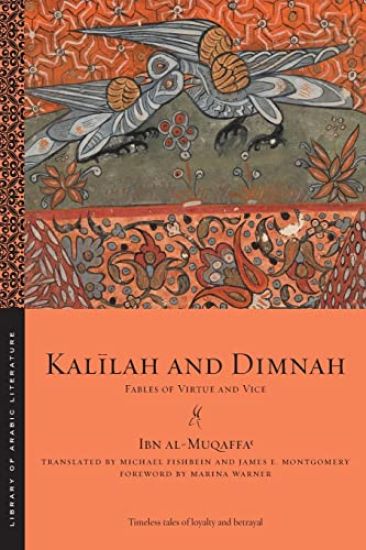
Timeless fables of loyalty and betrayal Like Aesop’s Fables, Kalilah and Dimnah is a collection designed not only for moral instruction, but also for the entertainment of readers. The stories, which originated in the Sanskrit Panchatantra and Mahabharata, were adapted, augmented, and translated into Arabic by the scholar and state official Ibn al-Muqaffa? in the second/eighth century. The stories are engaging, entertaining, and often funny, from “The Man Who Found a Treasure But Could Not Keep It,” to “The Raven Who Tried To Learn To Walk Like a Partridge” and “How the Wolf, the Raven, and the Jackal Destroyed the Camel.” Kalilah and Dimnah is a “mirror for princes,” a book meant to inculcate virtues and discernment in rulers and warn against flattery and deception. Many of the animals who populate the book represent ministers counseling kings, friends advising friends, or wives admonishing husbands. Throughout, Kalilah and Dimnah offers insight into the moral lessons Ibn al-Muqaffa? wished to impart to rulers—and readers. An English-only edition.
Esmond and Ilia: An Unreliable Memoir

Esmond and Ilia: An Unreliable Memoir

Marina Warner

New York Review of Books
2022
nidottu
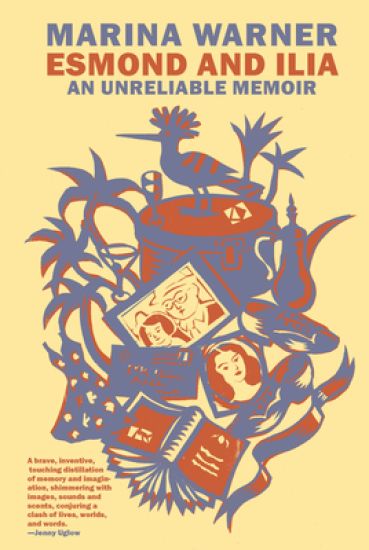
By one of the finest English writers of our time, a luminous memoir that travels from southern Italy to the banks of the Nile, capturing a lost past both personal and historical. Marina Warner's father, Esmond, met her mother, Ilia, while serving as an officer in the British Army during the Second World War. As Allied forces fought their way north through Italy, Esmond found himself in the southern town of Bari, where Ilia had grown up, one of four girls of a widowed mother. The Englishman approaching middle age and the twenty-one-year-old Italian were soon married. Before the war had come to an end, Ilia was on her way alone to London to wait for her husband's return and to learn how to be Mrs. Esmond Warner, an Englishwoman. Ilia begins to learn the world of cricket, riding, canned food, and distant relations she has landed in, while Esmond, in spite of his connections, struggles to support his wife and young daughter. He comes up with the idea of opening a bookshop, a branch of W.H. Smith's, in Cairo, where he had spent happy times during the North African campaign. In Egypt, however, nationalists are challenging foreign influences, especially British ones, and before long Cairo is on fire. Deeply felt, closely observed, rich with strange lore, Esmond and Ilia is a picture of vanished worlds, a portrait of two people struggling to know each other and themselves, a daughter's story of trying to come to terms with a past that is both hers and unknowable to her. It is an "unreliable memoir"--what memoir isn't?--and a lasting work of literature, lyrical, sorrowful, shaped by love and wonder.
Helen Chadwick

Helen Chadwick

Marina Warner

AFTERALL PUBLISHING
2022
nidottu
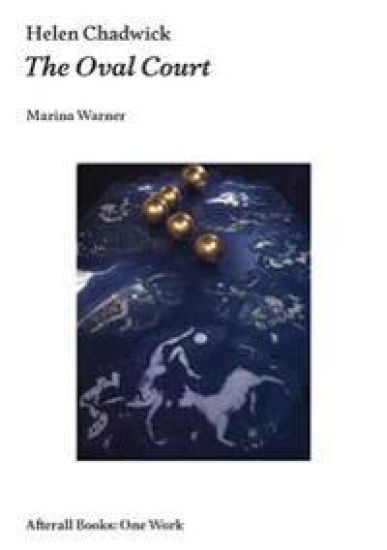
An illustrated exploration of Helen Chadwick's erotic, playful, and fierce 1986 installation. In 1986 the Institute of Contemporary Arts in London showed a new commission by the artist Helen Chadwick (1954-1996). What Chadwick conceived for the ICA exhibition explored her characteristic themes--the female body (her own), the aesthetics of pleasure, the material variety and wonder of phenomena--but took them in a new, flamboyant direction. In this illustrated volume, Marina Warner examines one part of Chadwick's installation, The Oval Court. This work was erotic, playful, and fierce; it showed imaginative ambition on an exceptional scale and a unique, piquant sensibility, both raunchy and delicate. Despite the work's recognition as a feminist monument of rare intensity, it has rarely been shown or discussed since the author's catalogue essay for the original exhibition. Warner here reconsiders Chadwick's influence as an artist who helped to shift conventional aesthetics and transvalue despised, even abominated forms. Exploring the work's richly layered composition in light of intervening years, Warner shows how Chadwick's imagination has shaped many artists' ideas and ethics, and emboldened their adventures with materials.