Kirjojen hintavertailu. Mukana 12 595 353 kirjaa ja 12 kauppaa.

Kirjailija

Marina Yaguello

Kirjat ja teokset yhdessä paikassa: 4 kirjaa, julkaisuja vuosilta 1998-2023, suosituimpien joukossa Imaginary Languages. Vertaile teosten hintoja ja tarkista saatavuus suomalaisista kirjakaupoista.

4 kirjaa

Kirjojen julkaisuhaarukka 1998-2023.

Imaginary Languages

Imaginary Languages

Marina Yaguello; Erik Butler

MIT PRESS LTD
2023
nidottu
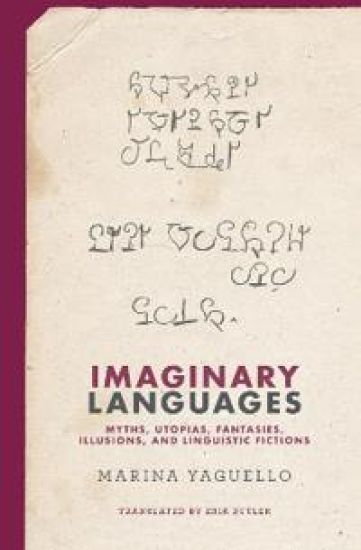
An exploration of the practice of inventing languages, from speaking in tongues to utopian schemes of universality to the discoveries of modern linguistics.In Imaginary Languages, Marina Yaguello explores the history and practice of inventing languages, from religious speaking in tongues to politically utopian schemes of universality to the discoveries of modern linguistics. She looks for imagined languages that are autonomous systems, complete unto themselves and meant for communal use; imaginary, and therefore unlike both natural languages and historically attested languages; and products of an individual effort to lay hold of language. Inventors of languages, Yaguello writes, are madly in love: they love an object that belongs to them only to the extent that they also share it with a community.Yaguello investigates the sources of imaginary languages, in myths, dreams, and utopias. She takes readers on a tour of languages invented in literature from the sixteenth to the twentieth century, including that in More’s Utopia, Leibniz’s “algebra of thought,” and Bulwer-Lytton’s linguistic fiction. She examines the linguistic fantasies (or madness) of Georgian linguist Nikolai Marr and Swiss medium Hélène Smith; and considers the quest for the true philosophical language. Yaguello finds two abiding (and somewhat contradictory) forces: the diversity of linguistic experience, which stands opposed to unifying endeavors, and, on the other hand, features shared by all languages (natural or not) and their users, which justifies the universalist hypothesis.Recent years have seen something of a boom in invented languages, whether artificial languages meant to facilitate international communication or imagined languages constructed as part of science fiction worlds. In Imaginary Languages (an updated and expanded version of the earlier Les Fous du langage, published in English as Lunatic Lovers of Language), Yaguello shows that the invention of language is above all a passionate, dizzying labor of love.
Imaginary Languages

Imaginary Languages

Marina Yaguello; Erik Butler

MIT PRESS LTD
2022
sidottu
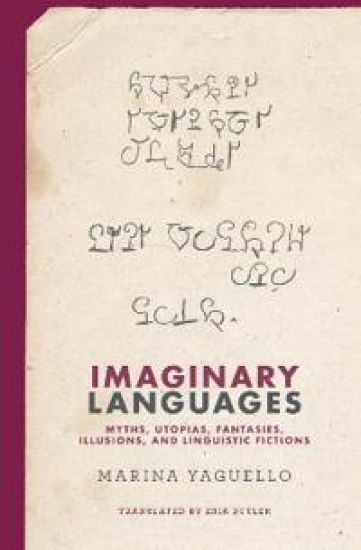
An exploration of the practice of inventing languages, from speaking in tongues to utopian schemes of universality to the discoveries of modern linguistics.In Imaginary Languages, Marina Yaguello explores the history and practice of inventing languages, from religious speaking in tongues to politically utopian schemes of universality to the discoveries of modern linguistics. She looks for imagined languages that are autonomous systems, complete unto themselves and meant for communal use; imaginary, and therefore unlike both natural languages and historically attested languages; and products of an individual effort to lay hold of language. Inventors of languages, Yaguello writes, are madly in love: they love an object that belongs to them only to the extent that they also share it with a community. Yaguello investigates the sources of imaginary languages, in myths, dreams, and utopias. She takes readers on a tour of languages invented in literature from the sixteenth to the twentieth century, including that in More’s Utopia, Leibniz’s “algebra of thought,” and Bulwer-Lytton’s linguistic fiction. She examines the linguistic fantasies (or madness) of Georgian linguist Nikolai Marr and Swiss medium Hélène Smith; and considers the quest for the true philosophical language. Yaguello finds two abiding (and somewhat contradictory) forces: the diversity of linguistic experience, which stands opposed to unifying endeavors, and, on the other hand, features shared by all languages (natural or not) and their users, which justifies the universalist hypothesis. Recent years have seen something of a boom in invented languages, whether artificial languages meant to facilitate international communication or imagined languages constructed as part of science fiction worlds. In Imaginary Languages (an updated and expanded version of the earlier Les Fous du langage, published in English as Lunatic Lovers of Language), Yaguello shows that the invention of language is above all a passionate, dizzying labor of love.
Language Through the Looking Glass

Language Through the Looking Glass

Marina Yaguello

Oxford University Press
1998
nidottu
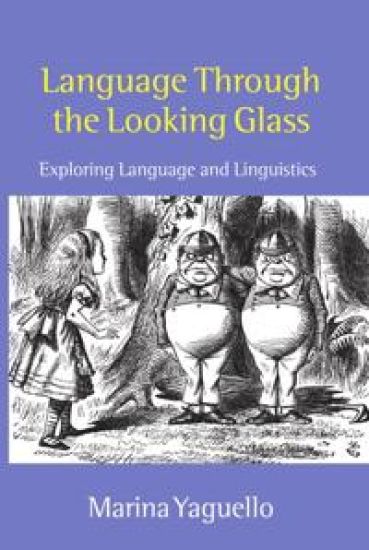
To play with language is to break its rules, disrupt its patterns, exploit its weak points. Thus, paradoxically, puns and spoonerisms, neologisms, and slogans reveal and highlight the patterns to which discourse conforms -- patterns which reflect the linguistic competence of language speakers. Only those who have linguistics competence can play with it: thus language games and the poetic use of language are underpinned by unconscious use of linguistic analysis. Using Lewis Carroll's Alice as a starting point, Marina Yaguello takes the reader on an unconventional voyage around language, charting the major themes of linguistics on the way. She shows that we can come to an understanding of language in general and of particular languages through exploring the devices of humour, word-games, and poetry -- devices which reveal the unconscious linguist in all of us. The result is an entertaining but rigorous introduction to language and linguistics for non-specialists and students alike.
Language through the Looking Glass

Language through the Looking Glass

Marina Yaguello

Oxford University Press
1998
sidottu
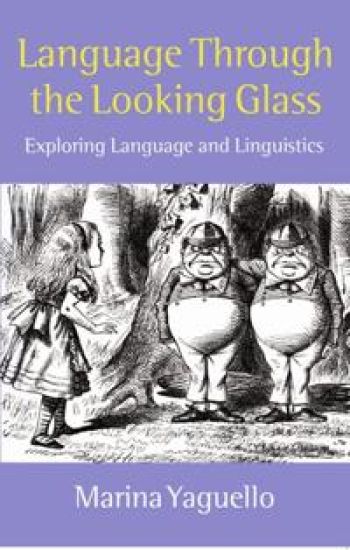
To play with language is to break its rules, disrupt its patterns, exploit its weak points. Thus, paradoxically, puns and spoonerisms, neologisms, and slogans reveal and highlight the patterns to which discourse conforms - patterns which reflect the linguistic competence of language speakers. Only those who have linguistics competence can play with it: thus language games and the poetic use of language are underpinned by unconscious use of linguistic analysis. Using Lewis Carroll's Alice as a starting point, Marina Yaguello takes the reader on an unconventional voyage around language, charting the major themes of linguistics on the way. She shows that we can come to an understanding of language in general and of particular languages through exploring the devices of humour, word-games, and poetry devices which reveal the unconscious linguist in all of us. The result is a rigorous introduction to language and linguistics for non-specialists and students alike.