Kirjojen hintavertailu. Mukana 12 390 323 kirjaa ja 12 kauppaa.

Kirjailija

Mario Telò

Kirjat ja teokset yhdessä paikassa: 25 kirjaa, julkaisuja vuosilta 2005-2026, suosituimpien joukossa The Politics of Transatlantic Trade Negotiations. Vertaile teosten hintoja ja tarkista saatavuus suomalaisista kirjakaupoista.

Mukana myös kirjoitusasut: Mario Telo

25 kirjaa

Kirjojen julkaisuhaarukka 2005-2026.

The Politics of Transatlantic Trade Negotiations

The Politics of Transatlantic Trade Negotiations

Jean-Frederic Morin; Tereza Novotná; Frederik Ponjaert; Mario Telò

Routledge
2015
sidottu
By focusing on the wider process of negotiations, this novel volume presents the first systematic analysis of the Transatlantic Trade and Investment Partnership (TTIP). The authors include outstanding scholars and relevant practitioners from across disciplines and various academic institutions around Europe and North America, but also from outside of the transatlantic basin. While presenting a thorough examination of the process of TTIP negotiations, the volume is divided into four parts with each part examining a broader theme and offering three or four shorter exploratory chapters that are accessible to academics, students, policy-makers and a wider audience. The volume explores historical and theoretical aspects of TTIP (with chapters by Gamble, Keohane and Morse, Telò), the beginnings of the TTIP talks and the role of individual actors (Mayer, Novotná, Dür and Lechner, Strange), TTIP’s possible knock-on effects and consequences for third parties (Aggarwal and Evenett, Duchesne and Ouellet, Zhang, Ponjaert) as well as impact on multilateral institutions and regimes complexes (Mavroidis, Mortensen, Meunier and Morin, Pauwelyn). The authors highlight dynamics which underline the relationship between the United States and the European Union and argue that TTIP promises to have vast implications not just for economics but global governance and international system.
The Politics of Transatlantic Trade Negotiations

The Politics of Transatlantic Trade Negotiations

Jean-Frederic Morin; Tereza Novotná; Frederik Ponjaert; Mario Telò

Routledge
2015
nidottu
By focusing on the wider process of negotiations, this novel volume presents the first systematic analysis of the Transatlantic Trade and Investment Partnership (TTIP). The authors include outstanding scholars and relevant practitioners from across disciplines and various academic institutions around Europe and North America, but also from outside of the transatlantic basin. While presenting a thorough examination of the process of TTIP negotiations, the volume is divided into four parts with each part examining a broader theme and offering three or four shorter exploratory chapters that are accessible to academics, students, policy-makers and a wider audience. The volume explores historical and theoretical aspects of TTIP (with chapters by Gamble, Keohane and Morse, Telò), the beginnings of the TTIP talks and the role of individual actors (Mayer, Novotná, Dür and Lechner, Strange), TTIP’s possible knock-on effects and consequences for third parties (Aggarwal and Evenett, Duchesne and Ouellet, Zhang, Ponjaert) as well as impact on multilateral institutions and regimes complexes (Mavroidis, Mortensen, Meunier and Morin, Pauwelyn). The authors highlight dynamics which underline the relationship between the United States and the European Union and argue that TTIP promises to have vast implications not just for economics but global governance and international system.
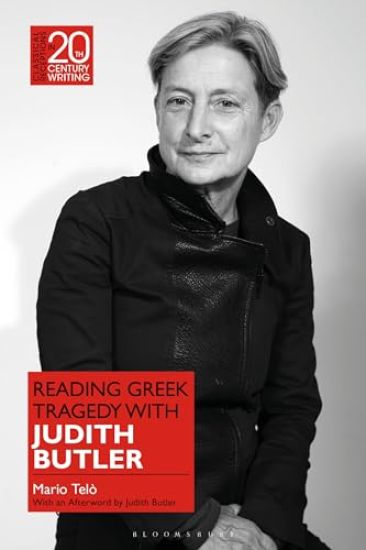
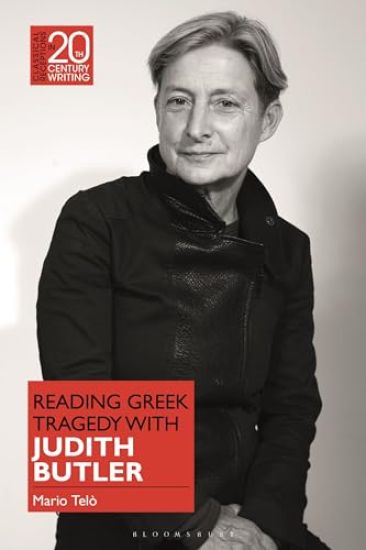
Reading Greek Tragedy with Judith Butler

Reading Greek Tragedy with Judith Butler

Mario Telò

BLOOMSBURY PUBLISHING PLC
2026
nidottu
Considering Butler’s “tragic trilogy”—a set of interventions on Sophocles’ Antigone, Euripides’ Bacchae, and Aeschylus’s Eumenides—this book seeks to understand not just how Butler uses and interprets Greek tragedy, but also how tragedy shapes Butler’s thinking, even when their gaze is directed elsewhere. Through close readings of these tragedies, this book brings to light the tragic quality of Butler’s writing. It shows how Butler’s mode of reading tragedy—and, crucially, reading tragically—offers a distinctive ethico-political response to the harrowing dilemmas of our current moment.Deeply committed both to critical theory and political activism, Judith Butler is one of the most influential intellectuals today. Their ideas have touched the lives of many people, both readers and those who have never heard Butler’s name. In encompassing gender performativity and sexual difference, vulnerability and precarity, disidentification and bodily interdependency, as well as the politics of protest, Butler’s work is often predicated on a strong engagement with or proximity to Greek tragedy.
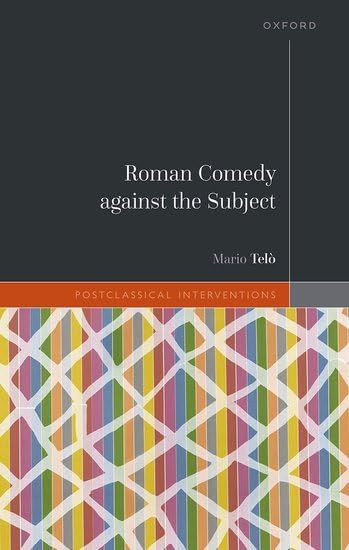
Roman Comedy against the Subject

Roman Comedy against the Subject

Mario Telò

Oxford University Press
2025
sidottu
Roman Comedy against the Subject provides an expansive interpretation of four Roman comedies named after objects--Plautus's Cistellaria, Aulularia, and Rudens, and Terence's Eunuchus. In this book, the titular object provides an opportunity not to reconceive the relational politics of Roman comedy, but to conceive a different politics of familial and social relations with Roman comedy. Employing object-oriented ontology, psychoanalysis, queer theory, and Black critical theory, the book radically recasts perennial problems of Roman comedy and literature in general: the author, in relation to "mothering" (alternative maternities); character, in relation to neurodiversity; genre, in relation to sibling-like parentality; and the title itself, in relation to gendering and ungendering. Roman Comedy against the Subject explores the aesthetic and political possibilities of becoming object, of embracing "itness." Rather than assimilating objects to subjects or vital agents, the book finds emancipatory potential in renouncing the normative and intrinsically exclusionary subjecthood of "he," "she," and "they," markers of privilege that are burdened by the violence of humanization and often dehumanizing of others. The introduction features nine brief but acute readings of object-oriented modern dramas: Tennessee Williams's Glass Menagerie, Yukio Mishima's The Damask Drum, Eugène Ionesco's Les Chaises, and Alice Childress's String, among others.
Reading Greek Tragedy with Judith Butler

Reading Greek Tragedy with Judith Butler

Mario Telò

BLOOMSBURY PUBLISHING PLC
2024
sidottu
Considering Butler’s “tragic trilogy”—a set of interventions on Sophocles’ Antigone, Euripides’ Bacchae, and Aeschylus’s Eumenides—this book seeks to understand not just how Butler uses and interprets Greek tragedy, but also how tragedy shapes Butler’s thinking, even when their gaze is directed elsewhere. Through close readings of these tragedies, this book brings to light the tragic quality of Butler’s writing. It shows how Butler’s mode of reading tragedy—and, crucially, reading tragically—offers a distinctive ethico-political response to the harrowing dilemmas of our current moment.Deeply committed both to critical theory and political activism, Judith Butler is one of the most influential intellectuals today. Their ideas have touched the lives of many people, both readers and those who have never heard Butler’s name. In encompassing gender performativity and sexual difference, vulnerability and precarity, disidentification and bodily interdependency, as well as the politics of protest, Butler’s work is often predicated on a strong engagement with or proximity to Greek tragedy.
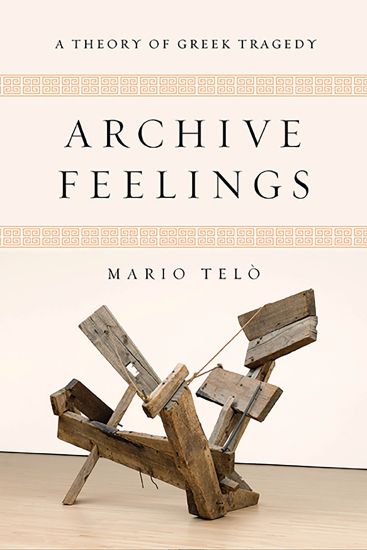
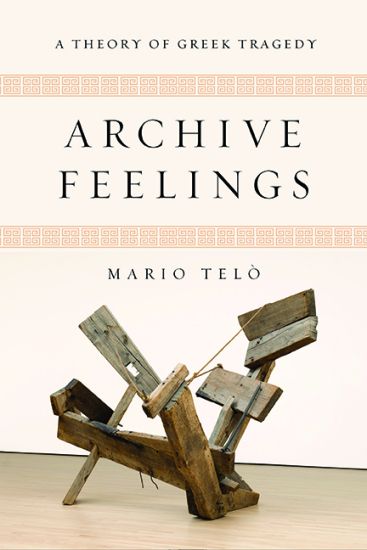
Archive Feelings

Archive Feelings

Mario Telò

OHIO STATE UNIVERSITY PRESS
2023
pokkari
Do we take pleasure in reading ancient Greek tragedy despite the unsettling content or because of it? Does a safe aesthetic distance protect us from tragic suffering, or does the proximity to death tap into something more primal? Aristotle proposed catharsis, an emotional cleansing-or, in later interpretations, a sense of equilibrium-as tragedy's outcome, and Sigmund Freud and Jacques Lacan, grand theorists of the forces of anti-mastery in human and nonhuman existence, surprisingly agreed. Notwithstanding this deferral to Aristotle, their theorizations of the death drive-together with Jacques Derrida's notion of the archive as a place of conservation that inevitably fails-provide the groundwork for a radically new way of understanding tragic aesthetics. With bold readings of thirteen plays by Aeschylus, Sophocles, and Euripides, including the Oedipus cycle, the Oresteia, Medea, and Bacchae; an eclectic synthesis of Freud, Lacan, Derrida, Zizek, Deleuze, and other critical theorists; and an engagement with art, architecture, and film, Mario Tel 's Archive Feelings: A Theory of Greek Tragedy locates Greek tragedy's aesthetic allure beyond catharsis in a vertiginous sense of giddy suspension, in a spiral of life and death that resists equilibrium, stabilization, and all forms of normativity. In so doing, Tel forges a new model of tragic aesthetics.
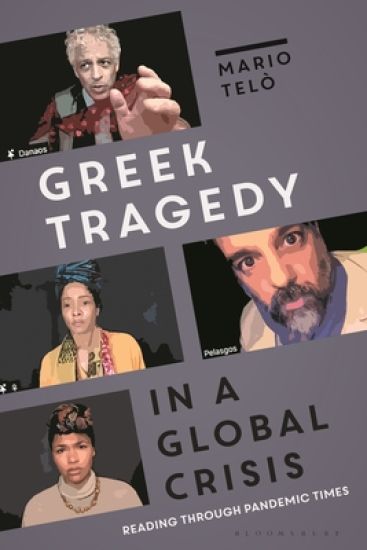
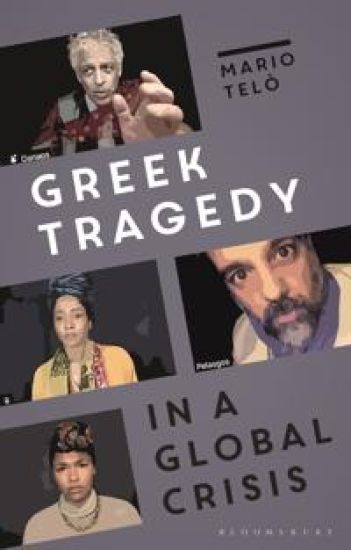
Greek Tragedy in a Global Crisis

Greek Tragedy in a Global Crisis

Mario Telò

BLOOMSBURY PUBLISHING PLC
2023
nidottu
What does it mean to read Greek tragedy in a pandemic, a global crisis? How can Greek tragedy address urgent contemporary troubles? One of the outstanding and most widely read theorists in the discipline, Mario Telò, brings together a deep understanding of Greek tragedy and its most famous icons with contemporary times. In close readings of plays such as Alcestis, Antigone, Bacchae, Hecuba, Oedipus the King, Prometheus Bound, and Trojan Women, our experience is precariously refracted back in the formal worlds of plays named after and, to an extent, epitomized by tragic characters.Structured around four thematic clusters – Air Time Faces, Communities, Ruins, and Insurrections – this book presents timely interventions in critical theory and in the debates that matter to us as disaster becomes routine in the time-out-of-joint of a (post-)pandemic world. Violently encompassing all pre-existing and future crises (relational, political and ecological), the pandemic coincides with the queer unhistoricism of tragedy, and its collapsing of present, past, and future readerships.
Greek Tragedy in a Global Crisis

Greek Tragedy in a Global Crisis

Mario Telò

BLOOMSBURY PUBLISHING PLC
2023
sidottu
PROSE AWARDS CLASSICS FINALIST 2024What does it mean to read Greek tragedy in a pandemic, a global crisis? How can Greek tragedy address urgent contemporary troubles? One of the outstanding and most widely read theorists in the discipline, Mario Telò, brings together a deep understanding of Greek tragedy and its most famous icons with contemporary times. In close readings of plays such as Alcestis, Antigone, Bacchae, Hecuba, Oedipus the King, Prometheus Bound, and Trojan Women, our experience is precariously refracted back in the formal worlds of plays named after and, to an extent, epitomized by tragic characters.Structured around four thematic clusters – Air Time Faces, Communities, Ruins, and Insurrections – this book presents timely interventions in critical theory and in the debates that matter to us as disaster becomes routine in the time-out-of-joint of a (post-)pandemic world. Violently encompassing all pre-existing and future crises (relational, political and ecological), the pandemic coincides with the queer unhistoricism of tragedy, and its collapsing of present, past, and future readerships.
Multilateralism Past, Present and Future

Multilateralism Past, Present and Future

Mario Telò

TAYLOR FRANCIS LTD
2023
sidottu
This book offers an important chronological perspective on the evolution of multilateralism within Europe and beyond.It provides a critical reconstruction of the history of the idea and praxis of peaceful global governance, a comparative analysis of regional multilateral organisations and a discussion about concrete trends and perspectives of a new multilateralism against the challenging context of the current multipolar power politics. Focusing on the changing European interplay with multilateralism – from Eurocentric cradle of civilian cooperation among sovereign imperial states, to political dwarf after the two world wars and decolonisation, and to potential co-leader of a multilayered and multi-actor cooperation within the current multipolar order, it addresses a theoretical “gap” by fuelling the long-recognised idealism v. realism debate over international cooperation and institutionalisation with both historical and new empirical insights.This book will be of key interest to scholars and students of European studies, global governance, multilateralism, international organisations and more broadly international relations.
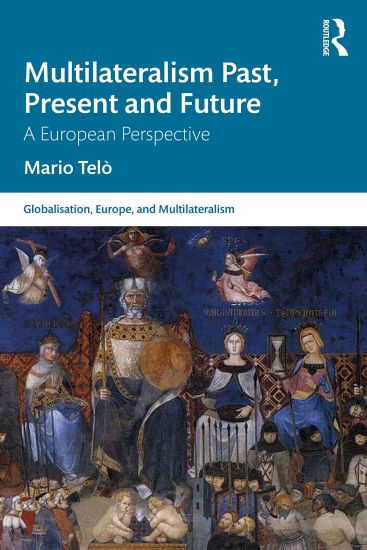
Multilateralism Past, Present and Future

Multilateralism Past, Present and Future

Mario Telò

TAYLOR FRANCIS LTD
2023
nidottu
This book offers an important chronological perspective on the evolution of multilateralism within Europe and beyond.It provides a critical reconstruction of the history of the idea and praxis of peaceful global governance, a comparative analysis of regional multilateral organisations and a discussion about concrete trends and perspectives of a new multilateralism against the challenging context of the current multipolar power politics. Focusing on the changing European interplay with multilateralism – from Eurocentric cradle of civilian cooperation among sovereign imperial states, to political dwarf after the two world wars and decolonisation, and to potential co-leader of a multilayered and multi-actor cooperation within the current multipolar order, it addresses a theoretical “gap” by fuelling the long-recognised idealism v. realism debate over international cooperation and institutionalisation with both historical and new empirical insights.This book will be of key interest to scholars and students of European studies, global governance, multilateralism, international organisations and more broadly international relations.
Archive Feelings

Archive Feelings

Mario Telò

Ohio State University Press
2020
sidottu
Do we take pleasure in reading ancient Greek tragedy despite the unsettling content or because of it? Does a safe aesthetic distance protect us from tragic suffering, or does the proximity to death tap into something more primal? Aristotle proposed catharsis, an emotional cleansing-or, in later interpretations, a sense of equilibrium-as tragedy's outcome, and Sigmund Freud and Jacques Lacan, grand theorists of the forces of anti-mastery in human and nonhuman existence, surprisingly agreed. Notwithstanding this deferral to Aristotle, their theorizations of the death drive-together with Jacques Derrida's notion of the archive as a place of conservation that inevitably fails-provide the groundwork for a radically new way of understanding tragic aesthetics. With bold readings of thirteen plays by Aeschylus, Sophocles, and Euripides, including the Oedipus cycle, the Oresteia, Medea, and Bacchae; an eclectic synthesis of Freud, Lacan, Derrida, Zizek, Deleuze, and other critical theorists; and an engagement with art, architecture, and film, Mario Tel 's Archive Feelings: A Theory of Greek Tragedy locates Greek tragedy's aesthetic allure beyond catharsis in a vertiginous sense of giddy suspension, in a spiral of life and death that resists equilibrium, stabilization, and all forms of normativity. In so doing, Tel forges a new model of tragic aesthetics.
European Union and New Regionalism
This title was first published in 2001. This is a collection of papers that look at the structure of the global economy, and its changing paradigms over the years. The contributors look at how the classic concept of state - autonomous, sovereign and freed of all constraint - never really reflected the reality of the international scene, despite the role it has played in realist and neo-realist theory for many decades. Instead, they consider that the political, social and economic characteristics originally attributed to states seem increasingly to be expressed through regional constructs. The papers in this volume show that even within regionalism there are a variety of different models that exist, and examine five of those models: the European Union; Mercosul-Mercosur; the North American Free Trade Area (NAFTA); the Association of South East Asian Nations (ASEAN); and the South African Development Community (SADC).
European Union and New Regionalism: Europe and Globalization in Comparative Perspective
This title was first published in 2001. This is a collection of papers that look at the structure of the global economy, and its changing paradigms over the years. The contributors look at how the classic concept of state - autonomous, sovereign and freed of all constraint - never really reflected the reality of the international scene, despite the role it has played in realist and neo-realist theory for many decades. Instead, they consider that the political, social and economic characteristics originally attributed to states seem increasingly to be expressed through regional constructs. The papers in this volume show that even within regionalism there are a variety of different models that exist, and examine five of those models: the European Union; Mercosul-Mercosur; the North American Free Trade Area (NAFTA); the Association of South East Asian Nations (ASEAN); and the South African Development Community (SADC).
Regionalism in Hard Times

Regionalism in Hard Times

Mario Telò

Routledge
2016
nidottu
Brexit confirms that the EU is not a super-state in the making but rather an advanced regional organization. This book bridges the gap between EU studies and international relations by providing a student-friendly presentation of regional, multidimensional cooperation among neighbouring states and societies, its four epochs and relevant variations and similarities across five continents, its interplay with globalization, and the changing post-hegemonic and post-Cold War international order. This text secondly focuses on the question of regionalism in hard times: whether the global financial crisis and multipolar power politics are leading to more competitive and political forms of instrumental regionalism and interregionalism in Europe, East-Asia and the Americas. It does this by addressing the political and strategic dimensions of changing regional/interregional arrangements and their current and potential impact on global governance, notably on trade and security challenges.
Regionalism in Hard Times

Regionalism in Hard Times

Mario Telò

Routledge
2016
sidottu
Brexit confirms that the EU is not a super-state in the making but rather an advanced regional organization. This book bridges the gap between EU studies and international relations by providing a student-friendly presentation of regional, multidimensional cooperation among neighbouring states and societies, its four epochs and relevant variations and similarities across five continents, its interplay with globalization, and the changing post-hegemonic and post-Cold War international order. This text secondly focuses on the question of regionalism in hard times: whether the global financial crisis and multipolar power politics are leading to more competitive and political forms of instrumental regionalism and interregionalism in Europe, East-Asia and the Americas. It does this by addressing the political and strategic dimensions of changing regional/interregional arrangements and their current and potential impact on global governance, notably on trade and security challenges.
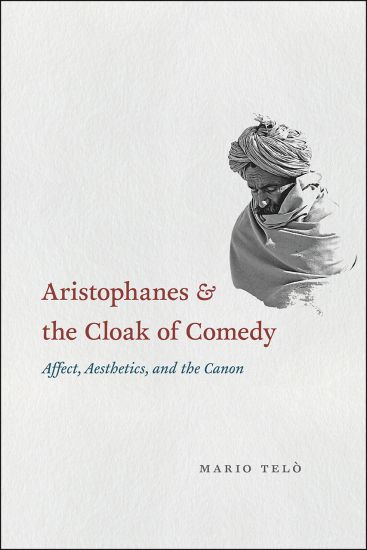
Aristophanes and the Cloak of Comedy

Aristophanes and the Cloak of Comedy

Mario Telo

University of Chicago Press
2016
sidottu
The Greek playwright Aristophanes (active 427–386 BCE) is often portrayed as the poet who brought stability, discipline, and sophistication to the rowdy theatrical genre of Old Comedy. In this groundbreaking book, situated within the affective turn in the humanities, Mario Telò explores a vital yet understudied question: how did this view of Aristophanes arise, and why did his popularity eventually eclipse that of his rivals? Telò boldly traces Aristophanes’s rise, ironically, to the defeat of his play Clouds at the Great Dionysia of 423 BCE. Close readings of his revised Clouds and other works, such as Wasps, uncover references to the earlier Clouds, presented by Aristophanes as his failed attempt to heal the audience, who are reflected in the plays as a kind of dysfunctional father. In this proto-canonical narrative of failure, grounded in the distinctive feelings of different comic modes, Aristophanic comedy becomes cast as a prestigious object, a soft, protective cloak meant to shield viewers from the debilitating effects of competitors’ comedies and restore a sense of paternal responsibility and authority. Associations between afflicted fathers and healing sons, between audience and poet, are shown to be at the center of the discourse that has shaped Aristophanes’s canonical dominance ever since.
Interregionalism and the European Union

Interregionalism and the European Union

Mario Telò; Louise Fawcett; Frederik Ponjaert

Routledge
2015
nidottu
Is the EU isolated within the emergent multipolar world? Concentrating on interregional relations and focussing on the European Union’s (EU) evolving international role with regards to regional cooperation, this innovative book collects a set of fresh empirical analyses of interregional ties binding the EU with its Eastern and Southern neighbourhood, as well as with Asia, Africa and the Americas. The 25 leading authors from 5 continents have contributed original and diverse chapters and the book advances a novel theoretical ‘post-revisionist’ approach beyond both the Eurocentrism of ‘Europe First’ perspectives as well as the Euroscepticism of those advocating to simply move ’Beyond Europe’. After a Foreword by A. Acharya, the book’s five sections reflect the main drivers of EU interregional policies: The European Union as a Sophisticated Laboratory of Regional and Interregional Cooperation (with chapters by M. Telò, L. Fawcett and T. Risse), De Facto Drivers of Regionalism (F. Ponjaert, M. Shu, A. Valladão and C. Jakobeit), De Jure Drivers of Regionalism (S. Lavenex, G. Finizio, C. Jakobeit, R. Coman, C. Cocq & S. Teo L-Shah), Cognitive Drivers of Regionalism (J. Rüland, E. Fitriani, S. Stavridis & S. Kingah, P. Bacon), and Instrumental Drivers of Regionalism (B. Delcourt, C. Olsson & G. Müller, A. Malamud & P. Seabra and L. Fioramonti & J. Kostopoulos).
Interregionalism and the European Union

Interregionalism and the European Union

Mario Telò; Louise Fawcett; Frederik Ponjaert

Routledge
2015
sidottu
Is the EU isolated within the emergent multipolar world? Concentrating on interregional relations and focussing on the European Union’s (EU) evolving international role with regards to regional cooperation, this innovative book collects a set of fresh empirical analyses of interregional ties binding the EU with its Eastern and Southern neighbourhood, as well as with Asia, Africa and the Americas. The 25 leading authors from 5 continents have contributed original and diverse chapters and the book advances a novel theoretical ‘post-revisionist’ approach beyond both the Eurocentrism of ‘Europe First’ perspectives as well as the Euroscepticism of those advocating to simply move ’Beyond Europe’. After a Foreword by A. Acharya, the book’s five sections reflect the main drivers of EU interregional policies: The European Union as a Sophisticated Laboratory of Regional and Interregional Cooperation (with chapters by M. Telò, L. Fawcett and T. Risse), De Facto Drivers of Regionalism (F. Ponjaert, M. Shu, A. Valladão and C. Jakobeit), De Jure Drivers of Regionalism (S. Lavenex, G. Finizio, C. Jakobeit, R. Coman, C. Cocq & S. Teo L-Shah), Cognitive Drivers of Regionalism (J. Rüland, E. Fitriani, S. Stavridis & S. Kingah, P. Bacon), and Instrumental Drivers of Regionalism (B. Delcourt, C. Olsson & G. Müller, A. Malamud & P. Seabra and L. Fioramonti & J. Kostopoulos).
European Union and New Regionalism
Stemming from an international and multidisciplinary network of leading specialists, this best-selling text is fully updated with new chapter additions. With the first edition prepared at the end of the last century and the second edition adding inter-regional relations, this new edition focuses on competing models of regional cooperation within a multipolar world and the role of European Union. This new edition offers: - A comparative analysis of regional cooperation and of both US-centred and EU-centred interregionalism. - A fresh exploration of key issues of regionalism versus globalization and the potential for world economic and political governance through regional cooperation, notably in hard times. - A vigorous response to conventional wisdom on the controversial EU international identity - An appendix on regional and interregional organizations. - A key resource for postgraduate or undergraduate study and research of international relations, European integration studies, comparative politics and international political economy. Taking into account both the expanded European Union and regional cooperation in every continent, this multidisciplinary volume comprises contributions from established scholars in the field: A. Gamble, P. Padoan, G. Joffé, G. Therborn, Th. Meyer, R. Higgott, B. Hettne / F. Ponjaert, F. Soederbaum, Ch. Deblock, K. Eliassen / A. Arnottir, S. Keukeleire / I. Petrova, S. Santander and M. Telò (editor).
European Union and New Regionalism
Stemming from an international and multidisciplinary network of leading specialists, this best-selling text is fully updated with new chapter additions. With the first edition prepared at the end of the last century and the second edition adding inter-regional relations, this new edition focuses on competing models of regional cooperation within a multipolar world and the role of European Union. This new edition offers: - A comparative analysis of regional cooperation and of both US-centred and EU-centred interregionalism. - A fresh exploration of key issues of regionalism versus globalization and the potential for world economic and political governance through regional cooperation, notably in hard times. - A vigorous response to conventional wisdom on the controversial EU international identity - An appendix on regional and interregional organizations. - A key resource for postgraduate or undergraduate study and research of international relations, European integration studies, comparative politics and international political economy. Taking into account both the expanded European Union and regional cooperation in every continent, this multidisciplinary volume comprises contributions from established scholars in the field: A. Gamble, P. Padoan, G. Joffé, G. Therborn, Th. Meyer, R. Higgott, B. Hettne / F. Ponjaert, F. Soederbaum, Ch. Deblock, K. Eliassen / A. Arnottir, S. Keukeleire / I. Petrova, S. Santander and M. Telò (editor).