Kirjojen hintavertailu. Mukana 12 474 117 kirjaa ja 12 kauppaa.

Kirjailija

Mario Valdes

Kirjat ja teokset yhdessä paikassa: 13 kirjaa, julkaisuja vuosilta 1973-2023, suosituimpien joukossa World-Making. Vertaile teosten hintoja ja tarkista saatavuus suomalaisista kirjakaupoista.

Mukana myös kirjoitusasut: Mario Valdés

13 kirjaa

Kirjojen julkaisuhaarukka 1973-2023.

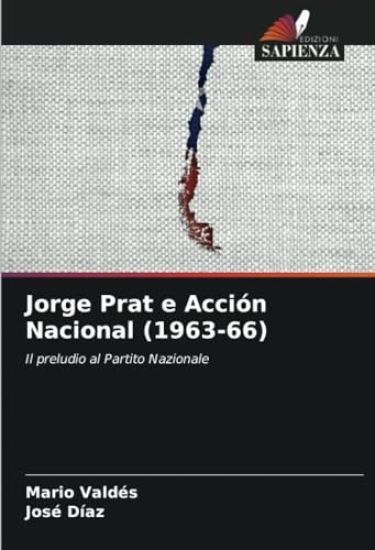
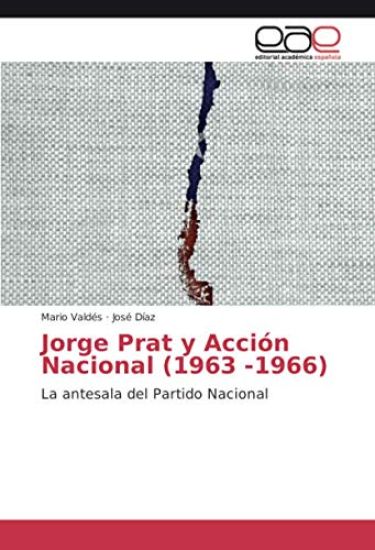
Jorge Prat e Acción Nacional (1963-66)

Jorge Prat e Acción Nacional (1963-66)

Mario Valdés; José Díaz

Edizioni Sapienza
2023
pokkari
Acci n Nacional stato un piccolo raggruppamento politico nazionalista cileno, sorto in seguito alla frustrata candidatura presidenziale di Jorge Prat Echaurren nel 1964. Dopo le elezioni parlamentari del 1965, in cui la destra ottenne una misera rappresentanza parlamentare, lanci la proposta di raggruppare conservatori, liberali, nazionalisti e indipendenti non marxisti in un unico raggruppamento politico. Questa un'approssimazione della sua breve ma significativa esistenza.
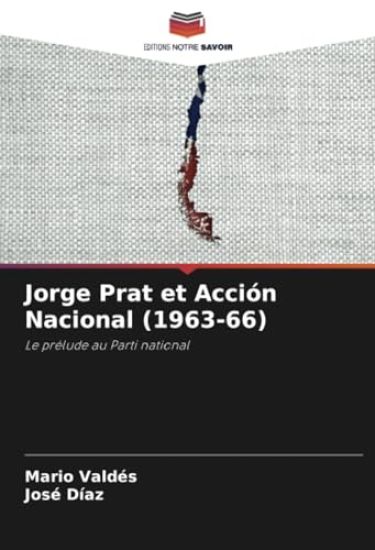
Jorge Prat et Acción Nacional (1963-66)

Jorge Prat et Acción Nacional (1963-66)

Mario Valdés; José Díaz

Editions Notre Savoir
2023
pokkari
Acci n Nacional tait une petite formation politique nationaliste chilienne n e de la candidature frustr e de Jorge Prat Echaurren l' lection pr sidentielle de 1964. Apr s les lections l gislatives de 1965, au cours desquelles la droite n'a obtenu qu'une maigre repr sentation parlementaire, elle a lanc une proposition visant regrouper les conservateurs, les lib raux, les nationalistes et les ind pendants non marxistes au sein d'une seule formation politique. C'est une approximation de son existence br ve mais significative.
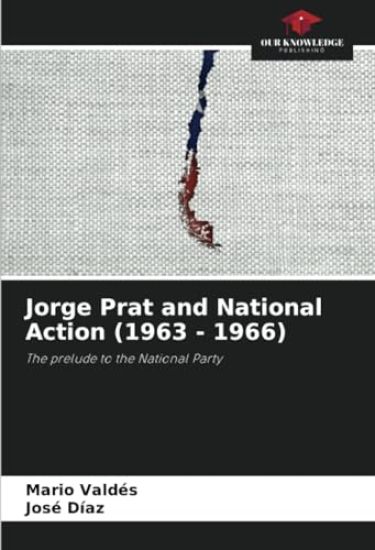
Jorge Prat and National Action (1963 - 1966)

Jorge Prat and National Action (1963 - 1966)

Mario Valdés; José Díaz

Our Knowledge Publishing
2023
pokkari
Acci n Nacional was a small Chilean nationalist political grouping that emerged as a result of the frustrated presidential candidacy of Jorge Prat Echaurren in 1964. After the parliamentary elections of 1965, in which the right-wing won a meagre parliamentary representation, it launched a proposal to regroup conservatives, liberals, nationalists and non-Marxist independents into a single political grouping. This is an approximation of its brief but significant existence.
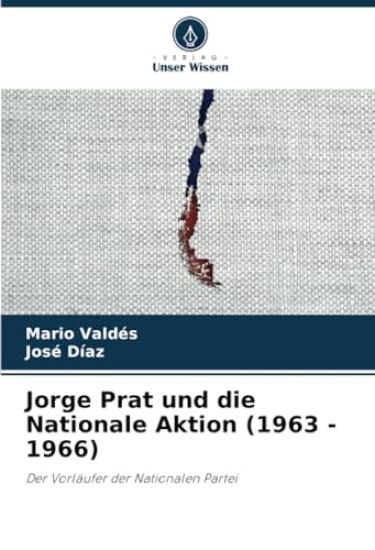
Jorge Prat und die Nationale Aktion (1963 - 1966)

Jorge Prat und die Nationale Aktion (1963 - 1966)

Mario Valdés; José Díaz

Verlag Unser Wissen
2023
pokkari
Die Acci n Nacional war eine kleine chilenische nationalistische politische Gruppierung, die aus der gescheiterten Pr sidentschaftskandidatur von Jorge Prat Echaurren im Jahr 1964 hervorging. Nach den Parlamentswahlen von 1965, bei denen die Rechten nur eine magere parlamentarische Vertretung errangen, unterbreitete sie den Vorschlag, Konservative, Liberale, Nationalisten und nichtmarxistische Unabh ngige in einer einzigen politischen Gruppierung zusammenzufassen. Dies ist eine Ann herung an ihre kurze, aber bedeutende Existenz.
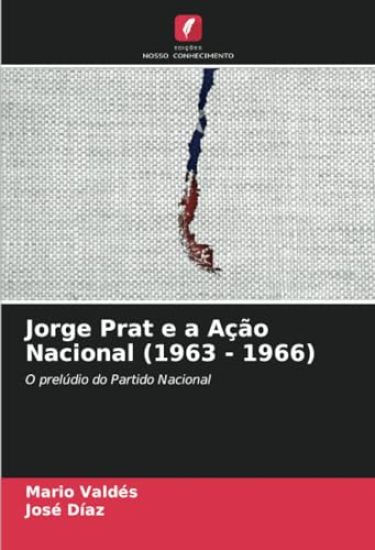
Jorge Prat e a Ação Nacional (1963 - 1966)

Jorge Prat e a Ação Nacional (1963 - 1966)

Mario Valdés; José Díaz

Edicoes Nosso Conhecimento
2023
pokkari
A A o Nacional foi um pequeno agrupamento pol tico nacionalista chileno que surgiu na sequ ncia da candidatura presidencial frustrada de Jorge Prat Echaurren em 1964. Ap s as elei es parlamentares de 1965, em que a direita obteve uma escassa representa o parlamentar, lan ou uma proposta para reagrupar conservadores, liberais, nacionalistas e independentes n o marxistas num nico agrupamento pol tico. Esta uma aproxima o da sua breve mas significativa exist ncia.
Cultural Hermeneutics

Cultural Hermeneutics

Mario Valdes

University of Toronto Press
2016
sidottu
In Cultural Hermeneutics, Mario J. Valdés offers a synthesis of the hermeneutic philosophies of Miguel de Unamuno and Paul Ricoeur, a dialectical method that has formed the basis for many of Valdés’ own studies in comparative literature. As Valdés explains in these insightful essays, what Unamuno and Ricoeur shared in their hermeneutic studies was a theory of interpretation in which the meaning of a work of art comes into existence through the dialectical relationship between its creator and its readers, listeners, or viewers. Contextualizing this hermeneutic concept as it appears in the works of both philosophers, Cultural Hermeneutics presents the basis for a profound understanding of the arts.
The Hermeneutics of Poetic Sense

The Hermeneutics of Poetic Sense

Mario Valdes

University of Toronto Press
1998
sidottu
In his earlier books, Shadows in the Cave (1982) and Phenomenological Hermeneutics and the Study of Literature (1987), Mario Valdés laid the foundation for his phenomenological-hermeneutic approach to literary criticism. With this book he continues the development of his ideas, using his views of literature, cinema, and art to unravel what he calls 'the imaginative configuration of the world, the cultural phenomenon of making sense, poetic sense, of life.' The book takes the form of a collection of studies dealing with a variety of key issues in literary theory. A central theme is the role of the reader in assigning meaning to written works. Literature is understood in its capacity to make sense of certain basic aspects of human experience, including the quest for order in the universe, personal identity over time, a definition of the self with respect to the other, and a definition of the self as a member of a cultural community. Valdés begins each chapter with a synopsis of leading philosophical and literary-theoretical views on the subject at hand, then presenting and illustrating his own position through a detailed analysis of one or more literary works, primarily by Hispanic and Latin American authors. This meticulously constructed phenomenological-experiential approach to literature effectively intervenes in a number of major critical controversies. Valdés's project, begun with his earlier works and continued here, has been to rewrite literary history from a cross-cultural perspective mediated by educated readers.
World-Making

World-Making

Mario Valdes

University of Toronto Press
1991
pokkari
In literary texts writers express their views on a great variety of issues, some of which they take seriously, others of which they treat with levity. Even in those statements to which cultural circumstances assign a transcendent meaning there is a wide range of commitment from marginal to central concern in the discursive context. Mario J. Valdés calls these assertions truth-claims. Drawing on the works of a wide range of authors, including Proust, Tolstoy, Woolf, Lorca, Solzhenitsyn, and Fowles, Valdés explores the phenomenon of truth-claims from two perspectives. One, textual semantics, deal with the content of a given truth-claim; the other, hermeneutics, is concerned with the reader’s interpretation of the truth-claim. In the reading of the text the subject making the truth-claim is not the author or a collective abstraction but rather an enunciating voice or voices. The subject enacting the truth-claim is the reader in his or her textual encounter with the discourse. Everything that happens in a text is recognizable and ultimately knowable because it is made possible as a world constituted through language by a reader. The subject-matter of truth-claims is therefore not the physical data of the world that corresponds to the statement, but rather the reader’s accessibility and relationship to those data within the lived world of language.
Phenomenological Hermeneutics and the Study of Literature

Phenomenological Hermeneutics and the Study of Literature

Mario Valdes

University of Toronto Press
1987
pokkari
In the intensity of current theoretical debates, critics and students of literature are sometimes in danger of losing sight of the most basic principles and presuppositions of their discipline, of the underlying connections between attitudes to truth and the study of literature. Aware of this danger, Mario Valdés has taken up the challenge of retracing the historical and philosophical background of his own approach to literature, the application of phenomenological philosophy to the interpretation of texts. Phenomenological hermeneutics, Valdés reminds us, participates in a long-standing tradition of textual commentary that originates in the Renaissance and achieves full force in the work of Giambattista Vico by the middle of the eighteenth century. Valdés characterizes this tradition as the embodiment of a relational rather than an absolutist epistemology: its practitioners do not seek fixed and exclusive meanings in texts but regard the literary work of art as an experience that is shared within a community of readers and commentators, and enriched by the historical continuity of that community. Valdés demonstrates the vigour of the tradition and community he has inherited in a brief survey of such relational commentators as Vico, Juan Luis Vives, Wilhelm von Humboldt, Unamuno, Croce, and Collingwood. He elaborates the contemporary contribution of phenomenological hermeneutics to the tradition, referring particularly to the work of Paul Ricoeur. In arguing for a living and evolving community of criticism, he contests both the historicist imposition of closure on texts and the radical scepticism of the deconstructionists. And in reading of works by Octavio Paz and Jorge Luis Borges, he offers a model for the continuing celebration of the living literary text.
Identity of the Literary Text

Identity of the Literary Text

Mario Valdes; Owen Miller

UNIVERSITY OF TORONTO PRESS
1985
nidottu
This book brings together, in the spirit of dialogue, the arguments on both sides of the most important issue in literary criticism today. It will be of interest to all concerned with textual theory, regardless of which literature are considered.
Shadows in the Cave

Shadows in the Cave

Mario Valdes

UNIVERSITY OF TORONTO PRESS
1982
pokkari
Professor Valdes presents a theory of literary criticism based on phenomenological philosophy – primarily the work of Husserl, Ingarden, Merleau-Ponty, and Ricoeur. His basic argument is that literary texts are inexhaustible sources of imaginative creativity for their readers, and, further, that this openness does not inhibit serious commentary but rather enhances the critic’s possibilities of exchange, dialogue, and intellectual enrichment. He argues for a system of classification of narrative texts according to phenomenological principles in which form is considered as a heuristic device established for the purpose of understanding the nature of literary expression. The only critical approach he holds to be untenable is that which lays claim to a definitive interpretation of a text, for such an approach would mean the death of the literary text as a creative source. Valdes’ presentation progresses from a statement of premises, through the construction of a critical approach, to a concluding historical generalization about literature. To introduce the richness of the Hispanic literatures and to elaborate an historical overview of one literary tradition, he has chosen to examine texts from Hispanic literatures exclusively, notably those of Unamuno and Cervantes.
An Unamuno Source Book

An Unamuno Source Book

Mario Valdes; Maria Elena de Valdes

UNIVERSITY OF TORONTO PRESS
1973
pokkari
Miguel de Unamuno (d. 1936), one of the most influential of modern Spanish writers and thinkers, has been described as Spain’s richest mind of the twentieth century. This book provides a bibliography of the approximately 5,700 books in his private library in Salamanca and includes most of his readings and acquisitions. Also listed are at least 2,000 more books from a personal catalogue kept by Unamuno, which have been collated with the present collection. Since Unamuno read in vast and indiscriminate quantities, an organized approach to his library is essential for determining the full dimensions of his intellectual stimulation. An introductory essay by Mario J. Valdes makes an original contribution to the study of Unamuno by analysing intensively the methodology used in his readings, and relating them to his thought. This source book provides answers to many diverse questions about Unamuno and his works, for example: Which newspapers did Unamuno write in? How interested was he in literature from the United States? Did he read Kierkegaard in Spanish? What about Kant? Did he read Catalan? An appendix correlates the catalogue of readings to the Vergara edition of Unamuno’s Obras completas.