Kirjojen hintavertailu. Mukana 12 390 323 kirjaa ja 12 kauppaa.

Kirjailija

Marion Nestle

Kirjat ja teokset yhdessä paikassa: 29 kirjaa, julkaisuja vuosilta 2004-2026, suosituimpien joukossa Sugar Coated. Vertaile teosten hintoja ja tarkista saatavuus suomalaisista kirjakaupoista.

29 kirjaa

Kirjojen julkaisuhaarukka 2004-2026.

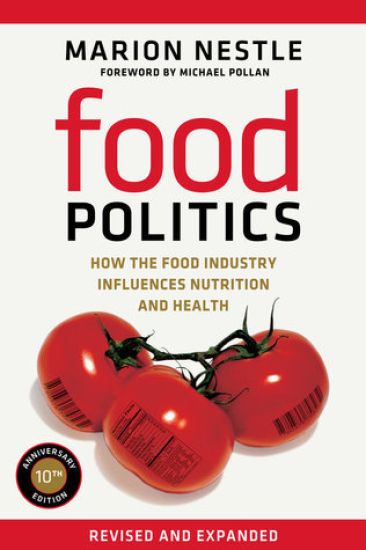
Food Politics

Food Politics

Marion Nestle; Michael Pollan

University of California Press
2013
pokkari
We all witness, in advertising and on supermarket shelves, the fierce competition for our food dollars. In this engrossing expose, Marion Nestle goes behind the scenes to reveal how the competition really works and how it affects our health. The abundance of food in the United States - enough calories to meet the needs of every man, woman, and child twice over - has a downside. Our over-efficient food industry must do everything possible to persuade people to eat more - more food, more often, and in larger portions - no matter what it does to waistlines or well-being. Like manufacturing cigarettes or building weapons, making food is big business. Food companies in 2000 generated nearly $900 billion in sales. They have stakeholders to please, shareholders to satisfy, and government regulations to deal with. It is nevertheless shocking to learn precisely how food companies lobby officials, co-opt experts, and expand sales by marketing to children, members of minority groups, and people in developing countries. We learn that the food industry plays politics as well as or better than other industries, not least because so much of its activity takes place outside the public view. Editor of the 1988 "Surgeon General's Report on Nutrition and Health", Nestle is uniquely qualified to lead us through the maze of food industry interests and influences. She vividly illustrates food politics in action: watered-down government dietary advice, schools pushing soft drinks, diet supplements promoted as if they were First Amendment rights. When it comes to the mass production and consumption of food, strategic decisions are driven by economics - not science, not common sense, and certainly not health. No wonder most of us are thoroughly confused about what to eat to stay healthy. An accessible and balanced account, "Food Politics" will forever change the way we respond to food industry marketing practices. By explaining how much the food industry influences government nutrition policies and how cleverly it links its interests to those of nutrition experts, this path-breaking book helps us understand more clearly than ever before what we eat and why.
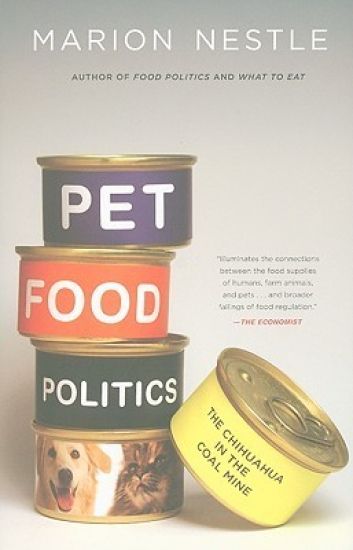
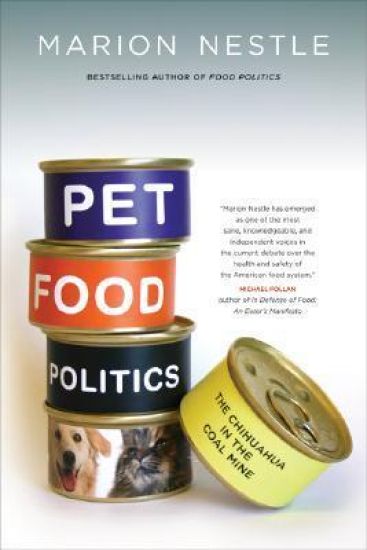
Pet Food Politics

Pet Food Politics

Marion Nestle

University of California Press
2010
pokkari
Marion Nestle, acclaimed author of "Food Politics", now tells the gripping story of how, in early 2007, a few telephone calls about sick cats set off the largest recall of consumer products in U.S. history and an international crisis over the safety of imported goods ranging from food to toothpaste, tires, and toys. Nestle follows the trail of tainted pet food ingredients back to their source in China and along the supply chain to their introduction into feed for pigs, chickens, and fish in the United States, Canada, and other countries throughout the world. What begins as a problem 'merely' for cats and dogs soon becomes an issue of tremendous concern to everyone. Nestle uncovers unexpected connections among the food supplies for pets, farm animals, and people and identifies glaring gaps in the global oversight of food safety.
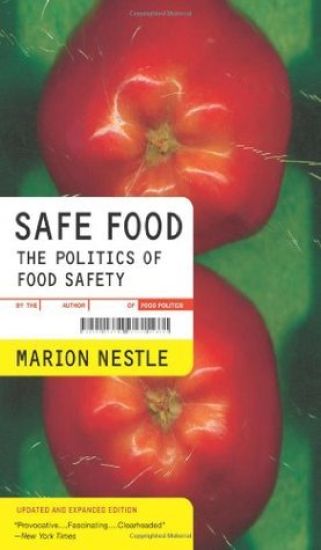
Safe Food

Safe Food

Marion Nestle

University of California Press
2010
pokkari
Food safety is a matter of intense public concern, and for good reason. Millions of annual cases of food 'poisonings' raise alarm not only about the food served in restaurants and fast-food outlets but also about foods bought in supermarkets. The introduction of genetically modified foods - immediately dubbed 'Frankenfoods' - only adds to the general sense of unease. Finally, the events of September 11, 2001, heightened fears by exposing the vulnerability of food and water supplies to attacks by bioterrorists. How concerned should we be about such problems? Who is responsible for preventing them? Who benefits from ignoring them? Who decides? Marion Nestle, author of the critically acclaimed "Food Politics", argues that ensuring safe food involves more than washing hands or cooking food to higher temperatures. It involves politics. When it comes to food safety, billions of dollars are at stake, and industry, government, and consumers collide over issues of values, economics, and political power - and not always in the public interest. Although the debates may appear to be about science, Nestle maintains that they really are about control: who decides when a food is safe? She demonstrates how powerful food industries oppose safety regulations, deny accountability, and blame consumers when something goes wrong, and how century-old laws for ensuring food safety no longer protect our food supply. Accessible, informed, and even-handed, "Safe Food" is for anyone who cares how food is produced and wants to know more about the real issues underlying today's headlines.
Feed Your Pet Right: The Authoritative Guide to Feeding Your Dog and Cat
Human nutrition expert and author of the critically acclaimed What to Eat, Marion Nestle, Ph.D., M.P.H., has joined forces with Malden C. Nesheim, Ph.D., a Cornell animal nutrition expert, to write Feed Your Pet Right, the first complete, research-based guide to selecting the best, most healthful foods for your cat or dog. Human nutrition expert and author of the critically acclaimed What to Eat, Marion Nestle, Ph.D., M.P.H., has joined forces with Malden C. Nesheim, Ph.D., a Cornell animal nutrition expert, to write Feed Your Pet Right, the first complete, research-based guide to selecting the best, most healthful foods for your cat or dog. A comprehensive and objective look at the science behind pet food, it tells a fascinating story while evaluating the range of products available and examining the booming pet food industry and its marketing practices. Drs. Nestle and Nesheim also present the results of their unique research into this sometimes secretive industry. Through conversations with pet food manufacturers and firsthand observations, they reveal how some companies have refused to answer questions or permit visits. The authors also analyze food products, basic ingredients, sources of ingredients, and the optimal ways to feed companion animals. In this engaging narrative, they explain how ethical considerations affect pet food research and product development, how pet foods are regulated, and how companies influence veterinary training and advice. They conclude with specific recommendations for pet owners, the pet food industry, and regulators. A road map to the most nutritious diets for cats and dogs, Feed Your Pet Right is sure to be a reference classic to which all pet owners will turn for years to come.
Food and Everyday Life in the Postsocialist World

Food and Everyday Life in the Postsocialist World

Marion Nestle; Elizabeth Cullen Dunn

Indiana University Press
2009
pokkari
Across the Soviet Union and eastern Europe during the socialist period, food emerged as a symbol of both the successes and failures of socialist ideals of progress, equality, and modernity. By the late 1980s, the arrival of McDonald's behind the Iron Curtain epitomized the changes that swept across the socialist world. Not quite two decades later, the effects of these arrivals were evident in the spread of foreign food corporations and their integration into local communities. This book explores the role played by food—as commodity, symbol, and sustenance—in the transformation of life in Russia and eastern Europe since the end of socialism. Changes in food production systems, consumption patterns, food safety, and ideas about health, well-being, nationalism, and history provide useful perspectives on the meaning of the postsocialist transition for those who lived through it.
Pet Food Politics

Pet Food Politics

Marion Nestle

University of California Press
2008
sidottu
Marion Nestle, acclaimed author of "Food Politics", now tells the gripping story of how, in early 2007, a few telephone calls about sick cats set off the largest recall of consumer products in U.S. history and an international crisis over the safety of imported goods ranging from food to toothpaste, tires, and toys. Nestle follows the trail of tainted pet food ingredients back to their source in China and along the supply chain to their introduction into feed for pigs, chickens, and fish in the United States, Canada, and other countries throughout the world. What begins as a problem 'merely' for cats and dogs soon becomes an issue of tremendous concern to everyone. Nestle uncovers unexpected connections among the food supplies for pets, farm animals, and people and identifies glaring gaps in the global oversight of food safety.
What to Eat

What to Eat

Marion Nestle

North Point Press
2007
nidottu
Since its publication in hardcover last year, Marion Nestle’s What to Eat has become the definitive guide to making healthy and informed choices about food. Praised as “radiant with maxims to live by” in The New York Times Book Review and “accessible, reliable and comprehensive” in The Washington Post, What to Eat is an indispensable resource, packed with important information and useful advice from the acclaimed nutritionist who “has become to the food industry what . . . Ralph Nader [was] to the automobile industry” (St. Louis Post-Dispatch). How we choose which foods to eat is growing more complicated by the day, and the straightforward, practical approach of What to Eat has been praised as welcome relief. As Nestle takes us through each supermarket section—produce, dairy, meat, fish—she explains the issues, cutting through foodie jargon and complicated nutrition labels, and debunking the misleading health claims made by big food companies. With Nestle as our guide, we are shown how to make wise food choices—and are inspired to eat sensibly and nutritiously. Now in paperback, What to Eat is already a classic—“the perfect guidebook to help navigate through the confusion of which foods are good for us” (USA Today).
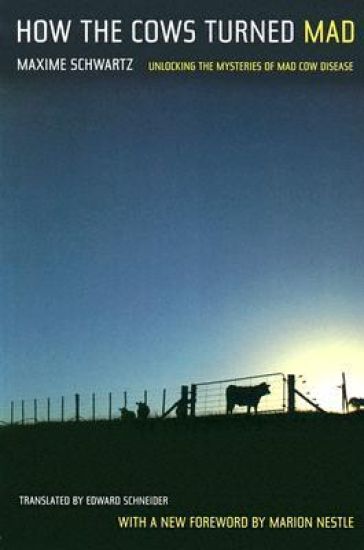
How the Cows Turned Mad

How the Cows Turned Mad

Maxime Schwartz; Marion Nestle

University of California Press
2004
pokkari
Fear of mad cow disease, a lethal illness transmitted from infected beef to humans, has spread from Europe to the United States and around the world. Originally published to much acclaim in France, this scientific thriller, available in English for the first time and updated with a new chapter on developments in 2001, tells of the hunt for the cause of an enigmatic class of fatal brain infections, of which mad cow disease is the latest incarnation. In gripping, nontechnical prose, Maxime Schwartz details the deadly manifestations of these diseases throughout history, describes the major players and events that led to discoveries about their true nature, and outlines our current state of knowledge. The book concludes by addressing the question we all want answered: should we be afraid? The story begins in the eighteenth century with the identification of a mysterious illness called scrapie that was killing British sheep. It was not until the 1960s that scientists understood that several animal and human diseases, including scrapie, were identical, and together identified them as transmissible spongiform encephalopathy (TSE). The various guises assumed throughout history by TSE include an illness called kuru in a cannibalistic tribe in Papua New Guinea, an infectious disease that killed a group of children who had been treated for growth hormone deficiencies, and mad cow disease. Revealing the fascinating process of scientific discovery that led to our knowledge of TSE, Schwartz relates pivotal events in the history of biology, including the Pasteurian revolution, the birth of genetics, the emergence of molecular biology, and the latest developments in biotechnology. He also explains the Nobel Prize-winning prion hypothesis, which has rewritten the rules of biological heredity and is a key link between the distinctive diseases of TSE. Up-to-date, informative, and thoroughly captivating, How the Cows Turned Mad tells the story of a disease that continues to elude on many levels. Yet science has come far in understanding its origins, incubation, and transmission. This authoritative book is a stunning case history that illuminates the remarkable progression of science.