Kirjojen hintavertailu. Mukana 12 192 523 kirjaa ja 12 kauppaa.

Kirjailija

Marion Schmid

Kirjat ja teokset yhdessä paikassa: 11 kirjaa, julkaisuja vuosilta 1998-2022, suosituimpien joukossa Chantal Akerman. Vertaile teosten hintoja ja tarkista saatavuus suomalaisista kirjakaupoista.

11 kirjaa

Kirjojen julkaisuhaarukka 1998-2022.

Chantal Akerman

Chantal Akerman

Emma Wilson; Marion Schmid

MODERN HUMANITIES RESEARCH ASSOCIATION
2021
nidottu
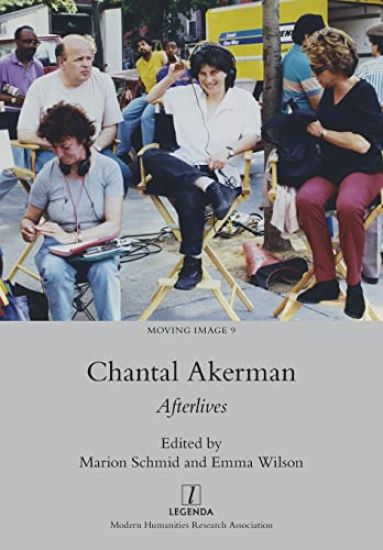
Chantal Akerman was one of the most significant directors of our times. A radical innovator of cinematic forms, she was at the forefront of feminist and women's filmmaking. In the 1990s, she developed an important installation practice and began to experiment with self-writing.Focusing on Akerman's works of the last two decades, a period during which she diversified her creative practice, this collection traces her artistic trajectory across different media. From her documentaries 'bordering on fiction' to her final installation, NOW, the volume elucidates the thematic and aesthetic concerns of the later works, placing particular emphasis on self-portraiture, the exploration of intimacy, and the treatment of trauma, memory and exile. It also attends to the aural and visual textures that underpin her art. Drawing on a wide range of theoretical approaches as well as engaging more creatively with Akerman's work, the essays provide a new optic for understanding this deeply personal, prescient oeuvre.Marion Schmid is Professor of French Literature and Film at the University of Edinburgh. Emma Wilson is Professor of French Literature and the Visual Arts at the University of Cambridge.
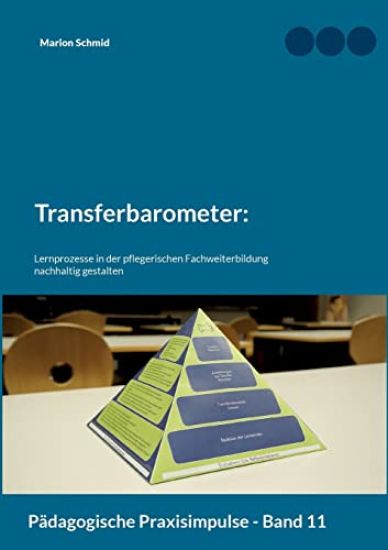
Transferbarometer

Transferbarometer

Marion Schmid

Books on Demand
2022
pokkari
In der pflegerischen Fachweiterbildung ist die F rderung der Lerntransfersicherung relevant, damit den Lernenden der Praxistransfer des theoretischen Wissens gelingt. In diesem Band wird das Transferbarometer beschrieben, ein neu entwickeltes Instrument, das die Lehrperson bei der Reflexion, Planung und Gestaltung des Unterrichts unterst tzt. Das eigene transferf rdern-de Handeln, die Gestaltungsaspekte des Lernangebots f r die Lernenden und die curricularen Voraussetzungen werden betrachtet, um die Transferqualit t des Unterrichts einsch tzen und verbessern zu k nnen. Abgeleitet aus empirisch belegten bzw. von Experten empfohlenen lerntheoretischen und didaktischen Prinzipien, werden Anregungen gegeben, um mehr berufliche Handlungskompetenz der Lernenden zu erm glichen.
Intermedial Dialogues

Intermedial Dialogues

Marion Schmid

Edinburgh University Press
2021
nidottu
Casting fresh light on one of the most important movements in film history, Intermedial Dialogues: The French New Wave and the Other Arts is the first comprehensive study of the New Wave's relationship with the older arts. Traversing the fields of literature, theatre, painting, architecture and photography, and drawing on Andre Bazin alongside recent theories of intermediality, it investigates the 'impure', intermedial aesthetics of New Wave cinema. Filmmakers under discussion include critics-turned-directors Francois Truffaut, Eric Rohmer, Jean-Luc Godard, Jacques Rivette and Claude Chabrol, members of the Left Bank Group Alain Resnais, Agnes Varda and Chris Marker, but also lesser-known directors, notably the 'secret child of the New Wave', Guy Gilles. This wide-ranging book offers an original reading of the complex, often ambivalent ways in which the New Wave engages the other arts in both its discursive construction and filmic practice.Key Features:Awide-ranging study which explores the complex, often ambiguous ways in which the New Wave engages with the other arts in both its discursive construction and cinematic practiceAffords a new prism for understanding New Wave filmmaking and its legacy through comprehensive analysis of the ways in which the New Wave aesthetic was shaped through intermedial dialogue and medium rivalry Reassesses one of the most acclaimed movements in film history drawing on cutting-edge theory in the prominent field of intermediality studiesOffers an inclusive, heterogeneous view of the New Wave through inclusion of lesser-known directors such as Guy Gilles, Jean-Daniel Pollet and Jacques Demy alongside renowned Nouvelle Vague filmmakers
Intermedial Dialogues

Intermedial Dialogues

Marion Schmid

Edinburgh University Press
2019
sidottu
Casting fresh light on one of the most important movements in film history, Intermedial Dialogues: The French New Wave and the Other Arts is the first comprehensive study of the New Wave's relationship with the older arts. Traversing the fields of literature, theatre, painting, architecture and photography, and drawing on Andre Bazin alongside recent theories of intermediality, it investigates the 'impure', intermedial aesthetics of New Wave cinema. Filmmakers under discussion include critics-turned-directors Francois Truffaut, Eric Rohmer, Jean-Luc Godard, Jacques Rivette and Claude Chabrol, members of the Left Bank Group Alain Resnais, Agnes Varda and Chris Marker, but also lesser-known directors, notably the 'secret child of the New Wave', Guy Gilles. This wide-ranging book offers an original reading of the complex, often ambivalent ways in which the New Wave engages the other arts in both its discursive construction and filmic practice.Key Features:Awide-ranging study which explores the complex, often ambiguous ways in which the New Wave engages with the other arts in both its discursive construction and cinematic practiceAffords a new prism for understanding New Wave filmmaking and its legacy through comprehensive analysis of the ways in which the New Wave aesthetic was shaped through intermedial dialogue and medium rivalry Reassesses one of the most acclaimed movements in film history drawing on cutting-edge theory in the prominent field of intermediality studiesOffers an inclusive, heterogeneous view of the New Wave through inclusion of lesser-known directors such as Guy Gilles, Jean-Daniel Pollet and Jacques Demy alongside renowned Nouvelle Vague filmmakers
Chantal Akerman

Chantal Akerman

Marion Schmid

Manchester University Press
2017
nidottu
Chantal Akerman is widely acclaimed as one of cinema’s boldest visionaries. A towering figure in women’s and feminist film-making, she produced a diverse and intensely personal body of work ranging from minimalist portraits of the everyday to exuberant romantic comedies, and from documentaries and musicals to installation art. This book traces the director’s career at the crossroads between experimental and mainstream cinema, contextualising her work within the American avant-garde of the 1970s, European anti-naturalism, feminism and the post-modern aesthetics. While offering an in-depth analysis of her multi-faceted film style, it also stresses the social and ethical dimension of her work, especially as regards her representation of marginal groups and her exploration of exilic and diasporic identities. Particular attention is given to the inscription of the Holocaust and of Jewish memory in her films.
Proust at the Movies

Proust at the Movies

Martine Beugnet; Marion Schmid

Routledge
2017
nidottu
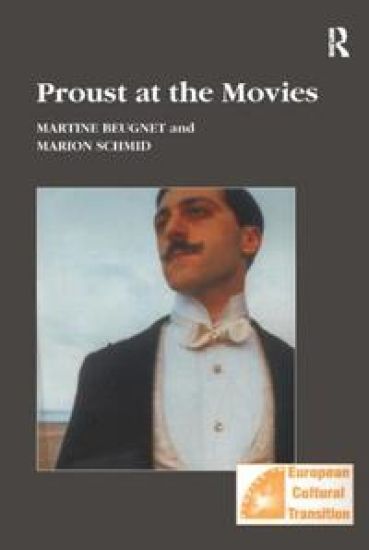
Film established itself as an artistic form of expression at the same time that Proust started work on his masterpiece, A la recherche du temps perdu. If Proust apparently took little interest in what he described as a poor avatar of reductive, mimetic representation, the resonances between his own radical reworking of writing styles and the novelistic forms, and cinema as the art of time are undeniable. Proust at the Movies is the first study in English to consider these rich interconnections. Its introductory chapter charts the missed encounter between Proust and the cinema and addresses the problems inherent in adapting his novel to the screen. The following chapters examine the various cinematic responses to A la recherche du temps perdu attempted to date: Luchino Visconti and Joseph Losey's failed attempts at adapting the whole of the novel in the 1970s, Volker Schlöndorff's Un Amour de Swann (1984), Raoul Ruiz's Le Temps retrouvé (1999), Chantal Akerman's La Prisonnière in La Captive (2000), and Fabio Carpi's Quartetto Basileus (1982) and Le Intermittenze del cuore (2003). The last chapter tracks the echoes of Proust's writing in the work of various directors, from Abel Grace to Jean-Luc Godard. The approach is multidisciplinary, combining literary criticism with film theory and elements of philosophy of art. Special attention is given to the modernist legacy in literature and film with its distinctive aesthetic and narrative features. An outline of the history and recent evolution of contemporary art cinema thus emerges: a cinema where the themes at the heart of Proust's work - memory, time, perception - are ceaselessly explored.
Chantal Akerman

Chantal Akerman

Marion Schmid

Manchester University Press
2010
sidottu
Chantal Akerman is widely acclaimed as one of the most original and important directors working in Europe today. A towering figure in women’s and feminist film-making, she has produced a diverse and intensely personal body of work ranging from minimalist portraits of the everyday to exuberant romantic comedies, and from documentaries and musicals to installation art. This book traces the director’s career at the crossroads between experimental and mainstream cinema, contextualising her work within the American avant-garde of the 1970s, European anti-naturalism, feminism and the post-modern aesthetics. While offering an in-depth analysis of her multi-faceted film style, it also stresses the social and ethical dimension of her work, especially as regards her representation of marginal groups and her exploration of exilic and diasporic identities. Particular attention is given to the inscription of the Holocaust and of Jewish memory in her films.
Proust at the Movies

Proust at the Movies

Martine Beugnet; Marion Schmid

Ashgate Publishing Limited
2005
sidottu
Film established itself as an artistic form of expression at the same time that Proust started work on his masterpiece, A la recherche du temps perdu. If Proust apparently took little interest in what he described as a poor avatar of reductive, mimetic representation, the resonances between his own radical reworking of writing styles and the novelistic forms, and cinema as the art of time are undeniable. Proust at the Movies is the first study in English to consider these rich interconnections. Its introductory chapter charts the missed encounter between Proust and the cinema and addresses the problems inherent in adapting his novel to the screen. The following chapters examine the various cinematic responses to A la recherche du temps perdu attempted to date: Luchino Visconti and Joseph Losey's failed attempts at adapting the whole of the novel in the 1970s, Volker Schlöndorff's Un Amour de Swann (1984), Raoul Ruiz's Le Temps retrouvé (1999), Chantal Akerman's La Prisonnière in La Captive (2000), and Fabio Carpi's Quartetto Basileus (1982) and Le Intermittenze del cuore (2003). The last chapter tracks the echoes of Proust's writing in the work of various directors, from Abel Grace to Jean-Luc Godard. The approach is multidisciplinary, combining literary criticism with film theory and elements of philosophy of art. Special attention is given to the modernist legacy in literature and film with its distinctive aesthetic and narrative features. An outline of the history and recent evolution of contemporary art cinema thus emerges: a cinema where the themes at the heart of Proust's work - memory, time, perception - are ceaselessly explored.
Processes of Literary Creation

Processes of Literary Creation

Marion Schmid

Legenda
1998
nidottu
This work examines the genetic processes that shaped two of the great literary masterpieces of modernity: Flaubert's "L'Education Sentimentale" and Proust's "A la Recherche de Temps Perdu". A detailed investigation of Flaubert's notebooks and scenarios from 1864 and 1869 and Proust's "Cahiers" from 1908 to 1911 reveals the almost diametrically opposed ways in which the two novels evolved in their early stages.
Chaos as Usual

Chaos as Usual

Marion Schmid

Applause Theatre Book Publishers
1999
pokkari
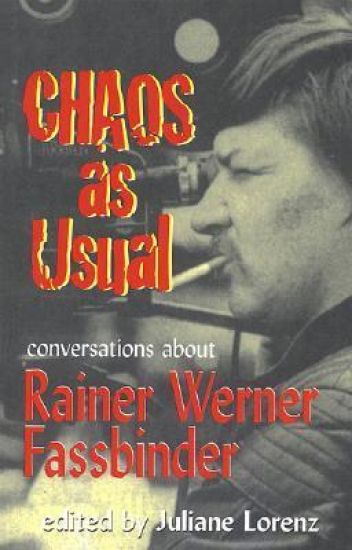
Rainer Werner Fassbiner left behind a literary and cinematic legacy which holds a unique place in the history of European film and in the culture of the twentieth century. It evolved as the expression of an era between 1966 and 1982 in a country which was then another Germany and which no longer exists.