Kirjojen hintavertailu. Mukana 12 152 606 kirjaa ja 12 kauppaa.

Kirjailija

Marius R. Busemeyer

Kirjat ja teokset yhdessä paikassa: 4 kirjaa, julkaisuja vuosilta 2014-2020, suosituimpien joukossa A Loud but Noisy Signal?. Vertaile teosten hintoja ja tarkista saatavuus suomalaisista kirjakaupoista.

4 kirjaa

Kirjojen julkaisuhaarukka 2014-2020.

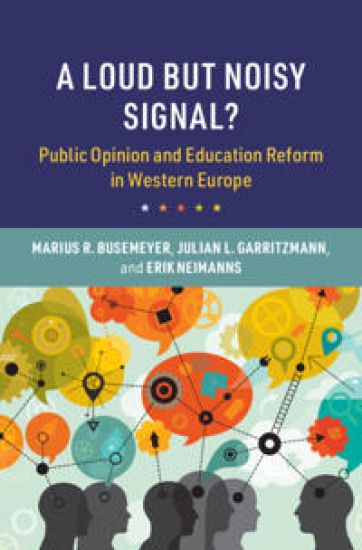
A Loud but Noisy Signal?

A Loud but Noisy Signal?

Marius R. Busemeyer; Julian L. Garritzmann; Erik Neimanns

Cambridge University Press
2020
sidottu
This path-breaking addition to the Comparative Politics of Education series studies the influence of public opinion on the contemporary politics of education reform in Western Europe. The authors analyze new data from a survey of public opinion on education policy across eight countries, and they also provide detailed case studies of reform processes based on interviews with policy-makers and stakeholders. The book's core finding is that public opinion has the greatest influence in a world of 'loud' politics, when salience is high and attitudes are coherent. In contrast, when issues are salient but attitudes are conflicting, the signal of public opinion turns 'loud, but noisy' and party politics have a stronger influence on policy-making. In the case of 'quiet' politics, when issue salience is low, interest groups are dominant. This book is required reading for anyone seeking to make sense of policy-makers' selective responsiveness to public demands and concerns.
A Loud but Noisy Signal?

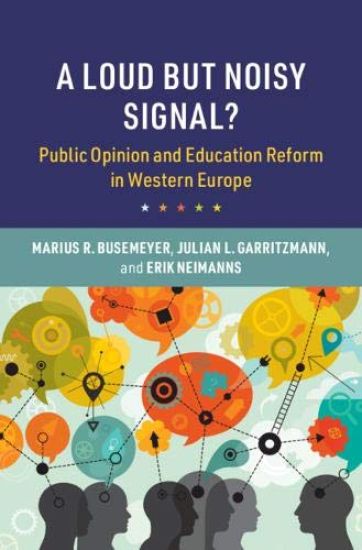
A Loud but Noisy Signal?

Marius R. Busemeyer; Julian L. Garritzmann; Erik Neimanns

Cambridge University Press
2020
pokkari
This path-breaking addition to the Comparative Politics of Education series studies the influence of public opinion on the contemporary politics of education reform in Western Europe. The authors analyze new data from a survey of public opinion on education policy across eight countries, and they also provide detailed case studies of reform processes based on interviews with policy-makers and stakeholders. The book's core finding is that public opinion has the greatest influence in a world of 'loud' politics, when salience is high and attitudes are coherent. In contrast, when issues are salient but attitudes are conflicting, the signal of public opinion turns 'loud, but noisy' and party politics have a stronger influence on policy-making. In the case of 'quiet' politics, when issue salience is low, interest groups are dominant. This book is required reading for anyone seeking to make sense of policy-makers' selective responsiveness to public demands and concerns.
Skills and Inequality

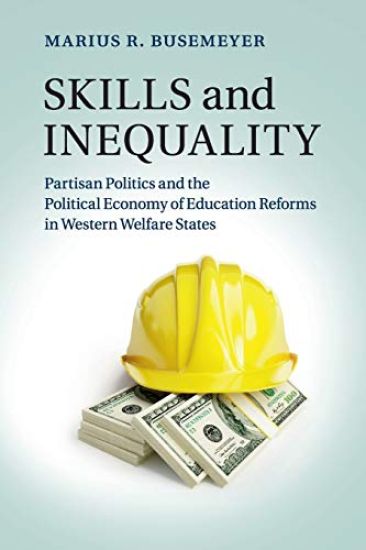
Skills and Inequality

Marius R. Busemeyer

Cambridge University Press
2016
pokkari
Skills and Inequality studies the political economy of education and training reforms from the perspective of comparative welfare state research. Highlighting the striking similarities between established worlds of welfare capitalism and educational regimes, Marius R. Busemeyer argues that both have similar political origins in the postwar period. He identifies partisan politics and different varieties of capitalism as crucial factors shaping choices about the institutional design of post-secondary education. The political and institutional survival of vocational education and training as an alternative to academic higher education is then found to play an important role in the later development of skill regimes. Busemeyer also studies the effects of educational institutions on social inequality and patterns of public opinion on the welfare state and education. Adopting a multi-method approach, this book combines historical case studies of Sweden, Germany, and the United Kingdom with quantitative analyses of macro-level aggregate data and micro-level survey data.
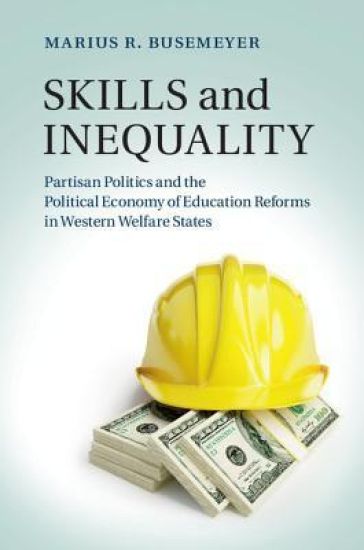
Skills and Inequality

Skills and Inequality

Marius R. Busemeyer

Cambridge University Press
2014
sidottu
Skills and Inequality studies the political economy of education and training reforms from the perspective of comparative welfare state research. Highlighting the striking similarities between established worlds of welfare capitalism and educational regimes, Marius R. Busemeyer argues that both have similar political origins in the postwar period. He identifies partisan politics and different varieties of capitalism as crucial factors shaping choices about the institutional design of post-secondary education. The political and institutional survival of vocational education and training as an alternative to academic higher education is then found to play an important role in the later development of skill regimes. Busemeyer also studies the effects of educational institutions on social inequality and patterns of public opinion on the welfare state and education. Adopting a multi-method approach, this book combines historical case studies of Sweden, Germany, and the United Kingdom with quantitative analyses of macro-level aggregate data and micro-level survey data.