Kirjojen hintavertailu. Mukana 12 390 323 kirjaa ja 12 kauppaa.

Kirjailija

Mark A. Weitz

Kirjat ja teokset yhdessä paikassa: 8 kirjaa, julkaisuja vuosilta 2000-2008, suosituimpien joukossa Clergy Malpractice in America. Vertaile teosten hintoja ja tarkista saatavuus suomalaisista kirjakaupoista.

8 kirjaa

Kirjojen julkaisuhaarukka 2000-2008.

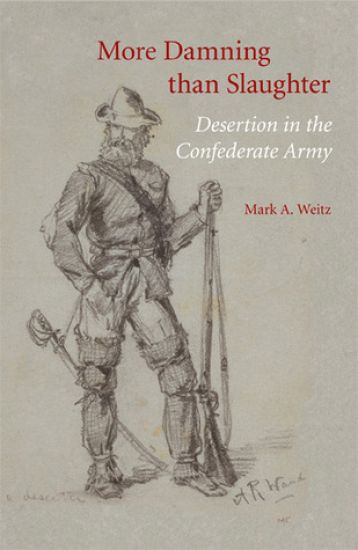
More Damning Than Slaughter

More Damning Than Slaughter

Mark A. Weitz

University of Nebraska Press
2008
pokkari
More Damning than Slaughter is the first broad study of desertion in the Confederate army. Incorporating extensive archival research with a synthesis of other secondary material, Mark A. Weitz confronts a question never fully addressed until now: did desertion hurt the Confederacy? Coupled with problems such as speculation, food and clothing shortages, conscription, taxation, and a pervasive focus on the protection of local interests, desertion started as a military problem and spilled over into the civilian world. Fostered by a military culture that treated absenteeism leniently early in the war, desertion steadily increased and by 1863 reached epidemic proportions. A Union policy that permitted Confederate deserters to swear allegiance to the Union and then return home encouraged desertion. Equally important in persuading men to desert was the direct appeal from loved ones on the home front—letters from wives begging soldiers to come home for harvests, births, and other events. By 1864 deserter bands infested some portion of every Confederate state. Preying on the civilian population, many of these bands became irregular military units that frustrated virtually every effort to subdue them. Ultimately, desertion not only depleted the Confederate army but also threatened "home" and undermined civilian morale. By examining desertion, Weitz assesses how deteriorating southern civilian morale and growing unwillingness to contribute goods and services to the war led to defeat.
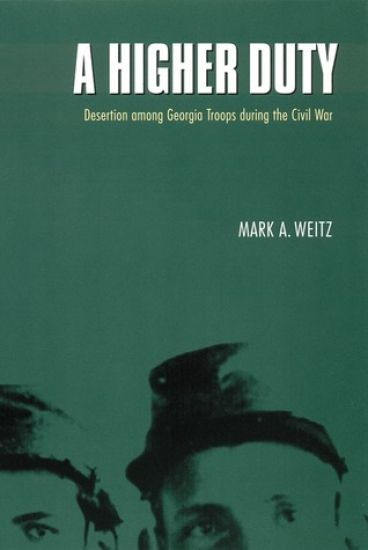
A Higher Duty

A Higher Duty

Mark A. Weitz

University of Nebraska Press
2005
pokkari
This book addresses the most important issues associated with Confederate desertion. How many soldiers actually deserted, when did they desert, and why? What does Confederate desertion say about Confederate nationalism and the war effort? Mark A. Weitz has taken his argument beyond the obvious reasons for desertion–that war is a horrific and cruel experience—and examined the emotional and psychological reasons that might induce a soldier to desert. Just as loyalty to his fellow soldiers might influence a man to charge into a hail of lead, loyalty to his wife and family could also lead him to risk a firing squad in order to return home.
The Confederacy on Trial

The Confederacy on Trial

Mark A. Weitz

University Press of Kansas
2005
nidottu
In the annals of Civil War history, one dispute remains unsettled: was the United States waging war against another nation or putting down an internal rebellion? In 1861 three legal battles put this question to the test. As Mark Weitz reveals, these proceedings were instrumental in debating and ultimately shaping the Confederacy's very identity..
The Confederacy on Trial

The Confederacy on Trial

Mark A. Weitz

University Press of Kansas
2005
sidottu
In the annals of Civil War history, one dispute remains unsettled: was the United States waging war against another nation or putting down an internal rebellion? In 1861 three legal battles put this question to the test. As Mark Weitz reveals, these proceedings were instrumental in debating and ultimately shaping the Confederacy's very identity.
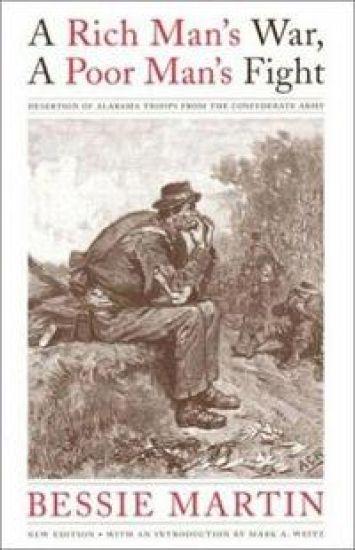
A Rich Man's War, a Poor Man's Fight

A Rich Man's War, a Poor Man's Fight

Bessie Martin; Mark A. Weitz

The University of Alabama Press
2003
nidottu
At the start of the Civil War in 1861, many men in Alabama enthusiastically enlisted. After these husbands, fathers, and brothers - all family breadwinners - marched off to duty, the number of indigent families in the state began to rise dramatically. Inflation, lack of transportation, a drastically decreased labor force, war taxes, and enemy invasion all created an increasingly desperate economic situation, especially in less affluent northern and south-eastern sections of the state. In some places, women and children were reported to be near starvation, bread riots erupted, and begging was common. As soldiers became more and more distressed about these developments at home, waves of desertions occurred. Even social relief efforts made by state and local governments in the form of the Military Aid Society, the Samaritan Society, and the Citizen's Relief Association did little to deter the cyclical exodus of fighting men from Confederate units. Southern leaders considered desertion the chief cause of serious military defeats, including those at Atlanta and Gettysburg. Desertions certainly weakened the manpower of the Confederacy and lowered the morale of its people. Bessie Martin's well-researched study sheds light on the complex nature of desertions by Alabama troops and provides valuable statistical and bibliographic information for contemporary researcher. It will be welcomed anew by Civil War historians and enthusiasts.
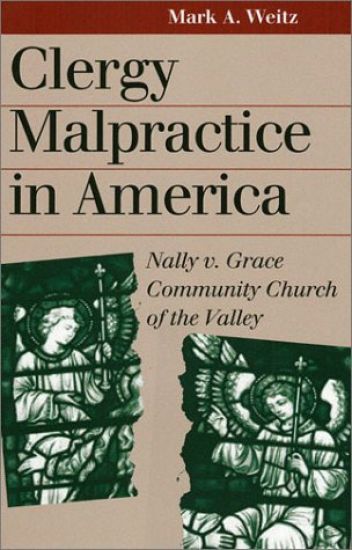
Clergy Malpractice in America

Clergy Malpractice in America

Mark A. Weitz

University Press of Kansas
2001
nidottu
Nally v. Grace Community Church of the Valley was America's first case to allege ""clergy malpractice,"" one that challenged the freedom of religious leaders to counsel their parishioners. The case is as much a story of modern America as it is an account of courtroom proceedings.
Clergy Malpractice in America

Clergy Malpractice in America

Mark A. Weitz

University Press of Kansas
2001
sidottu
Nally v. Grace Community Church of the Valley was America's first case to allege ""clergy malpractice,"" one that challenged the freedom of religious leaders to counsel their parishioners. The case is as much a story of modern America as it is an account of courtroom proceedings.
A Higher Duty

A Higher Duty

Mark A. Weitz

University of Nebraska Press
2000
sidottu
This book addresses the most important issues associated with Confederate desertion. How many soldiers actually deserted, when did they desert, and why? What does Confederate desertion say about Confederate nationalism and the war effort? Mark A. Weitz has taken his argument beyond the obvious reasons for desertion–that war is a horrific and cruel experience—and examined the emotional and psychological reasons that might induce a soldier to desert. Just as loyalty to his fellow soldiers might influence a man to charge into a hail of lead, loyalty to his wife and family could also lead him to risk a firing squad in order to return home.