Kirjojen hintavertailu. Mukana 12 595 353 kirjaa ja 12 kauppaa.

Kirjailija

Mark Andrejevic

Kirjat ja teokset yhdessä paikassa: 11 kirjaa, julkaisuja vuosilta 2003-2027, suosituimpien joukossa Autowork. Vertaile teosten hintoja ja tarkista saatavuus suomalaisista kirjakaupoista.

11 kirjaa

Kirjojen julkaisuhaarukka 2003-2027.

Autowork

Autowork

Håkon Fyhn; Mark Andrejevic; Mark Kharas; Debora Lanzeni; Kristoffer Nergård; Paulina Noches Pareja; Sarah Pink; Aneta Podkalicka; Jens Røyrvik; Roger Søraa; Jin Hurum

Bristol University Press
2026
nidottu
Available open access digitally under CC-BY-NC-ND licence. What happens to work when robots, automation and digital tools reshape industries overnight? This book explores how work-life is transformed across sectors like construction, healthcare and retail from the perspective of the workers themselves. Based on five years of international research spanning Norway and Australia, the book offers real-world case studies that illuminate the challenges, possibilities and future anticipations faced by workers navigating automation. It provides clear, accessible insights into one of today’s most urgent social transformations. This fascinating book is essential reading for students, scholars, professionals and anyone curious about the future of work.

Facial Recognition in Everyday Life

Facial Recognition in Everyday Life

Mark Andrejevic; Neil Selwyn; Gavin Smith; Xin Gu; Pat O'Malley

STANFORD UNIVERSITY PRESS
2027
pokkari
Facial recognition technology is one of the defining surveillance technologies of our time, and as the technology continues to develop it is urgently important to consider the ways in which it amplifies and reconfigures power relations. While much of the critical work on facial recognition technology has focused on bias and accuracy, this book considers the social, cultural, and political implications of a surveillance technology poised to dramatically transform our experience of anonymity in shared and public space. Drawing on a series of case studies to explore how existing logics of digital surveillance are transformed when physical space is equipped with automated recognition, the book develops several defining concepts for understanding what this level of surveillance means for strategies of governance and control. Long the object of physiognomic calculations, the face, as subjected to automated forms of data collection, is now already being used to predict everything from people's future career success to their potential for criminality. Further, as the authors show, as "smart" cameras proliferate, society moves into a post-panoptic realm in which people are actually being watched all the time. This shift from surveillance scarcity to glut allows "pattern-of-life" analysis on a mass scale, aiding in the customization of both physical and informational environments at the level of the individual and enabling the ongoing replacement of human-to-human interactions with automated human-to-machine ones – a process the authors describe as a "social recession."
Facial Recognition in Everyday Life

Facial Recognition in Everyday Life

Mark Andrejevic; Neil Selwyn; Gavin Smith; Xin Gu; Pat O'Malley

STANFORD UNIVERSITY PRESS
2027
sidottu
Facial recognition technology is one of the defining surveillance technologies of our time, and as the technology continues to develop it is urgently important to consider the ways in which it amplifies and reconfigures power relations. While much of the critical work on facial recognition technology has focused on bias and accuracy, this book considers the social, cultural, and political implications of a surveillance technology poised to dramatically transform our experience of anonymity in shared and public space. Drawing on a series of case studies to explore how existing logics of digital surveillance are transformed when physical space is equipped with automated recognition, the book develops several defining concepts for understanding what this level of surveillance means for strategies of governance and control. Long the object of physiognomic calculations, the face, as subjected to automated forms of data collection, is now already being used to predict everything from people's future career success to their potential for criminality. Further, as the authors show, as "smart" cameras proliferate, society moves into a post-panoptic realm in which people are actually being watched all the time. This shift from surveillance scarcity to glut allows "pattern-of-life" analysis on a mass scale, aiding in the customization of both physical and informational environments at the level of the individual and enabling the ongoing replacement of human-to-human interactions with automated human-to-machine ones – a process the authors describe as a "social recession."
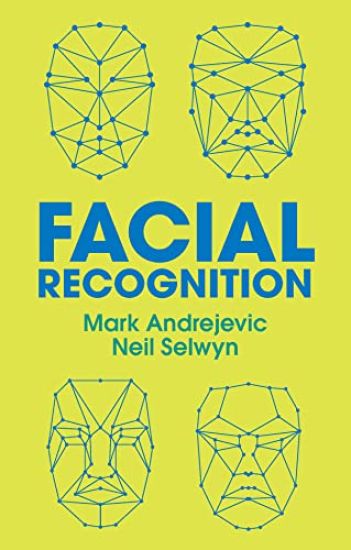
Facial Recognition

Facial Recognition

Mark Andrejevic; Neil Selwyn

JOHN WILEY AND SONS LTD
2022
nidottu
Facial recognition is set to fundamentally change our experience and understanding of monitoring, surveillance, and privacy. Backed by powerful industry interests, this technology is being integrated into many areas of society – from airports to shopping malls, classrooms to casinos. Despite the promise of security and efficiency, fears are growing that this technology is inherently biased, intrusive, and oppressive, with broad-ranging societal consequences. In this timely book, Neil Selwyn and Mark Andrejevic provide a critical introduction to facial recognition. Outlining its complex social history and future technical forms, as well as its conceptual and technical underpinnings, the book considers the arguments being advanced for the continued uptake of facial recognition. In assessing these developments, the book argues that we are at the cusp of a generational shift in surveillance technology that will reconfigure our expectations of anonymity in shared and public spaces. Throughout, the book addresses a deceptively simple question: do we really want to live in a world where our face is our ID? Facial Recognition is essential reading for students and scholars of media and communications studies, surveillance studies, criminology, and sociology, as well as for anyone interested in one of the defining technologies of our times.
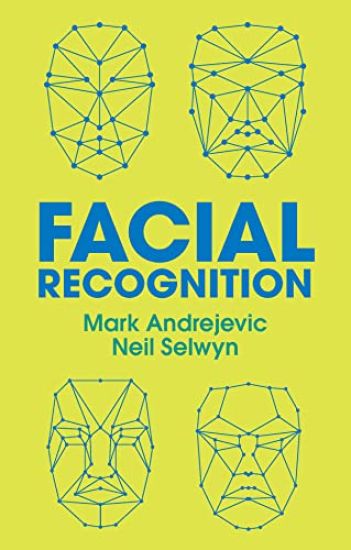
Facial Recognition

Facial Recognition

Mark Andrejevic; Neil Selwyn

JOHN WILEY AND SONS LTD
2022
sidottu
Facial recognition is set to fundamentally change our experience and understanding of monitoring, surveillance, and privacy. Backed by powerful industry interests, this technology is being integrated into many areas of society – from airports to shopping malls, classrooms to casinos. Despite the promise of security and efficiency, fears are growing that this technology is inherently biased, intrusive, and oppressive, with broad-ranging societal consequences. In this timely book, Neil Selwyn and Mark Andrejevic provide a critical introduction to facial recognition. Outlining its complex social history and future technical forms, as well as its conceptual and technical underpinnings, the book considers the arguments being advanced for the continued uptake of facial recognition. In assessing these developments, the book argues that we are at the cusp of a generational shift in surveillance technology that will reconfigure our expectations of anonymity in shared and public spaces. Throughout, the book addresses a deceptively simple question: do we really want to live in a world where our face is our ID? Facial Recognition is essential reading for students and scholars of media and communications studies, surveillance studies, criminology, and sociology, as well as for anyone interested in one of the defining technologies of our times.
Automated Media

Automated Media

Mark Andrejevic

Routledge
2019
nidottu
In this era of pervasive automation, Mark Andrejevic provides an original framework for tracing the logical trajectory of automated media and their social, political, and cultural consequences. This book explores the cascading logic of automation, which develops from the information collection process through to data processing and, finally, automated decision making. It argues that pervasive digital monitoring combines with algorithmic decision making and machine learning to create new forms of power and control that pose challenges to democratic forms of accountability and individual autonomy alike. Andrejevic provides an overview of the implications of these developments for the fate of human experience, describing the "bias of automation" through the logics of pre-emption, operationalism, and "framelessness." Automated Media is a fascinating and groundbreaking new volume: a must-read for students and researchers of critical media studies interested in the intersections of media, technology, and the digital economy.
Automated Media

Automated Media

Mark Andrejevic

Routledge
2019
sidottu
In this era of pervasive automation, Mark Andrejevic provides an original framework for tracing the logical trajectory of automated media and their social, political, and cultural consequences. This book explores the cascading logic of automation, which develops from the information collection process through to data processing and, finally, automated decision making. It argues that pervasive digital monitoring combines with algorithmic decision making and machine learning to create new forms of power and control that pose challenges to democratic forms of accountability and individual autonomy alike. Andrejevic provides an overview of the implications of these developments for the fate of human experience, describing the "bias of automation" through the logics of pre-emption, operationalism, and "framelessness." Automated Media is a fascinating and groundbreaking new volume: a must-read for students and researchers of critical media studies interested in the intersections of media, technology, and the digital economy.
Infoglut

Infoglut

Mark Andrejevic

Routledge
2013
sidottu
Today, more mediated information is available to more people than at any other time in human history. New and revitalized sense-making strategies multiply in response to the challenges of "cutting through the clutter" of competing narratives and taming the avalanche of information. Data miners, "sentiment analysts," and decision markets offer to help bodies of data "speak for themselves"—making sense of their own patterns so we don’t have to. Neuromarketers and body language experts promise to peer behind people’s words to see what their brains are really thinking and feeling. New forms of information processing promise to displace the need for expertise and even comprehension—at least for those with access to the data.Infoglut explores the connections between these wide-ranging sense-making strategies for an era of information overload and "big data," and the new forms of control they enable. Andrejevic critiques the popular embrace of deconstructive debunkery, calling into question the post-truth, post-narrative, and post-comprehension politics it underwrites, and tracing a way beyond them.
Infoglut

Infoglut

Mark Andrejevic

Routledge
2013
nidottu
Today, more mediated information is available to more people than at any other time in human history. New and revitalized sense-making strategies multiply in response to the challenges of "cutting through the clutter" of competing narratives and taming the avalanche of information. Data miners, "sentiment analysts," and decision markets offer to help bodies of data "speak for themselves"—making sense of their own patterns so we don’t have to. Neuromarketers and body language experts promise to peer behind people’s words to see what their brains are really thinking and feeling. New forms of information processing promise to displace the need for expertise and even comprehension—at least for those with access to the data.Infoglut explores the connections between these wide-ranging sense-making strategies for an era of information overload and "big data," and the new forms of control they enable. Andrejevic critiques the popular embrace of deconstructive debunkery, calling into question the post-truth, post-narrative, and post-comprehension politics it underwrites, and tracing a way beyond them.
ISpy

ISpy

Mark Andrejevic

University Press of Kansas
2007
nidottu
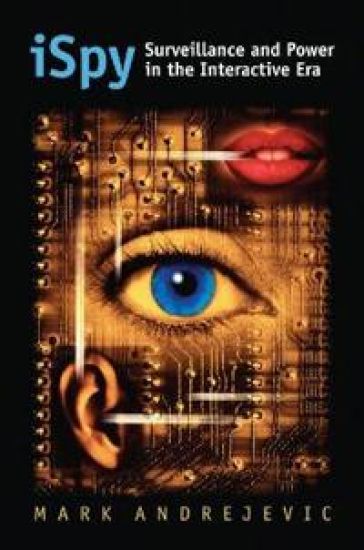
'This book will change the way you think about today's new media technologies' - Daniel J. Solove, author of ""The Digital Person: Technology and Privacy in the Information Age"". Whether you're purchasing groceries with your Safeway 'club card' or casting a vote on ""American Idol"", those data are being collected. From Amazon to iTunes, smart phones to GPS devices, Google to TiVo - all of these products and services give us an expansive sense of choice, access, and participation. Mark Andrejevic shows, however, that these continuously evolving new technologies have also been employed as modes of surveillance and control, most disturbingly exemplified by revelations about the NSA's secret monitoring of our phone calls, e-mails, and internet searches. Many contend that our proliferating interactive media empower individuals and democratize society. But, Andrejevic asks, at what cost? In ""iSpy"", he reveals that these and other highly advertised benefits are accompanied by hidden risks and potential threats that we all tend to ignore. His book, providing the first sustained critique of a concept that has been a talking point for twenty years, debunks the false promises of the digital revolution still touted by the popular media while seeking to rehabilitate, rather than simply write off, the potentially democratic uses of interactive media. Andrejevic opens up the world of digital rights management and the data trail each of us leaves - data about our locations, preferences, or life events that are already put to use in various economic, political, and social contexts. He notes that, while citizens are becoming increasingly transparent to private and public monitoring agencies, they themselves are unable to access the information gathered about them - or know whether it's even correct. (The watchmen, it seems, don't want to be watched.) He also considers the appropriation of consumer marketing for political campaigns in targeting voters and examines the implications of the Internet for the so-called War on Terror. In ""iSpy"", Andrejevic poses real challenges for our digital future. Amazingly detailed, compellingly readable, it warns that we need to temper our enthusiasm for these technologies with a better understanding of the threats they pose - to be able to distinguish between interactivity as centralized control and as collaborative participation.
Reality TV

Reality TV

Mark Andrejevic

Rowman Littlefield Publishers
2003
nidottu
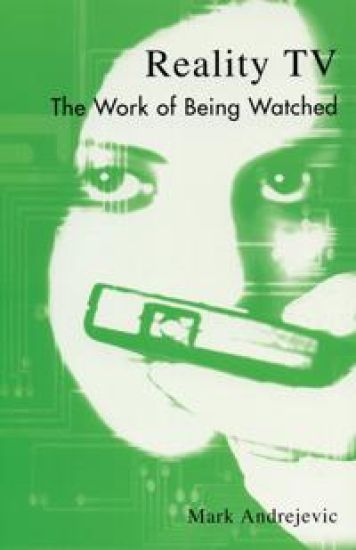
Drawing on cultural theory and interviews with fans, cast members and producers, this book places the reality TV trend within a broader social context, tracing its relationship to the development of a digitally enhanced, surveillance-based interactive economy and to a savvy mistrust of mediated reality in general. Surveying several successful reality TV formats, the book links the rehabilitation of 'Big Brother' to the increasingly important economic role played by the work of being watched. The author enlists critical social theory to examine how the appeal of 'the real' is deployed as a pervasive but false promise of democratization.