Kirjojen hintavertailu. Mukana 12 657 676 kirjaa ja 12 kauppaa.

Kirjailija

Mark Atwood Lawrence

Kirjat ja teokset yhdessä paikassa: 6 kirjaa, julkaisuja vuosilta 2007-2024, suosituimpien joukossa The End of Ambition. Vertaile teosten hintoja ja tarkista saatavuus suomalaisista kirjakaupoista.

6 kirjaa

Kirjojen julkaisuhaarukka 2007-2024.

The End of Ambition

The End of Ambition

Mark Atwood Lawrence

PRINCETON UNIVERSITY PRESS
2024
pokkari
A groundbreaking new history of how the Vietnam War thwarted U.S. liberal ambitions in the developing world and at home in the 1960sAt the start of the 1960s, John F. Kennedy and other American liberals expressed boundless optimism about the ability of the United States to promote democracy and development in Asia, Africa, the Middle East, and Latin America. With U.S. power, resources, and expertise, almost anything seemed possible in the countries of the Cold War’s “Third World”—developing, postcolonial nations unaligned with the United States or Soviet Union. Yet by the end of the decade, this vision lay in ruins. What happened? In The End of Ambition, Mark Atwood Lawrence offers a groundbreaking new history of America’s most consequential decade. He reveals how the Vietnam War, combined with dizzying social and political changes in the United States, led to a collapse of American liberal ambition in the Third World—and how this transformation was connected to shrinking aspirations back home in America.By the middle and late 1960s, democracy had given way to dictatorship in many Third World countries, while poverty and inequality remained pervasive. As America’s costly war in Vietnam dragged on and as the Kennedy years gave way to the administrations of Lyndon B. Johnson and Richard M. Nixon, America became increasingly risk averse and embraced a new policy of promoting mere stability in the Third World. Paying special attention to the U.S. relationships with Brazil, India, Iran, Indonesia, and southern Africa, The End of Ambition tells the story of this momentous change and of how international and U.S. events intertwined.The result is an original new perspective on a war that continues to haunt U.S. foreign policy today.
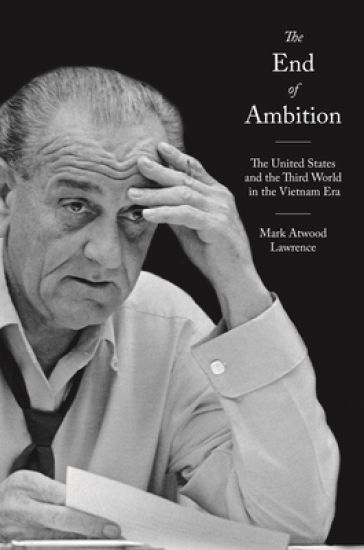
The End of Ambition

The End of Ambition

Mark Atwood Lawrence

PRINCETON UNIVERSITY PRESS
2021
sidottu
A groundbreaking new history of how the Vietnam War thwarted U.S. liberal ambitions in the developing world and at home in the 1960sAt the start of the 1960s, John F. Kennedy and other American liberals expressed boundless optimism about the ability of the United States to promote democracy and development in Asia, Africa, the Middle East, and Latin America. With U.S. power, resources, and expertise, almost anything seemed possible in the countries of the Cold War’s “Third World”—developing, postcolonial nations unaligned with the United States or Soviet Union. Yet by the end of the decade, this vision lay in ruins. What happened? In The End of Ambition, Mark Atwood Lawrence offers a groundbreaking new history of America’s most consequential decade. He reveals how the Vietnam War, combined with dizzying social and political changes in the United States, led to a collapse of American liberal ambition in the Third World—and how this transformation was connected to shrinking aspirations back home in America.By the middle and late 1960s, democracy had given way to dictatorship in many Third World countries, while poverty and inequality remained pervasive. As America’s costly war in Vietnam dragged on and as the Kennedy years gave way to the administrations of Lyndon B. Johnson and Richard M. Nixon, America became increasingly risk averse and embraced a new policy of promoting mere stability in the Third World. Paying special attention to the U.S. relationships with Brazil, India, Iran, Indonesia, and southern Africa, The End of Ambition tells the story of this momentous change and of how international and U.S. events intertwined.The result is an original new perspective on a war that continues to haunt U.S. foreign policy today.
The Vietnam War

The Vietnam War

Mark Atwood Lawrence

Oxford University Press Inc
2014
nidottu
The Vietnam War: An International History in Documents places America's most controversial conflict in a broad, international context that reflects the experiences of North and South Vietnam, China, and European nations, as well as the United States. Featuring newly available material, this brief collection of primary-source documents includes several never-before published and freshly translated diplomatic documents, social and cultural commentaries, memoirs, cartoons, posters, and photos. Mark Atwood Lawrence enables students to compare and contrast different vantage points on the war and to appreciate the conflict in all of its complexity.
The Vietnam War

The Vietnam War

Mark Atwood Lawrence

Oxford University Press Inc
2010
nidottu
Hailed as a "pithy and compelling account of an intensely relevant topic" (Kirkus Reviews), this wide-ranging volume offers a superb account of a key moment in modern U.S. and world history. Drawing upon the latest research in archives in China, Russia, and Vietnam, Mark Lawrence creates an extraordinary, panoramic view of all sides of the war. His narrative begins well before American forces set foot in Vietnam, delving into French colonialism's contribution to the 1945 Vietnamese revolution, and revealing how the Cold War concerns of the 1950s led the United States to back the French. The heart of the book covers the "American war," ranging from the overthrow of Ngo Dinh Diem and the impact of the Tet Offensive to Nixon's expansion of the war into Cambodia and Laos, and the final peace agreement of 1973. Finally, Lawrence examines the aftermath of the war, from the momentous liberalization--"Doi Moi"--in Vietnam to the enduring legacy of this infamous war in American books, films, and political debate.
The Vietnam War

The Vietnam War

Mark Atwood Lawrence

Oxford University Press Inc
2008
sidottu
The Vietnam War remains a topic of extraordinary interest, especially in light of the invasion of Iraq. In The Vietnam War, Mark Lawrence offers readers a superb short account of this key moment in U.S. as well as world history, based on the latest European and American research and on newly opened archives in China, Russia, and Vietnam. While focusing on the American involvement from 1965 to 1975, Lawrence offers an unprecedentedly complete picture of all sides of the war, drawing on now available communist records to capture the complicated brew of motivations that drove the other side. Moreover, the book reaches back well before American forces set foot in Vietnam, describing for instance how French colonialism sparked the 1945 Vietnamese revolution, and revealing how the Cold War concerns of the 1950s warped Washington's perception of Vietnam, leading the United States to back the French and eventually become involved on the ground itself. Of course, the heart of the book is the "American war," ranging from the overthrow of Ngo Dinh Diem to the impact of the Tet Offensive on the political situation in the US, Johnson's withdrawal from the 1968 presidential race, Nixon's expansion of the war into Cambodia and Laos, and the final peace agreement of 1973, which ended American military involvement. Finally, the book examines the aftermath of the war, from the momentous liberalization--"Doi Moi"--in Vietnam that began in 1986, to the enduring legacy of the war in American books, films, and political debate. A quick and reliable primer on an intensely relevant topic, this well researched and engaging volume offers an invaluable overview of the Vietnam War.
Assuming the Burden

Assuming the Burden

Mark Atwood Lawrence

University of California Press
2007
pokkari
This beautifully crafted and solidly researched book explains why and how the United States made its first commitment to Vietnam in the late 1940s. Mark Atwood Lawrence deftly explores the process by which the Western powers set aside their fierce disagreements over colonialism and extended the Cold War fight into the Third World. Drawing on an unprecedented array of sources from three countries, Lawrence illuminates the background of the U.S. government's decision in 1950 to send military equipment and economic aid to bolster France in its war against revolutionaries. That decision, he argues, marked America's first definitive step toward embroilment in Indochina, the start of a long series of moves that would lead the Johnson administration to commit U.S. combat forces a decade and a half later. Offering a bold new interpretation, the author contends that the U.S. decision can be understood only as the result of complex transatlantic deliberations about colonialism in Southeast Asia in the years between 1944 and 1950. During this time, the book argues, sharp divisions opened within the U.S., French, and British governments over Vietnam and the issue of colonialism more generally. While many liberals wished to accommodate nationalist demands for self-government, others backed the return of French authority in Vietnam. Only after successfully recasting Vietnam as a Cold War conflict between the democratic West and international communism--a lengthy process involving intense international interplay--could the three governments overcome these divisions and join forces to wage war in Vietnam. One of the first scholars to mine the diplomatic materials housed in European archives, Lawrence offers a nuanced triangulation of foreign policy as it developed among French, British, and U.S. diplomats and policymakers. He also brings out the calculations of Vietnamese nationalists who fought bitterly first against the Japanese and then against the French as they sought their nation's independence. Assuming the Burden is an eloquent illustration of how elites, operating outside public scrutiny, make decisions with enormous repercussions for decades to come.