Kirjojen hintavertailu. Mukana 12 595 353 kirjaa ja 12 kauppaa.

Kirjailija

Mark C.J. Stoddart

Kirjat ja teokset yhdessä paikassa: 5 kirjaa, julkaisuja vuosilta 2012-2026, suosituimpien joukossa Understanding Environmental Sociology. Vertaile teosten hintoja ja tarkista saatavuus suomalaisista kirjakaupoista.

5 kirjaa

Kirjojen julkaisuhaarukka 2012-2026.

Understanding Environmental Sociology

Understanding Environmental Sociology

Mark C.J. Stoddart; Myanna Lahsen; Pradip Swarnakar

EDWARD ELGAR PUBLISHING LTD
2026
sidottu
This book examines how environmental problems and solutions are intertwined with cultural meanings, power relations and inequality. It highlights the essential role played by environmental sociology in understanding the social dynamics that create opportunities and barriers to sustainability and wellbeing. Exploring key debates such as whether capitalism can ever be sustainable, the book underscores why ecological challenges are also questions of justice and equity. Drawing on a broad range of empirical examples from across the Global North and South, chapters highlight how responses to environmental crises vary across regions and the need for solutions to embrace diverse perspectives. The authors conclude that building sustainable futures requires more than technological fixes or incremental change: it demands social transformation, inclusive governance and critical reflection on the systems driving environmental harm. Linking theory and practical insights, Understanding Environmental Sociology is an essential resource for scholars and students of environmental sociology, environmental governance, and environmental studies more widely. Policymakers and public administrators in sustainable development will similarly benefit from its timely recommendations.
Industrial Development and Eco-Tourisms

Industrial Development and Eco-Tourisms

Mark C.J. Stoddart; Alice Mattoni; John McLevey

Springer Nature Switzerland AG
2021
nidottu
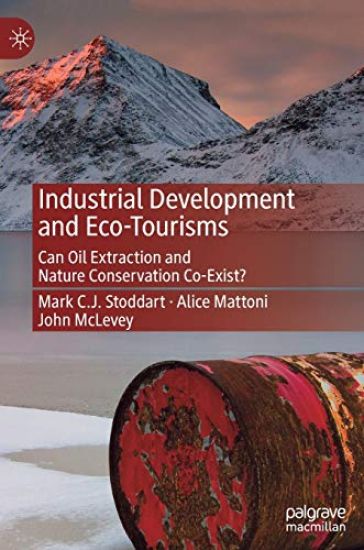
This book examines the “oil-tourism interface”, the broad range of direct and indirect contact points between offshore oil extraction and nature-based tourism. Offshore oil extraction and nature-based tourism are pursued as development paths across the North Atlantic region. Offshore oil promises economic benefits from employment and royalty payments to host societies, but is based on fossil fuel-intensive resource extraction. Nature-based tourism, instead, is based on experiencing natural environments and encountering wildlife, including whales, seals, or seabirds. They share social-ecological space, such as oceans, coastlines, cities and towns where tourism and offshore oil operations and offices are located. However, they rarely share cultural or political space, in terms of media coverage, public debate, or policy discussion that integrates both modes of development. Through a comparative analysis of Denmark, Iceland, Newfoundland and Labrador, Norway, and Scotland, this book offers important lessons for how coastal societies can better navigate relationships between resource extraction and nature-based tourism in the interests of social-ecological wellbeing.
Industrial Development and Eco-Tourisms

Industrial Development and Eco-Tourisms

Mark C.J. Stoddart; Alice Mattoni; John McLevey

Springer Nature Switzerland AG
2020
sidottu
This book examines the “oil-tourism interface”, the broad range of direct and indirect contact points between offshore oil extraction and nature-based tourism. Offshore oil extraction and nature-based tourism are pursued as development paths across the North Atlantic region. Offshore oil promises economic benefits from employment and royalty payments to host societies, but is based on fossil fuel-intensive resource extraction. Nature-based tourism, instead, is based on experiencing natural environments and encountering wildlife, including whales, seals, or seabirds. They share social-ecological space, such as oceans, coastlines, cities and towns where tourism and offshore oil operations and offices are located. However, they rarely share cultural or political space, in terms of media coverage, public debate, or policy discussion that integrates both modes of development. Through a comparative analysis of Denmark, Iceland, Newfoundland and Labrador, Norway, and Scotland, this book offers important lessons for how coastal societies can better navigate relationships between resource extraction and nature-based tourism in the interests of social-ecological wellbeing.
Making Meaning Out of Mountains

Making Meaning Out of Mountains

Mark C.J. Stoddart

University of British Columbia Press
2013
pokkari
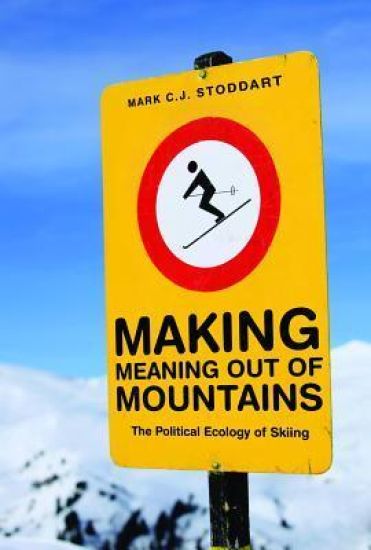
Mountains bear the imprint of human activity. Scars from logging andsurface mining sit alongside national parks and ski lodges. Althoughthe environmental effects of extractive industries are well known,skiing is more likely to bring to mind images of luxury, wealth, andhealth. In Making Meaning out of Mountains, Mark Stoddart draws oninterviews, field observations, and media analysis to reveal themultiple, often conflicting meanings attached to skiing in BritishColumbia. Corporate leaders promote the industry as sustainabledevelopment, while environmentalists and some First Nations argue thatskiing sacrifices wildlife habitats and traditional lands to tourismand corporate gain. Skiers themselves appreciate the opportunity tocommune with nature but are concerned about skiing'senvironmental impact. This multilayered analysis not only challenges us to reflect moreseriously on skiing's negative effects, it also brings to lighthow certain groups came to be viewed as the "natural"inhabitants and legitimate managers of mountain environments.
Making Meaning Out of Mountains

Making Meaning Out of Mountains

Mark C.J. Stoddart

University of British Columbia Press
2012
sidottu
Mountains bear the imprint of human activity. Scars from logging andsurface mining sit alongside national parks and ski lodges. Althoughthe environmental effects of extractive industries are well known,skiing is more likely to bring to mind images of luxury, wealth, andhealth. In Making Meaning out of Mountains, Mark Stoddart draws oninterviews, field observations, and media analysis to reveal themultiple, often conflicting meanings attached to skiing in BritishColumbia. Corporate leaders promote the industry as sustainabledevelopment, while environmentalists and some First Nations argue thatskiing sacrifices wildlife habitats and traditional lands to tourismand corporate gain. Skiers themselves appreciate the opportunity tocommune with nature but are concerned about skiing'senvironmental impact. This multilayered analysis not only challenges us to reflect moreseriously on skiing's negative effects, it also brings to lighthow certain groups came to be viewed as the "natural"inhabitants and legitimate managers of mountain environments.