Kirjojen hintavertailu. Mukana 12 390 323 kirjaa ja 12 kauppaa.

Kirjailija

Mark Coeckelbergh

Kirjat ja teokset yhdessä paikassa: 32 kirjaa, julkaisuja vuosilta 2013-2026, suosituimpien joukossa Viestivä tekoäly. Vertaile teosten hintoja ja tarkista saatavuus suomalaisista kirjakaupoista.

32 kirjaa

Kirjojen julkaisuhaarukka 2013-2026.

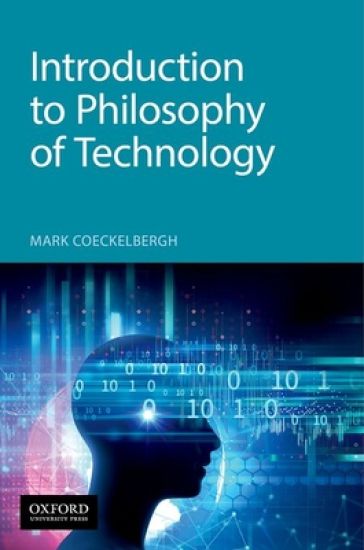
Introduction to Philosophy of Technology

Introduction to Philosophy of Technology

Mark Coeckelbergh

Oxford University Press Inc
2020
nidottu
Addressing the technological opportunities and challenges of the 21st century, Introduction to Philosophy of Technology offers the most up-to-date and comprehensive overview of philosophy of technology available. It covers several of the classic theories and approaches, but also moves beyond them to explore a broader range of theories and a number of new dynamics in the field, including responding to new technological developments. Esteemed scholar Mark Coeckelbergh emphasizes how new technological developments stimulate philosophical thinking--and rethinking--and how philosophers of technology could do more to interact with other subdisciplines in philosophy and fields beyond academia, such as art and policy.
Money Machines

Money Machines

Mark Coeckelbergh

Routledge
2020
nidottu
While we have become increasingly vulnerable to the ebb and flow of global finance, most of us know very little about it. This book focuses on the role of technology in global finance and reflects on the ethical and societal meaning and impact of financial information and communication technologies (ICTs). Exploring the history, metaphysics, and geography of money, algorithms, and electronic currencies, the author argues that financial ICTs contribute to impersonal, disengaged, placeless, and objectifying relations, and that in the context of globalization these 'distancing' effects render it increasingly difficult to exercise and ascribe responsibility. Caught in the currents of capital, it seems that both experts and lay people have lost control and lack sufficient knowledge of what they are doing. There is too much epistemic, social, and moral distance. At the same time, the book also shows that these electronically mediated developments do not render global finance merely 'virtual', for its technological practices remain material and place-bound, and the ethical and social vulnerabilities they create are no less real. Moreover, understood in terms of technological practices, global finance remains human through and through, and there is no technological determinism. Therefore, Money Machines also examines the ways in which contemporary techno-financial developments can be resisted or re-oriented in a morally and socially responsible direction - not without, but with technology. As such, it will appeal to philosophers and scholars across the humanities and the social sciences with interests in science and technology, finance, ethics and questions of responsibility.
Using Words and Things

Using Words and Things

Mark Coeckelbergh

Routledge
2020
nidottu
This book offers a systematic framework for thinking about the relationship between language and technology and an argument for interweaving thinking about technology with thinking about language. The main claim of philosophy of technology—that technologies are not mere tools and artefacts not mere things, but crucially and significantly shape what we perceive, do, and are—is re-thought in a way that accounts for the role of language in human technological experiences and practices. Engaging with work by Wittgenstein, Heidegger, McLuhan, Searle, Ihde, Latour, Ricoeur, and many others, the author critically responds to, and constructs a synthesis of, three "extreme", idealtype, untenable positions: (1) only humans speak and neither language nor technologies speak, (2) only language speaks and neither humans nor technologies speak, and (3) only technology speaks and neither humans nor language speak. The construction of this synthesis goes hand in hand with a narrative about subjects and objects that become entangled and constitute one another. Using Words and Things thus draws in central discussions from other subdisciplines in philosophy, such as philosophy of language, epistemology, and metaphysics, to offer an original theory of the relationship between language and (philosophy of) technology centered on use, performance, and narrative, and taking a transcendental turn.
AI Ethics

AI Ethics

Mark Coeckelbergh

MIT Press
2020
pokkari
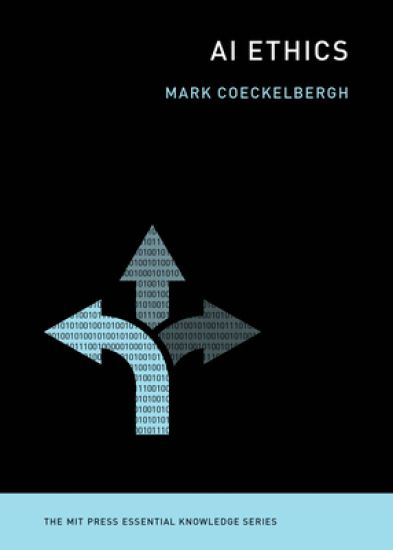
An accessible synthesis of ethical issues raised by artificial intelligence that moves beyond hype and nightmare scenarios to address concrete questions.Artificial intelligence powers Google's search engine, enables Facebook to target advertising, and allows Alexa and Siri to do their jobs. AI is also behind self-driving cars, predictive policing, and autonomous weapons that can kill without human intervention. These and other AI applications raise complex ethical issues that are the subject of ongoing debate. This volume in the MIT Press Essential Knowledge series offers an accessible synthesis of these issues. Written by a philosopher of technology, AI Ethics goes beyond the usual hype and nightmare scenarios to address concrete questions.Mark Coeckelbergh describes influential AI narratives, ranging from Frankenstein's monster to transhumanism and the technological singularity. He surveys relevant philosophical discussions: questions about the fundamental differences between humans and machines and debates over the moral status of AI. He explains the technology of AI, describing different approaches and focusing on machine learning and data science. He offers an overview of important ethical issues, including privacy concerns, responsibility and the delegation of decision making, transparency, and bias as it arises at all stages of data science processes. He also considers the future of work in an AI economy. Finally, he analyzes a range of policy proposals and discusses challenges for policymakers. He argues for ethical practices that embed values in design, translate democratic values into practices and include a vision of the good life and the good society.
Moved by Machines

Moved by Machines

Mark Coeckelbergh

Routledge
2019
sidottu
Given the rapid development of new technologies such as smart devices, robots, and artificial intelligence and their impact on the lives of people and on society, it is important and urgent to construct conceptual frameworks that help us to understand and evaluate them. Benefiting from tendencies towards a performative turn in the humanities and social sciences, drawing on thinking about the performing arts, and responding to gaps in contemporary artefact-oriented philosophy of technology, this book moves thinking about technology forward by using performance as a metaphor to understand and evaluate what we do with technology and what technology does with us.Focusing on the themes of knowledge/experience, agency, and power, and discussing some pertinent ethical issues such as deception, the narrative of the book moves through a number of performance practices: dance, theatre, music, stage magic, and (perhaps surprisingly) philosophy. These are used as sources for metaphors to think about technology—in particular contemporary devices and machines—and as interfaces to bring in various theories that are not usually employed in philosophy of technology. The result is a sequence of gestures and movements towards a performance-oriented conceptual framework for a thinking about technology which, liberated from the static, vision-centred, and dualistic metaphors offered by traditional philosophy, can do more justice to the phenomenology of our daily embodied, social, kinetic, temporal, and narrative performances with technology, our technoperformances.This book will appeal to scholars of philosophy of technology and performance studies who are interested in reconceptualizing the roles and impact of modern technology.
Environmental Skill

Environmental Skill

Mark Coeckelbergh

Routledge
2018
nidottu
Today it is widely recognized that we face urgent and serious environmental problems and we know much about them, yet we do very little. What explains this lack of motivation and change? Why is it so hard to change our lives? This book addresses this question by means of a philosophical inquiry into the conditions of possibility for environmental change. It discusses how we can become more motivated to do environmental good and what kind of knowledge we need for this, and explores the relations between motivation, knowledge, and modernity. After reviewing a broad range of possible philosophical and psychological responses to environmental apathy and inertia, the author argues for moving away from a modern focus on either detached reason and control (Stoicism and Enlightenment reason) or the natural, the sentiments, and the authentic (Romanticism), both of which make possible disengaging and alienating modes of relating to our environment.
Using Words and Things

Using Words and Things

Mark Coeckelbergh

Routledge
2017
sidottu
This book offers a systematic framework for thinking about the relationship between language and technology and an argument for interweaving thinking about technology with thinking about language. The main claim of philosophy of technology—that technologies are not mere tools and artefacts not mere things, but crucially and significantly shape what we perceive, do, and are—is re-thought in a way that accounts for the role of language in human technological experiences and practices. Engaging with work by Wittgenstein, Heidegger, McLuhan, Searle, Ihde, Latour, Ricoeur, and many others, the author critically responds to, and constructs a synthesis of, three "extreme", idealtype, untenable positions: (1) only humans speak and neither language nor technologies speak, (2) only language speaks and neither humans nor technologies speak, and (3) only technology speaks and neither humans nor language speak. The construction of this synthesis goes hand in hand with a narrative about subjects and objects that become entangled and constitute one another. Using Words and Things thus draws in central discussions from other subdisciplines in philosophy, such as philosophy of language, epistemology, and metaphysics, to offer an original theory of the relationship between language and (philosophy of) technology centered on use, performance, and narrative, and taking a transcendental turn.
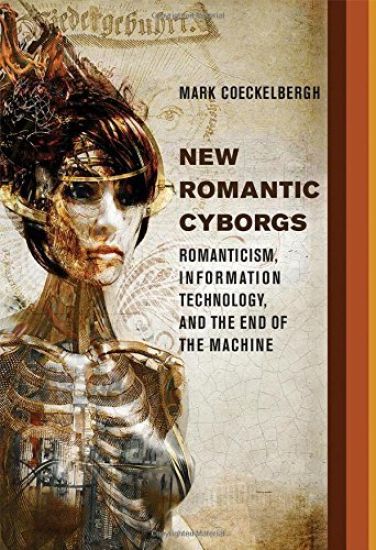
New Romantic Cyborgs

New Romantic Cyborgs

Mark Coeckelbergh

MIT Press
2017
sidottu
An account of the complex relationship between technology and romanticism that links nineteenth-century monsters, automata, and mesmerism with twenty-first-century technology's magic devices and romantic cyborgs.Romanticism and technology are widely assumed to be opposed to each other. Romanticism-understood as a reaction against rationalism and objectivity-is perhaps the last thing users and developers of information and communication technology (ICT) think about when they engage with computer programs and electronic devices. And yet, as Mark Coeckelbergh argues in this book, this way of thinking about technology is itself shaped by romanticism and obscures a better and deeper understanding of our relationship to technology. Coeckelbergh describes the complex relationship between technology and romanticism that links nineteenth-century monsters, automata, and mesmerism with twenty-first-century technology's magic devices and romantic cyborgs.Coeckelbergh argues that current uses of ICT can be interpreted as attempting a marriage of Enlightenment rationalism and romanticism. He describes the "romantic dialectic," when this new kind of material romanticism, particularly in the form of the cyborg as romantic figure, seems to turn into its opposite. He shows that both material romanticism and the objections to it are still part of modern thinking, and part of the romantic dialectic. Reflecting on what he calls "the end of the machine," Coeckelbergh argues that to achieve a more profound critique of contemporary technologies and culture, we need to explore not only different ways of thinking but also different technologies-and that to accomplish the former we require the latter.
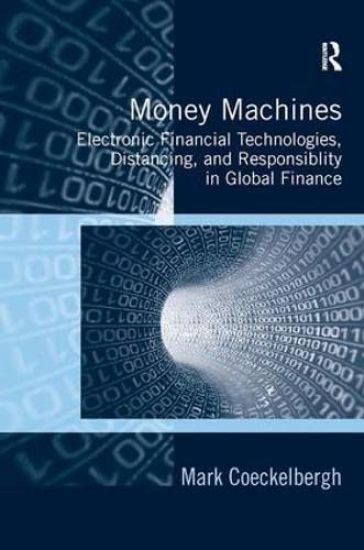
Money Machines

Money Machines

Mark Coeckelbergh

Routledge
2015
sidottu
While we have become increasingly vulnerable to the ebb and flow of global finance, most of us know very little about it. This book focuses on the role of technology in global finance and reflects on the ethical and societal meaning and impact of financial information and communication technologies (ICTs). Exploring the history, metaphysics, and geography of money, algorithms, and electronic currencies, the author argues that financial ICTs contribute to impersonal, disengaged, placeless, and objectifying relations, and that in the context of globalization these 'distancing' effects render it increasingly difficult to exercise and ascribe responsibility. Caught in the currents of capital, it seems that both experts and lay people have lost control and lack sufficient knowledge of what they are doing. There is too much epistemic, social, and moral distance. At the same time, the book also shows that these electronically mediated developments do not render global finance merely 'virtual', for its technological practices remain material and place-bound, and the ethical and social vulnerabilities they create are no less real. Moreover, understood in terms of technological practices, global finance remains human through and through, and there is no technological determinism. Therefore, Money Machines also examines the ways in which contemporary techno-financial developments can be resisted or re-oriented in a morally and socially responsible direction - not without, but with technology. As such, it will appeal to philosophers and scholars across the humanities and the social sciences with interests in science and technology, finance, ethics and questions of responsibility.
Human Being @ Risk

Human Being @ Risk

Mark Coeckelbergh

Springer
2015
nidottu
Whereas standard approaches to risk and vulnerability presuppose a strict separation between humans and their world, this book develops an existential-phenomenological approach according to which we are always already beings-at-risk. Moreover, it is argued that in our struggle against vulnerability, we create new vulnerabilities and thereby transform ourselves as much as we transform the world. Responding to the discussion about human enhancement and information technologies, the book then shows that this dynamic-relational approach has important implications for the evaluation of new technologies and their risks. It calls for a normative anthropology of vulnerability that does not ask which objective risks are acceptable, how we can become invulnerable, or which technologies threaten human nature, but which vulnerability transformations we want. To the extent that we can steer the growth of new technologies at all, this tragic and sometimes comic project should therefore beguided by what we want to become.?
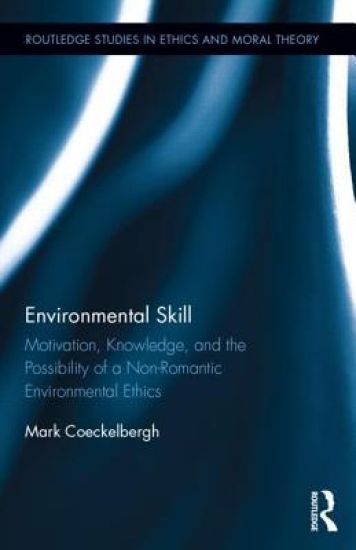
Environmental Skill

Environmental Skill

Mark Coeckelbergh

Routledge
2015
sidottu
Today it is widely recognized that we face urgent and serious environmental problems and we know much about them, yet we do very little. What explains this lack of motivation and change? Why is it so hard to change our lives? This book addresses this question by means of a philosophical inquiry into the conditions of possibility for environmental change. It discusses how we can become more motivated to do environmental good and what kind of knowledge we need for this, and explores the relations between motivation, knowledge, and modernity. After reviewing a broad range of possible philosophical and psychological responses to environmental apathy and inertia, the author argues for moving away from a modern focus on either detached reason and control (Stoicism and Enlightenment reason) or the natural, the sentiments, and the authentic (Romanticism), both of which make possible disengaging and alienating modes of relating to our environment. Instead he develops the notion of environmental skill: a concept that bridges the gap between knowledge and action, re-interprets environmental virtue, and suggests an environmental ethics centered on experience, know-how and skillful engagement with our environment. The author then explores the implications of this ethics for our lives: it changes the way we think about , and deal with, health, food, animals, energy, climate change, politics, and technology.
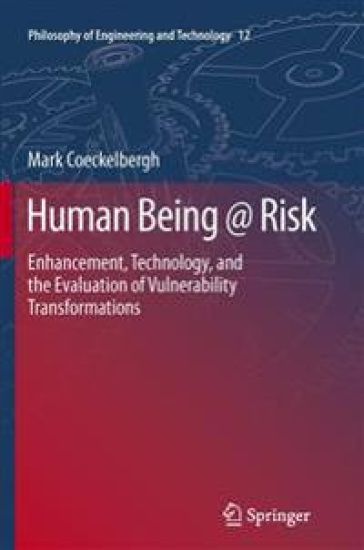
Human Being @ Risk

Human Being @ Risk

Mark Coeckelbergh

Springer
2013
sidottu
Whereas standard approaches to risk and vulnerability presuppose a strict separation between humans and their world, this book develops an existential-phenomenological approach according to which we are always already beings-at-risk. Moreover, it is argued that in our struggle against vulnerability, we create new vulnerabilities and thereby transform ourselves as much as we transform the world. Responding to the discussion about human enhancement and information technologies, the book then shows that this dynamic-relational approach has important implications for the evaluation of new technologies and their risks. It calls for a normative anthropology of vulnerability that does not ask which objective risks are acceptable, how we can become invulnerable, or which technologies threaten human nature, but which vulnerability transformations we want. To the extent that we can steer the growth of new technologies at all, this tragic and sometimes comic project should therefore beguided by what we want to become.?