Kirjojen hintavertailu. Mukana 12 595 353 kirjaa ja 12 kauppaa.

Kirjailija

Mark Crinson

Kirjat ja teokset yhdessä paikassa: 9 kirjaa, julkaisuja vuosilta 1996-2026, suosituimpien joukossa Aviationland. Vertaile teosten hintoja ja tarkista saatavuus suomalaisista kirjakaupoista.

9 kirjaa

Kirjojen julkaisuhaarukka 1996-2026.

Aviationland

Aviationland

Mark Crinson

Paul Mellon Centre for Studies in British Art
2026
sidottu
How the UK’s largest international airport remade a local landscape Aviationland is the first critical study to examine how a major international airport takes shape on the ground, and what that means for the landscape around it. Focused on Heathrow airport, it traces how the area has been formed and reformed by overlapping systems of architecture, infrastructure and enclosure, from the common land of Hounslow Heath in the eighteenth century to the global transport hub of the present day. The book explores the different forces that have shaped the airport’s environment: the remaking of landforms, the design of terminal buildings, and the surrounding sprawl of hotels, schools, factories, and business parks. At the same time, it shows how the Heathrow area has been moulded by wider shifts in energy, mobility, and the economy, and how the airport has in turn left a lasting mark on its surroundings, both materially and ecologically. Drawing on previously unpublished material, Aviationland includes close studies of key sites, as well as figures who shaped how we see the airport today, including Richard Rogers, Patrick Abercrombie, and J. G. Ballard. Bringing together architectural, landscape, and infrastructural histories that are seldom read in tandem, this volume makes the case for Heathrow as a distinctively modern landscape. The result is a nuanced account of how local places become entangled within global systems, and what happens when they do.
Shock City

Shock City

Mark Crinson

Paul Mellon Centre for Studies in British Art
2022
sidottu
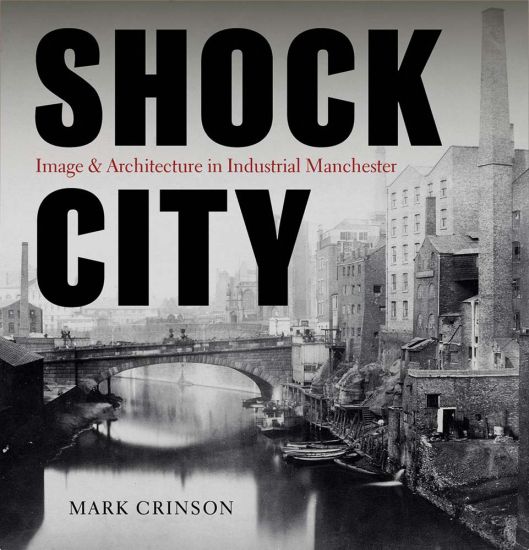
A bold reassessment of the major architectural monuments and urban forms of the world’s first industrial city: Manchester From the mid-eighteenth century to the nineteen-twenties, from the birth of the Industrial Revolution to the height of Manchester’s global significance and the beginning of its decline, Shock City challenges the idea that Paris was the "capital of the nineteenth century." Mark Crinson reorients this issue around the development of industrial production, particularly cotton and its manufacture by means of steam power, offering a fascinating and accessibly written account of how new relations in the industrial economy were manifested through the spaces and representations of the first industrial city. Focusing on Manchester’s mills and warehouses, its main trading institution (the Royal Exchange), its magnificent Gothic Revival Town Hall, and its late Gothic Revival Rylands Library, this book explores these iconic buildings alongside paintings, prints, maps, and photographs of the city throughout the period. Crinson interweaves analysis of buildings and images, urban spaces and new institutions, technology and industrial pollution to show how these were all the products of Manchester’s newly emergent industrial middle classes, who remade the city in their image. Distributed for the Paul Mellon Centre for Studies in British Art
The Architecture of Art History

The Architecture of Art History

Mark Crinson; Richard J. Williams

Bloomsbury Visual Arts
2019
nidottu
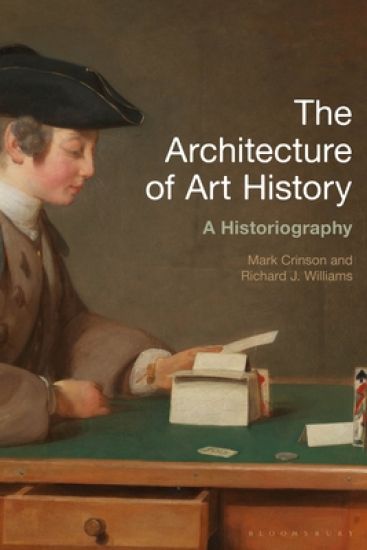
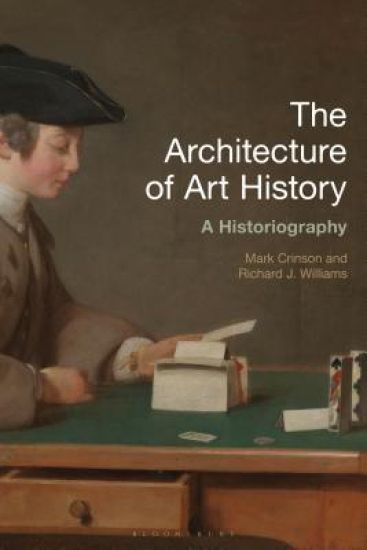
What is the place of architecture in the history of art? Why has it been at times central to the discipline, and at other times seemingly so marginal? What is its place now? Many disciplines have a stake in the history of architecture – sociology, anthropology, human geography, to name a few. This book deals with perhaps the most influential tradition of all – art history – examining how the relation between the disciplines of art history and architectural history has waxed and waned over the last one hundred and fifty years. In this highly original study, Mark Crinson and Richard J. Williams point to a decline in the importance attributed to the role of architecture in art history over the last century – which has happened without crisis or self-reflection. The book explores the problem in relation to key art historical approaches, from formalism, to feminism, to the social history of art, and in key institutions from the Museum of Modern Art, to the journal October. Among the key thinkers explored are Banham, Baxandall, Giedion, Panofsky, Pevsner, Pollock, Riegl, Rowe, Steinberg, Wittkower and Wölfflin. The book will provoke debate on the historiography and present state of the discipline of art history, and it makes a powerful case for the reconsideration of architecture.
Modern Architecture and the End of Empire
This title was first published in 2003: Modernist architecture claimed to be the 'international style' but the relationship between modernism and the new dispositions of nations and nationalities which have succeeded the old European empires remains obscure. In this, the first book to examine the interactions between modern architecture, imperialism and post-imperialism, Mark Crinson looks at the architecture of the last years of the British Empire, and during its prolonged dissolution and aftermath. Taking a number of case studies from Britain, Ghana, Hong Kong, Iran, India and Malaysia, he investigates the ambitions of the people who commissioned the buildings, the training and role of architects, and the interaction of the architecture and its changing social and cultural contexts. This book raises questions about the nature of modernism and its roles that look far beyond empire and towards the post-imperial.
The Architecture of Art History

The Architecture of Art History

Mark Crinson; Richard J. Williams

Bloomsbury Visual Arts
2018
sidottu
What is the place of architecture in the history of art? Why has it been at times central to the discipline, and at other times seemingly so marginal? What is its place now? Many disciplines have a stake in the history of architecture – sociology, anthropology, human geography, to name a few. This book deals with perhaps the most influential tradition of all – art history – examining how the relation between the disciplines of art history and architectural history has waxed and waned over the last one hundred and fifty years. In this highly original study, Mark Crinson and Richard J. Williams point to a decline in the importance attributed to the role of architecture in art history over the last century – which has happened without crisis or self-reflection. The book explores the problem in relation to key art historical approaches, from formalism, to feminism, to the social history of art, and in key institutions from the Museum of Modern Art, to the journal October. Among the key thinkers explored are Banham, Baxandall, Giedion, Panofsky, Pevsner, Pollock, Riegl, Rowe, Steinberg, Wittkower and Wölfflin. The book will provoke debate on the historiography and present state of the discipline of art history, and it makes a powerful case for the reconsideration of architecture.
Modern Architecture and the End of Empire
This title was first published in 2003: Modernist architecture claimed to be the 'international style' but the relationship between modernism and the new dispositions of nations and nationalities which have succeeded the old European empires remains obscure. In this, the first book to examine the interactions between modern architecture, imperialism and post-imperialism, Mark Crinson looks at the architecture of the last years of the British Empire, and during its prolonged dissolution and aftermath. Taking a number of case studies from Britain, Ghana, Hong Kong, Iran, India and Malaysia, he investigates the ambitions of the people who commissioned the buildings, the training and role of architects, and the interaction of the architecture and its changing social and cultural contexts. This book raises questions about the nature of modernism and its roles that look far beyond empire and towards the post-imperial.
Stirling and Gowan

Stirling and Gowan

Mark Crinson

Yale University Press
2012
sidottu
James Stirling (1924-1992) is acclaimed as the most influential and controversial modern British architect. His partnership with James Gowan (b. 1923) between 1956 and 1963 put postwar British architecture on the international map, and their Leicester University Engineering Building became an iconic monument for a new kind of modernism.Mark Crinson's book is the most thoroughly researched study of Stirling and Gowan's partnership to date. Based on extensive interviews and archival research, Crinson argues that their work was the product of two equally creative partners whose different concerns produced a dynamic aesthetic. He gives an in-depth account of their training and early careers, their relation to key architects and movements of the time, and the commissioning, design, and construction of their work. This critical reassessment dispels previous myths and inaccuracies regarding their partnership and analyzes how ideas about mannerism, modernism, nostalgia, community, consumerism, Victorian cities, and institutional typologies influenced their designs. Stirling and Gowan positions their avant-garde creations within a larger context as creative responses to Britain's postwar deindustrialization and the shift from austerity to affluence.Published for the Paul Mellon Centre for Studies in British Art
Empire Building

Empire Building

Mark Crinson

Routledge
1996
sidottu
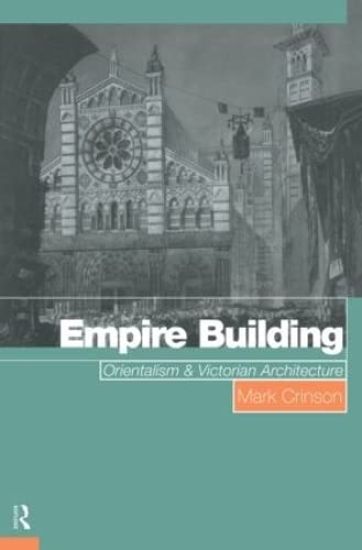
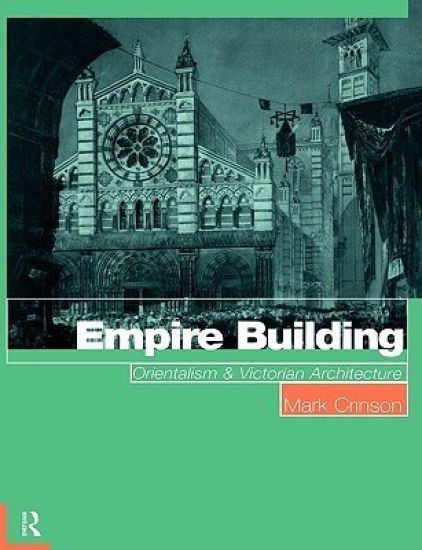
The colonial architecture of the nineteenth century has much to tell us of the history of colonialism and cultural exchange. Yet, these buildings can be read in many ways. Do they stand as witnesses to the rapacity and self-delusion of empire? Are they monuments to a world of lost glory and forgotten convictions? Do they reveal battles won by indigenous cultures and styles? Or do they simply represent an architectural style made absurdly incongruous in relocation?Empire Building is a study of how and why Western architecture was exported to the Middle East and how Islamic and Byzantine architectural ideas and styles impacted on the West. The book explores how far racial theory and political and religious agendas guided British architects (and how such ideas were resisted when applied), and how Eastern ideas came to influence the West, through writers such as Ruskin and buildings such as the Crystal Palace. Beautifully written and lavishly illustrated, Empire Building takes the reader on an extraordinary postcolonial journey, backwards and forwards, into the heart and to the edge of empire.
Empire Building

Empire Building

Mark Crinson

Routledge
1996
nidottu
The colonial architecture of the nineteenth century has much to tell us of the history of colonialism and cultural exchange. Yet, these buildings can be read in many ways. Do they stand as witnesses to the rapacity and self-delusion of empire? Are they monuments to a world of lost glory and forgotten convictions? Do they reveal battles won by indigenous cultures and styles? Or do they simply represent an architectural style made absurdly incongruous in relocation?Empire Building is a study of how and why Western architecture was exported to the Middle East and how Islamic and Byzantine architectural ideas and styles impacted on the West. The book explores how far racial theory and political and religious agendas guided British architects (and how such ideas were resisted when applied), and how Eastern ideas came to influence the West, through writers such as Ruskin and buildings such as the Crystal Palace. Beautifully written and lavishly illustrated, Empire Building takes the reader on an extraordinary postcolonial journey, backwards and forwards, into the heart and to the edge of empire.