Kirjojen hintavertailu. Mukana 12 595 353 kirjaa ja 12 kauppaa.

Kirjailija

Mark Crowley

Kirjat ja teokset yhdessä paikassa: 4 kirjaa, julkaisuja vuosilta 2010-2024, suosituimpien joukossa Elements of Dimensionality Reduction and Manifold Learning. Vertaile teosten hintoja ja tarkista saatavuus suomalaisista kirjakaupoista.

4 kirjaa

Kirjojen julkaisuhaarukka 2010-2024.

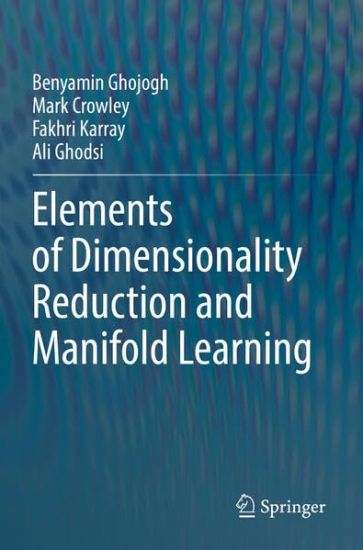
Elements of Dimensionality Reduction and Manifold Learning

Elements of Dimensionality Reduction and Manifold Learning

Benyamin Ghojogh; Mark Crowley; Fakhri Karray; Ali Ghodsi

Springer International Publishing AG
2024
nidottu
Dimensionality reduction, also known as manifold learning, is an area of machine learning used for extracting informative features from data for better representation of data or separation between classes. This book presents a cohesive review of linear and nonlinear dimensionality reduction and manifold learning. Three main aspects of dimensionality reduction are covered: spectral dimensionality reduction, probabilistic dimensionality reduction, and neural network-based dimensionality reduction, which have geometric, probabilistic, and information-theoretic points of view to dimensionality reduction, respectively. The necessary background and preliminaries on linear algebra, optimization, and kernels are also explained to ensure a comprehensive understanding of the algorithms.The tools introduced in this book can be applied to various applications involving feature extraction, image processing, computer vision, and signal processing. This book is applicable to a wide audience who would like to acquire a deep understanding of the various ways to extract, transform, and understand the structure of data. The intended audiences are academics, students, and industry professionals. Academic researchers and students can use this book as a textbook for machine learning and dimensionality reduction. Data scientists, machine learning scientists, computer vision scientists, and computer scientists can use this book as a reference. It can also be helpful to statisticians in the field of statistical learning and applied mathematicians in the fields of manifolds and subspace analysis. Industry professionals, including applied engineers, data engineers, and engineers in various fields of science dealing with machine learning, can use this as a guidebook for feature extraction from their data, as the raw data in industry often require preprocessing.The book is grounded in theory but provides thorough explanations and diverseexamples to improve the reader’s comprehension of the advanced topics. Advanced methods are explained in a step-by-step manner so that readers of all levels can follow the reasoning and come to a deep understanding of the concepts. This book does not assume advanced theoretical background in machine learning and provides necessary background, although an undergraduate-level background in linear algebra and calculus is recommended.
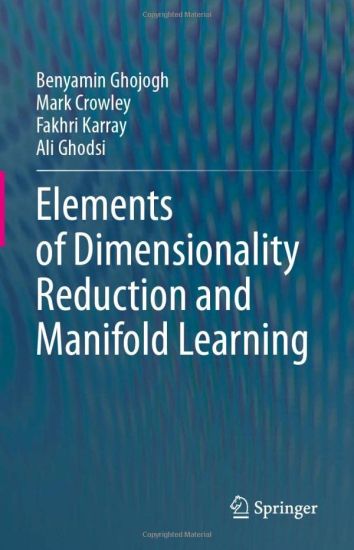
Elements of Dimensionality Reduction and Manifold Learning

Elements of Dimensionality Reduction and Manifold Learning

Benyamin Ghojogh; Mark Crowley; Fakhri Karray; Ali Ghodsi

Springer International Publishing AG
2023
sidottu
Dimensionality reduction, also known as manifold learning, is an area of machine learning used for extracting informative features from data for better representation of data or separation between classes. This book presents a cohesive review of linear and nonlinear dimensionality reduction and manifold learning. Three main aspects of dimensionality reduction are covered: spectral dimensionality reduction, probabilistic dimensionality reduction, and neural network-based dimensionality reduction, which have geometric, probabilistic, and information-theoretic points of view to dimensionality reduction, respectively. The necessary background and preliminaries on linear algebra, optimization, and kernels are also explained to ensure a comprehensive understanding of the algorithms.The tools introduced in this book can be applied to various applications involving feature extraction, image processing, computer vision, and signal processing. This book is applicable to a wide audience who would like to acquire a deep understanding of the various ways to extract, transform, and understand the structure of data. The intended audiences are academics, students, and industry professionals. Academic researchers and students can use this book as a textbook for machine learning and dimensionality reduction. Data scientists, machine learning scientists, computer vision scientists, and computer scientists can use this book as a reference. It can also be helpful to statisticians in the field of statistical learning and applied mathematicians in the fields of manifolds and subspace analysis. Industry professionals, including applied engineers, data engineers, and engineers in various fields of science dealing with machine learning, can use this as a guidebook for feature extraction from their data, as the raw data in industry often require preprocessing.The book is grounded in theory but provides thorough explanations and diverseexamples to improve the reader’s comprehension of the advanced topics. Advanced methods are explained in a step-by-step manner so that readers of all levels can follow the reasoning and come to a deep understanding of the concepts. This book does not assume advanced theoretical background in machine learning and provides necessary background, although an undergraduate-level background in linear algebra and calculus is recommended.
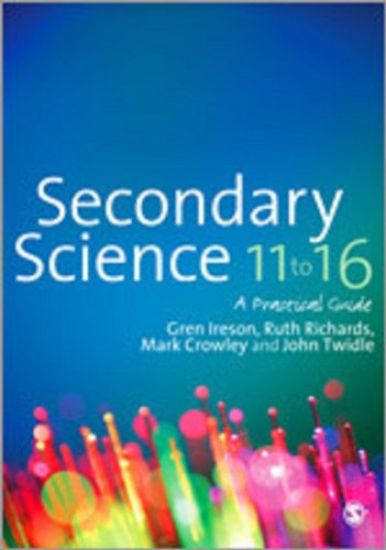
Secondary Science 11 to 16

Secondary Science 11 to 16

Gren Ireson; Mark Crowley; Ruth L. Richards; John Twidle

SAGE Publications Ltd
2010
nidottu
Are you looking for teaching ideas to make your science lessons come alive? Full of suggestions for exciting practical work to engage children, this book addresses and explains the science behind the experiments, and emphasises the need to engage the learner through minds-on activities. It shows you where to make links to the national curricula in England, Scotland, Wales and Northern Ireland, and it covers the three sciences: chemistry, biology and physics. The detailed subject knowledge helps you grasp key concepts, and there are lots of useful diagrams to illustrate important points. Experiments include: - extracting DNA from a kiwi fruit - capturing rainbows - the chromatography of sweets - removing iron from cornflakes - a plate tectonic jigsaw These practical activities will provide you with ways to ensure your students respond enthusiastically to science, and the book will also help you develop your subject knowledge and ensure you meet your Qualified Teacher Status (QTS) standards. Perfect reading for Secondary Science PGCE students, as well as those on the Graduate Teacher Programme (GTP), this book is also ideal for non-specialists who are looking for support as they get to grips with the sciences. Gren Ireson is Professor of Science Education at Nottingham Trent University. Mark Crowley is a Teaching Research Fellow in the Centre for Effective Learning in Science, Nottingham Trent University. Ruth Richards is Subject Strand Leader for the PGCE and Subject Knowledge Enhancement (SKE) courses in Science at Nottingham Trent University, and an examiner for A-level Geology. John Twidle is Subject Leader for the PGCE and MSc Science programmes at Loughborough University.
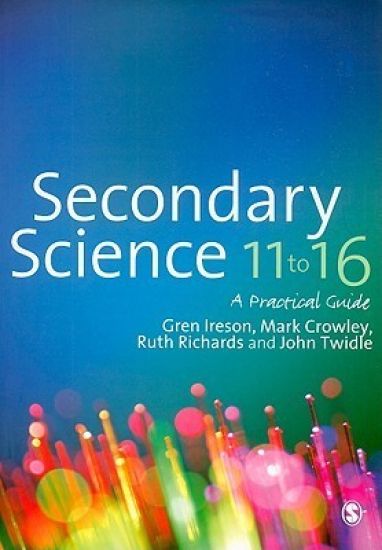
Secondary Science 11 to 16

Secondary Science 11 to 16

Gren Ireson; Mark Crowley; Ruth L. Richards; John Twidle

SAGE Publications Ltd
2010
sidottu
Are you looking for teaching ideas to make your science lessons come alive? Full of suggestions for exciting practical work to engage children, this book addresses and explains the science behind the experiments, and emphasises the need to engage the learner through minds-on activities. It shows you where to make links to the national curricula in England, Scotland, Wales and Northern Ireland, and it covers the three sciences: chemistry, biology and physics. The detailed subject knowledge helps you grasp key concepts, and there are lots of useful diagrams to illustrate important points. Experiments include: - extracting DNA from a kiwi fruit - capturing rainbows - the chromatography of sweets - removing iron from cornflakes - a plate tectonic jigsaw These practical activities will provide you with ways to ensure your students respond enthusiastically to science, and the book will also help you develop your subject knowledge and ensure you meet your Qualified Teacher Status (QTS) standards. Perfect reading for Secondary Science PGCE students, as well as those on the Graduate Teacher Programme (GTP), this book is also ideal for non-specialists who are looking for support as they get to grips with the sciences. Gren Ireson is Professor of Science Education at Nottingham Trent University. Mark Crowley is a Teaching Research Fellow in the Centre for Effective Learning in Science, Nottingham Trent University. Ruth Richards is Subject Strand Leader for the PGCE and Subject Knowledge Enhancement (SKE) courses in Science at Nottingham Trent University, and an examiner for A-level Geology. John Twidle is Subject Leader for the PGCE and MSc Science programmes at Loughborough University.