Kirjojen hintavertailu. Mukana 12 390 323 kirjaa ja 12 kauppaa.

Kirjailija

Mark D. Chapman

Kirjat ja teokset yhdessä paikassa: 4 kirjaa, julkaisuja vuosilta 2014-2024, suosituimpien joukossa What Christ? Whose Christ?. Vertaile teosten hintoja ja tarkista saatavuus suomalaisista kirjakaupoista.

4 kirjaa

Kirjojen julkaisuhaarukka 2014-2024.

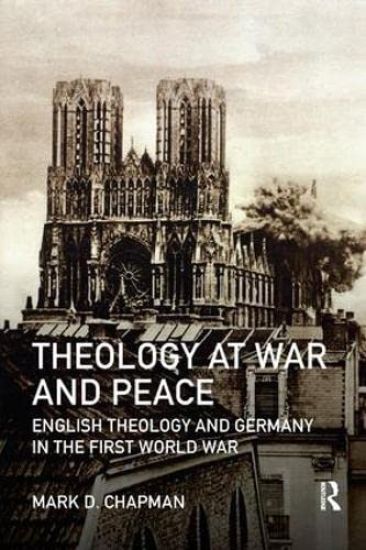
Theology at War and Peace

Theology at War and Peace

Mark D. Chapman

Routledge
2018
nidottu
This book is the first detailed discussion of the impact of the First World War on English theology. Assessing the close relationships between English and German theologians before the First World War, Chapman then explores developments throughout the war. A series of case studies make use of a large amount of unpublished material, showing how some theologians sought to maintain relationships with their German colleagues, while others, especially from a more Anglo-Catholic perspective, used the war as an opportunity to distance themselves from the liberal theology which was beginning to dominate the universities before the war. The increasing animosity between Britain and Germany meant that relations were never healed. English theology became increasingly insular, dividing between a more home-grown variety of liberalism and an ascendant Anglo-Catholicism. Consequently, this book offers useful insights into the development of theology in the twentieth century and will be of keen interest to scholars and students of the history of theology.
Theology at War and Peace

Theology at War and Peace

Mark D. Chapman

Routledge
2016
sidottu
This book is the first detailed discussion of the impact of the First World War on English theology. Assessing the close relationships between English and German theologians before the First World War, Chapman then explores developments throughout the war. A series of case studies make use of a large amount of unpublished material, showing how some theologians sought to maintain relationships with their German colleagues, while others, especially from a more Anglo-Catholic perspective, used the war as an opportunity to distance themselves from the liberal theology which was beginning to dominate the universities before the war. The increasing animosity between Britain and Germany meant that relations were never healed. English theology became increasingly insular, dividing between a more home-grown variety of liberalism and an ascendant Anglo-Catholicism. Consequently, this book offers useful insights into the development of theology in the twentieth century and will be of keen interest to scholars and students of the history of theology.
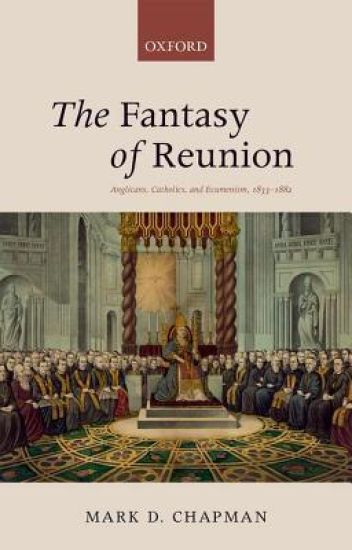
The Fantasy of Reunion

The Fantasy of Reunion

Mark D. Chapman

Oxford University Press
2014
sidottu
This book discusses the different understandings of 'catholicity' that emerged in the interactions between the Church of England and other churches - particularly the Roman Catholic Church and later the Old Catholic Churches - from the early 1830s to the early 1880s. It presents a pre-history of ecumenism, which isolates some of the most distinctive features of the ecclesiological positions of the different churches as these developed through the turmoil of the nineteenth century. It explores the historical imagination of a range of churchmen and theologians, who sought to reconstruct their churches through an encounter with the past whose relevance for the construction of identity in the present went unquestioned. The past was no foreign country but instead provided solutions to the perceived dangers facing the church of the present. Key protagonists are John Henry Newman and Edward Bouverie Pusey, the leaders of the Oxford Movement, as well as a number of other less well-known figures who made their distinctive mark on the relations between the churches. The key event in reshaping the terms of the debates between the churches was the Vatican Council of 1870, which put an end to serious dialogue for a very long period, but which opened up new avenues for the Church of England and other non-Roman European churches including the Orthodox. In the end, however, ecumenism was halted in the 1880s by an increasingly complex European situation and an energetic expansion of the British Empire, which saw the rise of Pan-Anglicanism at the expense of ecumenism.