Kirjojen hintavertailu. Mukana 12 595 353 kirjaa ja 12 kauppaa.

Kirjailija

Mark D Nanos

Kirjat ja teokset yhdessä paikassa: 12 kirjaa, julkaisuja vuosilta 1996-2019, suosituimpien joukossa Reading Romans Within Judaism. Vertaile teosten hintoja ja tarkista saatavuus suomalaisista kirjakaupoista.

Mukana myös kirjoitusasut: Mark D. Nanos

12 kirjaa

Kirjojen julkaisuhaarukka 1996-2019.

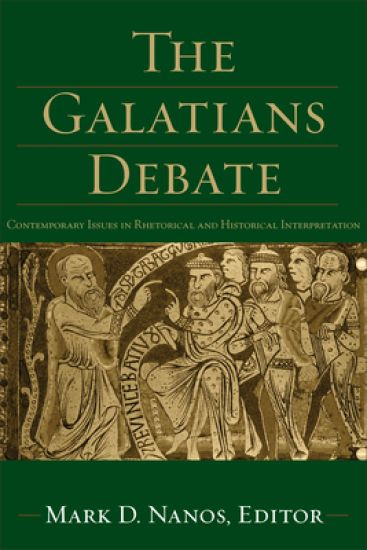
The Galatians Debate – Contemporary Issues in Rhetorical and Historical Interpretation

The Galatians Debate – Contemporary Issues in Rhetorical and Historical Interpretation

Mark D. Nanos

Baker Academic, Div of Baker Publishing Group
2019
nidottu
Students and scholars reading the secondary literature on Galatians must often negotiate specialized language and complex lines of argumentation. In addition to the theological jargon that traditionally characterizes discussion of Galatians, there is also a significant amount of rhetorical and sociohistorical terminology.This volume facilitates familiarity with the technical terminology and with issues central to the interpretation of Galatians and presents examples of the prevailing points of view as well as some recent challenges to them. The essays included explore the rhetorical and epistolary approaches to examining Galatians, comprise a comprehensive introduction to significant research in the field, and represent some of the best work available. Mark Nanos offers an introduction and glossary of terms to help students begin their study and a comprehensive volume bibliography and modern author and ancient sources indexes for those who are continuing on to further study.ContributorsJohn M. G. BarclayRobert M. BerchmanHans Dieter BetzC. Joachim ClassenNils A. DahlJames D. G. DunnPhilip F. EslerPaula FredriksenRobert G. HallG. Walter HansenA. E. HarveyJames D. HesterRobert JewettPaul E. KoptakB. C. LateganTroy MartinJ. Louis MartynDieter MitternachtMark D. NanosJoop SmitJohan S. VosNikolaus Walter
Reading Romans Within Judaism

Reading Romans Within Judaism

Mark D Nanos

Cascade Books
2018
pokkari
Over fifty years ago, Vatican II's Nostra Aetate 4 drew from Romans 11 to challenge the way Paul's voice has been used to negatively discuss Jews and Judaism. The church called for Catholics to conceptualize Jews as ""brothers"" in ""an everlasting covenant,"" and many other Christian organizations have expressed similar sentiments in the years since. Nevertheless, the portrayal of Jews as ""branches broken off,"" ""hardened,"" ""without faith,"" ""disobedient,"" and ""enemies of God"" whom Christians have ""replaced"" as ""true Israel,"" are among the many ways that readers encounter Paul's views of Jews and Judaism in today's translations and interpretations of this chapter, and throughout the letter as well. In the chapters in this volume, Nanos shows why these translations and interpretive decisions, among others, do not likely represent what Paul wrote or meant. Each essay offers challenges to the received view of Paul from the research hypothesis that Paul and the Christ-followers to whom he wrote were still practicing Judaism (a Jewish way of life) within subgroups of the Jewish synagogue communities of Rome, and that they understood Paul to observe Torah and promote Judaism for their communities. ""Over the years, Nanos has exposed many unexamined and problematic assumptions readers often bring to their reading of Paul. In this collection of essays, we are given a chance to trace how Nanos further developed his thoughts on Paul's letter to the Romans since the publication of The Mystery of Romans (1996). Consider this, then, Nanos's sequel to that award-winning monograph. Unlike most sequels, this one did not let me down."" --Tat-siong Benny Liew, College of the Holy Cross ""The 'Paul within Judaism' approach is dedicated to reading Paul as a Jew, writing to congregations still affiliated with Diaspora synagogues, and rooting out Christian supersessionist assumptions wherever they appear in scholarship on the apostle. Meticulous exegetical and historical precision have been as characteristic of Nanos's work as has the daring of his guiding hypotheses. These close readings of key aspects of Romans stand as testaments to his achievement and challenges to the research ahead."" --Neil Elliott, author of The Arrogance of Nations: Reading Romans in the Shadow of Empire (2008) ""These essays will remind readers why Mark Nanos is rightly regarded as one of the chief architects of the Paul within Judaism perspective. Paradigm shifts in biblical studies often involve fresh, challenging, and credible exegetical insights, and one will find a plethora of them here. Even when I'm not fully convinced by a particular rereading, I always come away feeling like my hermeneutical horizons have been profitably expanded by what Mark has to say. I look forward to discussing these essays with students for years to come "" --Mark D. Given, Missouri State University ""These essays, the fruit of close attention to the text of Romans, are indicative of Nanos' unique contribution to the interpretation of Romans. Significantly, both Paul and the Christ-following groups in Rome are viewed as part of Jewish community life. This challenges traditional approaches, and standard translations, and offers a fresh analysis of the historical context. Nanos opens up exciting avenues to further explore one of the most influential documents of Christian tradition in relation to Judaism."" --William S. Campbell, University of Wales Mark D. Nanos (PhD, University of St. Andrews, Scotland) is a Lecturer at the University of Kansas; his books include The Mystery of Romans (1996), The Irony of Galatians (2002), and as co-editor, Paul within Judaism (2015).
Reading Romans Within Judaism

Reading Romans Within Judaism

Mark D Nanos

Cascade Books
2018
sidottu
Over fifty years ago, Vatican II's Nostra Aetate 4 drew from Romans 11 to challenge the way Paul's voice has been used to negatively discuss Jews and Judaism. The church called for Catholics to conceptualize Jews as ""brothers"" in ""an everlasting covenant,"" and many other Christian organizations have expressed similar sentiments in the years since. Nevertheless, the portrayal of Jews as ""branches broken off,"" ""hardened,"" ""without faith,"" ""disobedient,"" and ""enemies of God"" whom Christians have ""replaced"" as ""true Israel,"" are among the many ways that readers encounter Paul's views of Jews and Judaism in today's translations and interpretations of this chapter, and throughout the letter as well. In the chapters in this volume, Nanos shows why these translations and interpretive decisions, among others, do not likely represent what Paul wrote or meant. Each essay offers challenges to the received view of Paul from the research hypothesis that Paul and the Christ-followers to whom he wrote were still practicing Judaism (a Jewish way of life) within subgroups of the Jewish synagogue communities of Rome, and that they understood Paul to observe Torah and promote Judaism for their communities. ""Over the years, Nanos has exposed many unexamined and problematic assumptions readers often bring to their reading of Paul. In this collection of essays, we are given a chance to trace how Nanos further developed his thoughts on Paul's letter to the Romans since the publication of The Mystery of Romans (1996). Consider this, then, Nanos's sequel to that award-winning monograph. Unlike most sequels, this one did not let me down."" --Tat-siong Benny Liew, College of the Holy Cross ""The 'Paul within Judaism' approach is dedicated to reading Paul as a Jew, writing to congregations still affiliated with Diaspora synagogues, and rooting out Christian supersessionist assumptions wherever they appear in scholarship on the apostle. Meticulous exegetical and historical precision have been as characteristic of Nanos's work as has the daring of his guiding hypotheses. These close readings of key aspects of Romans stand as testaments to his achievement and challenges to the research ahead."" --Neil Elliott, author of The Arrogance of Nations: Reading Romans in the Shadow of Empire (2008) ""These essays will remind readers why Mark Nanos is rightly regarded as one of the chief architects of the Paul within Judaism perspective. Paradigm shifts in biblical studies often involve fresh, challenging, and credible exegetical insights, and one will find a plethora of them here. Even when I'm not fully convinced by a particular rereading, I always come away feeling like my hermeneutical horizons have been profitably expanded by what Mark has to say. I look forward to discussing these essays with students for years to come "" --Mark D. Given, Missouri State University ""These essays, the fruit of close attention to the text of Romans, are indicative of Nanos' unique contribution to the interpretation of Romans. Significantly, both Paul and the Christ-following groups in Rome are viewed as part of Jewish community life. This challenges traditional approaches, and standard translations, and offers a fresh analysis of the historical context. Nanos opens up exciting avenues to further explore one of the most influential documents of Christian tradition in relation to Judaism."" --William S. Campbell, University of Wales Mark D. Nanos (PhD, University of St. Andrews, Scotland) is a Lecturer at the University of Kansas; his books include The Mystery of Romans (1996), The Irony of Galatians (2002), and as co-editor, Paul within Judaism (2015).
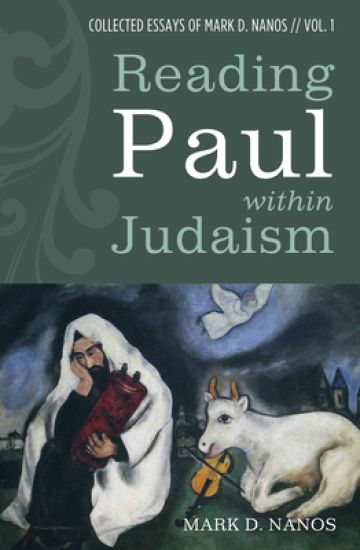
Reading Paul Within Judaism

Reading Paul Within Judaism

Mark D Nanos

Cascade Books
2017
pokkari
The dominant portrayals of the apostle Paul are of a figure who no longer valued Jewish identity and behavior, opposing them for both Jew and non-Jew in his assemblies. This prevailing version of Paul depends heavily upon certain interpretations of key ""flashpoint"" passages. In this book and the subsequent volumes in this series, Mark Nanos undertakes to test a ""Paul within Judaism"" (re)reading of the apostle, especially of these ""flashpoint"" texts. Nanos demonstrates how traditional conclusions about Paul and the meaning of his letters are dramatically altered by testing the hypothesis that the historical Paul practiced a Jewish, Torah-observant way of life, and that he expected those whom he addressed to know that he did so. Nanos also tests the hypothesis that the non-Jews addressed were expected to know that his guidance was based on promoting a Jewish way of life for themselves, at the same time insisting that they remain non-Jews and thus not technically under Torah on the same terms as himself and the other Jews in this new (Jewish) movement. In conversation with the prevailing views, Nanos argues that the ""Paul within Judaism"" perspective offers not only more historically probable interpretations of Paul's texts, but also more promise for better relations between Christians and Jews, because these texts have informed Christian concepts of, ways of talking about, and behavior toward Jews based on the premise that Paul considered Jews and Judaism the mirror opposites of what Christians should be and become. ""For over twenty years, Mark Nanos has been working on situating Paul and his thought within early Judaism. This volume brings together Nanos's innovative arguments that Paul was not an apostate Jew, but a Second Temple Jew who sought to be faithful to the Jewish law and Israel's God as he pursued a mission to gentiles. This is a must read for anyone looking to break out of traditional readings of Paul "" --Matthew Thiessen, McMaster University ""Mark Nanos has pioneered the historical reconstruction of Paul as native to his own time and place--a Paul, in brief, who stands entirely within the traditional hopes, beliefs, and practices of his own people, Israel. This exciting book conveys to the reader the thrill of a refreshed portrait, free of the later overlays of Luther, of Augustine, and of post-70 CE interpretations. If you want to meet Paul again for the first time, pick up Nanos' Reading Paul Within Judaism."" --Paula Fredriksen, Author of Paul: The Pagans' Apostle Mark D. Nanos (University of St. Andrews, Scotland) is a Lecturer at the University of Kansas; his books include The Mystery of Romans (1996), The Irony of Galatians (2002), and as co-editor, Paul within Judaism (2015).
Reading Paul Within Judaism

Reading Paul Within Judaism

Mark D Nanos

Cascade Books
2017
sidottu
The dominant portrayals of the apostle Paul are of a figure who no longer valued Jewish identity and behavior, opposing them for both Jew and non-Jew in his assemblies. This prevailing version of Paul depends heavily upon certain interpretations of key ""flashpoint"" passages. In this book and the subsequent volumes in this series, Mark Nanos undertakes to test a ""Paul within Judaism"" (re)reading of the apostle, especially of these ""flashpoint"" texts. Nanos demonstrates how traditional conclusions about Paul and the meaning of his letters are dramatically altered by testing the hypothesis that the historical Paul practiced a Jewish, Torah-observant way of life, and that he expected those whom he addressed to know that he did so. Nanos also tests the hypothesis that the non-Jews addressed were expected to know that his guidance was based on promoting a Jewish way of life for themselves, at the same time insisting that they remain non-Jews and thus not technically under Torah on the same terms as himself and the other Jews in this new (Jewish) movement. In conversation with the prevailing views, Nanos argues that the ""Paul within Judaism"" perspective offers not only more historically probable interpretations of Paul's texts, but also more promise for better relations between Christians and Jews, because these texts have informed Christian concepts of, ways of talking about, and behavior toward Jews based on the premise that Paul considered Jews and Judaism the mirror opposites of what Christians should be and become. ""For over twenty years, Mark Nanos has been working on situating Paul and his thought within early Judaism. This volume brings together Nanos's innovative arguments that Paul was not an apostate Jew, but a Second Temple Jew who sought to be faithful to the Jewish law and Israel's God as he pursued a mission to gentiles. This is a must read for anyone looking to break out of traditional readings of Paul "" --Matthew Thiessen, McMaster University ""Mark Nanos has pioneered the historical reconstruction of Paul as native to his own time and place--a Paul, in brief, who stands entirely within the traditional hopes, beliefs, and practices of his own people, Israel. This exciting book conveys to the reader the thrill of a refreshed portrait, free of the later overlays of Luther, of Augustine, and of post-70 CE interpretations. If you want to meet Paul again for the first time, pick up Nanos' Reading Paul Within Judaism."" --Paula Fredriksen, Author of Paul: The Pagans' Apostle Mark D. Nanos (University of St. Andrews, Scotland) is a Lecturer at the University of Kansas; his books include The Mystery of Romans (1996), The Irony of Galatians (2002), and as co-editor, Paul within Judaism (2015).

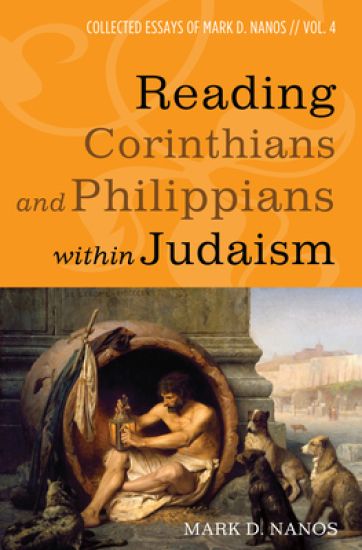
Reading Corinthians and Philippians within Judaism
The commentary tradition regarding 1 Corinthians unanimously identifies the ""weak"" as Christ-followers whose faith was not yet sufficient to indulge in the eating of idol food with indifference, as if ideally Paul wanted them to become ""strong"" enough to do so. Commentaries also do not hesitate to explain that Paul advised the Corinthians that he behaved like non-Jews (e.g., ate idol food) in order to win non-Jews to Christ, convinced that he was free from any obligation to observe Jewish covenantal behavior--except when he expediently chose to mimic Jewish behavior in order to win Jews to Christ. Similarly, commentators continue to conclude that in Philippians Paul called Jews ""dogs"" for upholding the value of undertaking circumcision, and that he renounced such identification as ""mutilation."" None of these interpretations likely represent what Paul meant originally, according to Nanos. Each essay explains why, and provides new alternatives for re-reading Paul's language ""within Judaism."" In this process, Nanos combines investigations of relevant elements from Jewish sources and from various Cynic and other Greco-Roman contemporaries, as well as the New Testament. ""Reading Corinthians and Philippians within Judaism is a convincing exploration into some of Paul's letters when he is seen as still within his ancestral tradition. Nanos's essays provide substantive arguments that when combined result in a more historical and persuasive reading of Paul than the traditional Paul of Paulinism. The interpretive insights found here are vital for those concerned about issues of supersessionism."" --J. Brian Tucker, Professor of New Testament, Moody Theological Seminary Mark D. Nanos (PhD, University of St. Andrews, Scotland) is a Lecturer at the University of Kansas; his books include The Mystery of Romans (1996), The Irony of Galatians (2002), and as co-editor, Paul within Judaism (2015).
Paul within Judaism

Paul within Judaism

Mark D. Nanos

Fortress Press,U.S.
2015
pokkari
In these chapters, a group of renowned international scholars seek to describe Paul and his work from "within Judaism," rather than on the assumption, still current after thirty years of the "New Perspective," that in practice Paul left behind aspects of Jewish living after his discovery of Jesus as Christ (Messiah). After an introduction that surveys recent study of Paul and highlights the centrality of questions about Paul's Judaism, chapters explore the implications of reading Paul's instructions as aimed at Christ-following non-Jews, teaching them how to live in ways consistent with Judaism while remaining non-Jews. The contributors take different methodological points of departure: historical, ideological-critical, gender-critical, and empire-critical, and examine issues of terminology and of interfaith relations. Surprising common ground among the contributors presents a coherent alternative to the "New Perspective." The volume concludes with a critical evaluation of the Paul within Judaism perspective by Terence L. Donaldson, a well-known voice representative of the best insights of the New Perspective.
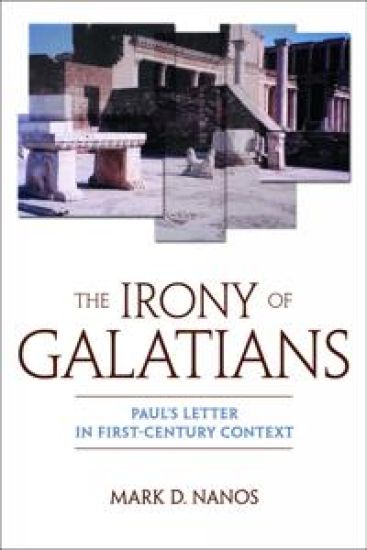
The Irony of Galatians

The Irony of Galatians

Mark D. Nanos

Augsburg Fortress
2001
pokkari
Intra-Jewish conflict in Paul's communitiesAfter taking on traditional interpretations of Romans in The Mystery of Romans, Nanos now turns his attention to the Letter to the Galatians. A primary voice in reclaiming Paul in his Jewish context, Nanos challenges the previously dominant views of Paul as rejecting his Jewish heritage and the Law. Where Paul's rhetoric has been interpreted to be its most anti-Jewish, Nanos instead demonstrates the implications of an intra-Jewish reading. He explores the issues of purity; insiders/outsiders; the character of "the gospel"; the relationship between groups of Christ-followers in Jerusalem, Antioch, and Galatia; and evil-eye accusations.
The Mystery of Romans

The Mystery of Romans

Mark D. Nanos

Augsburg Fortress
1996
pokkari
Paul's letter to the Romans, says Nanos, is an example of Jewish correspondence, addressing believers in Jesus who are steeped in Jewish ways-whether of Jewish or gentile origin. Arguing against those who think Paul was an apostate from Judaism, Nanos maintains Paul's continuity with his Jewish heritage. Several key arguments here are: Those addressed in Paul's letter were still an integral part of the Roman synagogue communities. The "weak" are non- Christian Jews, while the "strong" included both Jewish and gentile converts to belief in Jesus. Paul as a practicing devout Jew insists on the rules of behavior for "the righteous gentiles." Christian subordination to authorities (Romans 13:1-7) is intended to enforce submission to leaders of the synagogues, not Roman government officials. Paul behaves in a way to confirm the very Jewish portrait of him in Acts: going first to the synagogues.