Kirjailija
Mark Davis
Kirjat ja teokset yhdessä paikassa: 66 kirjaa, julkaisuja vuosilta 2005-2026, suosituimpien joukossa Ilkley Through Time. Vertaile teosten hintoja ja tarkista saatavuus suomalaisista kirjakaupoista.
66 kirjaa
Kirjojen julkaisuhaarukka 2005-2026.
A refund guarantee is an essential component of almost every shipbuilding project, without which the buyer will be unwilling or unable to proceed. There is no standard form of refund guarantee in universal usage, and both the form and substance of refund guarantee instruments vary widely from case to case. The ambiguity or uncertainty of the meaning of refund guarantee instruments, against a backdrop of a sharp downturn in the shipping markets, has led to numerous disputes in recent years concerning refund guarantees, which have been the subject of a number of important decisions of the English Courts. This is the first English law text book dedicated to the subject of refund guarantees. It provides essential guidance as to the issues arising and the pitfalls to be avoided. It analyses the specimen form of guarantee annexed to Bimco’s NEWBUILDCON form, and covers topics such as the circumstances in which the liability of the guarantor may be discharged, and when a builder may be entitled to obtain an injunction to restrain payment under a refund guarantee.It will be an essential and practical guide for those engaged in the shipbuilding industry, including shipbuilders, shipowners, banks and insurance companies, P&I clubs, and those advising them.
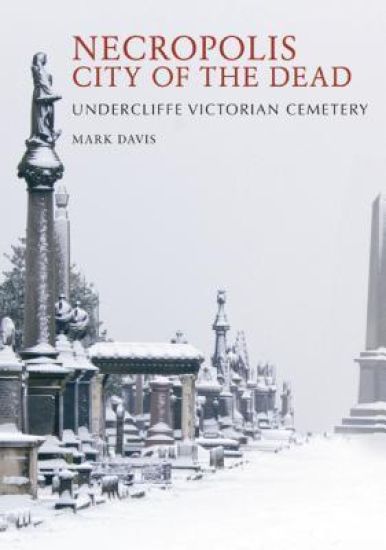
In Victorian Bradford, when death came, there was only one real place to be buried. For the rich and poor alike the newly laid out Undercliffe Cemetery, designed by William Gay, was the fashionable place to be seen in death. The cemetery, which was conceived by the Bradford Cemetery Co., was provisionally registered in 1849 as a consequence of the intense overcrowding at St Peter's parish graveyard, where human bones were seen to be protruding from the graves. The first burial at Undercliffe took place in March 1854, although the official opening did not occur until five months later in August. The grand opening ceremony was officiated by the Bishop of Ripon, who consecrated the western side of the cemetery for the Anglicans. The eastern side remained available for the burial of Nonconformists. In life, as in death, status was observed, and the ability to pay determined the location of a grave. In 2015, the cemetery remains as a testament to the lives of the people that forged this city. It is a place where history is quite literally written in granite and stone. The grand mausoleums and tombs are fit for kings and queens. Some of these monuments are now of special architectural and historic interest, and Undercliffe has been placed on the National Register of Historic Parks and Gardens alongside other famous cemeteries such as Highgate. Necropolis: City of the Dead explores one of the greatest achievements in Victorian funerary design and accomplishment, and some of the lives that until now have remained lost in the wilderness of time.
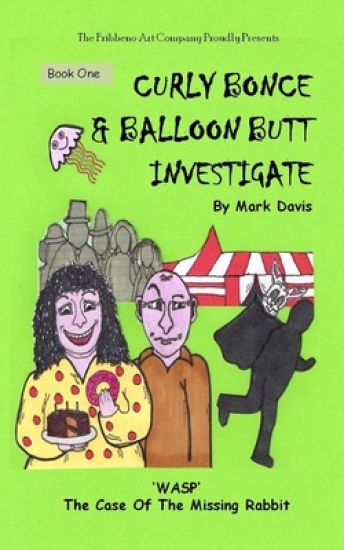
(BOOK ONE) Curly Bonce & Balloon Butt Investigate: "WASP" The Case Of The Missing Rabbit
Mark Davis
Createspace Independent Publishing Platform
2015
nidottu
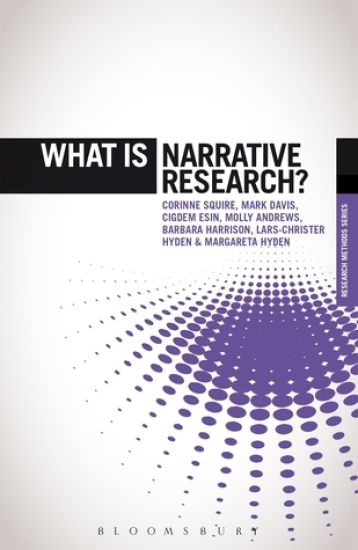
What is Narrative Research?
Corinne Squire; Molly Andrews; Mark Davis; Cigdem Esin; Barbara Harrison; Lars-Christer Hyden; Margareta Hydén
Bloomsbury Academic
2014
sidottu
This book is available as open access through the Bloomsbury Open Access programme and is available on www.bloomsburycollections.com.Narrative research has become a catchword in the social sciences today, promising new fields of inquiry and creative solutions to persistent problems. This book brings together ideas about narrative from a variety of contexts across the social sciences and synthesizes understandings of the field. Rather than focusing on theory, it examines how narrative research is conducted and applied. It operates as a practical introductory guide, basic enough for first-time researchers, but also as a window onto the more complex questions and difficulties that all researchers in this area face. The authors guide readers through current debates about how to obtain and analyse narrative data, about the nature of narrative, the place of the researcher, the limits of researcher interpretations, and the significance of narrative work in applied and in broader political contexts.
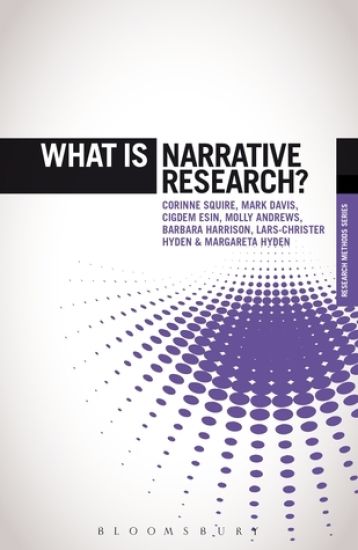
What is Narrative Research?
Corinne Squire; Molly Andrews; Mark Davis; Cigdem Esin; Barbara Harrison; Lars-Christer Hyden; Margareta Hydén
Bloomsbury Publishing PLC
2014
nidottu
This book is available as open access through the Bloomsbury Open Access programme and is available on www.bloomsburycollections.com.Narrative research has become a catchword in the social sciences today, promising new fields of inquiry and creative solutions to persistent problems. This book brings together ideas about narrative from a variety of contexts across the social sciences and synthesizes understandings of the field. Rather than focusing on theory, it examines how narrative research is conducted and applied. It operates as a practical introductory guide, basic enough for first-time researchers, but also as a window onto the more complex questions and difficulties that all researchers in this area face. The authors guide readers through current debates about how to obtain and analyse narrative data, about the nature of narrative, the place of the researcher, the limits of researcher interpretations, and the significance of narrative work in applied and in broader political contexts.
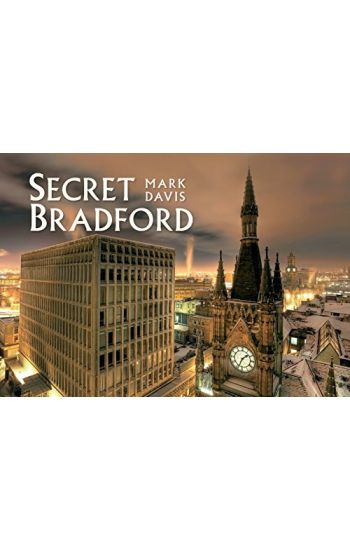
The dark, lost and forgotten corners of Bradford and their incredible history.
To begin at the beginning: it is spring, moonless night in the small town, starless and bible-black, the cobblestreets silent and the hunched courters’-and-rabbits’ wood limping invisible down to the sloeblack, slow, black, crowblack, fishingboatbobbing sea. - Dylan Thomas’ Under Milk Wood Dylan Thomas was the self-styled ‘bombastic adolescent provincial Bohemian’, and whose wizardry with words ensured his dominion over poverty, alcoholism, self-destruction and, ultimately, a premature death. He is immortal. From the window of his childhood via a voyage across the fishingboat-bobbing sea, he stored and sifted the episodes that nibbled at his imagination. Events, people, characters and places were intricately weaved into a glorious tapestry of religion, sex and death, which has become a timeless memory of Welsh whimsy that never actually existed and yet will live forever. Like the tides that Dylan watched from his writing shed, perched high on the cliff top in Laugharne, Under Milk Wood – a ‘play for voices’ that became a spellbinding movie – has drawn millions of readers to make a pilgrimage to the nocturnal quiet of Llareggub. In his centenary year, this photographic book captures the iconic landscape that fired Dylan’s passion for language. From Swansea’s Cwmdonkin Park via the harbour at Fishguard to the Boat House overlooking the estuary at Laugharne, Under Milk Wood Revisited takes the reader on a journey into the magical associations with the past and the roots that held Dylan Thomas to Wales: the land of his fathers from which he drew his inspiration.
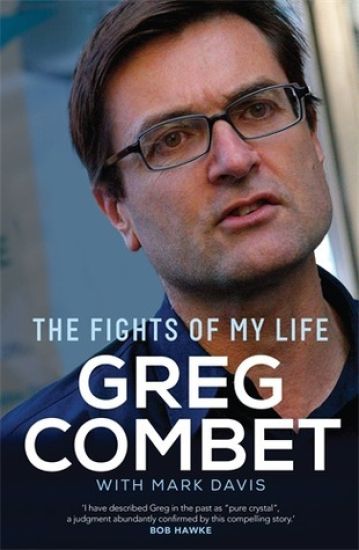
Greg Combet has been at the centre of some of the biggest battles of our time—the waterfront dispute, the collapse of an airline, compensation for asbestos victims, the campaign against unfair workplace laws and then climate change. From an isolated childhood on the Minchinbury estate west of Sydney, Combet's world changed dramatically with the early death of his father, a wine-maker.Facing many challenges, he rose to lead the Australian trade union movement and become a senior minister in the Rudd and Gillard Labor governments. Along the way he has struggled with political ideology, the impact of work on his family and the relentless demands of the parliamentary life.The Fights of My Life is the story of a man who faces up to the power structures of politics, big business and the media. He now makes the case that the labour movement's work is far from done—the Labor Party and the trade unions must democratise to engage the next generation of activists to fight the good fight: to achieve a more fair and just Australia.
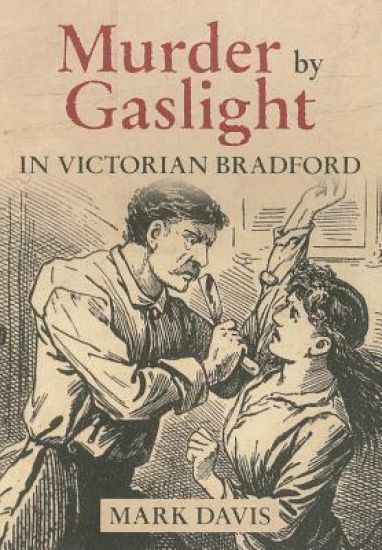
The mass migration of folk from the countryside to Bradford at the height of the Industrial Revolution resulted in large numbers of people existing in abject poverty, as thousands were housed in filthy and overcrowded rooms and cellar dwellings. For many, an escape from these conditions was a few hours in the public house, where alcohol and trouble flowed freely. The proverbial 'demon drink' was to fuel much of Victorian crime in the borough, including the most heinous of all - murder. Murder by Gaslight in Victorian Bradford is a fascinating insight into how demoralising and harsh life was for those living and working in this industrial boom town during a period of rapid growth (1857 - 97). Contemporary newspaper accounts were incredibly detailed and graphic in their content. Embark on a trip back in crime to see the lives of people who have quite literally slipped into obscurity. For the most part, their only memorial was an overgrown and unmarked grave, until now.
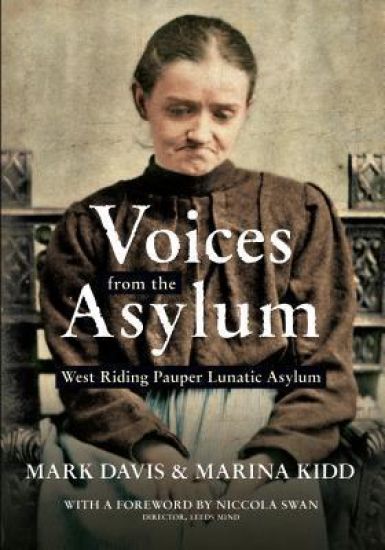
Almost forgotten by time, tucked away beyond the sight of the passerby, there is a little piece of old England, which was for many years a forgotten wilderness. If it were not for a weather-beaten plaque on the gatepost few would realise that beyond the rusted gates there lies, in unmarked paupers’ graves, 2,861 former patients of the once formidable Menston Asylum. To be admitted to a lunatic asylum in the nineteenth century was fraught with danger, and in many cases meant a life sentence hidden away from society. It is estimated as many as 30 per cent of the asylum population was incarcerated incorrectly and up until 1959 there was no form of appeal. Looking into the faces of the long dead, the forgotten former inmates of this once bustling institution, it is impossible not to feel a certain sadness at their plight. Abandoned by an intolerant society and their families these people all had one thing in common, when death came there was no one to shed a tear or collect their remains. They were given a pauper’s funeral and forgotten, until now.
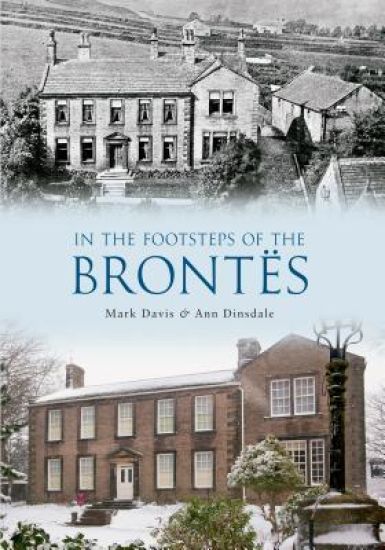
The lives and works of the celebrated Bronte family are so ingrained in our cultural psyche that we think we know them inside out - but walking in the footsteps of the literary greats and their characters offers a new perspective on their work. Our journey begins in Cambridge with the arrival of the young Patrick Bronte and follows his family's fortunes as they grow up in their home village of Haworth. We see the wild moorland locations that would inspire the haunting Wuthering Heights and the dour schools they attended that would later feature in Jane Eyre. We visit the homes of family and friends that provided the settings for many of their novels and travel with them across the industrial West Riding to York and the coast. This spectacular collection of photographs old and new explores the people and places that the brilliant Brontes knew and loved.
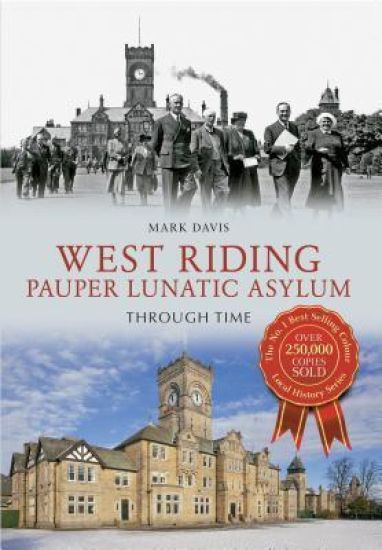
During the eighteenth century the plight of those considered insane was dismal. Many were locked up in madhouses or chained in the workhouse, their illnesses ignored. It was only with the advent of the Industrial Revolution that reform came into place. Within the West Riding of Yorkshire the first steps in reform were taken by the Tuke family who built the Retreat at York, instrumental in bringing a new moral, caring attitude that was quickly adopted across the country. Through our journey in time we discover how former asylums in York, Wakefield, Sheffield, Menston and Huddersfield changed over the centuries. These sprawling institutions were self-contained, isolated villages in their own right. With the aid of fascinating photographs, a formidable history emerges from an age where it is estimated that at least 30 per cent of the asylum population were unjustly incarcerated without crime or foundation.
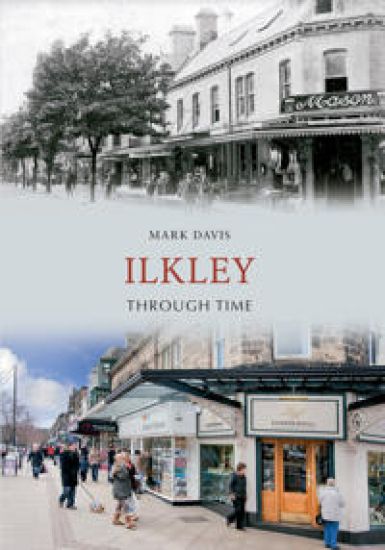
During her rise to fame Ilkley was often described in romantic terms by the Victorian traveller. Home to the oldest literary festival in the North of England Ilkley is clearly characterised by her Victorian architecture. Situated in the heart of Wharfdale, she is as pleasing to the eye today as she was a century ago. Through an enticing collection of photographs we explore how this fashionable spa town with its enchanting local scenery has grown in popularity. Mark Davis touches on the rich heritage that links Ilkley to the famous Hydrotherapy introduced in 1843 and the English Naturalist Charles Darwin. Ilkley was to firmly establish herself as an extremely popular spa and recreational town of the railway age. Such was her notoriety the Victorians were easily enticed in their droves to take in the pure and abundant springs alongside the open moorlands and green meadows.
Paranormal Investigations The Basics
Mark Davis
Createspace Independent Publishing Platform
2012
pokkari
This fascinating selection of photographs traces some of the many ways in which TenbySaundersfoot have changed and developed over the last century
This book aims to provide a unified treatment of input/output modelling and of control for discrete-time dynamical systems subject to random disturbances. The results presented are of wide applica bility in control engineering, operations research, econometric modelling and many other areas. There are two distinct approaches to mathematical modelling of physical systems: a direct analysis of the physical mechanisms that comprise the process, or a 'black box' approach based on analysis of input/output data. The second approach is adopted here, although of course the properties ofthe models we study, which within the limits of linearity are very general, are also relevant to the behaviour of systems represented by such models, however they are arrived at. The type of system we are interested in is a discrete-time or sampled-data system where the relation between input and output is (at least approximately) linear and where additive random dis turbances are also present, so that the behaviour of the system must be investigated by statistical methods. After a preliminary chapter summarizing elements of probability and linear system theory, we introduce in Chapter 2 some general linear stochastic models, both in input/output and state-space form. Chapter 3 concerns filtering theory: estimation of the state of a dynamical system from noisy observations. As well as being an important topic in its own right, filtering theory provides the link, via the so-called innovations representation, between input/output models (as identified by data analysis) and state-space models, as required for much contemporary control theory.
"Two leading reputation experts reveal how the internet is being used to destroy brands, reputations and even lives, and how to fight back. """""From false Wikipedia entries, to fake YouTube videos, to Facebook lynch mobs, everyone from CEOs to fashion models, journalists to politicians, restaurateurs to doctors, is open to character assassination in the burgeoning realm of digital media. Two top media experts recount vivid tales of character attacks, provide specific advice on how to counter them, and how to turn the tables on the attackers. Having spent decades preparing for and coping with these issues, Richard Torrenzano and Mark Davis share their secrets on dealing with problems at the top of today's news. Torrenzano and Davis also take a step back to look at how the past might inform our future thinking about character assassination, from the slander wars between Thomas Jefferson and Alexander Hamilton, to predictions on what the end of privacy will mean for civilization.
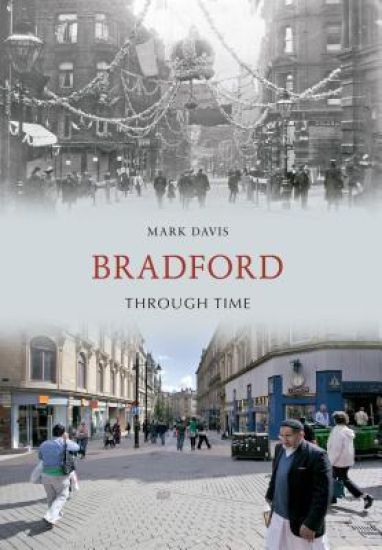
This fascinating selection of photographs traces some of the many ways in which Bradford has changed and developed over the last century.