Kirjailija
Mark Dodgson
Kirjat ja teokset yhdessä paikassa: 17 kirjaa, julkaisuja vuosilta 1991-2026, suosituimpien joukossa Innovation. Vertaile teosten hintoja ja tarkista saatavuus suomalaisista kirjakaupoista.
17 kirjaa
Kirjojen julkaisuhaarukka 1991-2026.
What is innovation? How is innovation used in business? How can we use it to succeed? Innovation, the ways ideas are made valuable, plays an essential role in economic and social development, and is an increasingly topical issue. Over the last 150 years our world has hit an accelerated rate of transformation. From aeroplanes to television and penicillin, and from radios to frozen food and digital money, the fruits of innovation surround us. This Very Short Introduction looks at what innovation is and why it affects us so profoundly. It examines how it occurs, who stimulates it, how it is pursued, and what its outcomes are, both positive and negative. Considering innovation today, and discussing future disruptive technologies such as AI, which have important implications for work and employment, Mark Dodgson and David Gann consider the extent to which our understanding of innovation has developed over the past century and how it might be used to interpret the global economy. ABOUT THE SERIES: The Very Short Introductions series from Oxford University Press contains hundreds of titles in almost every subject area. These pocket-sized books are the perfect way to get ahead in a new subject quickly. Our expert authors combine facts, analysis, perspective, new ideas, and enthusiasm to make interesting and challenging topics highly readable.

The Search for Viable Fusion Energy
Mark Dodgson; David Gann
Springer Nature Switzerland AG
2026
nidottu
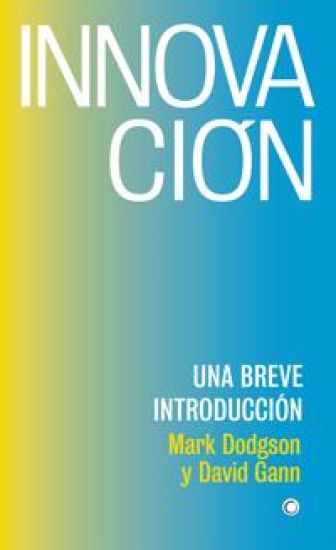
La innovación, la forma en que las ideas se vuelven valiosas, desempeña un papel esencial en el desarrollo económico y social. Durante los últimos ciento cincuenta años, el mundo ha sido transformado por la innovación; desde los aviones y la televisión, hasta las impresoras 3D y el dinero digital, los frutos de la innovación nos rodean.En esta breve introducción, Mark Dodgson y David Gann analizan qué es la innovación y qué la genera, quién la estimula y cómo se logra, además de cuáles son sus efectos, tanto positivos como negativos.Este título fue publicado originalmente dentro de la colección Very Short Introductions de Oxford University Press, de la que se han vendido más de nueve millones de ejemplares en el mundo.
Demystifying China's Innovation Machine
Marina Zhang; Mark Dodgson; David Gann
Oxford University Press
2021
sidottu
China's extraordinary economic development is explained in large part by the way it innovates. Contrary to widely held views, China's innovation machine is not created and controlled by an all-powerful government. Instead, it is a complex, interdependent system composed of various elements, involving bottom-up innovation driven by innovators and entrepreneurs and highly pragmatic and adaptive top-down policy. Using case studies of leading firms and industries, along with statistics and policy analysis, this book argues that China's innovation machine is similar to a natural ecosystem. Innovations in technology, organization, and business models resemble genetic mutations which are initially random, self-serving, and isolated, but the best fitting are selected by the market and their impacts are amplified by the innovation machine. This machine draws on China's multitude manufacturers, supply chains, innovation clusters, and digitally literate population, connected through super-sized digital platforms. China's innovation suffers from a lack of basic research and reliance upon certain critical technologies from overseas, yet its scale (size) and scope (diversity) possess attributes that make it self-correcting and stronger in the face of challenges. China's innovation machine is most effective in a policy environment where the market prevails; policy intervention plays a significant role when market mechanisms are premature or fail. The future success of China's innovation will depend on continuing policy pragmatism, mass innovation, and entrepreneurship, and the development of the 'new infrastructures'.
Innovation is the means by which organizations survive and thrive in uncertain and turbulent conditions. Innovation management has become a well-established field of research, teaching and practice, with a substantial literature. As a broad-based research field, contributions stem from an array of perspectives including science, economics, engineering and psychology. Innovation is crucial for economic and social progress, and it needs to be managed in order to be beneficial. Innovation Management: A Research Overview provides a concise introduction to the best research on innovation management. It covers four main themes: foundational studies, key concepts and frameworks, important empirical studies, and current and emerging themes. The research discussed includes classic studies, with core insights in the field, key thinking on strategies and processes for innovation, well-established and novel research methods, and issues of greatest contemporary importance.This shortform book provides direction through the maze of research on the nature, processes and outcomes of innovation management, and provides an invaluable introduction to the literature on innovation management for students and professionals.
Philanthropy, Innovation and Entrepreneurship
Mark Dodgson; David Gann
Springer Nature Switzerland AG
2021
nidottu
Intended as an essential introduction to philanthropy, this book provides a balanced, analytical, interdisciplinary overview of a complex, and often controversial, topic. Using case studies to illustrate the narrative, it covers everything from the history of individual, sometimes eccentric, philanthropists, to the controversies and challenges of ‘philanthrocapitalism’. This book explores philanthropists and their motivations: who are they and why do they give their money away? It explains what philanthropy does: its history and scope, and the impacts it has in areas such as science and the arts. The governance of philanthropy is explored: how decisions are reached about donations and their accountability. The book addresses the major controversies surrounding philanthropy, and discusses the difficulties involved in giving and receiving, e.g. the importance of ensuring that these processes are transparent and accountable. Lastly, the book considers the future of philanthropy, especially its changing role in society and the disruptive impact of digital technologies.Given its scope, the book offers a valuable resource for researchers interested in philanthropy, innovation and entrepreneurship, the motivations for individual and corporate donations, and the business of giving in general.
Philanthropy, Innovation and Entrepreneurship
Mark Dodgson; David Gann
Springer Nature Switzerland AG
2020
sidottu
Intended as an essential introduction to philanthropy, this book provides a balanced, analytical, interdisciplinary overview of a complex, and often controversial, topic. Using case studies to illustrate the narrative, it covers everything from the history of individual, sometimes eccentric, philanthropists, to the controversies and challenges of ‘philanthrocapitalism’. This book explores philanthropists and their motivations: who are they and why do they give their money away? It explains what philanthropy does: its history and scope, and the impacts it has in areas such as science and the arts. The governance of philanthropy is explored: how decisions are reached about donations and their accountability. The book addresses the major controversies surrounding philanthropy, and discusses the difficulties involved in giving and receiving, e.g. the importance of ensuring that these processes are transparent and accountable. Lastly, the book considers the future of philanthropy, especially its changing role in society and the disruptive impact of digital technologies.Given its scope, the book offers a valuable resource for researchers interested in philanthropy, innovation and entrepreneurship, the motivations for individual and corporate donations, and the business of giving in general.
This volume, originally published in 1993 is based on extensive research and draws together a selection of detailed global case studies illustrating a variety of issues from Japanese joint ventures to small business development. It considers the scope and scale of collaboration in order to assess the way successful companies have achieved their growth. The book presents a synthesis of business functions and economic analysis and asks what the implications for skills development are; what effect public policy has; how far such ventures can go and what decision making processes are involved.
Innovation is the means by which organizations survive and thrive in uncertain and turbulent conditions. Innovation management has become a well-established field of research, teaching and practice, with a substantial literature. As a broad-based research field, contributions stem from an array of perspectives including science, economics, engineering and psychology. Innovation is crucial for economic and social progress, and it needs to be managed in order to be beneficial.Innovation Management: A Research Overview provides a concise introduction to the best research on innovation management. It covers four main themes: foundational studies, key concepts and frameworks, important empirical studies, and current and emerging themes. The research discussed includes classic studies, with core insights in the field, key thinking on strategies and processes for innovation, well-established and novel research methods, and issues of greatest contemporary importance.This shortform book provides direction through the maze of research on the nature, processes and outcomes of innovation management, and provides an invaluable introduction to the literature on innovation management for students and professionals.
High-Tech Entrepreneurship in Asia
Marina Yue Zhang; Mark Dodgson
Edward Elgar Publishing Ltd
2008
nidottu
The option for consumers to make payments for services and products via mobile telephones has created a dynamic new industry. High-Tech Entrepreneurship in Asia illustrates how small, entrepreneurial firms in Asia have devised and produced innovations crucial for this industry's development. Marina Zhang and Mark Dodgson explore the evolution of the mobile payment industry which has emerged in recent years through the convergence of services provided by financial and mobile telecommunications companies. They consider how leading Asian economies are increasingly becoming the source of important technological innovations. Detailed case studies are used to reveal the technological, social, political, national and cultural factors that encourage and constrain entrepreneurship in Asia, paying particular attention to China and Korea, the industry vanguards. The role played by entrepreneurial start-ups in bridging the gap between banking, credit card and mobile telecommunications sectors is also explored. This highly original work will strongly appeal to students, researchers, policymakers and managers interested in international entrepreneurship, innovation, industrial and technological development and Asian business.
The Management of Technological Innovation
Mark Dodgson; David M. Gann; Ammon Salter
Oxford University Press
2008
nidottu
The management of technological innovation (MTI) is one of the most important challenges facing businesses today. Innovation has become the fundamental driver of competitiveness for firms of all sizes in virtually all business sectors and nations. The first edition of this book has become one of the most popular texts for students of innovation and technology management. This new edition sees David Gann and Ammon Salter join Mark Dodgson as authors, drawing on their combined experience of 60 years of researching and teaching MTI. It combines the most relevant theoretical analysis with contemporary and historical empirical evidence to provide a comprehensive, yet concise and readable, guide to the challenges of MTI. By explaining the innovation process the book reveals the broad scope of MTI and its importance for company survival, growth and sustainability. It describes how MTI has to be managed strategically and how this is successfully achieved by formulating and implementing strategy and delivering value. Chapters provide frameworks, tools and techniques, and case studies on managing: innovation strategy, communities, and networks, R&D, design and new product and service development, operations and production, and commercialization. Based on robust analysis, the book provides a wide range of empirical evidence from a huge diversity of case studies, with around fifty case studies newly written for this edition. It analyses MTI in all parts of the world, in companies large and small, and in services, manufacturing, and resource-based business sectors. This new edition has been fully revised and updated to reflect the latest teaching and research, and to ensure its continuing relevance to the contemporary world of MTI. It will be an important resource for academics, students, and managers throughout the world, is a recommended text for students of innovation and technology management at postgraduate and undergraduate level, and is particularly valuable for MBA courses.
The Management of Technological Innovation
Mark Dodgson; David M. Gann; Ammon Salter
Oxford University Press
2008
sidottu
The management of technological innovation (MTI) is one of the most important challenges facing businesses today. Innovation has become the fundamental driver of competitiveness for firms of all sizes in virtually all business sectors and nations. The first edition of this book has become one of the most popular texts for students of innovation and technology management. This new edition sees David Gann and Ammon Salter join Mark Dodgson as authors, drawing on their combined experience of 60 years of researching and teaching MTI. It combines the most relevant theoretical analysis with contemporary and historical empirical evidence to provide a comprehensive, yet concise and readable, guide to the challenges of MTI. By explaining the innovation process the book reveals the broad scope of MTI and its importance for company survival, growth and sustainability. It describes how MTI has to be managed strategically and how this is successfully achieved by formulating and implementing strategy and delivering value. Chapters provide frameworks, tools and techniques, and case studies on managing: innovation strategy, communities, and networks, R&D, design and new product and service development, operations and production, and commercialization. Based on robust analysis, the book provides a wide range of empirical evidence from a huge diversity of case studies, with around fifty case studies newly written for this edition. It analyses MTI in all parts of the world, in companies large and small, and in services, manufacturing, and resource-based business sectors. This new edition has been fully revised and updated to reflect the latest teaching and research, and to ensure its continuing relevance to the contemporary world of MTI. It will be an important resource for academics, students, and managers throughout the world, is a recommended text for students of innovation and technology management at postgraduate and undergraduate level, and is particularly valuable for MBA courses.
High-Tech Entrepreneurship in Asia
Marina Yue Zhang; Mark Dodgson
Edward Elgar Publishing Ltd
2007
sidottu
The option for consumers to make payments for services and products via mobile telephones has created a dynamic new industry. High-Tech Entrepreneurship in Asia illustrates how small, entrepreneurial firms in Asia have devised and produced innovations crucial for this industry's development. Marina Zhang and Mark Dodgson explore the evolution of the mobile payment industry which has emerged in recent years through the convergence of services provided by financial and mobile telecommunications companies. They consider how leading Asian economies are increasingly becoming the source of important technological innovations. Detailed case studies are used to reveal the technological, social, political, national and cultural factors that encourage and constrain entrepreneurship in Asia, paying particular attention to China and Korea, the industry vanguards. The role played by entrepreneurial start-ups in bridging the gap between banking, credit card and mobile telecommunications sectors is also explored. This highly original work will strongly appeal to students, researchers, policymakers and managers interested in international entrepreneurship, innovation, industrial and technological development and Asian business.
The innovation process is the most important of all business processes. Innovation is the means by which value is constructed and efficiencies are created. It is the source of sustainable competitive advantage. This book shows how the innovation process is changing profoundly. Part of the change results from the application of new technologies to the innovation process itself. A new category of technology has emerged which we call 'innovation technology'. This includes simulation and modelling, visualization, and rapid prototyping technologies. When used effectively, innovation technology makes the innovation process more economical and ameliorates some of its uncertainties. These technological changes are accompanied by changing organization structures and skills requirements. The technologies are used in fast moving, creative environments and are suited to project-based organization. They also require the development of new 'craft' skills to realize the possibilities created by the new 'code'. The book outlines a new way of thinking about innovation. Traditional definitions of 'research', 'development' and 'engineering', imply a progressive linearity which doesn't exist in reality. They are also associated with organizational departments, which are breaking down where once they existed, and are in any case non-existent in the vast majority of firms. They also fail to capture the central importance of design in innovation. We propose a new schema for the innovation process: Think, Play, Do. Innovation requires creating new ideas and thinking about new options, playing with them to see if they are practical, economical and marketable, and then doing: making the innovation real. This new schema captures the emerging innovation process using a more contemporary idiom. The book reports in-depth studies from a number of companies and sectors. Major case studies of Procter and Gamble and Arup Partners are presented. It reports on the use of innovation technology in a range of other companies and organizations, from pharmaceuticals in GSK, to engineering design in Ricardo engineering , and welding in TWI. We describe how innovation technology is used in traditional industries, such as in mining, and in public projects, such as the development of London's traffic congestion charge and the stabilization of the leaning tower of Pisa.