Kirjojen hintavertailu. Mukana 12 595 353 kirjaa ja 12 kauppaa.

Kirjailija

Mark Edwards

Kirjat ja teokset yhdessä paikassa: 98 kirjaa, julkaisuja vuosilta 2003-2027, suosituimpien joukossa En i familjen. Vertaile teosten hintoja ja tarkista saatavuus suomalaisista kirjakaupoista.

98 kirjaa

Kirjojen julkaisuhaarukka 2003-2027.

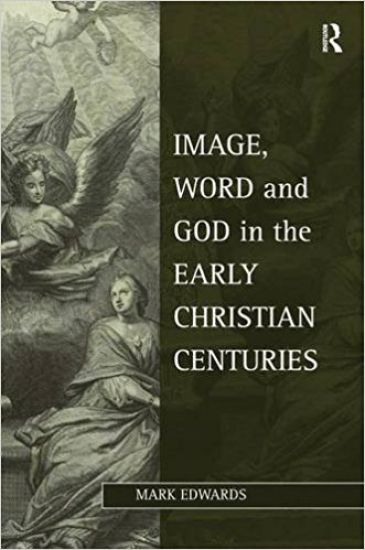
Image, Word and God in the Early Christian Centuries

Image, Word and God in the Early Christian Centuries

Mark Edwards

Ashgate Publishing Limited
2013
sidottu
Christianity proclaims Christ and the incarnate word of God; the Bible is described as the Word of God in both Jewish and Christian tradition. Are these usages merely homonymous, or would the ancients have recognized a more intimate relation between the word incarnate and the word proclaimed? This book investigates the concept of logos in pagan, Jewish and Christian thought, with a view to elucidating the polyphonic functions which the word acquired when used in theological discourse. Edwards presents a survey of theological applications of the term Logos in Greek, Jewish and Christian thought from Plato to Augustine and Proclus. Special focus is placed on: the relation of words to images in representation of divine realm, the relation between the logos within (reason) and the logos without (speech) both in linguistics and in Christology, the relation between the incarnate Word and the written text, and the place of reason in the interpretation of revelation. Bringing together materials which are rarely synthesized in modern study, this book shows how Greek and biblical thought part company in their appraisal of the capacity of reason to grasp the nature of God, and how in consequence verbal revelation plays a more significant role in biblical teaching. Edwards shows how this entailed the rejection of images in Jewish and Christian thought, and how the manifestation in flesh of Christ as the living word of God compelled the church to reconsider both the relation of word to image and the interplay between the logos within and the written logos in the formulation of Christian doctrine.
Image, Word and God in the Early Christian Centuries

Image, Word and God in the Early Christian Centuries

Mark Edwards

Ashgate Publishing Limited
2013
nidottu
Christianity proclaims Christ and the incarnate word of God; the Bible is described as the Word of God in both Jewish and Christian tradition. Are these usages merely homonymous, or would the ancients have recognized a more intimate relation between the word incarnate and the word proclaimed? This book investigates the concept of logos in pagan, Jewish and Christian thought, with a view to elucidating the polyphonic functions which the word acquired when used in theological discourse. Edwards presents a survey of theological applications of the term Logos in Greek, Jewish and Christian thought from Plato to Augustine and Proclus. Special focus is placed on: the relation of words to images in representation of divine realm, the relation between the logos within (reason) and the logos without (speech) both in linguistics and in Christology, the relation between the incarnate Word and the written text, and the place of reason in the interpretation of revelation. Bringing together materials which are rarely synthesized in modern study, this book shows how Greek and biblical thought part company in their appraisal of the capacity of reason to grasp the nature of God, and how in consequence verbal revelation plays a more significant role in biblical teaching. Edwards shows how this entailed the rejection of images in Jewish and Christian thought, and how the manifestation in flesh of Christ as the living word of God compelled the church to reconsider both the relation of word to image and the interplay between the logos within and the written logos in the formulation of Christian doctrine.
Christians, Gnostics and Philosophers in Late Antiquity

Christians, Gnostics and Philosophers in Late Antiquity

Mark Edwards

Ashgate Publishing Limited
2012
sidottu
Gnosticism, Christianity and late antique philosophy are often studied separately; when studied together they are too often conflated. These articles set out to show that we misunderstand all three phenomena if we take either approach. We cannot interpret, or even identify, Christian Gnosticism without Platonic evidence; we may even discover that Gnosticism throws unexpected light on the Platonic imagination. At the same time, if we read writers like Origen simply as Christian Platonists, or bring Christians and philosophers together under the porous umbrella of "monotheism", we ignore fundamental features of both traditions. To grasp what made Christianity distinctive, we must look at the questions asked in the studies here, not merely what Christians appropriated but how it was appropriated. What did the pagan gods mean to a Christian poet of the fifth century? What did Paul quote when he thought he was quoting Greek poetry? What did Socrates mean to the Christians, and can we trust their memories when they appeal to lost fragments of the Presocratics? When pagans accuse the Christians of moral turpitude, do they know more or less about them than we do? What divides Augustine, the disenchanted Platonist, from his Neoplatonic contemporaries? And what God or gods await the Neoplatonist when he dies?
Killing Cupid

Killing Cupid

Mark Edwards; Louise Voss

HARPERCOLLINS PUBLISHERS
2012
nidottu
He is watching her… The chillingly brilliant read from Mark Edwards and Louise Voss, the bestselling authors of Catch Your Death. Doesn’t love always feel this way? Alex Parkinson is in love with his writing tutor, Siobhan. He has never loved anyone like this, but how can he convince Siobhan that they are meant to be together?So Alex stalks her on Facebook and finds out where she lives, buys her presents using her own credit card and sends her messages telling her exactly what he wants to do to her. He breaks into her house, reads her diary and secretly listens to her while she takes a bath.Isn’t that what all lovers do?But when a love rival appears on the scene, Alex has to take drastic action, and soon a young woman lies dead after tumbling from the roof of her house. Now there is no-one standing in the way of Alex and his true love. But someone is watching Alex too and he is about to discover that there is a thin line between love – and hate…
Pirates on Dinosaur Island

Pirates on Dinosaur Island

Mark Edwards

Gemma Open Door
2012
pokkari
Dr. Christopher Lemuel escapes England on a privateer after he has the misfortune of winning a duel. With his life in jeopardy, he signs on as ship's doctor only to face further dangers on the high seas. The good doctor is wounded in a sea battle, captured by pirates, and reluctantly becomes a buccaneer. Then matters become stranger still when Dr. Lemuel is marooned on an island populated by enormous beasts unknown in natural history.
Catch Your Death

Catch Your Death

Mark Edwards; Louise Voss

HARPERCOLLINS PUBLISHERS
2012
nidottu
The No.1 bestselling book from Mark Edwards and Louise Voss. A terrifying enigma – with the power to destroy… Twenty years ago, Kate Maddox was a volunteer at a research centre where scientists hunted for a cure for the common cold virus. That summer, Kate fell in love with a handsome young doctor, Stephen, but her stay ended in his tragic death and Kate fled to a new life in the US. Now Kate is back in England and on the run with her young son, this time from her vile husband. But a chance encounter sets her on a terrifying path of discovery. What really happened at the Cold Research Unit two decades ago? Pursued by both her estranged husband and a psychotic killer who is obsessed with his prey, Kate must fight to solve the puzzle of the past – uncovering a sickening betrayal and a truth more horrifying than she could ever have imagined…
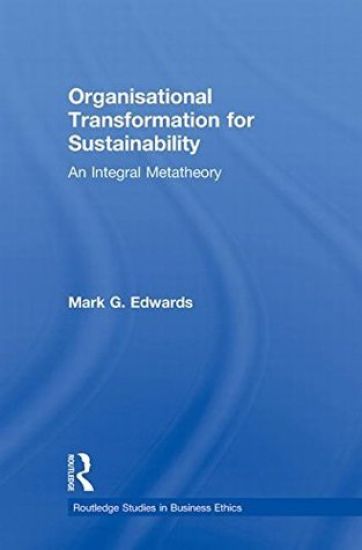
Organizational Transformation for Sustainability
During the 21st century organizations will undergo a level of radical and global change that has rarely been seen before. This transformation will come as a result of the environmental, social and economic challenges that now confront organisations in all their activities. But are our understandings and theories of change up to the task of meeting these challenges? Will we be able to develop sustaining visions of how organizations might contribute to the long-term viability of our interdependent global communities? Organizational Transformation for Sustainability: An Integral Metatheory offers some innovative answers to the big questions involved in organizational sustainability and the radical changes that organizations will need to undergo as we move into the third millennium. This new approach comes from the emerging field of integral metatheory. Edwards shows how a "Big Picture" view of organisational transformation can contribute to our understanding of, and search for, organisational sustainability. There are four key themes to the book: i) the need for integrative metatheories for organisational change; ii) the development of a general research method for building metatheory; iii) the description of an integral metatheory for organisational sustainability; and iv) the discussion of the implications of this metatheory for organisational change and social policy regarding sustainability. This book brings a unique and important orienting perspective to these issues.
Organizational Transformation for Sustainability
During the 21st century organizations will undergo a level of radical and global change that has rarely been seen before. This transformation will come as a result of the environmental, social and economic challenges that now confront organisations in all their activities. But are our understandings and theories of change up to the task of meeting these challenges? Will we be able to develop sustaining visions of how organizations might contribute to the long-term viability of our interdependent global communities? Organizational Transformation for Sustainability: An Integral Metatheory offers some innovative answers to the big questions involved in organizational sustainability and the radical changes that organizations will need to undergo as we move into the third millennium. This new approach comes from the emerging field of integral metatheory. Edwards shows how a "Big Picture" view of organisational transformation can contribute to our understanding of, and search for, organisational sustainability. There are four key themes to the book: i) the need for integrative metatheories for organisational change; ii) the development of a general research method for building metatheory; iii) the description of an integral metatheory for organisational sustainability; and iv) the discussion of the implications of this metatheory for organisational change and social policy regarding sustainability. This book brings a unique and important orienting perspective to these issues.
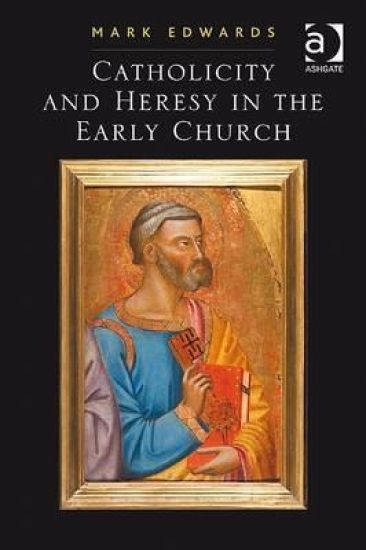
Catholicity and Heresy in the Early Church

Catholicity and Heresy in the Early Church

Mark Edwards

Ashgate Publishing Limited
2009
nidottu
While it has often been recognised that the development of Christian orthodoxy was stimulated by the speculations of those who are now called heretics, it is still widely assumed that their contribution was merely catalytic, that they called forth the exposition of what the main church already believed but had not yet been required to formulate. This book maintains that scholars have underrated the constructive role of these "heretical" speculations in the evolution of dogma, showing that salient elements in the doctrines of the fall, the Trinity and the union of God and man in Christ derive from teachings that were initially rejected by the main church. Mark Edwards also reveals how authors who epitomised orthodoxy in their own day sometimes favoured teachings which were later considered heterodox, and that their doctrines underwent radical revision before they became a fixed element of orthodoxy. The first half of the volume discusses the role of Gnostic theologians in the formation of catholic thought; the second half will offer an unfashionable view of the controversies which gave rise to the councils of Nicaea, Ephesus and Chalcedon . Many of the theories advanced here have not been broached elsewhere, and no synthesis on this scale had been attempted by other scholars. While this book proposes a revision in the scholarly perception of early Christendom, it also demonstrates the essential unity of the tradition.
Biowar I: Hunger

Biowar I: Hunger

Mark Edwards

Lulu.com
2007
pokkari
Biowar I initiates a social revolution that engages stakeholders to end Biowar I and the collateral damage from our ethanol policy that burns our food, pollutes our air, soils and ground water while threatening millions with starvation.
Nobu West

Nobu West

Nobu Matsuhisa; Mark Edwards

Quadrille Publishing Ltd
2006
sidottu
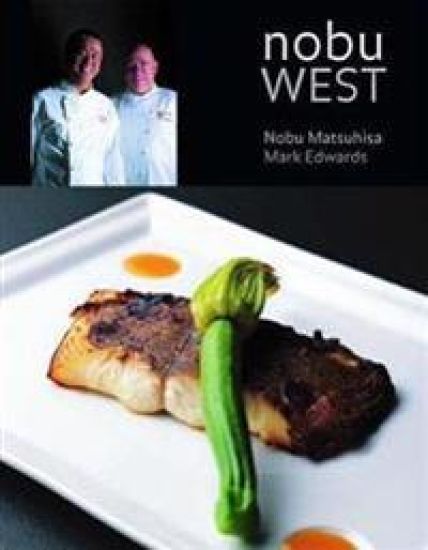
Nobu Matsuhisa still stands above all the other great world-class chefs in being the only one who is truly celebrated internationally. In this third book, the first to be written and published in English, he collaborates with Mark Edwards, the Head Chef at Nobu London, to explore even more fully the fusion of cultures and cuisines that is now "Nobu style". For each of the European restaurants Mark has created dishes made with local ingredients, such as porcini in Milan, and this book includes a repertoire of such recipes.
Culture and Philosophy in the Age of Plotinus

Culture and Philosophy in the Age of Plotinus

Mark Edwards

Bristol Classical Press
2006
nidottu
This book offers a survey of the teachings of, and relations between, four leading figures in third-century Platonism: Longinus, Plotinus, Porphyry and Iamblichus. It documents and explains the coalescence of Aristotelian and Platonic elements in the Platonic tradition before the 3rd century, considers the effect of the new political environment on these thinkers, and argues that the antagonistic interests of the two older men (Longinus and Plotinus) were combined in the work of the two younger figures (Porphyry and Iamblichus) without sacrifice of coherence, rationality or fidelity to Plato. The authorship of the treatise on the sublime, the question of mysticism in Plotinus and the relation of Neoplatonism to ancient Christianity are among the topics discussed.
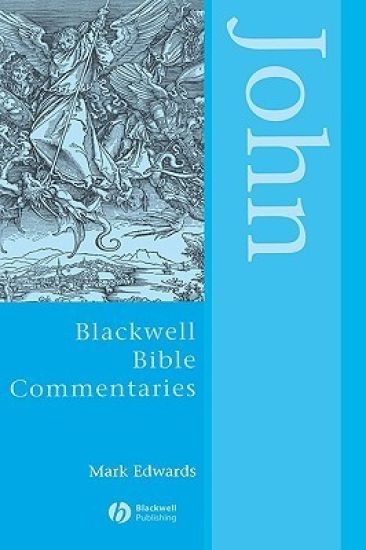
John Through the Centuries

John Through the Centuries

Mark Edwards

Blackwell Publishing Ltd
2003
nidottu
This pioneering commentary embraces the full scope and themes raised in John's Gospel, offering an engaging and perceptive reading. Mark Edwards explores a diverse range of excerpts and creative responses, with particular emphasis on the treatment of the Gospel in English poetry. Explores the diverse themes and issues raised in John’s Gospel, and considers its influence on figures from Saint Augustine, to Dorothy Sayers and Bob Dylan. Treats well-known interpreters such as Thomas Aquinas along with lesser-known figures such as the Gnostic Heracleon, and the sixth-century hymn-writer, Romanos. Brings ancient and modern commentators into dialogue with each other, and takes a critical stance towards some parallels drawn by modern scholars between the Gospel and the surrounding pagan culture. Features excerpts from a wide variety of poets who give a creative interpretation of John’s Gospel, and considers many artistic representations. Suggests that imaginative response can illuminate a reading of the Bible where purely critical and historical analysis has proved unsatisfactory. An accessible introduction and extensive section notes address interpretations of the Gospel from antiquity to the present. Published as part of the ground-breaking Blackwell Bible Commentaries series. More information about this series is available from the Blackwell Bible Commentaries website at http://www.bbibcomm.net/
John Through the Centuries

John Through the Centuries

Mark Edwards

Blackwell Publishing Ltd
2003
sidottu
This pioneering commentary embraces the full scope and themes raised in John's Gospel, offering an engaging and perceptive reading. Mark Edwards explores a diverse range of excerpts and creative responses, with particular emphasis on the treatment of the Gospel in English poetry. Explores the diverse themes and issues raised in John’s Gospel, and considers its influence on figures from Saint Augustine, to Dorothy Sayers and Bob Dylan. Treats well-known interpreters such as Thomas Aquinas along with lesser-known figures such as the Gnostic Heracleon, and the sixth-century hymn-writer, Romanos. Brings ancient and modern commentators into dialogue with each other, and takes a critical stance towards some parallels drawn by modern scholars between the Gospel and the surrounding pagan culture. Features excerpts from a wide variety of poets who give a creative interpretation of John’s Gospel, and considers many artistic representations. Suggests that imaginative response can illuminate a reading of the Bible where purely critical and historical analysis has proved unsatisfactory. An accessible introduction and extensive section notes address interpretations of the Gospel from antiquity to the present. Published as part of the ground-breaking Blackwell Bible Commentaries series. More information about this series is available from the Blackwell Bible Commentaries website at http://www.bbibcomm.net/