Kirjojen hintavertailu. Mukana 12 657 676 kirjaa ja 12 kauppaa.

Kirjailija

Mark Ellis

Kirjat ja teokset yhdessä paikassa: 33 kirjaa, julkaisuja vuosilta 2006-2025, suosituimpien joukossa The Spur - Helldorado. Vertaile teosten hintoja ja tarkista saatavuus suomalaisista kirjakaupoista.

33 kirjaa

Kirjojen julkaisuhaarukka 2006-2025.

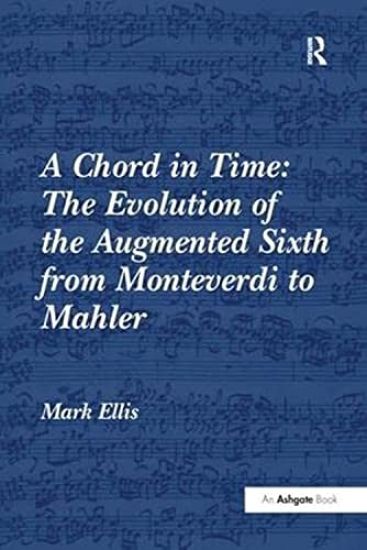
A Chord in Time: The Evolution of the Augmented Sixth from Monteverdi to Mahler
For centuries, the augmented sixth sonority has fascinated composers and intrigued music analysts. Here, Dr Mark Ellis presents a series of musical examples illustrating the 'evolution' of the augmented sixth and the changing contexts in which it can be found. Surprisingly, the sonority emerged from one of the last remnants of modal counterpoint to survive into the tonal era: the Phrygian Cadence. In the Baroque period, the 'terrible dissonance' was nearly always associated with negative textual imagery. Charpentier described the augmented sixth as 'poignantly expressive'. J. S. Bach considered an occurrence of the chord in one of his forebear's motets 'remarkably bold'. During Bach's composing lifetime, the augmented sixth evolved from a relatively rare chromaticism to an almost commonplace element within the tonal spectrum; the chord reflects particular chronological and stylistic strata in his music. Theorists began cautiously to accept the chord, but its inversional possibilities proved particularly contentious, as commentaries by writers as diverse as Muffat, Marpurg and Rousseau reveal. During the eighteenth century, the augmented sixth became increasingly significant in instrumental repertoires - it was perhaps Vivaldi who first liberated the chord from its negative textual associations. By the later eighteenth century, the chord began to function almost as a 'signpost' to indicate important structural boundaries within sonata form. The chord did not, however, entirely lose its darker undertone: it signifies, for example, the theme of revenge in Mozart's Don Giovanni. Romantic composers uncovered far-reaching tonal ambiguities inherent in the augmented sixth. Chopin's Nocturnes often seem beguilingly simple, but the surface tranquillity masks the composer's strikingly original harmonic experiments. Wagner's much-analyzed 'Tristan Chord' resolves (according to some theorists) on an augmented sixth. In Tristan und Isolde, the chord's mercurial character - its tonal ambivalence - symbolizes the 'distortion of reality' induced by the Magic Potion. As Schoenberg wrote, the chord of the augmented sixth stands 'on the fringes of tonality'. The book concludes with a discussion of the role of the chord in the decay of the tonal system, and its 'afterlife' in the post-tonal era. This book will appeal to music analysts by providing a chronological framework for further stylistic and harmonic analysis. To ensure its accessibility in graduate classes, the author includes a straightforward introduction to the augmented sixth and its theoretical background.
Wonderland

Wonderland

Mark Ellis

Lulu Press Inc
2014
nidottu
Wonderland is a script for a large immersive theatrical performance which includes both a full script and a script to facilitate improvised performances. It also includes twelve one to one pieces and engages with techniques relating to the development and presentation of the work. It will be of especial interest to academics and students interested in immersive theatre from both a performance perspective and a creative writing perspective. The narrative follows a group of young people on a night out that gradually collapses into a self-induced nightmarish world created through their collective personalities.
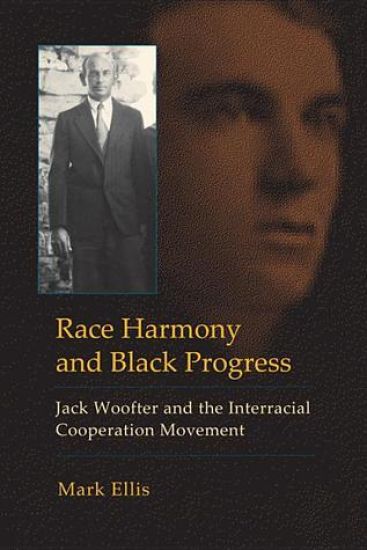
Race Harmony and Black Progress

Race Harmony and Black Progress

Mark Ellis

Indiana University Press
2013
sidottu
Founded by white males, the interracial cooperation movement flourished in the American South in the years before the New Deal. The movement sought local dialogue between the races, improvement of education, and reduction of interracial violence, tending the flame of white liberalism until the emergence of white activists in the 1930s and after. Thomas Jackson (Jack) Woofter Jr., a Georgia sociologist and an authority on American race relations, migration, rural development, population change, and social security, maintained an unshakable faith in the "effectiveness of cooperation rather than agitation." Race Harmony and Black Progress examines the movement and the tenacity of a man who epitomized its spirit and shortcomings. It probes the movement's connections with late 19th-century racial thought, Northern philanthropy, black education, state politics, the Du Bois-Washington controversy, the decline of lynching, the growth of the social sciences, and New Deal campaigns for social justice.
A Chord in Time: The Evolution of the Augmented Sixth from Monteverdi to Mahler
For centuries, the augmented sixth sonority has fascinated composers and intrigued music analysts. Here, Dr Mark Ellis presents a series of musical examples illustrating the 'evolution' of the augmented sixth and the changing contexts in which it can be found. Surprisingly, the sonority emerged from one of the last remnants of modal counterpoint to survive into the tonal era: the Phrygian Cadence. In the Baroque period, the 'terrible dissonance' was nearly always associated with negative textual imagery. Charpentier described the augmented sixth as 'poignantly expressive'. J. S. Bach considered an occurrence of the chord in one of his forebear's motets 'remarkably bold'. During Bach's composing lifetime, the augmented sixth evolved from a relatively rare chromaticism to an almost commonplace element within the tonal spectrum; the chord reflects particular chronological and stylistic strata in his music. Theorists began cautiously to accept the chord, but its inversional possibilities proved particularly contentious, as commentaries by writers as diverse as Muffat, Marpurg and Rousseau reveal. During the eighteenth century, the augmented sixth became increasingly significant in instrumental repertoires - it was perhaps Vivaldi who first liberated the chord from its negative textual associations. By the later eighteenth century, the chord began to function almost as a 'signpost' to indicate important structural boundaries within sonata form. The chord did not, however, entirely lose its darker undertone: it signifies, for example, the theme of revenge in Mozart's Don Giovanni. Romantic composers uncovered far-reaching tonal ambiguities inherent in the augmented sixth. Chopin's Nocturnes often seem beguilingly simple, but the surface tranquillity masks the composer's strikingly original harmonic experiments. Wagner's much-analyzed 'Tristan Chord' resolves (according to some theorists) on an augmented sixth. In Tristan und Isolde, the chord's mercurial character - its tonal ambivalence - symbolizes the 'distortion of reality' induced by the Magic Potion. As Schoenberg wrote, the chord of the augmented sixth stands 'on the fringes of tonality'. The book concludes with a discussion of the role of the chord in the decay of the tonal system, and its 'afterlife' in the post-tonal era. This book will appeal to music analysts by providing a chronological framework for further stylistic and harmonic analysis. To ensure its accessibility in graduate classes, the author includes a straightforward introduction to the augmented sixth and its theoretical background.

The Bilateral Dimensions of Transformational Leadership (University Leadership Edition)
Used as a university textbook, this groundbreaking research by Dr. Mark Ellis examines the bilateral dimensions of transformational leadership within the context of higher education. Since its inception over 30 years ago, transformational leadership has rapidly become known as an effective leadership model. The positive effects of transformational leadership on organizational constituency have been clearly supported by research. However, the inner dimensions of transformational leadership have undergone extremely limited empirical study. The major components of transformational leadership consist of inspirational motivation, idealized influence, intellectual stimulation, and individualized consideration. This research further investigates transformational leadership beyond these four characteristics by focusing on two variables identified as bilateral dimensions.
Excel Essentials

Excel Essentials

Bengt Edhlund; Mark Ellis

Lulu.com
2006
pokkari
Microsoft Excel is the worlds most widely used worksheet software. It forms part of the Microsoft Office package which is often regarded as the industry standard. This book is aimed at those with basic knowledge of all Microsoft Office products but can be used by those with no previous experience. Parts of this book will also help those who use Excel regularly but are unaware of many of Excel's features to evolve from a fairly basic or adequate user to a reasonably advanced user. It includes chapters on pivottable reports, macros, charts, formatting and interfacing with Microsoft Office and other software programs. For use with English versions of Microsoft Excel 95, 97, 2000, 2002(XP) and 2003 running on Windows 95, 98, NT4, ME, 2000 and XP.