Kirjojen hintavertailu. Mukana 12 595 353 kirjaa ja 12 kauppaa.

Kirjailija

Mark Epstein

Kirjat ja teokset yhdessä paikassa: 11 kirjaa, julkaisuja vuosilta 1999-2026, suosituimpien joukossa Thoughts Without a Thinker: Psychotherapy from a Buddhist Perspective. Vertaile teosten hintoja ja tarkista saatavuus suomalaisista kirjakaupoista.

11 kirjaa

Kirjojen julkaisuhaarukka 1999-2026.

The Zen of Therapy: Uncovering a Hidden Kindness in Life
"A warm, profound and cleareyed memoir. . . this wise and sympathetic book's lingering effect is as a reminder that a deeper and more companionable way of life lurks behind our self-serious stories."--Oliver Burkeman, New York Times Book ReviewDrawing on decades of personal and professional experience, Dr. Mark Epstein considers how his practice of psychotherapy and meditation can be used in tandem to lead his patients, and himself, to greater awareness and fulfillment. For much of his career, Dr. Mark Epstein kept his beliefs as a Buddhist separate from his work as a psychiatrist. But as he became more forthcoming with his patients about his personal spiritual leanings, he was surprised to find how many of them were eager to learn more. The divisions between the psychological, emotional, and the spiritual, he soon realized, were not as distinct as one might think. In The Zen of Therapy, Dr. Epstein reflects on a year's worth of selected sessions with his patients and observes how, in a given hour, his Buddhist background influences his work. He emphasizes how Western therapy can be considered a two-person meditation, and how mindfulness, much like a good therapist, can "hold" awareness, creating the necessary conditions for inner peace. Throughout this deeply personal and wise inquiry, Dr. Epstein illuminates the therapy relationship as a spiritual friendship, and reveals how a therapist can help us realize that there is something magical running through our fraught lives. For when we understand how readily we have misinterpreted ourselves, when we touch the ground of our own being, we come home.
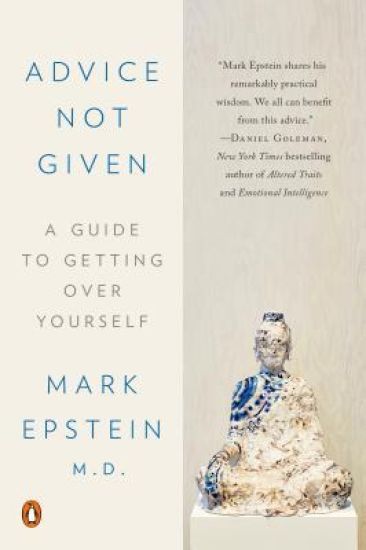
Advice Not Given: A Guide to Getting Over Yourself
Our ego, and its accompanying sense of nagging self-doubt, is one affliction we all share. And while our ego claims to have our best interests at heart, in its never-ending pursuit of attention and power, it sabotages the very goals it sets to achieve. In Advice Not Given, renowned psychiatrist and author Dr Mark Epstein reveals how Buddhism and Western psychotherapy both identify the ego as the limiting factor in our wellbeing. With great insight, Epstein offers readers a how-to guide grounded in two traditions devoted to maximizing the human potential for living a better life. Epstein uses the Eightfold Path, eight areas of self-reflection that Buddhists believe necessary for enlightenment, as the structure of the book. When informed by the sensibility of Western psychotherapy, the principles of the Eightfold Path become a road map for spiritual and psychological growth. Breaking down the wall between East and West, Epstein brings a Buddhist sensibility to therapy and a therapist's practicality to Buddhism. Our ego is at once our biggest obstacle and our greatest hope. We can be at its mercy or we can learn to mould it. Completely unique and practical, Epstein's advice can be used by all, and will provide wise counsel in a confusing world.
How to Play Blues Bass

How to Play Blues Bass

Mark Epstein

Hal Leonard Corporation
2018
nidottu
(Bass Instruction). Explore various 12-bar blues forms, the shuffle feel, walking lines, box patterns, tone, turnarounds, passing tones, and transitions to establish a great blues groove with this book Use the accompanying audio to play along with a professional band in shuffle, slow blues, rhumba, and blues rock styles. You will also learn how to lock in with the drummer in order to complement the other instruments in an authentic blues band.
The Trauma of Everyday Life

The Trauma of Everyday Life

Mark Epstein

Hay House UK Ltd
2014
nidottu
Trauma does not just happen to a few unlucky people; it is the bedrock of our psychology. Death and illness touch us all, but even the everyday sufferings of loneliness and fear are traumatic. In The Trauma of Everyday Life renowned psychiatrist and author of Thoughts Without a Thinker Mark Epstein uncovers the transformational potential of trauma, revealing how it can be used for the mind's own development. Epstein finds throughout that trauma, if it doesn't destroy us, wakes us up to both our minds' own capacity and to the suffering of others. It makes us more human, caring and wise. It can be our greatest teacher, our freedom itself, and it is available to all of us. Western psychology teaches that if we understand the cause of trauma, we might move past it while many drawn to Eastern practices see meditation as a means of rising above, or distancing themselves from, their most difficult emotions. Both, Epstein argues, fail to recognize that trauma is an indivisible part of life and can be used as a tool for growth and an ever deeper understanding of change. When we regard trauma with this perspective, understanding that suffering is universal and without logic, our pain connects us to the world on a more fundamental level. Guided by the Buddha's life as a profound example of the power of trauma, Epstein's also closely examines his own experience and that of his psychiatric patients to help us all understand that the way out of pain is through it.
The Trauma of Everyday Life

The Trauma of Everyday Life

Mark Epstein

PENGUIN BOOKS
2014
nidottu
A revolutionary reexamination of trauma's role in the life journey, opening the door to growth and healing Trauma does not just happen to a few unlucky people; it is the bedrock of our psychology. Death and illness touch us all, but even the everyday sufferings of loneliness and fear are traumatic. In The Trauma of Everyday Life renowned psychiatrist and author of Thoughts Without a Thinker Mark Epstein uncovers the transformational potential of trauma, revealing how it can be used for the mind's own development. Western psychology teaches that if we understand the cause of trauma, we might move past it while many drawn to Eastern practices see meditation as a means of rising above, or distancing themselves from, their most difficult emotions. Both, Epstein argues, fail to recognize that trauma is an indivisible part of life and can be used as a lever for growth and an ever deeper understanding of change. When we regard trauma with this perspective, understanding that suffering is universal and without logic, our pain connects us to the world on a more fundamental level. The way out of pain is through it. Epstein's discovery begins in his analysis of the life of Buddha, looking to how the death of his mother informed his path and teachings. The Buddha's spiritual journey can be read as an expression of primitive agony grounded in childhood trauma. Yet the Buddha's story is only one of many in The Trauma of Everyday Life. Here, Epstein looks to his own experience, that of his patients, and of the many fellow sojourners and teachers he encounters as a psychiatrist and Buddhist. They are alike only in that they share in trauma, large and small, as all of us do. Epstein finds throughout that trauma, if it doesn't destroy us, wakes us up to both our minds' own capacity and to the suffering of others. It makes us more human, caring, and wise. It can be our greatest teacher, our freedom itself, and it is available to all of us. Check out Epstein's latest book, Advice Not Given: A Guide to Getting Over Yourself.
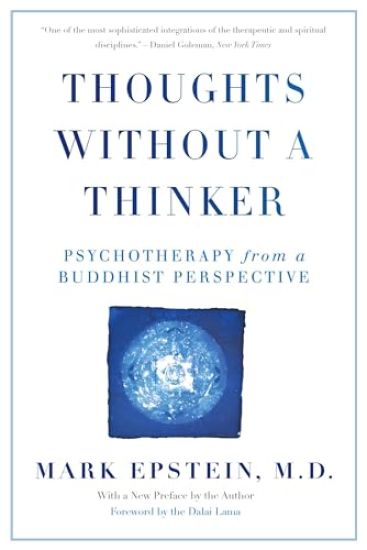
Thoughts Without A Thinker

Thoughts Without A Thinker

Mark Epstein

Basic Books
2013
pokkari
The line between psychology and spirituality has blurred, as clinicians, their patients, and religious seekers explore new perspectives on the self. A landmark contribution to the field of psychoanalysis, Thoughts Without a Thinker describes the unique psychological contributions offered by the teachings of Buddhism. Drawing upon his own experiences as a psychotherapist and meditator, New York-based psychiatrist Mark Epstein lays out the path to meditation-inspired healing, and offers a revolutionary new understanding of what constitutes a healthy emotional life.
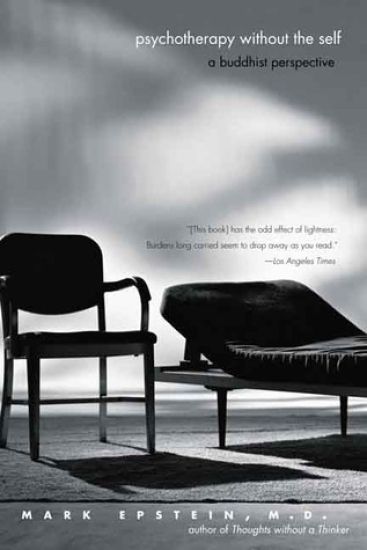
Psychotherapy without the Self

Psychotherapy without the Self

Mark Epstein

Yale University Press
2008
pokkari
Insights on the interface between Buddhist teachings and Western psychotherapy by the best-selling author of Thoughts without a Thinker Immersed in Buddhist psychology prior to studying Western psychiatry, Dr. Mark Epstein first viewed Western therapeutic approaches through the lens of the East. This posed something of a challenge. Although both systems promise liberation through self-awareness, the central tenet of Buddha's wisdom is the notion of no-self, while the central focus of Western psychotherapy is the self. This book, which includes writings from the past twenty-five years, wrestles with the complex relationship between Buddhism and psychotherapy and offers nuanced reflections on therapy, meditation, and psychological and spiritual development. A best-selling author and popular speaker, Epstein has long been at the forefront of the effort to introduce Buddhist psychology to the West. His unique background enables him to serve as a bridge between the two traditions, which he has found to be more compatible than at first thought. Engaging with the teachings of the Buddha as well as those of Freud and Winnicott, he offers a compelling look at desire, anger, and insight and helps reinterpret the Buddha's Four Noble Truths and centralconcepts such as egolessness and emptiness in the psychoanalytic language of our time.
Open to Desire

Open to Desire

Mark Epstein

Gotham Books
2006
nidottu
"A masterpiece. . . . It teaches us how not to fear and repress, but to rechannel and harness the most powerful energies of life toward freedom and bliss." --ROBERT THURMAN It is common in both Buddhism and Freudian psychoanalysis to treat desire as if it is the root of all suffering and problems, but psychiatrist Mark Epstein believes this to be a grave misunderstanding.In his controversial defense of desire, he makes clear that it is the key to deepening intimacy with ourselves, each other, and our world.Proposing that spiritual attainment does not have to be detached from intimacy or eroticism, Open to Desire begins with an exploration of the state of dissatisfaction that causes us to cling to irrational habits. Dr. Epstein helps readers overcome their own fears of desire so that they can more readily bridge the gap between self and other, cope with feelings of incompletion, and get past the perception of others as objects. Freed from clinging and shame, desire's spiritual potential can then be opened up.