Kirjojen hintavertailu. Mukana 12 595 353 kirjaa ja 12 kauppaa.

Kirjailija

Mark Franko

Kirjat ja teokset yhdessä paikassa: 13 kirjaa, julkaisuja vuosilta 2002-2026, suosituimpien joukossa Text as Dance. Vertaile teosten hintoja ja tarkista saatavuus suomalaisista kirjakaupoista.

13 kirjaa

Kirjojen julkaisuhaarukka 2002-2026.

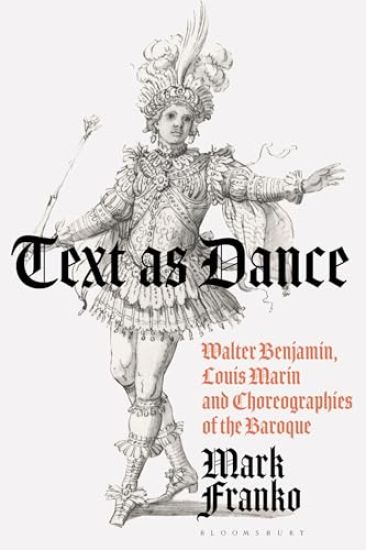
Text as Dance

Text as Dance

Mark Franko

BLOOMSBURY PUBLISHING PLC
2026
nidottu
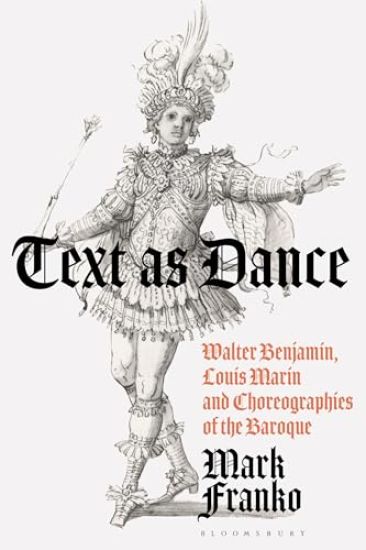
This book offers a groundbreaking investigation into issues of gender, power and the representation of sovereignty in French Baroque court ballet – and in today’s performances that recall them. Mark Franko uses powerful interpretive tools derived from historiography and critical theory, especially the work of German-Jewish philosopher Walter Benjamin, to offer the reader both a historical and a theoretical interpretation of this genre of dance in France (c. 1615–1654), as well as its aftermath and legacy today. Through doing so, he reaches conclusions about how sovereignty and power were both perceived by viewers at the time and how they were represented through dance, given that it was the noble class who devised and performed court ballets. He enquires into the role of choreography and theatricality as potentially critical forces operating at the heart of sovereignty. Franko places the work of Louis Marin on power, representation and movement in French Baroque painting and performance in juxtaposition to that of Benjamin on theater. Other historians whose work is prominent in this study are Ernst Kantorowicz, Michel Foucault and José Antonio Maravall. With wide breadth in the work of historians, philosophers, political scientists, critical theorists, musicologists and dance historians, this is the culmination of a career’s-worth of scholarship and research in the field.
Text as Dance

Text as Dance

Mark Franko

BLOOMSBURY PUBLISHING PLC
2025
sidottu
This book offers a groundbreaking investigation into issues of gender, power and the representation of sovereignty in French Baroque court ballet – and in today’s performances that recall them. Mark Franko uses powerful interpretive tools derived from historiography and critical theory, especially the work of German-Jewish philosopher Walter Benjamin, to offer the reader both a historical and a theoretical interpretation of this genre of dance in France (c. 1615–1654), as well as its aftermath and legacy today. Through doing so, he reaches conclusions about how sovereignty and power were both perceived by viewers at the time and how they were represented through dance, given that it was the noble class who devised and performed court ballets. He enquires into the role of choreography and theatricality as potentially critical forces operating at the heart of sovereignty. Franko places the work of Louis Marin on power, representation and movement in French Baroque painting and performance in juxtaposition to that of Benjamin on theater. Other historians whose work is prominent in this study are Ernst Kantorowicz, Michel Foucault and José Antonio Maravall. With wide breadth in the work of historians, philosophers, political scientists, critical theorists, musicologists and dance historians, this is the culmination of a career’s-worth of scholarship and research in the field.
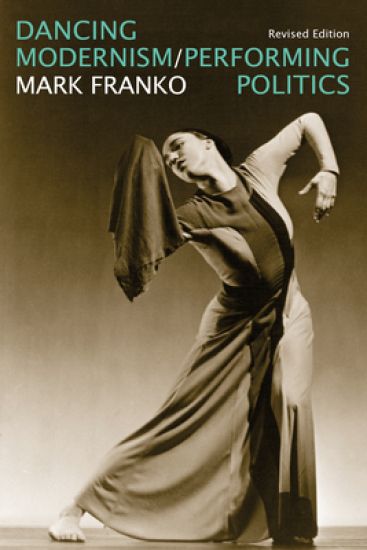
Dancing Modernism / Performing Politics

Dancing Modernism / Performing Politics

Mark Franko

INDIANA UNIVERSITY PRESS
2023
sidottu
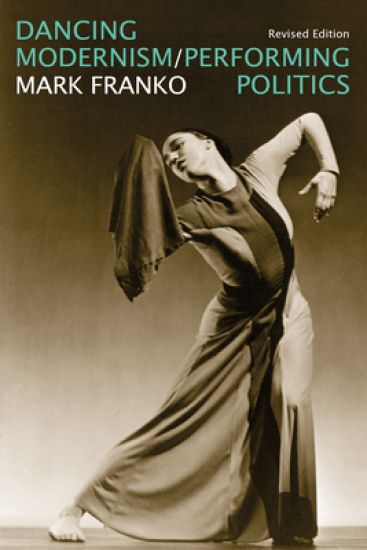
In the much-anticipated update to a classic in dance studies, Mark Franko analyzes the political aspects of North American modern dance in the 20th century. A revisionary account of the evolution of modern dance, this revised edition of Dancing Modernism / Performing Politics features a foreword by Juan Ignacio Vallejos on Franko's career, a new preface, a new chapter on Yvonne Rainer, and an appendix of left-wing dance theory articles from the 1930s. Questioning assumptions that dancing reflects culture, Franko employs a unique interdisciplinary approach to dance analysis that draws from cultural theory, feminist studies, and sexual, class, and modernist politics. Franko also highlights the stories of such dancers as Isadora Duncan, Martha Graham, and even revolutionaries like Douglas Dunn in order to upend and contradict ideas on autonomy and traditionally accepted modernist dance history. Revealing the captivating development of modern dance, this revised edition of Dancing Modernism / Performing Politics will fascinate anyone interested in the intersection of performance studies, history, and politics.
Dancing Modernism / Performing Politics

Dancing Modernism / Performing Politics

Mark Franko

INDIANA UNIVERSITY PRESS
2023
pokkari
In the much-anticipated update to a classic in dance studies, Mark Franko analyzes the political aspects of North American modern dance in the 20th century. A revisionary account of the evolution of modern dance, this revised edition of Dancing Modernism / Performing Politics features a foreword by Juan Ignacio Vallejos on Franko's career, a new preface, a new chapter on Yvonne Rainer, and an appendix of left-wing dance theory articles from the 1930s. Questioning assumptions that dancing reflects culture, Franko employs a unique interdisciplinary approach to dance analysis that draws from cultural theory, feminist studies, and sexual, class, and modernist politics. Franko also highlights the stories of such dancers as Isadora Duncan, Martha Graham, and even revolutionaries like Douglas Dunn in order to upend and contradict ideas on autonomy and traditionally accepted modernist dance history. Revealing the captivating development of modern dance, this revised edition of Dancing Modernism / Performing Politics will fascinate anyone interested in the intersection of performance studies, history, and politics.
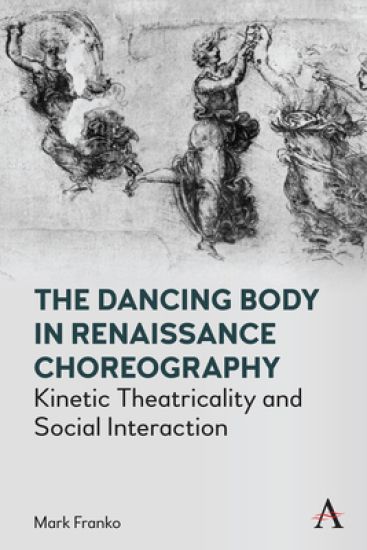
The Dancing Body in Renaissance Choreography
The Dancing Body in Renaissance Choreography problematizes the absence of the dancing body in treatises in order to reconstruct it through a series of intertextual readings triggered by Thoinot Arbeau’s definition of dance in his 1589 dance treatise, Orchesographie. The notion of the intertext as elaborated by Michael Riffaterre is used to understand a series of relationships between dance and other activities within which the historical dancing body emerges to the light of day. Arbeau’s discussion of dance as a mute rhetoric in the demonstrative genre points to the intertext of Quintilian’s The Oratorical Institution where the genus demonstrativum is explained as epideixis, the goal of which is to inspire confidence and charm the audience. The second intertext explored is that of civility as found in courtesy books where the posture of the body and the parameters of movement are outlined, converging in the gesture of the révérence. The categories of pose and movement are then read into the structure of the basse danse, the quintessential courtly social dance of the period. The relation of pose to movement or of stillness to mobility is further theorized through the terms of earlier Italian treatises, specifically in terms of fantasmata as used by Domenico da Piacenza.
The Fascist Turn in the Dance of Serge Lifar

The Fascist Turn in the Dance of Serge Lifar

Mark Franko

Oxford University Press Inc
2020
sidottu
Ukrainian dancer and choreographer Serge Lifar (1905-86) is recognized both as the modernizer of French ballet in the twentieth century and as the keeper of the flame of the classical tradition upon which the glory of French ballet was founded. Having migrated to France from Russia in 1923 to join Diaghilev's Ballets Russes, Lifar was appointed star dancer and ballet director at the Paris Opéra in 1930. Despite being rather unpopular with the French press at the start of his appointment, Lifar came to dominate the Parisian dance scene-through his publications as well as his dancing and choreography-until the end of the Second World War, reaching the height of his fame under the German occupation of Paris (1940-44). Rumors of his collaborationism having remained inconclusive throughout the postwar era, Lifar retired in 1958. This book not only reassesses Lifar's career, both aesthetically and politically, but also provides a broader reevaluation of the situation of dance-specifically balletic neoclassicism-in the first half of the twentieth century. The Fascist Turn in the Dance of Serge Lifar is the first book not only to discuss the resistance to Lifar in the French press at the start of his much-mythologized career, but also the first to present substantial evidence of Lifar's collaborationism and relate it to his artistic profile during the preceding decade. In examining the political significance of the critical discussion of Lifar's body and technique, author Mark Franko provides the ground upon which to understand the narcissistic and heroic images of Lifar in the 1930s as prefiguring the role he would play in the occupation. Through extensive archival research into unpublished documents of the era, police reports, the transcript of his postwar trial and rarely cited newspaper columns Lifar wrote, Franko reconstructs the dancer's political activities, political convictions, and political ambitions during the Occupation.
The Fascist Turn in the Dance of Serge Lifar

The Fascist Turn in the Dance of Serge Lifar

Mark Franko

Oxford University Press Inc
2020
nidottu
Ukrainian dancer and choreographer Serge Lifar (1905-86) is recognized both as the modernizer of French ballet in the twentieth century and as the keeper of the flame of the classical tradition upon which the glory of French ballet was founded. Having migrated to France from Russia in 1923 to join Diaghilev's Ballets Russes, Lifar was appointed star dancer and ballet director at the Paris Opéra in 1930. Despite being rather unpopular with the French press at the start of his appointment, Lifar came to dominate the Parisian dance scene-through his publications as well as his dancing and choreography-until the end of the Second World War, reaching the height of his fame under the German occupation of Paris (1940-44). Rumors of his collaborationism having remained inconclusive throughout the postwar era, Lifar retired in 1958. This book not only reassesses Lifar's career, both aesthetically and politically, but also provides a broader reevaluation of the situation of dance-specifically balletic neoclassicism-in the first half of the twentieth century. The Fascist Turn in the Dance of Serge Lifar is the first book not only to discuss the resistance to Lifar in the French press at the start of his much-mythologized career, but also the first to present substantial evidence of Lifar's collaborationism and relate it to his artistic profile during the preceding decade. In examining the political significance of the critical discussion of Lifar's body and technique, author Mark Franko provides the ground upon which to understand the narcissistic and heroic images of Lifar in the 1930s as prefiguring the role he would play in the occupation. Through extensive archival research into unpublished documents of the era, police reports, the transcript of his postwar trial and rarely cited newspaper columns Lifar wrote, Franko reconstructs the dancer's political activities, political convictions, and political ambitions during the Occupation.
I Want to Go to Heaven but I Don't Want to Die: Poems by Mark Franko
Take a journey through author Mark Franko's observations and inspirations in I Want to Go to Heaven but I Don't Want to Die, his collection of poetry that displays many themes, including life's great mysteries, God and faith, and family and friends. About the AuthorMark Franko is a graduate of Wichita State University, with a B.S. in Medical Technology. He worked 34 years in the laboratory profession and is now 70 years old, retired and living in Hutchinson, Kansas. His hobbies include golf, poetry, and music.
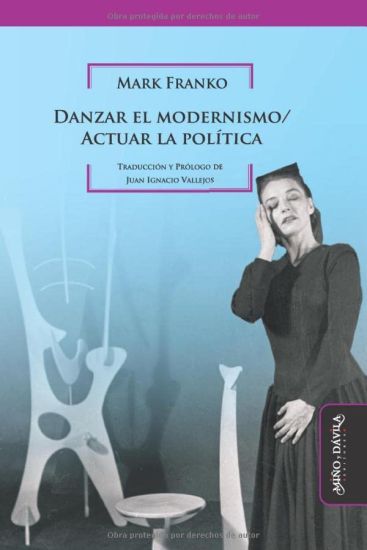
Danzar el modernismo / Actuar la política

Danzar el modernismo / Actuar la política

Mark Franko

Mino y Davila Editores
2019
nidottu
Los ensayos agrupados en este libro se proponen contribuir a una revisi n de la historia de la danza moderna estadounidense en su relaci n con el modernismo est tico. En este sentido, conforman una introducci n a la historia de la danza en ese pa s, representada por figuras can nicas como Isadora Duncan, Martha Graham, Merce Cunningham o Yvonne Rainer, pero tambi n una reflexi n cr tica sobre la historiograf a de la danza y la relaci n entre arte y pol tica. En el an lisis propuesto por Mark Franko, el modernismo est tico deja de ser una metanarrativa hist rica para transformarse en un dispositivo, es decir, un ordenamiento del movimiento de los cuerpos plausible de ser "manipulado" desde la pr ctica. De este modo, las evoluciones est ticas devienen el fruto de luchas cin ticas. La investigaci n devela la genealog a del encapsulamiento formal de la emoci n desde los a os 1930s hasta la actualidad. En este sentido, responde a una pregunta crucial: c mo llega a volverse imperceptible la influencia de la teor a est tica de la izquierda revolucionaria de principios del siglo XX en la danza moderna? De qu modo una danza engendrada a partir de una pol tica de la emoci n arriba a una est tica de la indiferencia? La respuesta ofrecida se relaciona con una tensi n caracter stica de la danza hist rica estadounidense, aquella que reside en el v nculo entre la pol tica de clase y la pol tica de g nero. Finalmente, Mark Franko persigue el objetivo de recuperar la emoci n como pr ctica cr tica, una postura que va a contracorriente del discurso hegem nico sobre lo contempor neo en la danza.
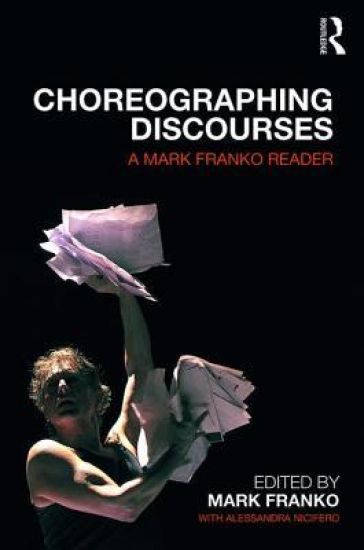
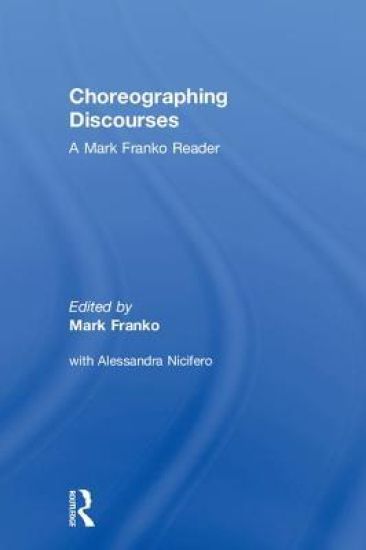
Choreographing Discourses

Choreographing Discourses

Mark Franko

CRC Press Inc
2018
nidottu
Choreographing Discourses brings together essays originally published by Mark Franko between 1996 and the contemporary moment. Assembling these essays from international, sometimes untranslated sources and curating their relationship to a rapidly changing field, this Reader offers an important resource in the dynamic scholarly fields of Dance and Performance Studies.What makes this volume especially appropriate for undergraduate and graduate teaching is its critical focus on twentieth- and twenty-first-century dance artists and choreographers – among these, Oskar Schlemmer, Merce Cunningham, Kazuo Ohno, William Forsythe, Bill T. Jones, and Pina Bausch, some of the most high-profile European, American, and Japanese artists of the past century. The volume’s constellation of topics delves into controversies that are essential turning points in the field (notably, Still/Here and Paris is Burning), which illuminate the spine of the field while interlinking dance scholarship with performance theory, film, visual, and public art.The volume contains the first critical assessments of Franko’s contribution to the field by André Lepecki and Gay Morris, and an interview incorporating a biographical dimension to the development of Franko’s work and its relation to his dance and choreography. Ultimately, this Reader encourages a wide scope of conversation and engagement, opening up core questions in ethics, embodiment, and performativity.
Choreographing Discourses

Choreographing Discourses

Mark Franko

CRC Press Inc
2018
sidottu
Choreographing Discourses brings together essays originally published by Mark Franko between 1996 and the contemporary moment. Assembling these essays from international, sometimes untranslated sources and curating their relationship to a rapidly changing field, this Reader offers an important resource in the dynamic scholarly fields of Dance and Performance Studies.What makes this volume especially appropriate for undergraduate and graduate teaching is its critical focus on twentieth- and twenty-first-century dance artists and choreographers – among these, Oskar Schlemmer, Merce Cunningham, Kazuo Ohno, William Forsythe, Bill T. Jones, and Pina Bausch, some of the most high-profile European, American, and Japanese artists of the past century. The volume’s constellation of topics delves into controversies that are essential turning points in the field (notably, Still/Here and Paris is Burning), which illuminate the spine of the field while interlinking dance scholarship with performance theory, film, visual, and public art.The volume contains the first critical assessments of Franko’s contribution to the field by André Lepecki and Gay Morris, and an interview incorporating a biographical dimension to the development of Franko’s work and its relation to his dance and choreography. Ultimately, this Reader encourages a wide scope of conversation and engagement, opening up core questions in ethics, embodiment, and performativity.
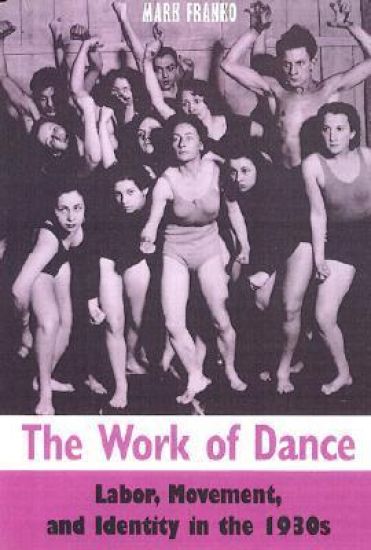
The Work of Dance

The Work of Dance

Mark Franko

Wesleyan University Press
2002
nidottu
In this insightful new book, Mark Franko explores the many genres of theatrical dancing during the radical decade of the 1930s and their relationship to labor movements, including Fordist and unionist organizational structures, the administrative structures of the Federal Dance and Theatre Project, the International Ladies Garment Workers Union, and the Communist Party. Franko shows how the structures of labor organization were reproduced and acted out - but also profoundly reasoned through in corporeal terms - by choreography and performance of the proletarian mass dance, the chorus line of the Ziegfeld Follies and the reflexive backstage musical film, Martha Graham's modern dance, the revolutionary dance movement of the proletarian avant-garde, African-American "ethnic" opera-ballet, and Lincoln Kirstein's "American" ballet. The contributions of many important personalities of American theatrical, visual and literary culture are included in this study. Franko's focus extends from the direct impact of performances on audiences to the reviewing, reporting and photography of print journalism.