Kirjojen hintavertailu. Mukana 12 595 353 kirjaa ja 12 kauppaa.

Kirjailija

Mark Freeman

Kirjat ja teokset yhdessä paikassa: 44 kirjaa, julkaisuja vuosilta 1994-2025, suosituimpien joukossa Do I Look at You with Love?. Vertaile teosten hintoja ja tarkista saatavuus suomalaisista kirjakaupoista.

44 kirjaa

Kirjojen julkaisuhaarukka 1994-2025.

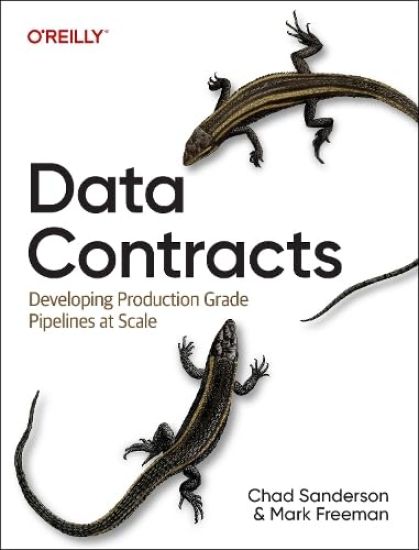
Data Contracts

Data Contracts

Chad Sanderson; Mark Freeman

O'Reilly Media
2025
nidottu
Poor data quality can cause major problems for data teams, from breaking revenue-generating data pipelines to losing the trust of data consumers. Despite the importance of data quality, many data teams still struggle to avoid these issues—especially when their data is sourced from upstream workflows outside of their control. The solution: data contracts. Data contracts enable high-quality, well-governed data assets by documenting expectations of the data, establishing ownership of data assets, and then automatically enforcing these constraints within the CI/CD workflow.This practical book introduces data contract architecture with a clear definition of data contracts, explains why the data industry needs them, and shares real-world use cases of data contracts in production. In addition, you'll learn how to implement components of the data contract architecture and understand how they're used in the data lifecycle. Finally, you'll build a case for implementing data contracts in your organization.Authors Chad Sanderson and Mark Freeman will help you:Explore real-world applications of data contracts within the industryUnderstand how to apply each component of this architecture, such as CI/CD, monitoring, version control data, and moreLearn how to implement data contracts using open source toolsExamine ways to resolve data quality issues using data contract architectureMeasure the impact of implementing a data contract in your organizationDevelop a strategy to determine how data contracts will be used in your organization
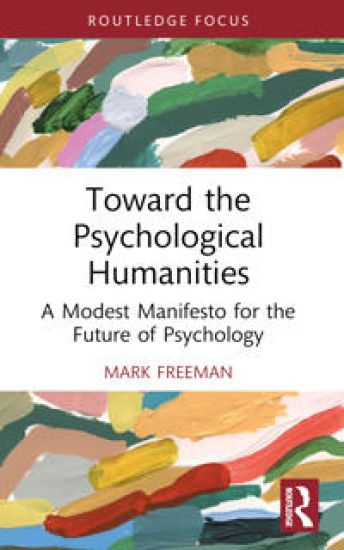
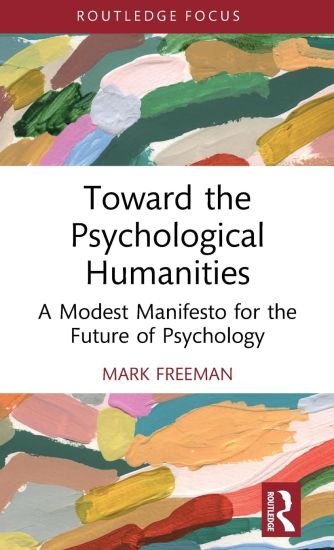
Toward the Psychological Humanities

Toward the Psychological Humanities

Mark Freeman

TAYLOR FRANCIS LTD
2025
nidottu
Mark Freeman’s inspiring account of the burgeoning field of the psychological humanities presents a clear and compelling vision of what the discipline of psychology might become.Valuable though the scientific perspective has been for advancing the discipline, Freeman maintains that significant dimensions of the human experience elude this perspective and call for an entirely different kind of psychology, one more closely tied to the arts and humanities. Issuing his call for the psychological humanities in the form of a ten chapter "manifesto," Freeman’s groundbreaking book offers a comprehensive rationale for a more inclusive, pluralistic, and artful approach to exploring the psychological world in all of its potential complexity, obscurity, and beauty.Engaging and accessible, this bold, provocative book is destined to spark significant discussion and debate in audiences including advanced undergraduates, postgraduates, and professionals in the field of psychology with interests in theoretical and philosophical psychology, history of psychology, clinical psychology, humanistic psychology, and qualitative psychology. It will also be welcomed by those in philosophy, literature, and the arts, as well as anyone intrigued by psychological life who may be interested in encountering a vital new approach to examining the human condition.
St Albans

St Albans

Mark Freeman

UNIVERSITY OF HERTFORDSHIRE PRESS
2023
nidottu
Mark Freeman’s classic history of St Albans, first published in 2008, has been substantially rewritten by the author and brought fully up to date, making it an invaluable guide to more than two thousand years of St Albans’s history. From the late Iron Age, when the new oppidum of Verlamion emerged at the site of modern St Albans, to plans to develop the city’s unique ‘brand’ in the 2010s, this is a scholarly yet highly readable account of St Albans from pre-Roman times to the present day. The Roman settlement of Verulamium grew out of Verlamion soon after the Roman invasion; in 60 CE it was attacked during Boudica’s great uprising against Roman rule, along with Colchester and London. Becoming one of the most important towns in Roman Britain and the site of Britain’s first Christian martyrdom, Verulamium later took the martyr’s name as its own, the abbey dedicated to the saint among the most significant religious houses of medieval England. For many in St Albans, the long period of conflict between the abbey and the civic authorities would have cast a shadow over their lives, but the history of St Albans is also the story of political upheavals that beset all England through the centuries, as experienced by the citizens of a rapidly evolving town. Like many other places, it was touched by the Norman conquest, the Wars of the Roses and the civil wars. The emergence of urban self-government in early modern St Albans provides a case study of a process that happened throughout the country. The same is true for the account of St Albans’s suburbanisation and the emergence of a commuter population fostered by the railways in the nineteenth century, the growth and decline of the local manufacturing economy, and its participation in the growth of mass education, consumerism and democratic politics. At every point in St Albans’s history, two key themes play out: the proximity of London, and an awareness of the significance of its own history. The past is a powerful resource, helping a community to understand the events that have made it what it is. That process is exemplified in this masterful volume.
Toward the Psychological Humanities

Toward the Psychological Humanities

Mark Freeman

TAYLOR FRANCIS LTD
2023
sidottu
Mark Freeman’s inspiring account of the burgeoning field of the psychological humanities presents a clear and compelling vision of what the discipline of psychology might become.Valuable though the scientific perspective has been for advancing the discipline, Freeman maintains that significant dimensions of the human experience elude this perspective and call for an entirely different kind of psychology, one more closely tied to the arts and humanities. Issuing his call for the psychological humanities in the form of a ten chapter "manifesto," Freeman’s groundbreaking book offers a comprehensive rationale for a more inclusive, pluralistic, and artful approach to exploring the psychological world in all of its potential complexity, obscurity, and beauty.Engaging and accessible, this bold, provocative book is destined to spark significant discussion and debate in audiences including advanced undergraduates, postgraduates, and professionals in the field of psychology with interests in theoretical and philosophical psychology, history of psychology, clinical psychology, humanistic psychology, and qualitative psychology. It will also be welcomed by those in philosophy, literature, and the arts, as well as anyone intrigued by psychological life who may be interested in encountering a vital new approach to examining the human condition.
Entrena Tu Mente / The Mind Workout
Un programa de ejercicios en el hogar para mejorar tu salud mental y tu estado f sico.Es bien sabido que si queremos mantener nuestros cuerpos en forma, debemos realizar ejercicio de manera regular. Pero cuando se trata de nuestra salud mental, pocos nos tomamos el tiempo para mantenerla y mejorarla. Por alguna raz n, esperamos estar en gran forma mental sin hacer ning n trabajo. Y cuando nos damos cuenta de que tenemos dificultades, buscamos una soluci n r pida y f cil en lugar de desarrollar las habilidades que nos ayudar n en el futuro.Entrena tu mente combina atenci n plena, terapia conductual cognitiva (TCC) y terapia de aceptaci n y compromiso (ACT), para delinear veinte pasos f ciles de seguir que puedes practicar para liberarte de las formas de pensar y comportarte que causan desaf os de salud mental en tu vida; desde eliminar las compulsiones que causan incertidumbre, ansiedad y angustia hasta aliviar el estr s y la distracci n.El entrenamiento mental es la clave para pasar de una vida fren tica y basada en la ansiedad a una que se basa en tus valores fundamentales. Te har sentir mentalmente m s fuerte, m s en forma y mejor equipado para navegar por las complejidades de la vida cotidiana.ENGLISH DESCRIPTION A ground-breaking new method for building better mental health and fitness It's well known that if you want to keep your body fit, you must do some regular exercise. But when it comes to our mental health, few of us take the time to maintain and improve it. For some reason, we expect to be in great mental shape without doing any work. And when we realize we're struggling, we look for a quick and easy fix instead of developing the skills that will help us in the future. Enter The Mind Workout - a home exercise program for improving your mental health and fitness. Developed as a result of Mark Freeman's own recovery from mental illness, The Mind Workout combines mindfulness, Cognitive Behavioural Therapy (CBT) and Acceptance and Commitment Therapy (ACT). It outlines twenty easy-to-follow steps you can take to free yourself from the ways of thinking and behaving that cause mental health challenges in your life - from cutting out the compulsions that cause uncertainty, anxiety and distress to relieving stress and distraction. The Mind Workout is the key to making the switch from a frenetic, anxiety-driven life to one that's based on your core values. It will leave you feeling mentally stronger, fitter and better equipped to navigate the complexities of everyday life.
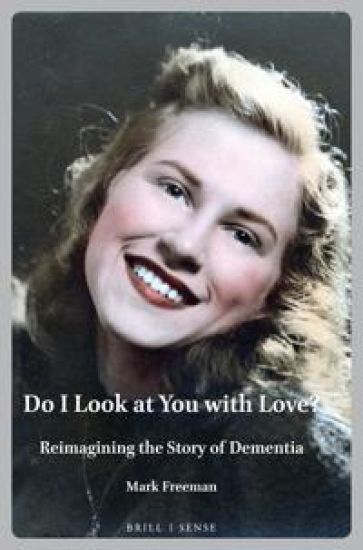
Do I Look at You with Love?
Do I Look at You with Love? were the words uttered by Mark Freeman’s mother when she learned, once again, that he was her son. This book explores the experience of dementia as it transpired during the course of the final twelve years of her life, from the time of her diagnosis until her death in 2016 at age 93. As a longtime student of memory, identity, and narrative, as well as the son of a woman with dementia, he had a remarkable opportunity to try to understand and tell her story. Much of the story is tragic. But there were other periods and other dimensions of relationship that were beautiful and that could not have emerged without her very affliction. In the midst of affliction there were gifts, arriving unbidden, that served to alert Freeman and his family to what is most precious and real. These are part of the story too. Part narrative psychology, part memoir, part meditation on the beauty and light that might be found amidst the ravages of time and memory, Freeman’s moving story is emblematic of nothing less than the bittersweet reality of life itself.
Do I Look at You with Love?: Reimagining the Story of Dementia
Do I Look at You with Love? were the words uttered by Mark Freeman's mother when she learned, once again, that he was her son. This book explores the experience of dementia as it transpired during the course of the final twelve years of her life, from the time of her diagnosis until her death in 2016 at age 93. As a longtime student of memory, identity, and narrative, as well as the son of a woman with dementia, he had a remarkable opportunity to try to understand and tell her story. Much of the story is tragic. But there were other periods and other dimensions of relationship that were beautiful and that could not have emerged without her very affliction. In the midst of affliction there were gifts, arriving unbidden, that served to alert Freeman and his family to what is most precious and real. These are part of the story too. Part narrative psychology, part memoir, part meditation on the beauty and light that might be found amidst the ravages of time and memory, Freeman's moving story is emblematic of nothing less than the bittersweet reality of life itself.
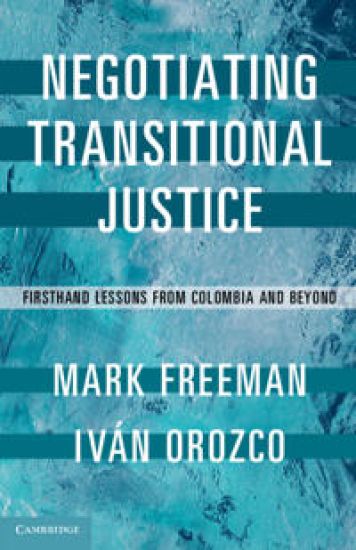
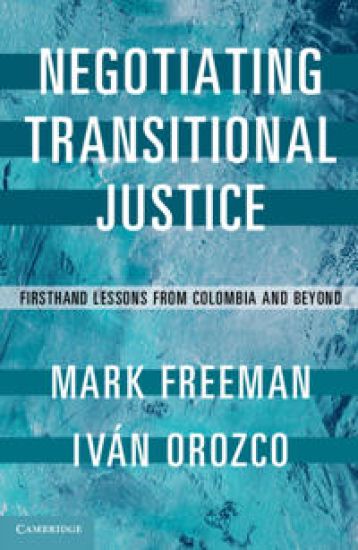
Negotiating Transitional Justice

Negotiating Transitional Justice

Mark Freeman; Iván Orozco

Cambridge University Press
2020
sidottu
The recent Colombian peace negotiations took the art and science of negotiating transitional justice to unprecedented levels of complexity. For decades, the Colombian government fought a bitter insurgency war against FARC guerrilla forces. After protracted negotiations, the two parties reached a peace deal that took account of the rights of victims. As first-hand participants in the talks, and principal advisers to the Colombia government, Mark Freeman and Iván Orozco offer a unique account of the mechanics through which accountability issues were addressed. Drawing from this case study and other global experiences, Freeman and Orozco offer a comprehensive theoretical and practical conception of what makes the 'devil's dilemma' of negotiating peace with justice implausible but feasible.
Negotiating Transitional Justice

Negotiating Transitional Justice

Mark Freeman; Iván Orozco

Cambridge University Press
2020
pokkari
The recent Colombian peace negotiations took the art and science of negotiating transitional justice to unprecedented levels of complexity. For decades, the Colombian government fought a bitter insurgency war against FARC guerrilla forces. After protracted negotiations, the two parties reached a peace deal that took account of the rights of victims. As first-hand participants in the talks, and principal advisers to the Colombia government, Mark Freeman and Iván Orozco offer a unique account of the mechanics through which accountability issues were addressed. Drawing from this case study and other global experiences, Freeman and Orozco offer a comprehensive theoretical and practical conception of what makes the 'devil's dilemma' of negotiating peace with justice implausible but feasible.
You Are Not a Rock: A Step-By-Step Guide to Better Mental Health (for Humans)
Mental health is . . . being yourself. A prescriptive and positive guide, illustrated with line drawings, making the case that mental well-being, like physical health, can be strengthened over time and with specific techniques We all want to feel less anxiety, guilt, anger and sadness. We want to obsess less and be less lonely, free ourselves from our demons, compulsive habits, and stress. But as humans (unlike rocks) we experience all of these. And paradoxically, trying to avoid and control them only makes things worse. Having struggled with serious mental illness for many years himself, Mark Freeman has become a dedicated mental-health advocate and coach. He makes the case that instead of trying to feel less and avoid pain and stress, we need to build emotional fitness, especially our capacity for strength, balance and focus. With wit, compassion, and depth of experience and anecdotes, he shows that we can recover from many mental disorders, from mild to very serious, at all ages and stages of life, and even if other methods have failed. Freeman's innovative approach makes use of a range of therapeutic techniques, mindfulness training, peer support, humor, and common sense.
Rewriting the Self

Rewriting the Self

Mark Freeman

Routledge
2017
nidottu
Originally published in 1993. This book explores the process by which individuals reconstruct the meaning and significance of past experience. Drawing on the lives of such notable figures as St Augustine, Helen Keller and Philip Roth as well as on the combined insights of psychology, philosophy and literary theory, the book sheds light on the intricacies and dilemmas of self-interpretation in particular and interpretive psychological enquiry more generally.The author draws upon selected, mainly autobiographical, literary texts in order to examine concretely the process of rewriting the self. Among the issues addressed are the relationship of rewriting the self to the concept of development, the place of language in the construction of selfhood, the difference between living and telling about it, the problem of facts in life history narrative, the significance of the unconscious in interpreting the personal past, and the freedom of the narrative imagination. Alpha Sigma Nu National Book Award winner in 1994
Rewriting the Self

Rewriting the Self

Mark Freeman

Routledge
2015
sidottu
Originally published in 1993. This book explores the process by which individuals reconstruct the meaning and significance of past experience. Drawing on the lives of such notable figures as St Augustine, Helen Keller and Philip Roth as well as on the combined insights of psychology, philosophy and literary theory, the book sheds light on the intricacies and dilemmas of self-interpretation in particular and interpretive psychological enquiry more generally.The author draws upon selected, mainly autobiographical, literary texts in order to examine concretely the process of rewriting the self. Among the issues addressed are the relationship of rewriting the self to the concept of development, the place of language in the construction of selfhood, the difference between living and telling about it, the problem of facts in life history narrative, the significance of the unconscious in interpreting the personal past, and the freedom of the narrative imagination. Alpha Sigma Nu National Book Award winner in 1994
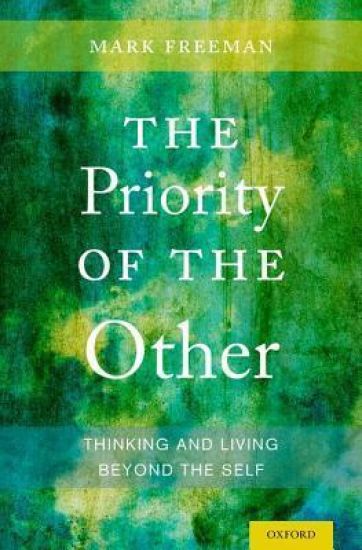
The Priority of the Other

The Priority of the Other

Mark Freeman

Oxford University Press Inc
2014
sidottu
Psychology, having come of age under the influence of Descartes and other champions of the thinking "I," has come to focus largely on what happens inside the self. This perspective expanded with the emergence of social psychology and, more recently, cultural psychology, but by and large, the field has taken an essentially ego-centric approach. Working from this basic premise, Mark Freeman proposes that we adopt a more "ex-centric" perspective, one that affirms the priority of the Other in shaping human experience. In speaking of the "Other," Freeman refers not only to other people, but also to those non-human "others," nature, art, God, that take us beyond the ego and bring us closer to the world. In speaking of the Other's priority, he insists that there is much in life that "comes before us." By thinking and living the priority of the Other, we can therefore become better attuned to both the world beyond us and the world within. At the heart of Freeman's perspective are two fundamental ideas. The first is that the Other is the primary source of meaning, inspiration, and existential nourishment. The second is that it is the primary source of our ethical energies, and that being responsive and responsible to the world beyond us is a defining feature of our humanity. There is a tragic side to Freeman's story, however. Enraptured though we may be by the Other, we frequently encounter it in a state of distraction and fail to receive the nourishment and inspiration it can provide. And responsive and responsible though we may sometimes be, it is perilously easy to retreat inward, to the needy ego. The challenge, therefore, is to break the spell of the "ordinary oblivion" that characterizes much of everyday life. The Priority of the Other can help us rise to the occasion.
Shareholder Democracies?

Shareholder Democracies?

Mark Freeman; Robin Pearson; James Taylor

University of Chicago Press
2011
sidottu
Understanding the challenges of corporate governance is central to our comprehension of the economic dynamics driving corporations today. Among the most important institutions in capitalism, corporations and joint-stock companies had their origins in Europe during the seventeenth and eighteenth centuries. And as they became more prevalent, the issue of internal governance became more pressing. At stake - and very much contested - were the allocation of rights and obligations among shareholders, directors, and managers. This comprehensive account of the development of corporate governance in Britain and Ireland during its earliest stages highlights the role of political factors in shaping the evolution of corporate governance as well as the important debates that arose about the division of authority and responsibility. Political and economic institutions confronted similar issues, including the need for transparency and accountability in decision making and the roles of electors and the elected, and this book emphasizes how political institutions - from election procedures to assemblies to annual reporting - therefore provided apt models upon which companies drew readily. Filling a gap in the literature on early corporate economy, this book provides insight into the origins of many ongoing modern debates.
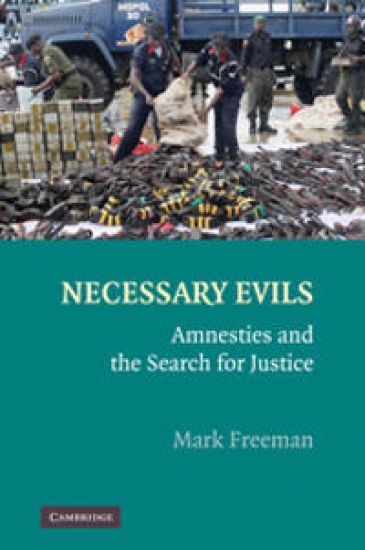
Necessary Evils

Necessary Evils

Mark Freeman

Cambridge University Press
2011
pokkari
This book is about amnesties for grave international crimes that states adopt in moments of transition or social unrest. The subject is naturally controversial, especially in the age of the International Criminal Court. The goal of this book is to reframe and revitalise the global debate on the subject and to offer an original framework for resolving amnesty dilemmas when they arise. Most literature and jurisprudence on amnesties deal with only a small subset of state practice and sidestep the ambiguity of amnesty's position under international law. This book addresses the ambiguity head on and argues that amnesties of the broadest scope are sometimes defensible when adopted as a last recourse in contexts of mass violence. Drawing on an extensive amnesty database, the book offers detailed guidance on how to ensure that amnesties extend the minimum leniency possible, while imposing the maximum accountability on the beneficiaries.