Kirjojen hintavertailu. Mukana 12 595 353 kirjaa ja 12 kauppaa.

Kirjailija

Mark G. McGowan

Kirjat ja teokset yhdessä paikassa: 7 kirjaa, julkaisuja vuosilta 1998-2024, suosituimpien joukossa The Imperial Irish. Vertaile teosten hintoja ja tarkista saatavuus suomalaisista kirjakaupoista.

7 kirjaa

Kirjojen julkaisuhaarukka 1998-2024.

Finding Molly Johnson

Finding Molly Johnson

Mark G. McGowan

MCGILL-QUEEN'S UNIVERSITY PRESS
2024
sidottu
Ireland’s Great Famine produced Europe’s worst refugee crisis of the nineteenth century. More than 1.5 million people left Ireland, many ending up in Canada. Among the most vulnerable were nearly 1,700 orphaned children who now found themselves destitute in an unfamiliar place. The story Canada likes to tell is that these orphans were adopted by benevolent families and that they readily adapted to their new lives, but this happy ending is mostly a myth.In Finding Molly Johnson Mark McGowan traces what happened to these children. In the absence of state support, the Catholic and Protestant churches worked together to become the orphans’ principal caregivers. The children were gathered, fed, schooled, and placed in family homes in Saint John, Quebec, Montreal, Bytown, Kingston, and Toronto. Yet most were not considered members of their placement families, but rather sources of cheap labour. Many fled their placements, joining thousands of other Irish refugees on the Canadian frontier searching for work, extended family, and the opportunity to begin a new life.Finding Molly Johnson revisits an important chapter of the Irish emigrant experience, revealing that the story of Canada’s acceptance of the famine orphans is a product of national myth-making that obscures both the hardship the children endured and the agency they ultimately expressed.
Finding Molly Johnson

Finding Molly Johnson

Mark G. McGowan

MCGILL-QUEEN'S UNIVERSITY PRESS
2024
nidottu
Ireland’s Great Famine produced Europe’s worst refugee crisis of the nineteenth century. More than 1.5 million people left Ireland, many ending up in Canada. Among the most vulnerable were nearly 1,700 orphaned children who now found themselves destitute in an unfamiliar place. The story Canada likes to tell is that these orphans were adopted by benevolent families and that they readily adapted to their new lives, but this happy ending is mostly a myth.In Finding Molly Johnson Mark McGowan traces what happened to these children. In the absence of state support, the Catholic and Protestant churches worked together to become the orphans’ principal caregivers. The children were gathered, fed, schooled, and placed in family homes in Saint John, Quebec, Montreal, Bytown, Kingston, and Toronto. Yet most were not considered members of their placement families, but rather sources of cheap labour. Many fled their placements, joining thousands of other Irish refugees on the Canadian frontier searching for work, extended family, and the opportunity to begin a new life.Finding Molly Johnson revisits an important chapter of the Irish emigrant experience, revealing that the story of Canada’s acceptance of the famine orphans is a product of national myth-making that obscures both the hardship the children endured and the agency they ultimately expressed.
The Imperial Irish

The Imperial Irish

Mark G. McGowan

McGill-Queen's University Press
2017
sidottu
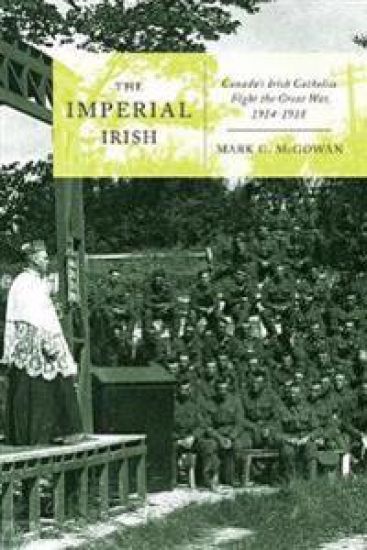
Between 1914 and 1918, many Irish Catholics in Canada found themselves in a vulnerable position. Not only was the Great War slaughtering millions, but tension and violence was mounting in Ireland over the question of independence from Britain and Home Rule. For Canada's Irish Catholics, thwarting Prussian militarism was a way to prove that small nations, like Ireland, could be free from larger occupying countries. Yet, even as tens of thousands of Irish Catholic men and women rallied to the call to arms and supported government efforts to win the war, many Canadians still doubted their loyalty to the Empire. Retracing the struggles of Irish Catholics as they fought Canada's enemies in Europe while defending themselves against charges of disloyalty at home, The Imperial Irish explores the development and fraying of interfaith and intercultural relationships between Irish Catholics, French Canadian Catholics, and non-Catholics throughout the course of the Great War. Mark McGowan contrasts Irish Canadian Catholics' beliefs with the neutrality of Pope Benedict XV, the supposed pro-Austrian sympathies of many immigrants from central Europe, Irish republicans inciting rebellion in Ireland, and the perceived indifference to the war by French Canadian Catholics, and argues that, for the most part, Irish Catholics in Canada demonstrated strong support for the imperial war effort by recruiting in large numbers. He further investigates their religious lives within the Canadian Expeditionary Force, the spiritual resources available to them, and church and lay leaders' negotiation of the sensitive political developments in Ireland that coincided with the war effort. Grounded in research from dozens of archives as well as census data and personnel records, The Imperial Irish explores stirring conflicts that threatened to irreparably divide Canada along religious and linguistic lines.
The Great War as I Saw It

The Great War as I Saw It

Frederick George Scott; Mark G. McGowan

McGill-Queen's University Press
2014
nidottu
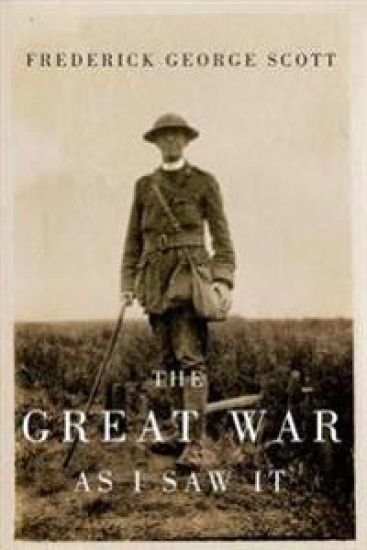
A fifty-three-year-old Anglican priest and poet when the First World War broke out, Frederick George Scott was an improbable volunteer, but also an invaluable war memoirist about life at the front. Enlisting at the very beginning of the conflict and serving on the Western Front until the Armistice, Scott became the most decorated Canadian chaplain. A High Anglican and staunch British imperialist described by one of his fellow officers as "an old snob of the old school," Scott also defied stereotypes, often rejecting the privileges he was entitled to as an officer and insisting on being at the frontlines with the rank-and-file soldiers, with whom he felt genuine kinship. As a result, he was seriously wounded in the autumn of 1918, near the end of the war. The Great War as I Saw It is an idiosyncratic portrait by a man of strong religious convictions witnessing the horror of modern warfare. In evocative prose shaped by his background as a poet, Scott moves between lighthearted moments and dark tragedy, including his wrenching account of searching for his own son's body in a ruined battlefield. Rich in detail, it is one of the most diverse and complete first-hand accounts of the war ever published.
The Great War as I Saw It

The Great War as I Saw It

Frederick George Scott; Mark G. McGowan

McGill-Queen's University Press
2014
sidottu
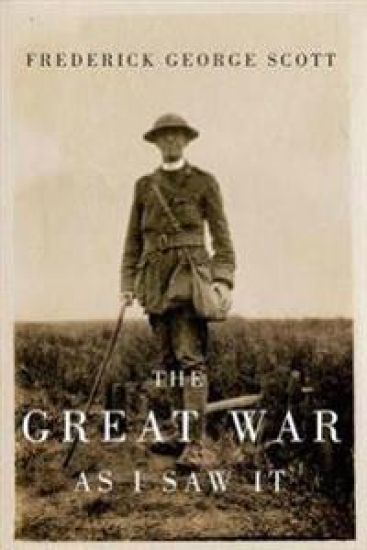
A fifty-three-year-old Anglican priest and poet when the First World War broke out, Frederick George Scott was an improbable volunteer, but also an invaluable war memoirist about life at the front. Enlisting at the very beginning of the conflict and serving on the Western Front until the Armistice, Scott became the most decorated Canadian chaplain. A High Anglican and staunch British imperialist described by one of his fellow officers as "an old snob of the old school," Scott also defied stereotypes, often rejecting the privileges he was entitled to as an officer and insisting on being at the frontlines with the rank-and-file soldiers, with whom he felt genuine kinship. As a result, he was seriously wounded in the autumn of 1918, near the end of the war. The Great War as I Saw It is an idiosyncratic portrait by a man of strong religious convictions witnessing the horror of modern warfare. In evocative prose shaped by his background as a poet, Scott moves between lighthearted moments and dark tragedy, including his wrenching account of searching for his own son's body in a ruined battlefield. Rich in detail, it is one of the most diverse and complete first-hand accounts of the war ever published.
The Waning of the Green

The Waning of the Green

Mark G. McGowan

McGill-Queen's University Press
1999
nidottu
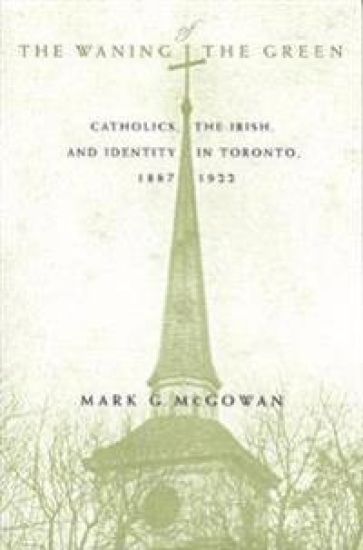
McGowan traces the evolution of the Catholic community from an isolated religious and Irish ethnic subculture in the late nineteenth century into an integrated segment of English Canadian society by the early twentieth century. English-speaking Catholics moved into all neighbourhoods of the city and socialized with and married non-Catholics. They even embraced their own brand of imperialism: by 1914 thousands of them had enlisted to fight for God and the British Empire. McGowan's detailed and lively portrait will be of great interest to students and scholars of religious history, Irish studies, ethnic history, and Canadian history.
The Waning of the Green

The Waning of the Green

Mark G. McGowan

McGill-Queen's University Press
1998
sidottu
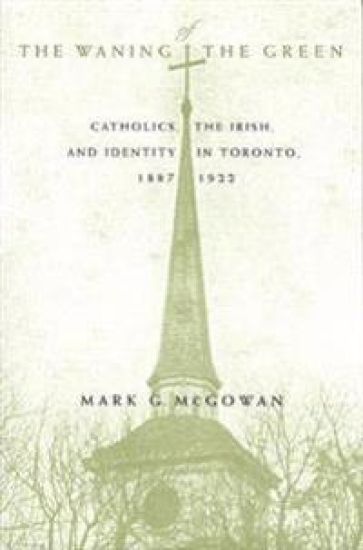
Most historical accounts of the Irish Catholic community in Toronto describe it as a poor underclass of society, ghettoised by the largely British, Protestant population and characterised by the sectarian violence between Protestants and Catholics that earned Toronto the title "Belfast of Canada." Challenging this long-standing view of the Irish Catholic experience, Mark McGowan provides a new picture of the community's evolution and integration into Canadian society. McGowan traces the evolution of the Catholic community from an isolated religious and Irish ethnic subculture in the late nineteenth century into an integrated segment of English Canadian society by the early twentieth century. English-speaking Catholics moved into all neighbourhoods of the city and socialised with and married non-Catholics. They even embraced their own brand of imperialism: by 1914 thousands of them had enlisted to fight for God and the British Empire. McGowan's detailed and lively portrait will be of great interest to students and scholars of religious history, Irish studies, ethnic history, and Canadian history. Mark G. McGowan is associate professor of history at St Michael's College, University of Toronto.