
Kirjailija
Mark Gilbert
Kirjat ja teokset yhdessä paikassa: 18 kirjaa, julkaisuja vuosilta 1995-2026, suosituimpien joukossa Inside Indonesia's Big Bang. Vertaile teosten hintoja ja tarkista saatavuus suomalaisista kirjakaupoista.
18 kirjaa
Kirjojen julkaisuhaarukka 1995-2026.
A major new account of the emergence of Italian democracy after the Second World WarThe rebirth of Italy after the Second World War is one of the most impressive political transformations in modern European history. In 1945, post-fascist Italy was devastated by war and its reputation in the international arena was nil. Yet by December 1955, when Italy was admitted to the United Nations, the nation had contested three acrimonious but free general elections, had a flourishing press, and was a leader in the re-building of Europe. The contrast with Fascism was stark.This book charts the descent of Italy into Fascism, the scale of the wartime disaster, the Italian resistance to Nazi occupation, and the establishment of the Republic in 1946. The Cold War divided, in 1947, the coalition of parties that had led the resistance to Fascism and Nazism.The book’s final chapters deal with the consolidation of Italian democracy and with the statesmanship of Alcide De Gasperi, the premier from December 1945 to August 1953. The book argues, first, that De Gasperi deserves more credit than he has typically been accorded for Italy’s post-war democratization and, second, that Italian democracy was constructed on a sound foundation – which is why it has been able to survive its many post-war crises.Largely based on contemporary Italian sources, the book is written in an engaging, lively way for both the general reader and specialists in Italian history.
The rebirth of Italy after the Second World War is one of the most impressive political transformations in modern European history. In 1945, post-fascist Italy was devastated by war, and its reputation in the international arena was nil. Yet by December 1955, when Italy was admitted to the United Nations, the nation had contested three acrimonious but free general elections, had a flourishing press, and was a leader in the rebuilding of Europe.This is the dramatic story told by Italy Reborn. It charts the descent of Italy into Fascism, the scale of the wartime disaster, the Italian resistance to Nazi occupation, the horrors of civil war, and the establishment of the Republic in 1946. The Cold War divided, in 1947, the coalition of parties that had led the resistance to Fascism and Nazism.The book's final chapters deal with the consolidation of Italian democracy and with the statesmanship of Alcide De Gasperi, the premier from December 1945 to August 1953. The book persuasively argues that De Gasperi deserves more credit than he has typically been accorded for Italy's postwar democratization and shows how Italian democracy was constructed on a sound foundation--which is why it has been able to survive its many postwar crises.Largely based on contemporary Italian sources, Italy Reborn is both an original account of this crucial period in Italian history and a remarkable example of how democracies are made.
A major new account of the emergence of Italian democracy after the Second World WarThe rebirth of Italy after the Second World War is one of the most impressive political transformations in modern European history. In 1945, post-fascist Italy was devastated by war and its reputation in the international arena was nil. Yet by December 1955, when Italy was admitted to the United Nations, the nation had contested three acrimonious but free general elections, had a flourishing press, and was a leader in the re-building of Europe. The contrast with Fascism was stark.This book charts the descent of Italy into Fascism, the scale of the wartime disaster, the Italian resistance to Nazi occupation, and the establishment of the Republic in 1946. The Cold War divided, in 1947, the coalition of parties that had led the resistance to Fascism and Nazism.The book’s final chapters deal with the consolidation of Italian democracy and with the statesmanship of Alcide De Gasperi, the premier from December 1945 to August 1953. The book argues, first, that De Gasperi deserves more credit than he has typically been accorded for Italy’s post-war democratization and, second, that Italian democracy was constructed on a sound foundation – which is why it has been able to survive its many post-war crises.Largely based on contemporary Italian sources, the book is written in an engaging, lively way for both the general reader and specialists in Italian history.

Asilomar and Ernest Holmes. Asilomar and Religious Science. Asilomar and Science of Mind. The deep history of Asilomar itself, enriched by the history of Religious Science, adds texture and context to this collection of lectures and classes presented by Dr. Ernest Holmes at Asilomar in the 1950s. Readers will forge the connection between this sacred place and this spiritual leader's teachings. Captured in this volume are the words spoken by Holmes to those who attended the Religious Science conferences during the final decade of Holmes's life. These summer gatherings were a special time for Religious Scientists and for Holmes himself. The transcripts gathered here detail what Holmes believed was important to share with the people already deeply involved in the movement. As such, they are, to a degree, advanced metaphysics presentations, building on the basic concepts of Science of Mind and New Thought. For the long-time spiritual seeker and one familiar with the basics of Science of Mind, these talks will reinforce and broaden your understanding, taking you deeper into the philosophy. Be prepared to be challenged. Compiled by Rev. Mark Gilbert for the Science of Mind Archives and Library Foundation and made possible by funding from Rev. Dr. Kristina Collins About the AuthorErnest Holmes is an internationally recognized authority on religious psychology and the founder of the Religious Science movement. His inspirational books include the renowned classic The Science of Mind, This Thing Called You, The Art of Life, 365: Science of Mind, The Hidden Power of the Bible, and Creative Mind and Success, a list that now includes Ernest Holmes at Asilomar.

Historical Dictionary of Modern Italy
Mark Gilbert; Sara Lamberti Moneta
Rowman Littlefield
2020
sidottu
Italy is a country that exercises a hold on the imagination of people all over the world. Its long history has left an inexhaustible treasure chest of cultural achievement: Historic cities such as Rome, Florence, and Venice are among the most sought-after destinations in the world for tourists and art lovers. Italy's natural beauty and cuisine are rightly renowned. It’s history and politics are also a source of endless fascination. Modern Italy has consistently been a political laboratory for the rest of Europe.This third edition of Historical Dictionary of Modern Italy contains a chronology, an introduction, and an extensive bibliography. The dictionary section has over 400 cross-referenced entries on important personalities as well as aspects of the country’s politics, economy, foreign relations, religion, and culture. This book is an excellent resource for students, researchers, and anyone wanting to know more about Italy.

Now in a fully revised and updated edition, this book remains the standard for concise histories of the European Union. Mark Gilbert offers a clear and balanced narrative of European integration since its inception to the present, set in the wider history of the post-war period. Gilbert concludes by considering the Union’s future in light of the mood of crisis that has taken hold in the EU in the aftermath of the global recession, the refugee crisis, and Brexit.

Now in a fully revised and updated edition, this book remains the standard for concise histories of the European Union. Mark Gilbert offers a clear and balanced narrative of European integration since its inception to the present, set in the wider history of the post-war period. Gilbert concludes by considering the Union’s future in light of the mood of crisis that has taken hold in the EU in the aftermath of the global recession, the refugee crisis, and Brexit.
Since 1992, Italy has been rocked by the disintegration of its traditional ruling elite as dozens of leading politicians have been accused of corruption, extortion, and Mafia ties. The two linchpins of the former governing coalition, the Christian Democrats and the Socialists, have been shattered by scandal and humiliated at the polls. New politica

A masterly synthesis of the history of the contemporary world, The World Since 1945 offers the ideal introduction to the events of the period between the end of the Second World War and the present day. P. M. H. Bell and Mark Gilbert balance a clear narrative with in-depth analysis to guide the reader through the aftermath of the Second World War, the Cold War, decolonization, Détente and the Arab-Israeli Conflict, up to the on-going ethnic strife and political instability of the 21st century.The new edition has been thoroughly revised to fully reflect developments in the history and historiography of the post-war world, and features five new chapters on the post-Cold War world, covering topics including: - The rise and fall of American hegemony- The decline of Europe- The rise of Asia- Political Islam as a global force - The role of human rightsThe World Since 1945 challenges us to better understand what happened and why in the post-war period and shows the ways in which the past continues to exercise a profound influence on the present. It is essential reading for any student of contemporary history.

A masterly synthesis of the history of the contemporary world, The World Since 1945 offers the ideal introduction to the events of the period between the end of the Second World War and the present day. P. M. H. Bell and Mark Gilbert balance a clear narrative with in-depth analysis to guide the reader through the aftermath of the Second World War, the Cold War, decolonization, Détente and the Arab-Israeli Conflict, up to the on-going ethnic strife and political instability of the 21st century.The new edition has been thoroughly revised to fully reflect developments in the history and historiography of the post-war world, and features five new chapters on the post-Cold War world, covering topics including: - The rise and fall of American hegemony- The decline of Europe- The rise of Asia- Political Islam as a global force - The role of human rightsThe World Since 1945 challenges us to better understand what happened and why in the post-war period and shows the ways in which the past continues to exercise a profound influence on the present. It is essential reading for any student of contemporary history.

This compelling history of Europe’s Cold War follows the dramatic arc of the conflict that shaped the development of the continent and defined world politics in the second half of the twentieth century. Focusing on European actors and events, Mark Gilbert traces the onset of the Cold War, the process of Stalinization in the Soviet bloc, and the difficulties of legitimation experienced by communist regimes in Hungary, Poland, and East Germany even after Stalin’s death. He also shows how Washington’s leadership and worldview was contested in Western Europe, especially by Great Britain and French president Charles de Gaulle. The book charts the growing weakness of the communist system in Eastern Europe and the economic and moral reasons for the system’s eventual collapse. It highlights the central role of European leaders in the process of détente and in the diplomatic endgame that concluded the Cold War in 1990. Rather than simply a strategic standoff between the superpowers, Gilbert argues, the Cold War was a social and ideological conflict that transformed Europe from Lisbon to Riga. Fast-paced and readable, this political, intellectual, and social history illuminates a conflict that continues to resonate today.

This compelling history of Europe’s Cold War follows the dramatic arc of the conflict that shaped the development of the continent and defined world politics in the second half of the twentieth century. Focusing on European actors and events, Mark Gilbert traces the onset of the Cold War, the process of Stalinization in the Soviet bloc, and the difficulties of legitimation experienced by communist regimes in Hungary, Poland, and East Germany even after Stalin’s death. He also shows how Washington’s leadership and worldview was contested in Western Europe, especially by Great Britain and French president Charles de Gaulle. The book charts the growing weakness of the communist system in Eastern Europe and the economic and moral reasons for the system’s eventual collapse. It highlights the central role of European leaders in the process of détente and in the diplomatic endgame that concluded the Cold War in 1990. Rather than simply a strategic standoff between the superpowers, Gilbert argues, the Cold War was a social and ideological conflict that transformed Europe from Lisbon to Riga. Fast-paced and readable, this political, intellectual, and social history illuminates a conflict that continues to resonate today.
Our Spiritual Evolution: Transcending the Third Dimension
Mark Gilbert
Conscious Bridge Publishing
2014
nidottu
What are your thoughts on evolution? Physical evolution is a reality, but have you ever considered that it is only part of the story? Our Spiritual Evolution: Transcending the Third Dimension is about looking at life through a spiritual evolutionary lens. More and more spiritual teachers in the 21st century are seeing life in this way The book helps you easily develop this outlook by offering a concise and accessible description of how all of life and the universe came to be -- and gives meaning to our lives as a part of this process. The book's essential theory is provided in the form of a "dialogue" where we begin to consider how all of the universe sprang forth from one source. Each "part" of the universe--including ourselves--is experiencing life feeling separate and apart from everything else. Yet we also feel that we are connected to something that transcends our individual lives and is calling us forward to a greater life--we are evolving individually and collectively towards some greater expansiveness. Building on this overview, this brief book then offers introductions to the concepts of "big history", the emergence of conscious awareness, our evolution of worldviews and Spiral Dynamics, New Thought and the Science of Mind, where we are on this evolutionary journey and the evolution of our idea of God. The book concludes with considerations of how we might live our lives from this spiritual evolutionary viewpoint. Ultimately, Our Spiritual Evolution is about navigating that dynamic tension between being motivated by two worlds simultaneously -- one our physical-animalistic past through which we have evolved; the other our spiritual truth that pulls us towards a higher future. Developing a spiritual evolutionary outlook provides both greater meaning for our individual life and offers guidance on how to live the best life possible. Our Spiritual Evolution sets the stage and basic theory that are discussed further in the author's books Our Spiritual Rights and Responsibilities where he outlines what it means to be a human being moving through this evolutionary process and Becoming a Spiritual Change Agent where he offers guidance on how to assist the evolutionary process.
Be Yourself: Evolving the World Through Personal Empowerment
Mark Gilbert
Conscious Bridge Publishing
2012
nidottu
Italy is a country that exercises a hold on the imagination of people all over the world. Its long history has left an inexhaustible treasure chest of cultural achievement. The historic cities of Rome, Florence, and Venice are among the most sought-after destinations in the world for tourists and art lovers, and Italy's natural beauty and cuisine are rightly renowned. Italy's history and politics are also a source of endless fascination. Modern Italy has consistently been a political laboratory for the rest of Europe. In the 19th century, Italian patriotism was of crucial importance in the struggle against the absolute governments reintroduced after the Congress of Vienna, 1814-15. After the fall of Fascism during World War II, Italy became a model of rapid economic development, though its politics has never been less than contentious and its democracy has remained a troubled one. The A to Z of Modern Italy is an attempt to introduce the key personalities, events, social developments, and cultural achievements of Italy since the beginning of the 19th century, when Italy first began to emerge as something more than a geographical entity and national feeling began to grow. This is done through a chronology, a list of acronyms and abbreviations, an introductory essay, a map, a bibliography, and some 400 cross-referenced dictionary entries on prominent individuals, basic institutions, crucial events, history, politics, economics, society, and culture.
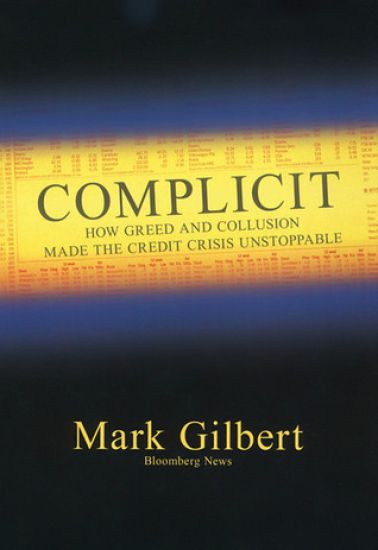
The credit crunch is affecting every investor and every consumer, every industry and every government program, yet few people truly understand how it happened. Subprime mortgages have been center stage, but behind the scenes a conspiracy of greed among bankers, investors, rating agencies and regulators has imperiled everyone's financial future. We need to know what went wrong and how to change the practices that led to this calamity. Bloomberg columnist Mark Gilbert shows how Wall Street's tolerance for extremes made the global credit crunch both foreseeable and inevitable. He offers a blow-by-blow account of what went wrong and what lessons need to be learned from the crisis. Gilbert's argument--that everyone with skin in the money game had a vested interest in pretending that nothing could go awry--is a well-defended, compelling indictment of the financial community. Gilbert is able to make complex financial events easy to understand. His outlook is truly global: this financial crisis respects no geographical boundaries, and Gilbert draws on anecdotes and examples from around the world to make his case.
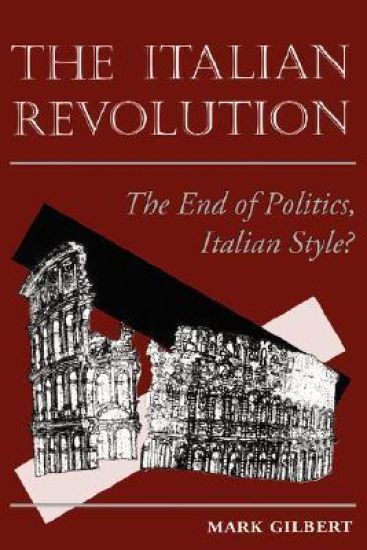
This book provides both a historical account of the circumstances that led to la rivoluzione italiana and an explanation of why it took place after decades of complacency. It deals with major events that occurred within the Italian party political system between 1976 and 1991.