
Kirjailija
Mark Grimsley
Kirjat ja teokset yhdessä paikassa: 8 kirjaa, julkaisuja vuosilta 1995-2022, suosituimpien joukossa The Union Must Stand. Vertaile teosten hintoja ja tarkista saatavuus suomalaisista kirjakaupoista.
8 kirjaa
Kirjojen julkaisuhaarukka 1995-2022.
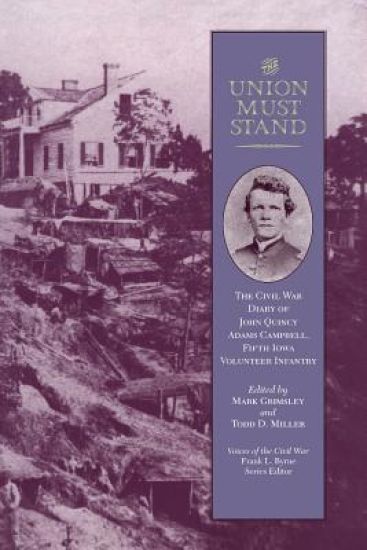
Only rarely does a Civil War diarist combine detailed observations of events with an intelligent understanding of their significance. John Campbell, a newspaperman before the war, left such a legacy. A politically aware Union soldier with strong moral and abolitionist beliefs, Campbell recorded not only his own reflections on wartime matters but also those of his comrades and the southerners—soldiers, civilians, and slaves—that he encountered.Campbell served in the Fifth Iowa Volunteer Infantry from 1861 to 1864. He participated in the war’s major theaters and saw early action at Island No. 10, Iuka, and Corinth. His diary is especially valuable because he viewed the war as both a field-commissioned officer able to make intelligent comments about combat and as a former enlisted man with a feel for the soldier’s life. He was present during Grant’s campaign at Vicksburg and depicted the bloody failure of the May 22 storming of Confederate fortifications in unsparing terms; he then went on to fight at Chattanooga and took Gen. William T. Sherman to task for his poor leadership at Missionary Ridge.The Union Must Stand contains more than Campbell’s journal. Editors Mark Grimsley and Todd Miller have written an introduction that provides background information and places the diary in the context of current debate over the ideological commitments of Civil War soldiers. An appendix reproduces fifteen of Campbell’s letters to his hometown newspaper, in which he shared his impressions of both war and slavery.With its unique point of view, valuable insights into the conduct of various campaigns, and some of the most vivid depictions of Civil War combat ever set to paper, Campbell’s diary offers both a wealth of new primary material for historians and exciting reading for enthusiasts. Combining a journalist’s accuracy with a zealot’s idealism, it makes a forceful statement about why one man went to war.
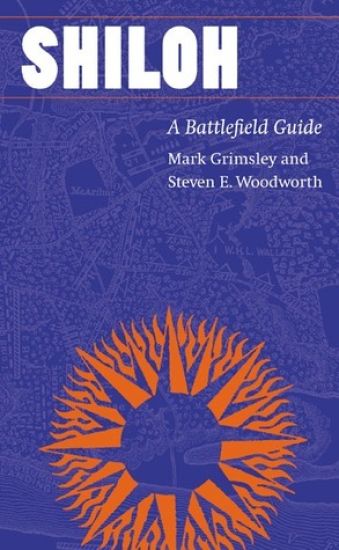
A comprehensive guide to Shiloh, one of the key battlefields of the Civil War, provides precise directions to all the important locations on the battlefield, along with more than forty detailed maps, vivid descriptions of the battle, and an analysis of the events of the engagement, key personalities involved, and the ultimate ramifications of the conflict. Original.

And Keep Moving On is the first book to see the Virginia campaign of spring 1864 as Ulysses S. Grant and Robert E. Lee saw it: a single, massive operation stretching hundreds of miles. The story of the campaign is also the story of the demise of two great armies. The scale of casualties and human suffering that the campaign inflicted makes it unique in U.S. history. Mark Grimsley's study, however, is not just another battle book. Grimsley places the campaign in the political context of the 1864 presidential election; appraises the motivation of soldiers; appreciates the impact of the North’s sea power advantage; questions conventional interpretations; and examines the interconnections among the major battles, subsidiary offensives, and raids.
Only rarely does a Civil War diarist combine detailed observations of events with an intelligent understanding of their significance. John Campbell, a newspaperman before the war, left such a legacy. A politically aware Union soldier with strong moral and abolitionist beliefs, Campbell recorded not only his own reflections on wartime matters but also those of his comrades and the southerners soldiers, civilians, and slaves that he encountered. Campbell served in the Fifth Iowa Volunteer Infantry from 1861 to 1864. He participated in the war's major theaters and saw early action at Island No. 10, Iuka, and Corinth. His diary is especially valuable because he viewed the war as both a field-commissioned officer able to make intelligent comments about combat and as a former enlisted man with a feel for the soldier's life. He was present during Grant's campaign at Vicksburg and depicted the bloody failure of the May 22 storming of Confederate fortifications in unsparing terms; he then went on to fight at Chattanooga and took Gen. William T. Sherman to task for his poor leadership at Missionary Ridge. The Union Must Stand contains more than Campbell's journal. Editors Mark Grimsley and Todd Miller have written an introduction that provides background information and places the diary in the context of current debate over the ideological commitments of Civil War soldiers. An appendix reproduces fifteen of Campbell's letters to his hometown newspaper, in which he shared his impressions of both war and slavery.With its unique point of view, valuable insights into the conduct of various campaigns, and some of the most vivid depictions of Civil War combat ever set to paper, Campbell's diary offers both a wealth of new primary material for historians and exciting reading for enthusiasts. Combining a journalist's accuracy with a zealot's idealism, it makes a forceful statement about why one man went to war. The Editors: Mark Grimsley is an associate professor of history at the Ohio State University and the author of The Hard Hand of War: Union Military Policy Toward Southern Civilians, 1861-1865. Todd D. Miller is a history teacher and an independent researcher for Time-Life Books' Civil War series. He lives in Ashland, Ohio. "
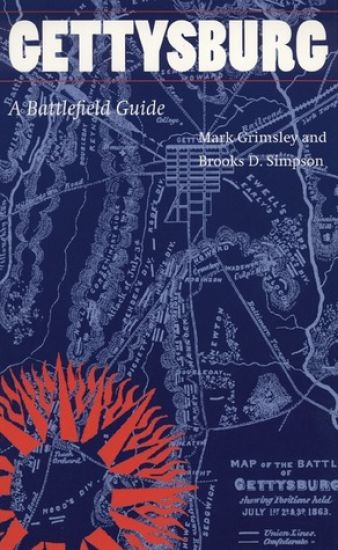
Little Round Top, the Railroad Cut, Pickett's Charge—these are the turning points within the most important battle of the Civil War. Even careful students of Gettysburg, however, can find themselves disoriented when visiting the site itself. Here, finally, is a convenient guide for serious student and casual visitor alike that makes plain the sweep of events and the geography of the battlefield. This invaluable guidebook was created by scholars who have walked the battlegrounds, consulted with local experts and park guides, and studied the testimony left behind by the participants. Gettysburg will help you find all the important locales and understand what the participants saw in 1863, even if you have no prior knowledge of the battle. Designed to enhance the experience of both first-time and returning visitors, this guide can be used alone or as a supplement to a tour. Clearly written and illustrated with maps and photographs, this is the book to have when you explore Gettysburg.
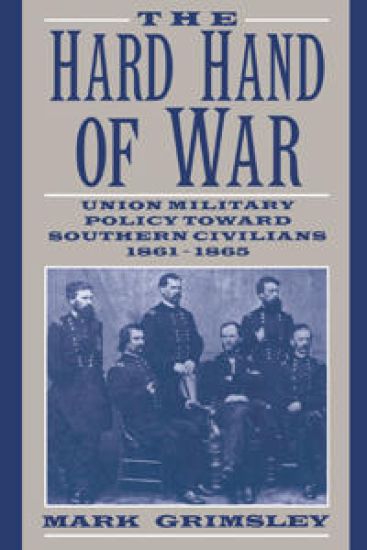
The Hard Hand of War explores the Union army’s policy of destructive attacks upon Southern property and civilian morale - how it evolved, what it was like in practice. From an initial policy of deliberate restraint, extending even to the active protection of Southerners’ property and constitutional rights, Union armies gradually adopted measures that subjected civilians to the burdens of war. Yet the ultimate ‘hard war’ policy was far from the indiscriminate fury of legend. Union policy makers emphasised a program of directed severity, and Grimsley demonstrates how and why it worked. Through comparisons with earlier European wars and through the testimony of Union soldiers and Southern civilians alike, he shows that Union soldiers exercised restraint even as they made war against the Confederate civilian population.
The Hard Hand of War explores the Union army’s policy of destructive attacks upon Southern property and civilian morale – how it evolved, what it was like in practice. From an initial policy of deliberate restraint, extending even to the active protection of Southerners’ property and constitutional rights, Union armies gradually adopted measures that subjected civilians to the burdens of war. Yet the ultimate ‘hard war’ policy was far from the indiscriminate fury of legend. Union policy makers emphasised a program of directed severity, and Grimsley demonstrates how and why it worked. Through comparisons with earlier European wars and through the testimony of Union soldiers and Southern civilians alike, he shows that Union soldiers exercised restraint even as they made war against the Confederate civilian population.